REVIEW · DHAKA
Private Tour: Dhaka Heritage & Cultural Tour – Full Day
Book on Viator →Operated by Travel Trips · Bookable on Viator
Dhaka feels like a living museum. This full-day private tour strings together the big sights with traditional rickshaw and wooden rowboat rides, so you get history and everyday street life in one go. What I love most is how much you see without rushing, plus the local lunch that keeps the day human. One thing to plan for: rain and traffic can change timing, and the river portions are the most weather-sensitive part.
You’ll move with your own schedule, not a group cattle-car pace, and the guide’s explanations are built for real on-the-street moments. Guides including Nazmul, Mahib, Rahman, Razu, Mahim, Al Amin, Farazi, and Jafar have led groups on this route, and the common theme is flexibility when Dhaka gets unpredictable. Expect an 8-hour day with hotel pickup and an air-conditioned vehicle for the hops between old-town stops.
In This Review
- Key things you’ll like about this tour
- Dhaka in one day: how this private route actually feels
- Morning start at Shahbag Flower Market (and why it sets the tone)
- Shahid Minar: a cultural stop with real meaning (and quick pacing)
- Lalbag Fort: the history stop that most people remember
- Dhakeshwari Temple and Star Mosque: two religious landmarks, handled respectfully
- Shankhari Bazaar Road: where the city’s old trades show up
- Ahsan Manzil (Pink Palace): riverfront beauty with a real-world feel
- Sadarghat and the Buriganga River: the part you’ll feel in your bones
- Bara Katra and Armenian Church: smaller stops that deepen the picture
- Bangladesh National Parliament: architecture hit, access limits possible
- Guides and flexibility: why names keep showing up
- Price and value: is $67.78 worth a full day like this?
- Practical tips to make your day smoother
- Should you book this Dhaka Heritage & Cultural Tour?
- FAQ
- What time does the tour start?
- Is this tour private?
- How long is the tour?
- Do I get hotel pickup and drop-off?
- What rides are included?
- Is lunch included?
- Are entrance fees included?
- What food and drinks are provided during the day?
- Where does the tour end?
- What’s the cancellation policy?
Key things you’ll like about this tour
- Private for your party only: your pace, your questions, your comfort level.
- Rickshaw + Buriganga rowboat time: two classic ways to see Old Dhaka without just staring from a car window.
- Ahsan Manzil, Lalbag Fort, and major landmarks: Mughal-era architecture mixed with Bengali cultural sites.
- Old-town walking through narrow lanes: perfect for getting your bearings fast in a city that doesn’t do “easy.”
- Local lunch plus snacks and tea: enough food breaks to keep you energized through the day.
- Guides adapt in real time: especially during rain, festivals, or heavy traffic.
Dhaka in one day: how this private route actually feels
A lot of city tours list famous stops. This one helps you experience Dhaka. You start in the morning and then shift through different textures of the city: flower-market color, memorial space, Mughal forts, Hindu and Muslim religious sites, a big riverside port, and that pink-palace look along the Buriganga River.
The day works because it’s not just about seeing. It’s about moving. You’ll take a pulling rickshaw through older lanes where cars can’t go, and you’ll also do a traditional wooden boat/rowboat stretch on the river area. Those moments change how you understand the city’s geography—especially how the river shapes daily life.
The best part is the balance between iconic sights and local scale. You’ll spend time where people actually gather and work (like the flower market and traditional bazaar streets), then you’ll step into landmark architecture without feeling like you’re speed-running a museum.
You can also read our reviews of more private tours in Dhaka
Morning start at Shahbag Flower Market (and why it sets the tone)
The tour kicks off around Shahbag Square at 8:00 am, and the first big stop is the Shahbag Flower Market. This is the kind of place where the city’s energy shows up early: wholesale flower volumes, strong color, and the behind-the-scenes feeling of a working market rather than a souvenir-style stop.
You get about 20 minutes there, plus admission is included. That may sound short, but it’s usually enough time to (1) understand how the market works, and (2) grab photos without feeling like you’re competing with a crowd for a single angle. It’s also a good warm-up—after this, the rest of the day feels more connected.
Practical tip: if you care about photos, bring a light lens cloth. Morning market humidity can be sticky, and you’ll be near lots of damp surfaces and leaves.
Shahid Minar: a cultural stop with real meaning (and quick pacing)
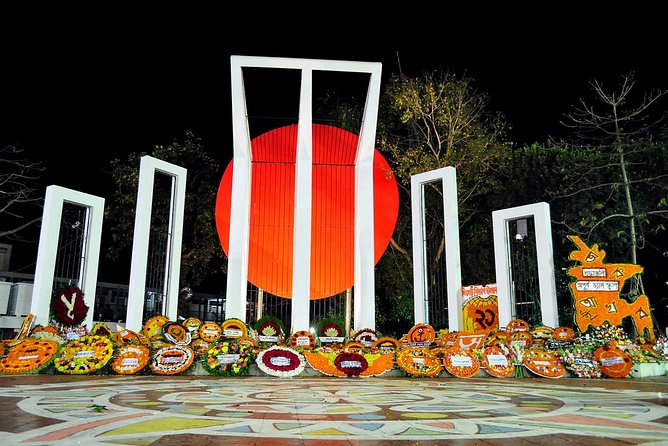
Next up is Shahid Minar, known as a symbol of Bengali nationalism tied to the Language Movement of 1952. You’ll spend around 20 minutes, and admission is free.
This stop matters because Dhaka isn’t only about Mughal domes and temple roofs. It’s also about language, identity, and the way public space holds memory. With a good guide, the monument stops being a photo op and turns into context for why Dhaka feels the way it does today.
If you’re sensitive to memorial spaces, keep your phone respectful in posture and volume. You’ll feel the atmosphere.
Lalbag Fort: the history stop that most people remember
Then you move to Lalbag Fort (Lalbagh Fort), built in 1678 during the Mughal period under Emperor Aurangzeb. The time here is about 45 minutes, and admission is included.
This is one of those places that tends to become the day’s anchor. Reviews frequently call it the star attraction, and it’s easy to see why. It’s visually strong, and it gives you a sense of how this city grew around power, trade, and defense—not just spirituality and daily street life.
What makes it work on a full-day tour is the pacing. You don’t just pass through. You have enough time to walk at a relaxed speed, read the key ideas from your guide, and actually look at walls, arches, and layout.
If the fort is closed on your travel day, you might lose this chunk. One review mentioned a closure on a Sunday, so it’s worth being flexible with your expectations even before you arrive.
Dhakeshwari Temple and Star Mosque: two religious landmarks, handled respectfully
After the fort, you’ll visit Dhakeshwari Temple, described as the national Hindu temple of Bangladesh and state-owned, with the name connected to Dhaka’s goddess identity. Expect about 25 minutes, admission included.
Then comes Star Mosque (Tara Masjid), a Mughal-era mosque with white marble and engraved star patterns. You’ll have about 20 minutes, and admission is free.
These stops can be quick, but they’re not empty. The guide’s job here is to help you read what you’re seeing: architectural style, religious purpose, and how religious landmarks sit inside the city’s everyday rhythm.
Practical tip: wear clothing that works for temple and mosque environments. Even when you don’t need formal coverage, it helps you feel comfortable and respectful.
Shankhari Bazaar Road: where the city’s old trades show up
The tour walks into Shankhari Bazaar Road, part of the older Hindu artisan community area and said to be over 400 years old. You’ll spend around 40 minutes here, and admission is free.
This is the kind of street where you start to understand how Dhaka functions at a human scale. It’s not one single landmark—it’s a corridor of homes, small businesses, and neighborhood movement. It’s also where the guide’s commentary becomes important, because the value here is in interpreting what you’re seeing rather than checking boxes.
If you’re prone to sensory overload, you might want to pace yourself during this segment. Stop for water, look slow, and let the noise settle.
Ahsan Manzil (Pink Palace): riverfront beauty with a real-world feel
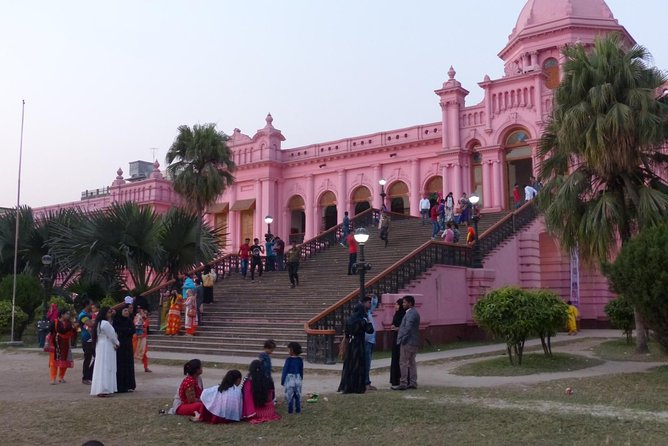
At Ahsan Manzil, often nicknamed the Pink Palace, you’ll spend about 45 minutes and admission is included. It sits by the Buriganga River, so even when you’re not doing the boat segment at that exact moment, the riverside mood is present.
Several highlights in this route are linked to this area: the architecture is photogenic, and the river proximity makes it feel like the day has a spine. A guide can also explain how this riverside region connected power and commerce.
Weather note: rain can matter here. One account described waiting out heavy rain in this area rather than forcing the river port stop. That’s not a failure—it’s how you stay realistic with Dhaka’s conditions.
Sadarghat and the Buriganga River: the part you’ll feel in your bones
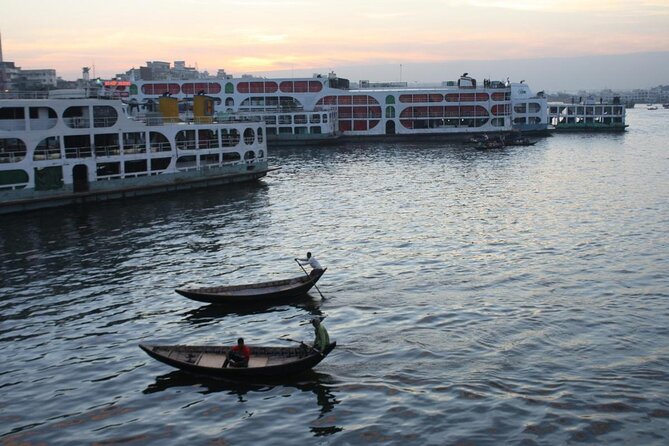
Next is Sadarghat Central River Port, with about 1 hour on the schedule and admission included. This is one of Dhaka’s most active river terminals, and it’s where the city’s scale becomes obvious fast.
Then you get traditional wooden boat/rowboat time on the river system as part of the experience. That’s the moment many people remember because it turns abstract geography into something physical: your sightline changes, the air shifts, and you see how people and goods move around the water.
Important consideration: this part is weather-sensitive. In heavy rain, port schedules and safe timing can shift. One case described the Sadarghat stop being skipped due to a heavy shower, even though other river-related plans still got attention. So if river time is your top priority, it’s worth communicating that right away to your guide.
Bara Katra and Armenian Church: smaller stops that deepen the picture
You’ll also visit Bara Katra near the Buriganga banks (around 10 minutes; admission included). It’s a significant 17th-century structure and adds a historical texture beyond the big-name architecture.
Then comes the Armenian Church (Armanitola area) with about 15 minutes, admission included. This is a useful “break” from Mughal and South Asian religious architecture because it adds the story of Dhaka’s wider historical communities.
These shorter stops are still valuable because they prevent the day from becoming only domes, forts, and monuments. You get more variety in who influenced the city over time.
Bangladesh National Parliament: architecture hit, access limits possible
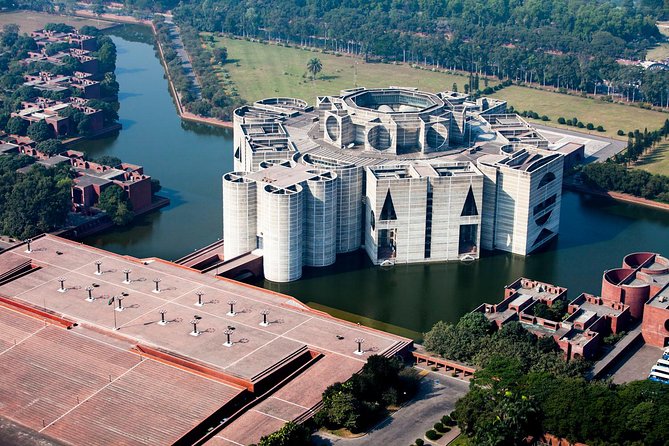
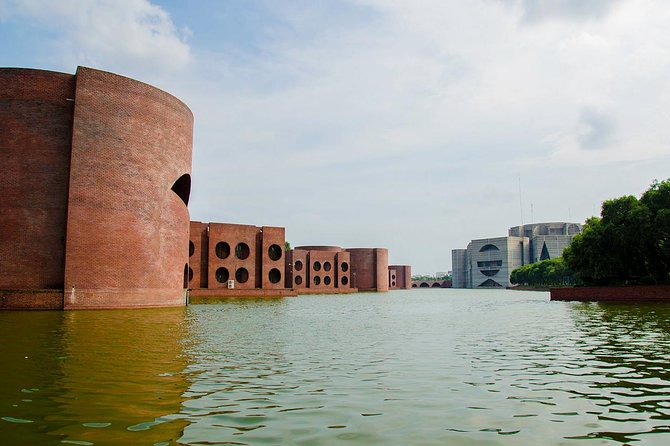
Finally, there’s time at the Bangladesh National Parliament Building (Jatiya Sangsad Bhaban), designed by Louis I. Kahn. The stop is short and admission details aren’t specified in the info you have, but it’s included as part of the route.
One practical reality: access can be limited for foreign visitors. A guide may be able to provide explanation and viewpoints, but you might not get as close as you hope due to security rules.
Still, it’s worth including because you’ll see a major modern architectural landmark woven into a day otherwise anchored in older Dhaka.
Guides and flexibility: why names keep showing up
The strongest praise tied to this tour is guide quality and flexibility. People repeatedly mention guides like Mahib, Rahman, Razu, Mahim, Al Amin, Farazi, and Jafar as friendly, patient, and good at adjusting the route to match the day’s situation.
That matters in Dhaka more than in many cities. Traffic can blow up your schedule. Religious celebrations can change street flow. Rain can make certain river-area timing unsafe or uncomfortable. When your guide has options—umbrella strategy, snack breaks, alternate pacing—you feel taken care of.
And it’s not just theory. One rain-related situation described the guide bringing umbrellas and offering snacks/tea, while trying to arrange an Uber car and then falling back to tuk-tuk when cars couldn’t be summoned in time. Even if you don’t love every workaround, you can see how local problem-solving keeps the day moving.
Price and value: is $67.78 worth a full day like this?
At $67.78 per person for about 8 hours, the value comes from what’s bundled, not the headline price.
You’re getting:
- Private setup for your party (so you’re not stuck in the same pace as strangers)
- Hotel pickup and drop-off
- Air-conditioned vehicle for the main transfers
- Professional art and historian guide
- Traditional rickshaw and wooden rowboat rides
- Lunch with local cuisine
- Bottled water (500 ml) plus light snacks and tea
- Fees and taxes included (for the stops that require them)
For many travelers, the biggest “value” piece is the transportation + guide combination. Dhaka can be stressful to navigate on your own. This tour gives you a structure and local interpretation—so you spend less time figuring out logistics and more time understanding what you’re looking at.
The only time it feels overpriced is if you end up spending a lot of the day off-plan due to weather or if you miss the specific ride segments you were counting on. That’s why clear communication at the start is worth it.
Practical tips to make your day smoother
A few things I’d do before you head out:
- Tell your guide your top two priorities. If you care most about the river or the fort, say it early.
- Dress for heat and rain. Dhaka days can switch quickly, and temple/mosque visits add to the clothing needs.
- Plan your energy. The day has many short stops, plus walking in narrow lanes. Comfortable shoes matter.
- Bring a small rain layer even if you think the forecast looks fine. Umbrellas can help, but you still might want your own.
- Have patience for timing. Traffic is part of Dhaka. A flexible day usually beats a rigid one.
If you go with the mindset of adapting with the city instead of fighting it, you’ll get a lot more out of the experience.
Should you book this Dhaka Heritage & Cultural Tour?
Book it if you want a guided introduction to Dhaka that goes beyond one neighborhood. This is a strong choice for first-timers who want classic contrasts: flower market morning energy, memorial meaning, Mughal architecture at Lalbag Fort, religious landmarks, and river life through the Buriganga area.
Skip it or reconsider if you’re traveling on a day when weather is likely to be severe and your schedule is tight. The river stops and timings can shift, and you’ll want flexibility. Also, if you have very specific expectations for each ride segment, communicate them upfront so your guide can protect the parts you care about most.
If you like local pacing and you want to leave Dhaka with a real sense of how different parts of the city connect, this tour is a smart way to spend your time.
FAQ
What time does the tour start?
The tour starts at 8:00 am, meeting at Shahbag Square, Dhaka 1205.
Is this tour private?
Yes. It’s a private tour/activity, and only your group participates.
How long is the tour?
The duration is listed as about 8 hours.
Do I get hotel pickup and drop-off?
Yes. Hotel pickup and drop-off are included.
What rides are included?
You’ll do a traditional pulling rickshaw ride and a traditional wooden rowboat ride.
Is lunch included?
Yes. Lunch of traditional local cuisine is included.
Are entrance fees included?
Admission fees are included for stops where the tour lists admission tickets (and free where noted).
What food and drinks are provided during the day?
You get bottled water (500 ml), plus a light snack and tea while you’re on the go.
Where does the tour end?
The tour ends in a different location than the start point. The exact end location is provided in the tour details at booking time.
What’s the cancellation policy?
Free cancellation is available up to 24 hours before the experience start time for a full refund.