REVIEW · DHAKA
Private Tour: 9 Days – World Heritage Tour of Bangladesh
Book on Viator →Operated by Travel Trips · Bookable on Viator
Bangladesh moves fast on this 9-day loop. I like the way this route pairs Dhaka’s big monuments with UNESCO World Heritage sites, so you don’t just stack photo stops—you see how modern politics, religion, and empire echoes connect. I also really value the 2 nights/3 days Sundarbans forest trip with permissions and full-board, which is the hardest part of planning in-country. One consideration: the Sundarbans cabin is described as non-air-conditioned with common washrooms, and one past guest reported serious communication trouble with the operator.
This is a private tour in the sense that your group is the only one participating, but the forest segment is a shared group experience. You’ll start with a busy, structured Day 1 in Dhaka, then gradually shift outward—Sonargaon, Bagerhat, the Sundarbans, and finally Rajshahi and ancient Bengal sites—before returning to Dhaka late Day 9.
In This Review
- Key highlights and what to watch for
- Getting oriented in Dhaka: Parliament House and the National Museum
- Old Dhaka monuments you can feel: Shahid Minar, Lalbag Fort, and Dhakeshwari
- Day 2 outside Dhaka: Sonargaon’s medieval capital feel
- Shakhari Bazaar, Ahsan Manzil, and Sadarghat at night
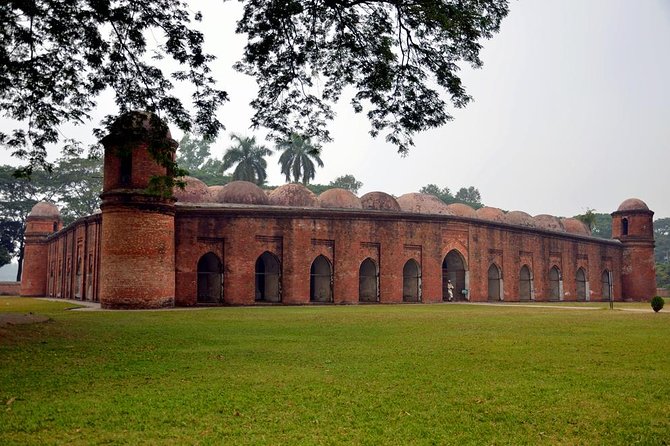
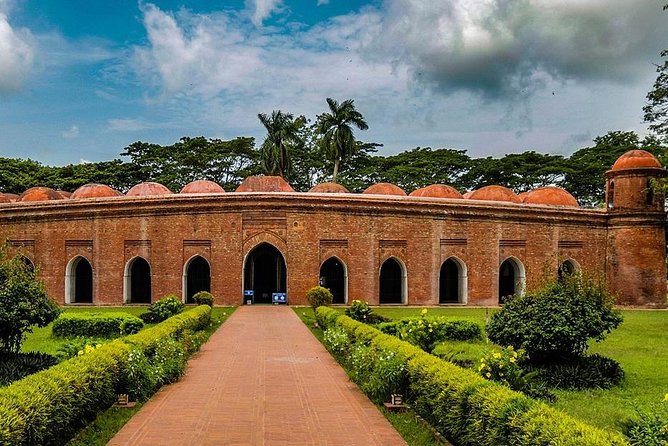
- Day 3’s UNESCO path: Bagerhat and the Sixty Dom Mosque
- The Sundarbans reality check: shared-group boats, tigers, and cabin comfort
- Rajshahi by train: Puthia’s temple village pace
- Padma morning market energy and Kusumba Mosque stones
- Somapura Mahavihara UNESCO: Buddhist monastery at full scale
- Mahasthangarh and the drive back to Dhaka on Day 9
- Price and value: what $1,450 really buys on this route
- Should you book this World Heritage tour of Bangladesh?
- FAQ
- What time does the tour start each day?
- Is this tour private or shared?
- What meals are included?
- How long is the Sundarbans forest trip?
- When is Sundarbans available, and when is it not?
- Which UNESCO World Heritage sites are included?
- Does the tour depend on weather?
Key highlights and what to watch for
- Louis I. Kahn’s National Parliament exterior: you see the architectural statement without rushing inside.
- Dhaka’s layered religious heritage: Language Movement memorials, Mughal-era forts and mosques, and a national Hindu temple.
- Sonargaon’s medieval traces: Goaldi Mosque (1519) and the strangely quiet Panam Nagar merchant city.
- Sundarbans logistics are real: shared-group boat days, non-air-conditioned cabin, and forest timing (April–August closure).
- Real UNESCO hits: Bagerhat’s Sixty Dom Mosque, the Sundarbans mangroves, and Somapura Mahavihara.
Getting oriented in Dhaka: Parliament House and the National Museum
Dhaka is your starting line, and Day 1 is designed to help you get your bearings quickly. You begin with the Bangladesh National Parliament House exterior—an architectural landmark by Louis I. Kahn, with construction beginning in 1964, pausing during the War of Independence, and finishing in 1982. Even as an exterior visit, it’s an early lesson in how Bangladesh frames identity through architecture.
Next comes the Bangladesh National Museum, established in 1913. It’s a four-storey building with multiple departments, including natural history, history and classical art, ethnography and decorative art, plus contemporary art and world civilizations. One practical note: the museum is listed as closed on Thursdays, so if your dates line up, you may need to adjust your expectations for that day.
Also on the Dhaka educational block is the University of Dhaka, described as founded in 1921 during the British Raj and later tied to democratic movements and Bengali nationalism. The angle here matters: you’re not only seeing places; you’re building a timeline of why people rallied, what they argued for, and how modern Bangladesh formed.
You can also read our reviews of more private tours in Dhaka


Old Dhaka monuments you can feel: Shahid Minar, Lalbag Fort, and Dhakeshwari
After the museum and university context, Day 1 shifts into strong visual symbols and Mughal-era atmospherics. Shahid Minar is first-rate for understanding Bengali nationalism: it commemorates the martyrs of the 1952 Language Movement, and you’ll learn about the solemn annual crowds that gather on 21 February. The monument’s meaning also connects to UN recognition of 21 February as International Mother Language Day in 1999.
Then you move into the religious and imperial patchwork of Old Dhaka. Hussaini Dalan (also written Hosaini Dalan) is tied to the Shia community and the martyrdom of Imam Hussain in Karbala, with a pond in front and a 17th-century Mughal Dynasty link. Next, Dhakeshwari Temple is presented as Bangladesh’s National Hindu Temple—so this isn’t just a landmark for photos; it’s a living religious center. It’s said to trace back to the Sena Dynasty era (12th century), though the current architectural style reflects many repairs over time.
From here, the day turns to Mughal grandeur with Lalbag Fort, built in 1678 under Aurangzeb’s era, and described as the dream of a Mughal prince who stayed unfinished. It’s also noted as closed on Sundays, so the day-of-week matters if that fort is on your must-see list.
You wrap up with two more Old Dhaka icons. Star Mosque (Tara Masjid) is a white marble structure decorated with floral and star patterns, reportedly built in 1711. And Armenian Church is described as abandoned now, but historically tied to an Armenian trading community in Dhaka. That mix—still-used sites and abandoned reminders—gives you a more honest picture of how cities evolve.
Day 2 outside Dhaka: Sonargaon’s medieval capital feel
Day 2 is one of my favorite kinds of travel days: you get out of the city, but you’re still moving through the same story of Bengal’s power centers. Sonargaon is introduced as the old capital of Bengal during the medieval period, with its administrative and commercial importance and maritime role. Even if there aren’t many standing structures left, the quiet village setting is exactly what makes the history land.
Your stops in Sonargaon are focused, not random. You visit Goaldi Mosque, described as the only remaining medieval-period structure from Sonargaon, built in 1519. Then it’s Panam Nagar, an abandoned merchant-city linked to Hindu traders, which can feel oddly serene after Dhaka’s intensity.
You also get a museum stop that helps bridge the gap between ruins and everyday life. The Sonargaon Folk Art and Craft Museum is presented with artifacts showing daily tools, ornaments, furniture, arms, musical instruments, boats, and decoration pieces, especially from the 17th century onward. I like this because it keeps the trip grounded: history isn’t only stone and monuments; it’s also what people used each day.
Shakhari Bazaar, Ahsan Manzil, and Sadarghat at night

Back near Dhaka, you walk through Shakhari Bazaar, described as a 400-year-old center of Dhaka’s Hindu artisan community. Expect narrow streets, a busy feel, and the chance to see everyday commerce rather than staged tourism. Your itinerary also includes street hawker time and a short ride on a traditional horse cart, which is a simple way to slow your pace without feeling like you’re stuck waiting.
Then comes Ahsan Manzil, known as the Pink Palace, on the bank of the Buriganga River. It’s described as the Nawab dynasty’s lavish residence, and the placement by the river matters because you’re seeing how power sat beside trade routes.
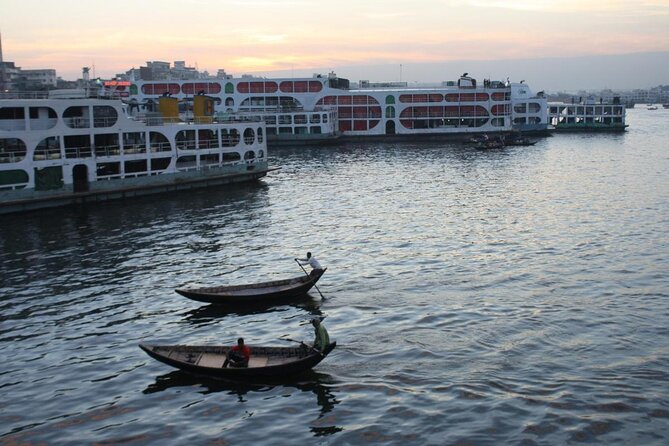
The big finale is Sadarghat, one of the busiest river port areas described on the Buriganga. You start with a small rowboat ride on the river, then board a passenger ferry. The itinerary calls for a cruise night with a reserved sleeping cabin and common washroom facilities. That’s not luxury travel, but it can be a memorable way to understand Bangladesh as a river country—especially when you’re moving toward the south-west.
Day 3’s UNESCO path: Bagerhat and the Sixty Dom Mosque
Day 3 helps you connect the region beyond Dhaka through a heritage-focused detour. You transfer to the mosque city of Bagerhat for a daylong excursion by bus, with Sixty Dom Mosque listed as a UNESCO World Heritage Site. The day starts with a ferry transfer option depending on where your route anchors, then shifts to local movement described as via tuktuk and rickshaws.
Sat Gumbad Mosque is also included, and the combination matters: you’re not only seeing one famous structure, you’re getting a cluster that shows how 15th-century mosque design shaped the city. If you’re the kind of traveler who likes to compare styles rather than just collect stamps, this is a good day.

The Sundarbans reality check: shared-group boats, tigers, and cabin comfort
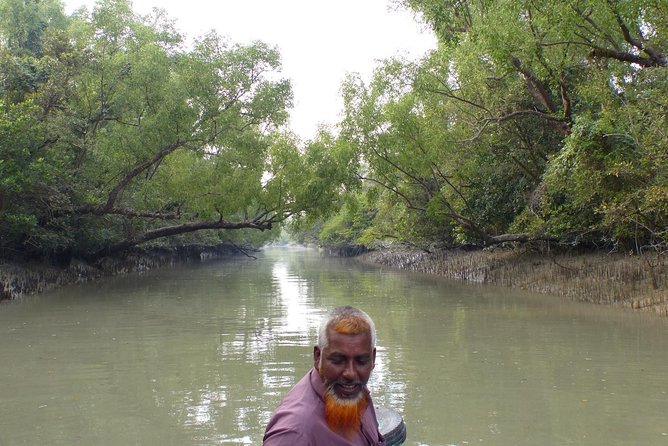
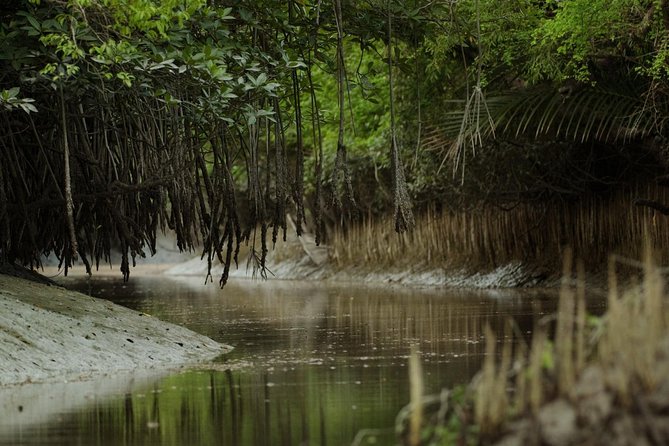
This is the heart of the trip, and the way it’s described is practical enough to plan around. The Sundarbans segment is a 2 nights/3 days forest trip inside the UNESCO-listed mangrove area. You’ll spend time gliding through narrow creeks and canals on a mix of wooden rowboats early and late in the day, with wildlife searching tied to those quiet hours.
The schedule includes trekking and watching wildlife from an observation tower. You’re told the goal is to look for the Royal Bengal Tiger and other wildlife and birds, but you should treat tiger spotting as a bonus rather than a promise. The route’s value is that you’re there when conditions and light are best for seeing animals.
Logistics are where you’ll feel the difference. The forest trip is described as a shared group tour with accommodation on board, full-board meals, and on-the-ground support including a government forest gunman and a common guide. Your motorboat has sleeping cabins that are non air-conditioned with common washroom facilities, and you’re told fresh water for shower is provided.
Timing also matters. Sundarbans trips are operating on a Friday through Sunday shared-group schedule, and the forest department closure is listed as April to August. If you’re traveling in those months, you won’t get the same Sundarbans experience, and the guide is expected to arrange alternative activities, though the specifics aren’t laid out here.
Rajshahi by train: Puthia’s temple village pace
After the forest intensity, Day 7 slows things down in a good way. You depart for Rajshahi by train in the morning, arriving around noon, and then shift to Puthia Temple Complex, described as the Temple Village of Puthia. The afternoon visit is framed as an archaeology-important stop filled with Hindu temples.
This day is a good fit if you’re traveling for architecture and atmosphere rather than only for big museum names. You also get an overnight in Rajshahi, which is a relief after the on-boat rhythm of the Sundarbans segment.
Padma morning market energy and Kusumba Mosque stones
Day 8 starts with a morning visit along the Padma River, with time to walk and take photos. That quiet river start is paired with a practical market stop: Saheb Bazaar, described as a local wholesale market that starts very early with rush before noon. If you like watching how daily supply chains work—people, shelves, bargaining rhythms—this is the kind of stop that brings a city to life.
Then comes Kusumba Mosque, described as a medieval stone-built mosque and noted as one of two stone-built historic mosques in Bangladesh. The itinerary includes a moment at a street-side market on the way, which helps break up the drive.
Somapura Mahavihara UNESCO: Buddhist monastery at full scale
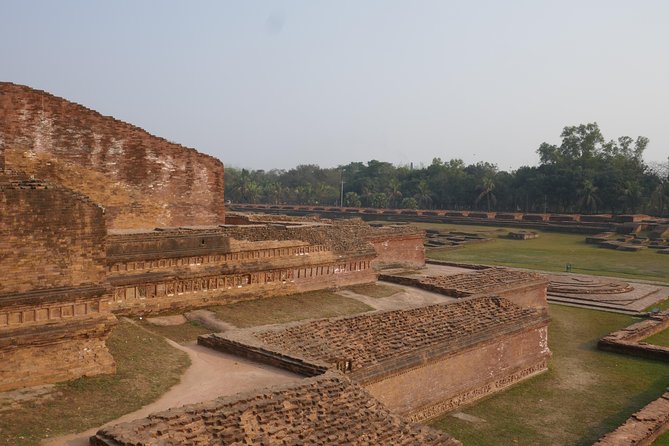
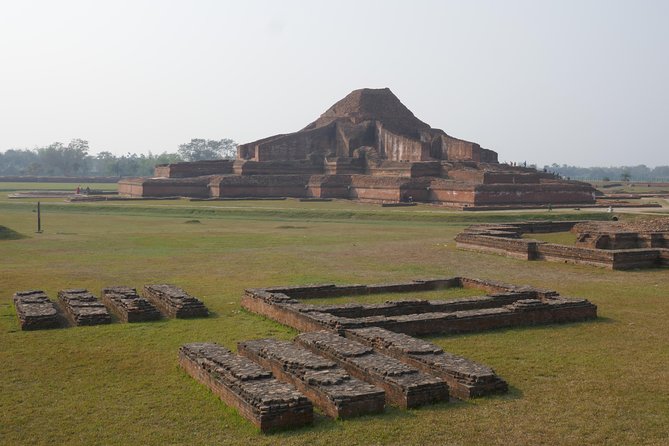
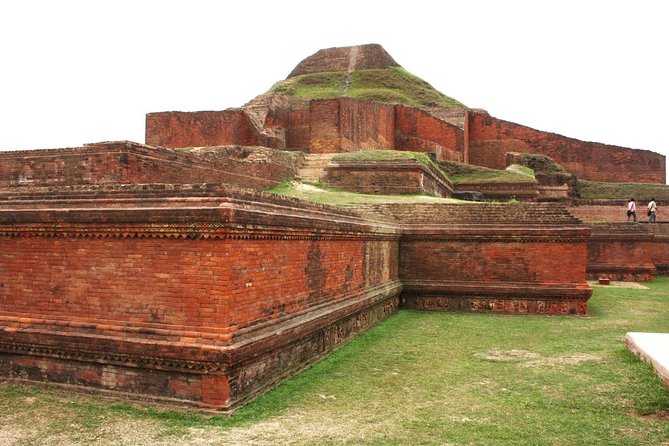
The Day 8 anchor is Sompura Mahavihara, a UNESCO World Heritage Site. You’re told it’s an 8th-century Buddhist monastery and was the single largest Buddhist monastery on the southern part of the Himalaya, associated with the ancient Vareendra territory.
This is one of those sites where scale hits even if you’re not an archaeology expert. The visit duration on your day is longer than the mosque stops, which is a good sign: it’s given room for you to see the main layout and understand why it mattered.
Mahasthangarh and the drive back to Dhaka on Day 9
Day 9 begins with Mahasthangarh, described as a ruined city of the ancient Pundravardhana kingdom from the 3rd century BC. Even as ruins, this is presented as the oldest known city of Bengal, so it fits the tour’s theme: moving outward to understand Bengal’s deep layers.
After Mahasthangarh, you drive back to Dhaka by highway recline coach (SIC). You arrive late afternoon or in the evening, and there’s an optional detour if time permits: Atia Mosque in Tangail, described as built in 1609 during Mughal Empire. The itinerary warns this may require replacing bus twice, so treat it as a timing gamble.
Price and value: what $1,450 really buys on this route
At $1,450 per person, the big question is whether you’re paying for experiences or for distance. On this plan, you’re paying for both—but the value hinges on the included parts.
Here’s what stands out as genuinely costly to arrange on your own:
- Accommodation for 5 nights in choice hotels plus 1+2 nights on board.
- A guided, historian-led route with entry fees and tickets included as per itinerary.
- Sundarbans forest permissions and the structured 2 nights/3 days forest trip with full-board, government forest gunman support, and onboard lodging.
- Multiple meals spread across the trip: 7 breakfasts, 5 lunches, 4 dinners.
Where your money might feel stretched is the pace. There are long travel segments: ferries, buses, and daylong drives, plus walking in markets and religious areas. If you prefer slower days with fewer handoffs, you’ll feel the schedule.
There’s also a trust factor to acknowledge. The rating given is mixed, and one past guest described the company as unresponsive and leaving them without a tour. Another complaint said the trip felt very simple and was too expensive for the offered level. That doesn’t prove your trip will go wrong, but it does mean you should plan to confirm key details early and keep your own copies of reservations.
Should you book this World Heritage tour of Bangladesh?
I’d recommend it if you want a structured Bangladesh heritage route that hits UNESCO sites without you doing the heavy planning. This is especially good for travelers who like variety: monument-and-museum days in Dhaka, medieval fragments in Sonargaon and Bagerhat, wildlife-focused days in the Sundarbans, then temples and ancient cities around Rajshahi.
I’d think twice if you’re expecting air-conditioned comfort throughout—your on-board Sundarbans cabin is described as non air-conditioned with common washrooms. I’d also be cautious if you rely on fast communication from the operator, since one reported incident was serious enough to raise a red flag.
If you book, do two things that make a difference: keep a close eye on the day-of-week closures mentioned (National Museum on Thursdays, Lalbag Fort on Sundays), and be mentally ready for shared-group parts during the Sundarbans segment. For the right traveler, this is a powerful way to see Bangladesh’s heritage in one coherent loop.
FAQ
What time does the tour start each day?
The tour start time is listed as 8:00 am.
Is this tour private or shared?
It’s described as private, meaning only your group participates, but the Sundarbans forest trip is specifically a shared group tour.
What meals are included?
The itinerary lists 7 breakfasts, 5 lunches, and 4 dinners included.
How long is the Sundarbans forest trip?
The tour includes a 2 nights and 3 days Sundarbans forest trip.
When is Sundarbans available, and when is it not?
Sundarbans trips are not available April–August due to forest department closure.
Which UNESCO World Heritage sites are included?
The UNESCO sites included are the Sixty Dom Mosque (Bagerhat), the Sundarbans mangrove forest, and Somapura Mahavihara.
Does the tour depend on weather?
Yes, it’s described as requiring good weather; if canceled due to poor weather, you’ll be offered a different date or a full refund.