REVIEW · RIGA
Riga Jewish History Tour
Book on Viator →Operated by Armands Latvia Guide · Bookable on Viator
Riga holds stories you feel. This private tour strings together Jewish landmarks, Holocaust memorials, and Art Nouveau architecture, with time for your questions and respectful reflection. You’ll also get practical photo moments, not just facts, so the city’s details start to make sense fast.
What I like most is the Art Nouveau connection to Jewish life—especially the architect Mikhail Eisenstein and philosopher Isaiah Berlin—and how the guide explains what you’re seeing while you’re walking. I also really value the pace at the memorial sites, where you’re given real room to absorb what happened, rather than being rushed through. The main consideration: this is a heavy subject, and you should expect moments that feel deeply somber.
In This Review
- Key Points to Know Before You Go
- A 3 to 4 Hour Jewish History Route That Actually Makes Riga Coherent
- Art Nouveau Riga: Eisenstein, Isaiah Berlin, and Seeing the City Differently
- Latgale Suburb: Where the WWII-era Ghetto Feeling Still Shows
- Great Choral Synagogue Memorial: A Basement Fire and a Reckoning
- Rumbula Forest Memorial: The Scale of November and December 1941
- Riga Ghetto and the Latvian Holocaust Museum: Turning a Location Into a Story
- Riga Synagogue on Peitavas Street: Art Nouveau Meets Ancient Egyptian Motifs
- Price and Logistics: What You’re Really Paying For
- When This Tour Fits Best (and When to Consider Another Option)
- Should You Book This Riga Jewish History Tour?
- FAQ
- How long is the Riga Jewish History Tour?
- Is the tour private, and is it offered in English?
- Do I need tickets for the stops?
- Are there any extra costs on site?
- What time does the tour start, and how does pickup work?
- What should I wear, and do you provide head coverings?
- Can I cancel for free?
Key Points to Know Before You Go
- Private, Q&A friendly format, so you can ask follow-ups without feeling like you’re slowing a group down
- Art Nouveau + Jewish history links, including Mikhail Eisenstein’s work and a synagogue built in 1903–1905 with Ancient Egyptian motives
- Memorials where time matters, including Rumbula Forest’s 1941 killings and a longer, reflective stop there
- Free entry at every stop, but plan for required on-site donations (synagogue donation) and a €5 museum donation
- English-speaking guide (Armands) with a track record of being flexible when something is closed, like on Shabbat
A 3 to 4 Hour Jewish History Route That Actually Makes Riga Coherent
This tour works well if you want more than a checklist of famous sites. In a few hours, you’ll connect the dots between Riga’s Jewish community before World War II, the violent period that followed, and what survives today in buildings and memorials.
At $96.33 per person, it’s not a budget bus tour. But you’re paying for a private guide plus transportation, and that matters here. When the subject is history, context is everything. A good guide can turn a street corner or a memorial plaque into something you truly understand.
The schedule is tight enough to feel efficient, but not so tight that you feel hunted. The stopping times add up to roughly 3 to 4 hours, with free admission at each main site and driving between them.
One more practical note: pickup is offered, but you’ll need to wait outside your hotel or apartment, because the car isn’t allowed to park in Old Riga. If you’re staying just inside the historic core, this is usually easy—just build in a few minutes for the walk to the pickup spot.
You can also read our reviews of more historical tours in Riga
Art Nouveau Riga: Eisenstein, Isaiah Berlin, and Seeing the City Differently
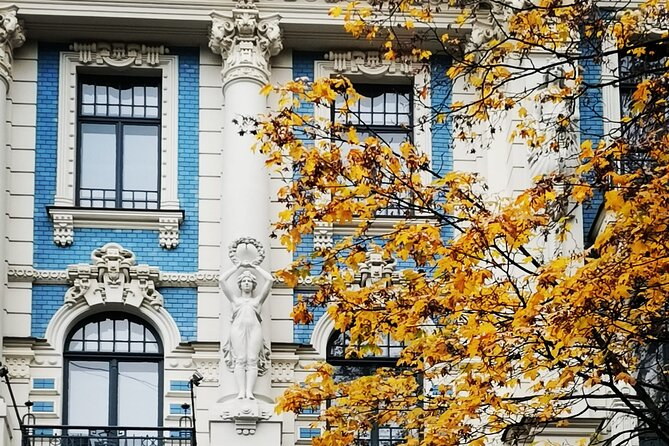
The tour starts in a part of Riga where architecture is doing historical work. Several buildings were designed by Jewish architect Mikhail Eisenstein. The point isn’t just that one famous name appears in the credits. It’s that you can stand in front of these facades and understand how Riga’s culture and Jewish community were intertwined.
One of the most interesting context nuggets here is that philosopher Isaiah Berlin was born in one of those buildings. That single detail changes how you look at the streets. Instead of Art Nouveau being just pretty shapes, it becomes part of a real human story—people, families, careers, and ideas.
You get about 30 minutes in this first area. That’s a sweet spot: long enough to frame photos, read a bit, and listen, without eating the whole morning.
Photo tip: bring your phone camera habits, not your tourist pressure. The guide’s explanations give you a reason to shoot—small carvings, window patterns, or the feel of the neighborhood—so your photos aren’t just random building shots.
Latgale Suburb: Where the WWII-era Ghetto Feeling Still Shows
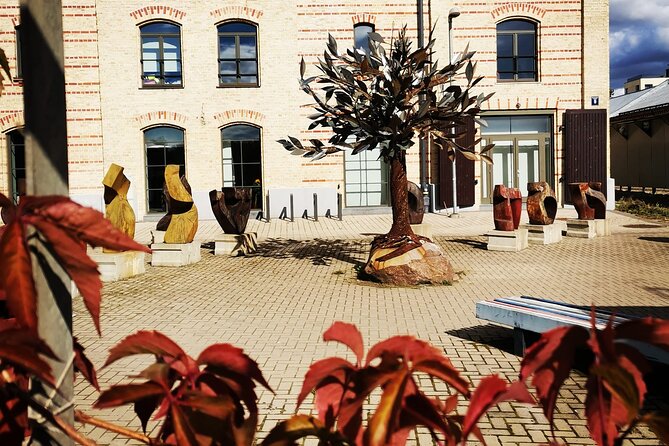
Next comes Latgale Suburb, which the tour frames as former territory of the Riga Jewish Ghetto. The key idea is not nostalgia; it’s visibility. Many buildings here still reflect the look and structure they had roughly 80 years ago during World War II.
You’ll have about 30 minutes for this walk-and-listen segment. It’s enough to register the atmosphere and connect it to what you learned in the first stop. But it’s also short enough that you’re not overwhelmed before the memorial sites.
What I think makes this stop valuable is the way it helps you understand the geography of fear. Later, you’ll hear about refugees, burnings, and mass killings. Seeing the neighborhood layout and the surviving building character makes those stories feel less abstract.
If you’re the type who likes architecture, you’ll enjoy this portion. If you’re not, it still gives you mental scaffolding for everything that follows.
Great Choral Synagogue Memorial: A Basement Fire and a Reckoning
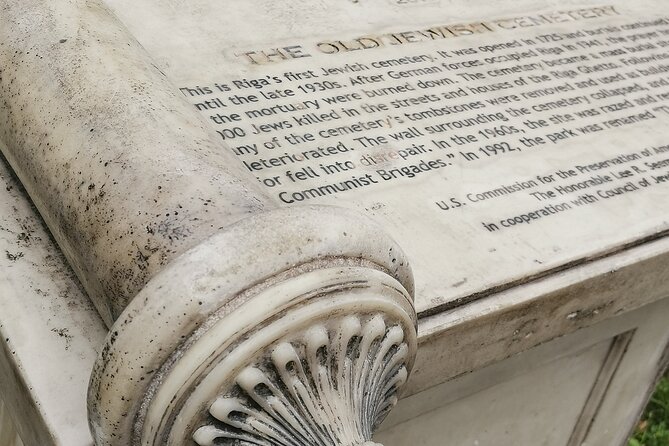
Then you shift to one of the most painful parts of Riga’s WWII story: the Great Choral Synagogue Memorial.
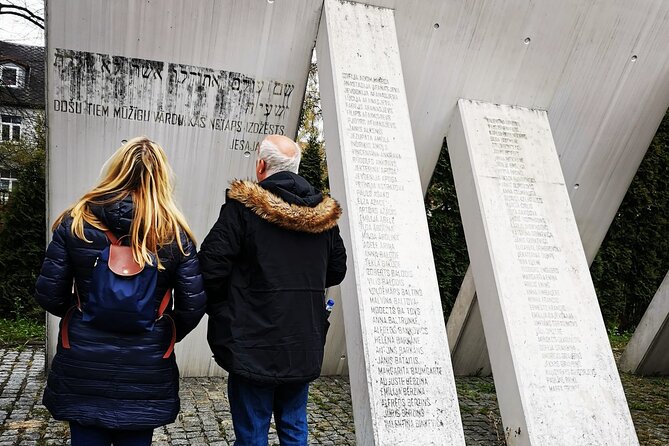
On July 4, 1941, more than 300 Jewish refugees from Lithuania and local Latvian Jews were herded into the basement of the synagogue, which was then intentionally burned to the ground. There’s now a memorial place marking what happened.
This stop lasts around 15 minutes, which is short, but it’s the right length for many people. You don’t need an hour to feel the weight of what’s being remembered. The guide’s job is to help you hold the facts while keeping your respect.
Practical consideration: if you’re sensitive to graphic history or you tend to get emotionally affected by memorials, give yourself a quiet moment before moving on. The tour’s flow is respectful, but it does move forward to more sites after this.
Rumbula Forest Memorial: The Scale of November and December 1941
After the synagogue memorial, the tour moves to the Rumbula Forest Memorial, and the tone changes from specific tragedy to large-scale atrocity.
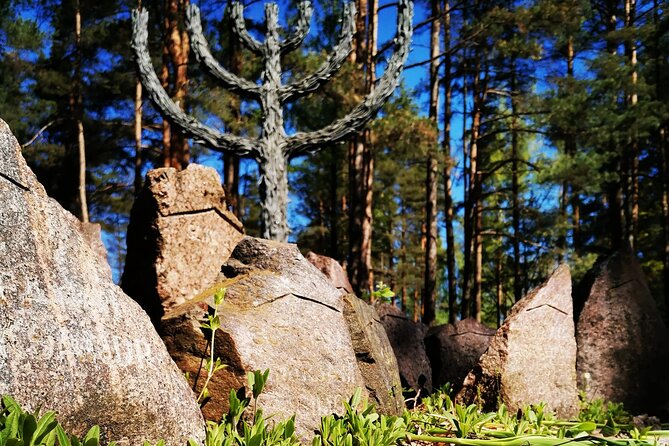
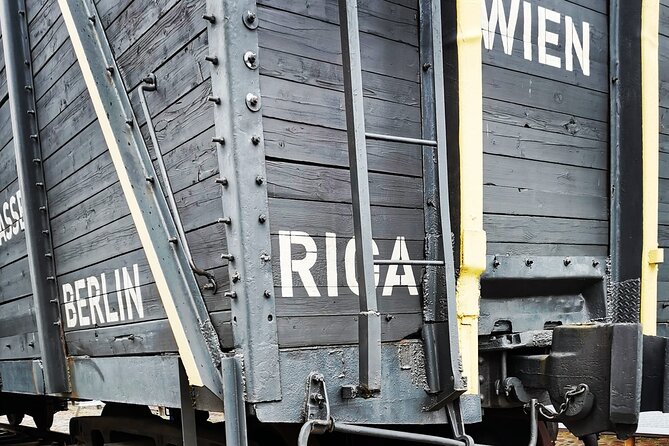
In November 1941, Nazi authorities decided to exterminate Jewish prisoners of the Riga ghetto. During events on November 30 and December 8, 1941, more than 25,000 people were killed in the Rumbula forest, including about 1,000 Jews deported from Germany. A complete memorial was opened on November 29, 2002.
This stop is the longest at about 1 hour. That extra time matters. When the numbers are this large, your brain needs room to process what the memorial is pointing to. You’re not just hearing dates; you’re being asked to slow down and think.
I also like that this tour doesn’t treat the memorial as a quick photo op. The guide helps you connect the site to the human cost, and you’re given time to reflect without being rushed.
If you tend to walk fast when you’re nervous or uncomfortable, you might want to do the opposite here. Even though you’re on a guided route, you can still choose your pace.
Riga Ghetto and the Latvian Holocaust Museum: Turning a Location Into a Story
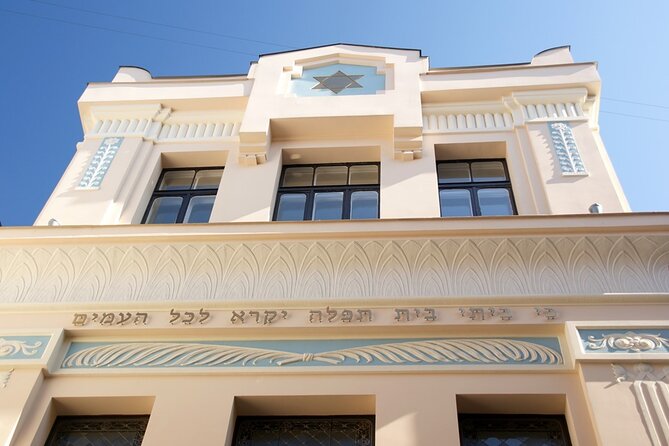
Next is the Riga Ghetto and Latvian Holocaust Museum, described as a window into the Riga ghetto story, the Holocaust in Latvia, and Jewish life in Latvia before the Holocaust.
You’ll spend about 30 minutes here. That’s not enough time to read everything if you’re a slow, deep reader, but it’s enough time to get the narrative thread and then decide what you want to see on your own if you return later.
A key value of this stop is that it helps you place earlier scenes into a broader timeline. You’ll have already seen the architecture links and some ghetto geography, so the museum becomes the explanatory backbone.
Money note (important): museum entry is free through the tour format, but there is a required donation of €5.00 per person for the museum. That donation supports the work of keeping the story accessible.
If you like buying a book after learning, you’ll probably appreciate the chance to take something home for later reading. It’s the kind of add-on that helps history stay with you after the tour ends.
Riga Synagogue on Peitavas Street: Art Nouveau Meets Ancient Egyptian Motifs
The final stop is the Riga Synagogue on Peitavas Street, one of Riga’s Art Nouveau architectural jewels.
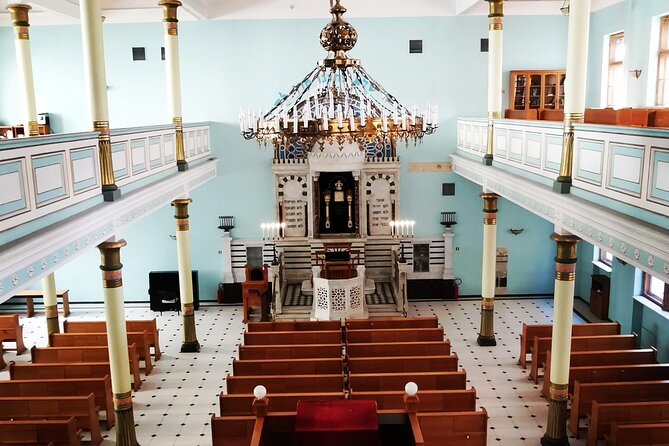
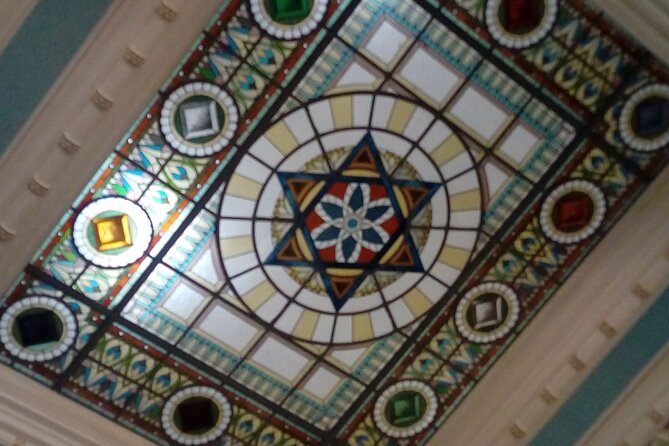
It was built 1903–1905 and designed in Art Nouveau style with Ancient Egyptian motives. That mix sounds odd until you see it. Then it clicks: Riga wasn’t copying one style. Jewish community life and European architecture trends could overlap in surprising ways.
You’ll have about 45 minutes here, and that extra time is well used. You can look closely, ask questions, and understand why donations are part of keeping important sites functioning.
Donation note: there’s a donation for the synagogue required on site. The amount isn’t stated in the tour info, so plan for cash or card depending on what the site accepts.
Practical detail: the tour provides a kipa if you don’t already cover your head with a cap, hat, scarf, or other covering. Dress code is flexible—any clothing is fine as long as it’s not naked—so you don’t need to stress about outfits.
If you care about photos, this is also your best chance for architectural images with a strong cultural explanation behind them. You’re not photographing a facade; you’re seeing a building with layered meaning.
Price and Logistics: What You’re Really Paying For
Here’s how I’d think about value for a tour like this.
You’re paying $96.33 per person for a short, focused window into major sites. The biggest value is the pairing of transport + guided interpretation. Riga’s Holocaust memorials and synagogue sites are meaningful, but they’re also easy to misunderstand if you only have a brochure. A guide helps you connect dates, names, and locations—especially when you’re moving between architectural areas and remembrance sites.
Also, entry at the listed stops is free in the context of the tour, but donations come up in two places:
- Synagogue donation required on site
- Museum donation €5.00 per person
That means your final cost may be higher than the headline price. Still, these are normal support costs for the institutions involved.
Group size is only your group, because it’s a private tour/activity. That usually makes the pace feel more human. If you want extra time at a memorial to read slowly, you can ask for it. If your questions go off track, you can bring them back without the awkwardness of a full van behind you.
One more helpful detail: the tour offers group discounts and uses a mobile ticket. So if you’re coming as a small group, it’s worth checking that pricing is adjusted.
When This Tour Fits Best (and When to Consider Another Option)
This tour is best for you if you want:
- A structured route that links Art Nouveau Riga to Jewish life and later tragedies
- A guide who will answer questions and adjust your timing so you don’t feel rushed
- A balance of outdoor memorial sites and an indoor museum stop
It may be less ideal if you want a light, casual walk. This route deals with genocide, burning, and mass killings. It’s respectful, but it won’t feel like a relaxed sightseeing day.
Also keep in mind the tour is flexible around closure situations. For example, if you book on a Saturday, some things can be closed for Shabbat. In that case, the guide can shift to another point of interest so you still get a full experience.
Should You Book This Riga Jewish History Tour?
If your goal is understanding—not just checking boxes—this is a strong choice. The route is well balanced: architecture for context, ghetto-area geography for placement, and memorials plus a museum for the narrative you can’t get from photos alone.
Book it if you:
- Want a private, English-speaking guide (Armands) who handles questions with care
- Are okay with a serious, reflective tone
- Can handle on-site donations for the synagogue and a €5 museum donation
Skip it if you’re looking for a quick, cheerful city highlights loop. This tour is about memory and meaning, and that deserves your attention.
FAQ
How long is the Riga Jewish History Tour?
It runs about 3 to 4 hours.
Is the tour private, and is it offered in English?
Yes. It’s a private tour/activity and is offered in English.
Do I need tickets for the stops?
Admission tickets for the listed stops are free as part of the tour.
Are there any extra costs on site?
Yes. There is a donation required for the synagogue on site, and there is a €5.00 per person donation to the Riga Holocaust Museum.
What time does the tour start, and how does pickup work?
The start time is 9:00 am. Pickup is offered, and you should wait outside your hotel or apartment, since the car can’t park in Old Riga.
What should I wear, and do you provide head coverings?
Dress code is flexible (any clothing is fine as long as it’s not naked). A kipa is provided if your head isn’t already covered by a cap, hat, scarf, or other covering.
Can I cancel for free?
Yes. You can cancel for a full refund up to 24 hours in advance of the experience’s start time.