REVIEW · SAMARKAND
Samarkand City Tour: Ancient Domes & Timeless Stories
Book on GetYourGuide →Operated by Jonny Guide · Bookable on GetYourGuide
Samarkand’s domes grab you fast. This half-day tour threads sacred places and major monuments through Shah-i-Zinda and Registan Square, with stories you can actually remember. I love how the route mixes spiritual stops with big architecture moments, and you’ll get multiple photo windows in the places that define Samarkand.
I also like the human side: the guide experience can be very personal, with English that’s easy to follow and facts that go beyond a script. I’ve seen the tour described as energetic and friendly, including guide Jonny (and also Jahongir) sharing extra context and even taking short sitting breaks if you ask. The one drawback to plan for is heat and walking, since the day moves between sites and you’ll want your head covered.
You’ll meet next to the red Ziraat Bank ATM by the Shah-i-Zinda entrance complex, and the guide will be holding a paper with GetYourGuide branding. Bring a headscarf and plan to use the included water, since the schedule is tight enough that you don’t want to lose time to thirst or shade hunting.
In This Review
- Key things I’d highlight before you go
- Why this 4-hour Samarkand route makes sense
- Tomb of Saint Daniel and Khazreti Khizr Mosque: faith across time
- Shah-i-Zinda: the photo alley that also teaches you how to read Samarkand
- Siyob Bazaar: spice-and-sweets local life in the middle of monuments
- Bibi-Khanym Mosque: scale, legend, and a story you can picture
- Registan Square: the guided orientation and the time to linger
- Amir Timur Mausoleum: a powerful end to the story line
- Price and value: what $25 really covers
- What to bring and how to stay comfortable in Samarkand heat
- Who should book this tour, and who might not love it
- Should you book this Samarkand City Tour: Ancient Domes & Timeless Stories?
- FAQ
- How long is the Samarkand City Tour?
- What does the tour cost?
- What is included in the price?
- Are entry tickets included for museums?
- Where do I meet the guide?
- How big is the group?
- What languages are available for the guide?
- Do I need to bring a headscarf?
- What weather prep should I do?
- Is free cancellation available?
Key things I’d highlight before you go
- Small-group feel (up to 7 people) with room to ask questions without getting rushed.
- Sacred sites with multifaith meaning, starting at the Tomb of Saint Daniel.
- Shah-i-Zinda’s tiled mausoleums, with structured time and extra free time for photos.
- Registan Square in two parts: guided orientation plus time to linger and look.
- Amir Timur’s mausoleum as a strong finish, capped by a guided stop at the resting place.
Why this 4-hour Samarkand route makes sense
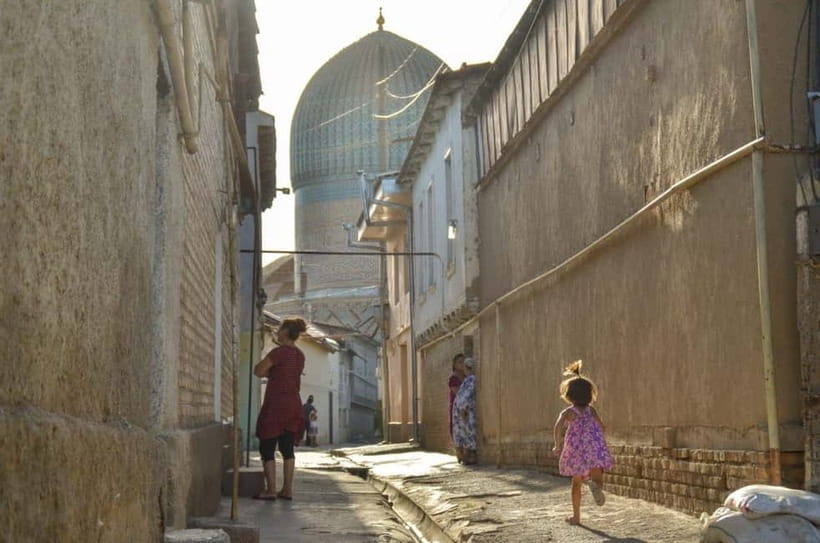
Samarkand can feel like three different cities at once: the monument city, the everyday city, and the spiritual city. This tour stitches them together in a way that’s easy to follow, especially if it’s your first day and you’re still figuring out distances.
You’re with a small group (up to 7), so you won’t spend half the time waiting for the slowest person to catch up. The pacing also includes short built-in gaps—free time chunks at a couple of sites—so you’re not trapped only in “follow the guide” mode.
Logistically, it helps that the tour begins at a very clear landmark: the red Ziraat Bank ATM in front of the Shah-i-Zinda entrance complex. The guide comes holding a GetYourGuide paper, which reduces the usual confusion of “where exactly do I stand?”
One more practical note: entry tickets to museums aren’t included. That doesn’t make the tour less valuable, but you should budget a little extra for any paid sites along the way, and avoid arriving with a zero-spare-cash plan.
You can also read our reviews of more city tours in Samarkand
Tomb of Saint Daniel and Khazreti Khizr Mosque: faith across time
The tour opens with a calmer kind of start—peace and reverence at the Tomb of Saint Daniel. Even if you’re not religious, I like how this first stop sets the tone: you’re not just chasing photos, you’re learning how Samarkand treats memory, holiness, and respect.
Next comes Khazreti Khizr Mosque, described as one of the oldest Islamic sites in Samarkand. You also get a chance to look out over the city from there, which matters because it helps your brain scale what you’re seeing. Monuments become easier to understand when you can tie them to the geography of the area.
What I think you’ll appreciate here is the multifaith angle. The tour frames these sites as places visited by people of different faiths, not as closed-off “only for believers” spaces. That creates a respectful atmosphere, and it makes the storytelling feel less like a lecture and more like cultural context.
Shah-i-Zinda: the photo alley that also teaches you how to read Samarkand
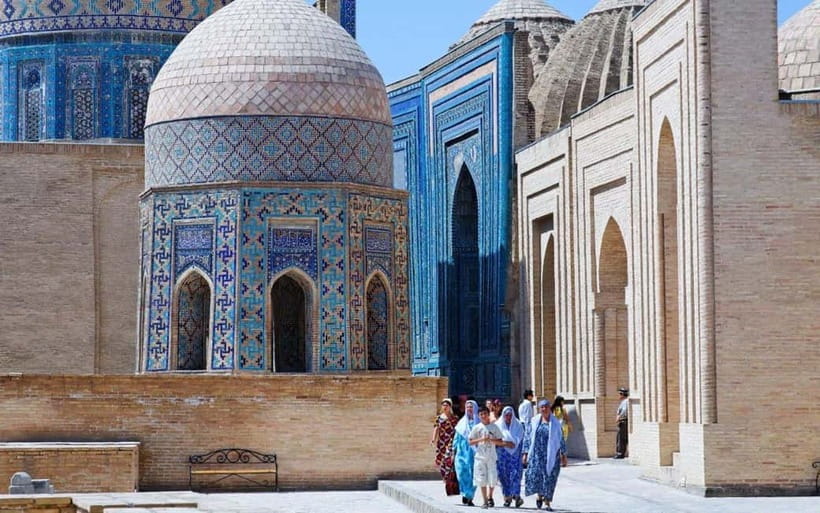
Shah-i-Zinda is the kind of place where your camera wants to work overtime. The famous tiled mausoleums line up like an illustrated history book, with each doorway and wall panel doing its own quiet job.
Here’s how the experience is structured in a smart way: you get a guided visit plus dedicated photo time, then later a free-time window. That mix is important. In the guided portion, you can learn what you’re looking at—how the space is organized, what details mean, and why the area holds such spiritual weight. In the free time, you can slow down for your own angles without feeling like you’re missing the “right way” to view it.
The tour also includes an additional walk back through Shah-i-Zinda afterward. That’s a clever touch, because it lets you re-see the same alley with different focus: first as architecture and story, then as atmosphere and light, with less pressure.
If you want to keep it comfortable in the heat, use those breaks wisely. Shade and water matter here, not just at the last stop. Bring sunglasses even if you think you won’t need them—you’ll thank yourself when the sun bounces off the tiles.
Siyob Bazaar: spice-and-sweets local life in the middle of monuments
One of the nicest surprises in this tour concept is the inclusion of Siyob Bazaar. It shifts you away from “tourist monument mode” and into the sensory, everyday rhythm that makes Samarkand feel real.
You’ll spend time where spices, fruits, and traditional sweets are part of the scene. Even short bazaar time helps you understand the city as a living place, not a museum set. You’ll pick up little cues—what people buy, what smells dominate the air, and how daily trade shapes the vibe.
A practical tip: treat bazaar time as an opportunity to snack smart. Since the tour is only 4 hours, it’s better to plan for a quick bite rather than later trying to find a full meal between monuments.
Also, remember that bazaars can be crowded. Keep an eye on your belongings and expect some jostling, especially around stalls. It’s not unsafe by default—it’s just busy.
Bibi-Khanym Mosque: scale, legend, and a story you can picture
Bibi-Khanym Mosque is one of those monuments where scale hits you before the details do. The tour gives you a walking transition to it, plus both guided time and free time. That matters because big mosques often require two kinds of attention: first to understand the overall layout, then to notice the smaller elements.
You’ll also hear the famous story tied to the mosque—about a queen, an emperor, and a kiss that shaped its history. Whether you love legends or you prefer strict dates, this kind of storytelling helps you remember the architecture. A building stops being an object and becomes a piece of social history.
This is also a spot where your headscarf comes into play. If you plan to respect local rules, it makes the visit smoother and less stressful. Even if you’re unsure, having it already sorted saves time.
The free-time windows here are useful for two reasons. One: you can take photos without the group moving on. Two: you can just sit for a moment and let the place absorb you—because the mosque’s size can be overwhelming if you’re sprinting through.
Registan Square: the guided orientation and the time to linger
Registan Square is Samarkand at its most recognizable. Expect it to be one of your strongest photo stops, but the value isn’t only visual. The tour includes guided time to help you understand what you’re seeing, plus extra free time afterward so you can decide how long you want to stay in the moment.
Why the two-part approach works: in guided time, you get the basics that turn the square from “pretty buildings” into “a designed political and spiritual center.” Then, during free time, you can test your own theories. Look for symmetry, notice the textures, and try different viewpoints until the square clicks for you.
In hot weather, I’d treat the free time as your chance to reset. Find shade if you can, drink water, and step back from the densest crowd pockets if you need breathing room. The architecture will still be there.
Also, keep your phone battery in mind. This is the kind of place where you might keep snapping even after you’ve already captured the postcard shot. A quick pause can save you from running out of charge right before the finish.
Amir Timur Mausoleum: a powerful end to the story line
The tour finishes at the Amir Temur Mausoleum, where Tamerlane rests beneath a stunning jade tombstone. Ending here works because it ties the whole itinerary together: you start with sacred reverence, you move through Islamic history and architectural storytelling, and you end with a conqueror whose legacy is literally carved into the city’s memory.
You’ll get another guided stop and then free time to look at the mausoleum at your own pace. That’s the best time to slow down. If you’ve been collecting facts earlier, this is where they start to feel coherent. If you mostly came for beauty, you can still appreciate the craft without feeling behind on context.
One reason I like tours that end with a “final anchor” like this: it prevents the common problem of leaving the biggest site with no energy left. Here, you reach the centerpiece before fatigue fully takes over.
Price and value: what $25 really covers
At $25 per person for about 4 hours, this tour is priced for people who want key sights without the stress of piecing everything together on your own.
What’s included is straightforward and helpful: a guide, water, and a tourist map. Those three items matter in practice. The guide helps you read the places. The water keeps the schedule from collapsing under heat. The map helps you navigate afterward, which is useful when you want to continue exploring independently.
What’s not included: entry tickets to museums and personal expenses. So if you know you’ll want additional paid interiors, or you’re planning on buying snacks, plan to spend a bit more than the base price.
Given the small group size and the number of major stops—Shah-i-Zinda, Bibi-Khanym Mosque, Registan Square, and Amir Timur’s mausoleum—this is good value if you want structure. If you already feel totally confident navigating and you prefer self-paced wandering, you might spend less by doing things alone. But you’ll lose that guided “what you’re looking at” benefit.
What to bring and how to stay comfortable in Samarkand heat
This tour is built for walking and sunlight, so heat planning isn’t optional. The basic kit is simple: sunglasses, hat, and water are recommended, and a headscarf is required.
I’d also suggest comfortable shoes. The route moves between sacred sites and major monument areas, and the timeline is short enough that you can’t afford long detours.
A small-group format is great for comfort too. One of the standout notes from guide feedback is that you can request a sitting break when you need it. That’s smart travel support, not just friendliness, and it can make a difference if you’re sensitive to heat or just need a few minutes to reset your legs.
Who should book this tour, and who might not love it
This tour fits best if you want:
- guided context for Samarkand’s sacred and monumental sites
- a compact route with time for photos and short pauses
- a guide who can answer questions in multiple languages (English, Russian, Uzbek)
- a small group experience that doesn’t feel chaotic
You might want a different plan if:
- you hate walking between sites in heat
- you want a very long bazaar hangout day (this tour includes bazaar life, but it’s not positioned as a full shopping spree)
- you’re mainly interested in museum interiors that require paid entry beyond what’s included
If you’re visiting for the architecture and the layered stories, this tour makes a strong first impression.
Should you book this Samarkand City Tour: Ancient Domes & Timeless Stories?
I’d book it if you’re trying to make your time count in a short visit. The biggest strengths are the combination of sacred sites and monument highlights, plus the fact that the guide experience can be interactive and friendly in a small group setting.
Before you go, do two things: bring your headscarf and plan for heat. Also budget a little extra for entry tickets if you expect to pay for museum-type spaces.
If you want a guided Samarkand overview that doesn’t waste your time, this one earns a spot on your schedule.
FAQ
How long is the Samarkand City Tour?
The tour lasts 4 hours.
What does the tour cost?
It costs $25 per person.
What is included in the price?
The price includes a guide, water, and a tourist map.
Are entry tickets included for museums?
No. Entry tickets to museums are not included.
Where do I meet the guide?
Meet next to the red Ziraat Bank ATM in front of the entrance of the Shah-i-Zinda Mausoleum complex. The guide will be holding a paper with GetYourGuide branding.
How big is the group?
The tour is a small group limited to 7 participants.
What languages are available for the guide?
The live guide speaks English, Russian, and Uzbek.
Do I need to bring a headscarf?
Yes. A headscarf is recommended/required to bring, especially for sacred sites.
What weather prep should I do?
The weather will be hot, so it’s recommended to bring sunglasses, a hat, and water.
Is free cancellation available?
Yes. You can cancel up to 24 hours in advance for a full refund.