REVIEW · ST AUGUSTINE
1 Hour Historical Tour of Saint Augustine Florida & FREE Parking
Book on Viator →Operated by Pineapple Ride & Tour · Bookable on Viator
Some cities make you choose between seeing enough and seeing it well.
This one-hour ride is built for getting your bearings fast—with a guide narrating the big moments as you cover more ground than foot traffic allows.
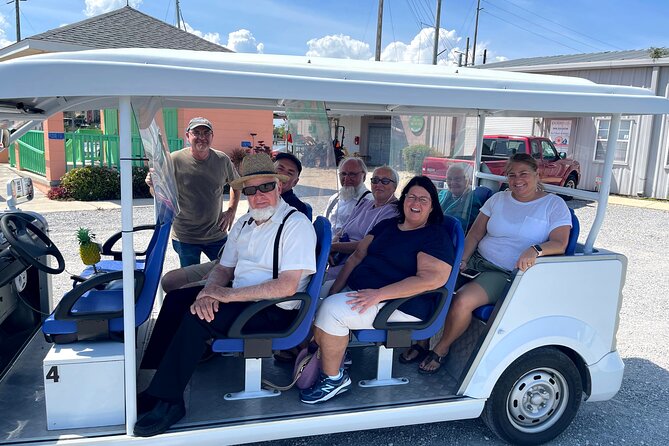
I really like the small group size (max 10) and the open-sided vehicle setup, which makes it easier to spot details as you roll through the historic district. I also love how the route mixes major landmarks with the kind of stories you usually only hear after hours of reading.
One thing to keep in mind: it’s still a one-hour tour, so you’ll mostly be viewing landmarks from the route (plus occasional quick stops), not doing deep museum time.
In This Review
- Key highlights I’d plan around
- Why a one-hour golf-cart tour works in St. Augustine
- Meeting at 134 Riberia St and choosing the right start time
- What the guide actually does while you roll through downtown
- Stop-by-stop: from Henry Flagler to the Bridge of Lions
- Old houses, the Old Treasury-style building, and street-level secrets
- Flagler’s family burial and the fort that shaped the battles
- Lincolnville’s black history and the Seminole connections with Osceola
- Nights of Lights, the tallest building, and the older shops you can spot later
- Value at $48: what you get for your hour
- Who should book this tour (and who might want something else)
- One smart booking tip if you want to avoid stress
- Should you book this historic tour?
- FAQ
- How long is the historical tour of St. Augustine?
- What does the tour cost?
- Where does the tour start?
- Will I be able to park easily?
- Is the tour in English?
- What kind of ticket do I get?
- How many people are on the tour?
- Are service animals allowed?
- What if the weather is bad?
- Can I cancel for free?
Key highlights I’d plan around

- Open-sided ride + tight-street access so you see more than the bigger vehicles can reach
- Small group (max 10), which keeps questions from getting lost
- Fort Castillo San Marcos, Flagler sites, and Lincolnville all in one loop
- Two-toned Old Treasury-style architecture and other “look closer” buildings
- Nights of Lights stop and the bridge area tied to Pride of Dixie
- Guides like Ryan, Meghan, Reggie, Megan, Patty, and Garry bring different pacing and personalities
Why a one-hour golf-cart tour works in St. Augustine
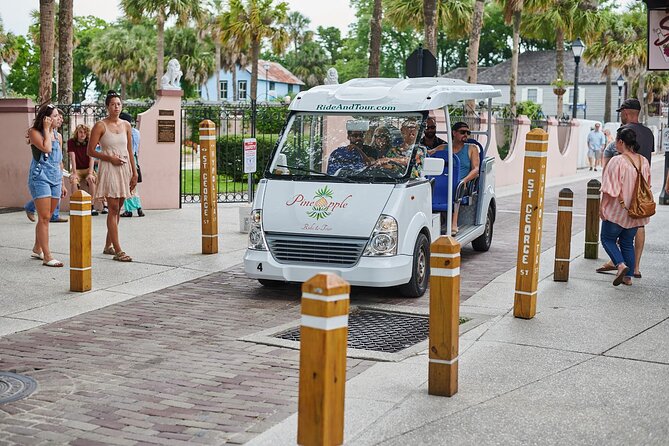
St. Augustine’s historic core is charming, but it can also be a maze. Walking is great when you have time, yet it also burns daylight fast—especially if you’re trying to cover Flagler-era buildings, forts, cemeteries, and older homes in one day. This tour is designed to solve that problem: you ride through the downtown area while a guide tells the stories, so you leave with a clearer mental map.
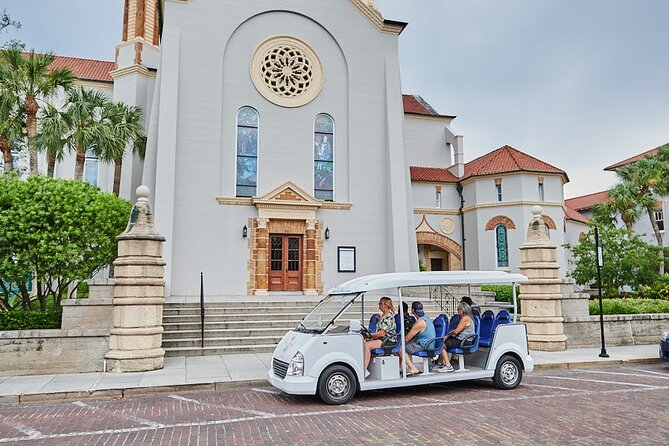
The vehicle matters. You get open sides for better viewing, and because it’s built for the small streets, you can reach spots larger trams can’t. That also helps with parking stress. The tour includes free parking, which is a big deal in a place where finding a space can turn into a time tax.
There’s also a practical bonus: you’re not locked into one pace. The tour offers multiple departure times, which helps if you’re traveling with kids, or if you want to dodge the hottest part of the day.
You can also read our reviews of more historical tours in St Augustine



Meeting at 134 Riberia St and choosing the right start time
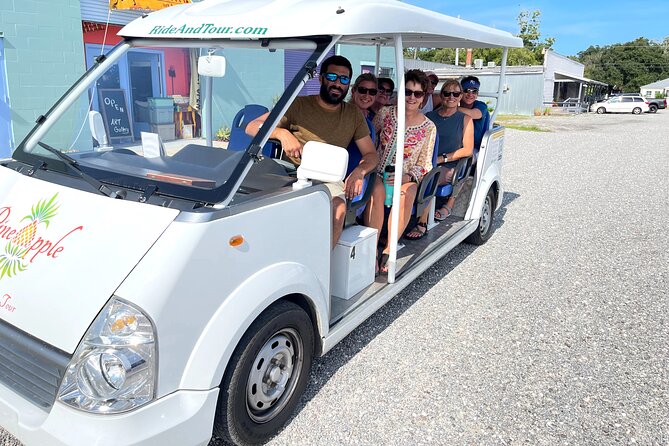
You’ll meet at 134 Riberia St, St. Augustine, FL 32084, and the tour ends back at the same point. That “round-trip to the same spot” design is underrated. It makes the rest of your day easier to plan, whether you’re heading to a meal, a walk along the waterfront, or one more stop on your own.
The tour runs about 1 hour. The provider uses mobile tickets, and the tour is offered in English. Service animals are allowed, and it’s near public transportation, which can be helpful if you’re not bringing a car or don’t want to fight traffic after the tour.
When I’m trying to pick a time, I think about two things: light and comfort. This experience depends on good weather, so if the forecast looks rough, plan to adjust. On cooler days, you may appreciate the added comfort touches—there are references to fleece blankets—so layering up is still smart.
What the guide actually does while you roll through downtown
A big part of the value here is the guide’s role. This isn’t a “point-and-pronounce” drive. You get a narrated route where the guide ties each place to a story you can remember later.
In practice, it works like this: you pass a landmark, the guide explains what it was used for, who shaped it, and why it matters to how St. Augustine developed. Since you’re on an open-sided vehicle and the group is small, you can ask questions without waiting for the moment to pass.
Guides I’ve seen associated with this tour include Ryan, Meghan, Megan, Reggie, Patty, and Garry. The common theme across them is personality plus local storytelling, not just dates. One of the best signs that a tour will land well is when the guide can flex—slowing down when people want more detail and keeping energy up when the route calls for it.
Stop-by-stop: from Henry Flagler to the Bridge of Lions

The tour starts with Historic Downtown’s highlights, with the guide guiding you from place to place so you see a wide range of St. Augustine’s most recognizable sites in a short time.
One early highlight is Henry Flagler’s second hotel, the Hotel Alcazar, which today is home to the Lightner Museum. Flagler is a key thread in St. Augustine’s later boom, and this stop gives you the foundation: you’re seeing how grand development shaped the city’s identity, not just a pretty building from the outside.
Next, you’ll learn about the Catholic Diocese here in St. Augustine and the Catholic Church’s role in the city and beyond. This matters because St. Augustine’s story isn’t only colonial battles and sea trade. It’s also institutions—religious, civic, and social—that influenced daily life for generations.
From there, you’ll get a “where it all began” moment tied to the founding of the city. It’s the kind of landmark story that helps you understand why later buildings and fortifications make sense where they do.
Then comes one of the most “easy to photograph, hard to ignore” areas: you pass (and hear about) the Bridge of Lions, once called the Pride of Dixie. The narration covers the bridge’s founding and also its renovations. That’s a detail I love on tours like this: you’re not only seeing what exists today—you’re learning why it looks the way it does now.
As you continue, you’ll also pass or drive by historic crossing points and viewpoints the guide uses as the route shifts. It’s a smart way to show you how the city connects without forcing you to walk every segment.
Old houses, the Old Treasury-style building, and street-level secrets

If you like architecture, this route is built for you. You’ll see both of the oldest houses on the tour, with the guide explaining that there’s more going on than what you’d catch from a quick glance. This is where the vehicle helps again: you can take in the streetscape, then let the narration point out the details you might miss on your own.
You’ll also learn about a building that used to function as a treasury during colonial times, including its two-toned architecture. Two-tone design in old buildings usually has a story behind it—materials, phases, or function—and hearing it while you’re right there makes it easier to recognize later when you’re exploring independently.
Another perk on this tour is how often the guide cues you to look for “use” and “purpose,” not just appearance. For example, you’ll get multiple narrated stops tied to historical uses of buildings, including what one structure was originally used for and the secrets that come with that.
There’s also an area connected to the night of lights celebration, where the tour notes that the celebration keeps going. Even if you’re not visiting during the event itself, it’s a great way to understand how a modern tradition grew out of a city that takes remembering seriously.
A few more St Augustine tours and experiences worth a look

Flagler’s family burial and the fort that shaped the battles
Flagler’s legacy doesn’t end with hotels. The tour includes a stop where Flagler and his family are buried, with stories tied to that area. This is the kind of detail that makes your day feel more complete—because you connect the money, ambition, and architecture to the people behind it.
And then you’ll get the military thread of the city’s story: you’ll see the fort and hear about its significant victories and battles. The tour specifically calls out Fort Castillo San Marcos and tells you about how soldiers were treated for injuries during battles there.
This is one of the strongest reasons to do the tour early in your trip. When you later see the fort on your own, you’ll already have the basics in your head: why it mattered, what it protected, and how the city’s defensive identity changed over time.
The tour also includes another “big landmark pass” connected to the Bridge of Lions area again in the context of stories and renovations. It’s not repeated for filler—it’s used as a reference point so the guide can connect eras across the loop.
Lincolnville’s black history and the Seminole connections with Osceola
St. Augustine’s history is layered, and this tour makes room for that. You’ll hear about Saint Augustine’s rich Black history and events that took place in historic Lincolnville. Lincolnville is one of the places you can’t fully understand without local context, and a narrated drive is a practical way to start.
After that, the tour connects you to Osceola and the Seminoles, including the history of who is buried there and stories tied to that site. Even if you only catch a few key points in one hour, you walk away with more respect for the complexity of the city’s past—and with names and themes you can follow up on if you want.
This part of the route is also a reminder of something useful: good history tours are not just about monuments. They’re about people, displacement, community life, and what happened after the headlines.
Nights of Lights, the tallest building, and the older shops you can spot later

As you continue, the route includes the Nights of Lights tradition again as a highlight area, then moves you toward some truly “St. Augustine specific” sightseeing cues.
You’ll see a stop described as featuring some of the largest single fired pieces of terracotta in the world, plus comparisons the guide uses to frame why that detail is impressive. It’s the kind of fact that’s easy to remember because it’s so specific.
The tour also notes the tallest building and shares its history. If you don’t catch everything, that’s fine—what matters is that you now know there’s a “top of the city” reference point you can look for while you explore on foot afterward.
You’ll also pass by an old drug store, connected to the Potter’s Wax Museum. That pairing makes sense: it’s one of those local stops that feels like a photo moment but also reflects how the city has entertained visitors over time.
Finally, there’s a stop for a building that’s described as officially the oldest house. It’s closed during the tour, but the guide still drives by so you can see what it looks like and hear the significance. This is smart planning: you don’t waste your hour stuck at a closed site, and you still get the storyline.
Value at $48: what you get for your hour
At $48 per person for about 1 hour, the value is in what the tour accomplishes in limited time. You’re paying for three things that add up: a narrated route, small-group pacing, and access to tight streets with easy parking included.
If you’re trying to cover a wide set of historic stops—Flagler, the fort, older houses, Lincolnville, and multiple “look closer” buildings—this is efficient. You also get a guide who can answer questions. That can save you time later, because you’ll know which places are worth returning to.
What it might not be best for: if you want to spend lots of time inside museums and houses. This tour is built for seeing and understanding from the route. You’ll likely still want a second day (or a longer visit) for any interior stops that catch your eye.
Who should book this tour (and who might want something else)
I think this works especially well for:
- First-time visitors who want context fast
- Families with teens and grandparents who need a short, attention-holding format
- Anyone who likes stories that connect architecture, religion, war, and local community history
- People who want a low-stress way to see the historic core without parking headaches
It may be less ideal if:
- You have very limited mobility and need to avoid any walking at short stops (the data says most travelers can participate, but it doesn’t say this is fully step-free everywhere)
- You’re hoping for a long, museum-style itinerary in one ticket
One smart booking tip if you want to avoid stress
There’s one practical lesson worth passing along. When tours are booked through third-party platforms, you can run into miscommunication issues. The provider’s advice is to book directly through their own website by searching for their business name, Pineapple Ride and Tour, instead of relying on a connection between platforms.
That’s not a reason to avoid the tour. It’s a reason to reduce avoidable friction before you drive in from out of town.
Should you book this historic tour?
If you want the quickest path to understanding St. Augustine, I’d book it. The one-hour format is a good fit when you’re balancing beaches, restaurants, and a few must-see landmarks. The route also covers a mix of themes—Flagler’s rise, Catholic roots, the fort’s battles, and Lincolnville and Seminole stories—so you get more than a single slice of the city.
I’d think twice only if you’re expecting a full day of museum time, or if you’re very sensitive to weather changes since the experience depends on good weather.
If you’re heading to St. Augustine soon, I’d go in with layered clothing, a short list of what you want to return to, and a willingness to let the guide set your mental timeline.
FAQ
How long is the historical tour of St. Augustine?
The tour lasts about 1 hour.
What does the tour cost?
It costs $48.00 per person.
Where does the tour start?
The meeting point is 134 Riberia St, St. Augustine, FL 32084, USA.
Will I be able to park easily?
The experience includes free parking.
Is the tour in English?
Yes, the tour is offered in English.
What kind of ticket do I get?
You’ll receive a mobile ticket.
How many people are on the tour?
The tour has a maximum of 10 travelers.
Are service animals allowed?
Yes, service animals are allowed.
What if the weather is bad?
The tour requires good weather. If it’s canceled due to poor weather, you’ll be offered a different date or a full refund.
Can I cancel for free?
Yes, there is free cancellation.