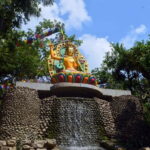
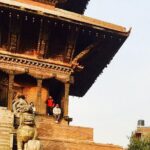
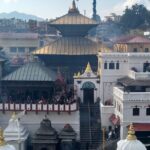
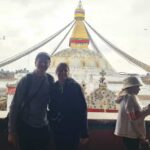
One day, four kinds of sacred. This Kathmandu heritage city tour is interesting because you pack big spiritual landmarks into a single organized circuit, including Pashupatinath, Swayambhunath, and the UNESCO-listed Kathmandu Durbar Square. I like the pickup + driver/guide setup that keeps your 9:00 am start from turning into a hunt for your group, and I also like the real-temple energy you get at Pashupatinath, where the holy Bagmati River is part of the story.
One thing to watch: entrance fees and meals are not generally included, so you’ll want a bit of cash and a simple lunch plan to avoid scrambling.
In This Review
- Quick hits you’ll feel right away
- Why this Kathmandu heritage loop works in 6–8 hours
- Meeting point pre-briefing at Mountain Rock Treks (and why that matters)
- Pashupatinath on the Bagmati River: sacred Shiva and real temple life
- Swayambhunath hill temple: the Sublime Trees name you can feel
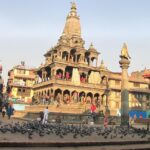
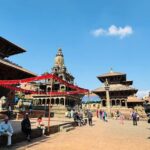
- Kathmandu Durbar Square (Basantapur): UNESCO palaces, courtyards, and shrines
- Price and logistics: what you’re really paying for (and what you’ll add)
- Service quality: what you should expect from Mountain Rock Treks
- Who this tour suits best (and who might not love it)
- Make it comfortable: simple prep for temples and city walking
- Should you book this Kathmandu City Full Day Heritage Tour?
- FAQ
- How long is the Kathmandu city heritage tour?
- What time does the tour start?
- Is pickup included, and where do we meet?
- Are food and drinks included?
- Are entrance fees included?
- Do I need passport details to book?
- What is the cancellation policy?
Quick hits you’ll feel right away
- Tight timing for a full day: about 6 to 8 hours, starting at 9:00 am.
- A guided circuit, not a self-guided maze: driver/guide included, plus a short pre-briefing at the office meeting point.
- Pashupatinath is free to enter (per the itinerary), and it’s one of the most intense spiritual stops in Kathmandu.
- Swayambhunath is hilltop and ancient: an old religious complex whose Tibetan name connects to trees on the hill.
- Kathmandu Durbar Square is UNESCO-linked: palaces, courtyards, temples, and shrines packed into one durbar square.
- Small groups: max 20 travelers, which usually means less waiting and more human-scale pacing.
Why this Kathmandu heritage loop works in 6–8 hours
Kathmandu can feel like a lot on day one. Traffic, new streets, and too many temples can turn “I’ll figure it out” into “why am I lost again?” This tour format helps because it’s built around a clear route and a clear time box: 6–8 hours, approx., and a 9:00 am start.
What makes it especially practical is that you’re not just hopping from one landmark to another. You’re moving through different layers of belief and city identity in a single day—Hindu devotion at Pashupatinath, Buddhist presence at Swayambhunath, and the royal-era history you see in Kathmandu Durbar Square. You get variety without having to plan three separate outings.
Group size matters too. With a maximum of 20 travelers, you’re less likely to be stuck behind a busload of people at every gate. And because pickup is offered, you start with less friction than many do-it-yourself city tours.
You can also read our reviews of more city tours in Kathmandu
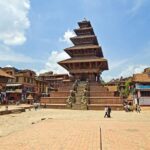
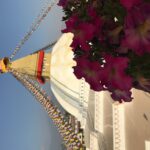
Meeting point pre-briefing at Mountain Rock Treks (and why that matters)
Your day starts with a short stop at Mountain Rock Treks And Expedition Pvt. Ltd., which acts as a meeting point for trip coordination and pre-briefing. The timing is tight—about 15 minutes—and admission tickets aren’t included for that first step.
That pre-briefing is more useful than it sounds. In Kathmandu, the first hours are where travelers most often lose time. Having a driver/guide lined up, a plan for what comes next, and a mobile ticket ready can mean you spend energy looking at temples, not sorting out logistics.
You’ll also see that the tour uses a mobile ticket. That tends to reduce the usual “where’s my paper voucher” chaos and helps you get going faster once you’re with your group.
Pashupatinath on the Bagmati River: sacred Shiva and real temple life
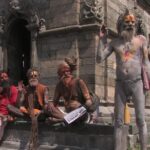
Pashupatinath is located on the eastern outskirts of Kathmandu on both banks of the holy Bagmati River. This is one of Nepal’s most sacred Hindu temples, devoted to Lord Shiva, and it draws thousands of pilgrims—so you’re not visiting a museum. You’re stepping into ongoing religious practice.
What I find powerful here is how the river is woven into the meaning. The temple is known for elderly devotees who come to spend their last weeks in the area, and the belief is that cremation on the banks of the Bagmati matters spiritually. The itinerary also notes the idea that if someone dies in Pashupatinath, they will be reborn as a human regardless of sins—and that astrologers tied to the temple predict the exact death day.
Practical note: Pashupatinath is listed as 2 hours, and the itinerary says admission is free. That’s a real value win, and it also helps you budget time because you’re not waiting on a paid ticket exchange.
Etiquette-wise, treat this as a working religious space. Keep your voice low, follow your guide’s lead on where to stand or walk, and avoid turning people’s ceremonies into a photo backdrop.
Swayambhunath hill temple: the Sublime Trees name you can feel
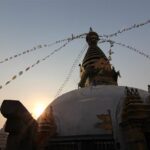
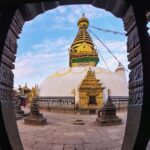
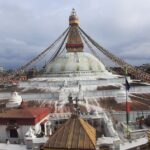
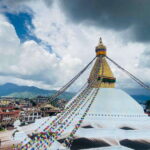
Swayambhunath is an ancient religious complex on a hill in the Kathmandu Valley, west of Kathmandu city. The Tibetan name is given as Sublime Trees, tied to the many varieties of trees found on the hill. That small detail helps you understand why this site feels grounded in its environment rather than floating above the city.
The stop is scheduled for about 1 hour, and the itinerary states admission tickets are not included. So budget for entry if your day’s plan includes paying at the gate.
What you should expect here is a mix of religious architecture, a hilltop setting, and a lot of movement in the surrounding area. Even if you’re not a temple expert, Swayambhunath is the kind of stop where you naturally slow down because there’s so much to look at—structure, carvings, and the busy flow of devotion around you.
A helpful way to prepare: wear something comfortable for walking on uneven ground and bring water. This is one of those places where you’ll naturally take more steps than the clock suggests.
Kathmandu Durbar Square (Basantapur): UNESCO palaces, courtyards, and shrines
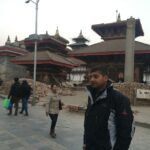
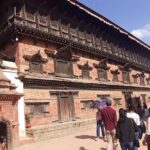
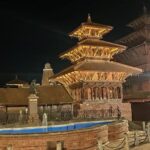
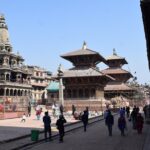
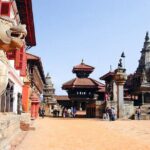
Kathmandu Durbar Square is one of the durbar squares of Kathmandu Valley, and it’s also connected to UNESCO World Heritage Sites through the group of durbar squares in the valley. It’s widely known as Basantapur or Basantapur Durbar Square.
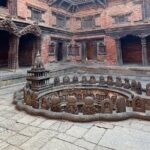
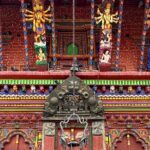
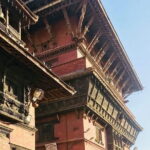
This is the “royal Kathmandu” stop. The area includes palaces from the Malla and Shah monarchs, plus courtyards, temples, and shrines. In practice, that means you’re not looking at one big building; you’re walking through a cluster of spaces that reflect centuries of rule, religion, and civic life.
Your schedule gives this stop about 2 hours. Admission tickets are not included, so again, have a plan for paying entry if the tour route requires it.
Why this square is worth your attention: it explains Kathmandu beyond postcards. When you see how many courtyards and shrines sit inside one durbar area, you start to understand the city as layered rather than simple—power and worship sharing the same ground.
If you care about photos, pace yourself. Durbar squares are busy, and it’s easy to block someone’s path without meaning to. Use your guide as your traffic controller and keep an eye on where people are flowing.
You can also read our reviews of more historical tours in Kathmandu
Price and logistics: what you’re really paying for (and what you’ll add)
The tour price is listed as $105.34 per person, with an approximate duration of 6–8 hours. For that cost, you get:
- Driver/guide
- Fuel surcharge
- Landing and facility fees
- Pickup is offered
- Mobile ticket
What’s not included:
- Food and drinks (unless specified)
- Entrance fees
- Tips for driver and guide
Here’s the value math I’d use when deciding. You’re paying for time-saving coordination and local guidance—basically, someone handles transportation and keeps the route sensible. Entrance fees and meals are the part that can vary a lot by your choices and the day’s exact access rules, so you should treat the base price as “tour delivery,” not “everything costed.”
A quick budgeting tip: plan a simple lunch or snack before you start, or carry a budget for food during breaks. The tour doesn’t promise meals, so don’t assume you’ll be fed like a long-haul bus tour.
Also, allow a little extra for tips if you want things to feel smooth at the end of the day. Tips for the driver and guide are explicitly not included, and in a day with walking and waiting, a fair tip is part of the relationship.
Service quality: what you should expect from Mountain Rock Treks
This experience is provided by Mountain Rock Treks And Expedition Pvt. Ltd., and it’s rated 5 based on five reviews in the available summary. That’s not a giant sample size, but it does suggest the company is hitting the basics: organization, welcome, and follow-through.
One practical theme that shows up in the feedback style is how much effort they put into making solo visitors feel comfortable. One response specifically names Ketan as a travel agent who provides local knowledge and helps travelers feel cared for from arrival onward. You can use that as a signal: if your booking includes an agent like that, expect real guidance rather than just a driver who drops you off and disappears.
The small-group limit (up to 20 travelers) also supports service quality. Less crowding usually means your guide can spend more time answering questions and directing you to the right viewpoint or walkway.
Who this tour suits best (and who might not love it)
This is a strong fit for:
- First-time Kathmandu visitors who want a structured heritage day
- People who care about religious life and historical monuments more than shopping
- Solo travelers who want pickup, a guide, and a sane pace
- Anyone who likes seeing how Hindu and Buddhist traditions sit side by side in the city
You might not love it if:
- You hate walking or uneven ground and want long, slow stops with rest breaks
- You want a very flexible schedule where you linger for hours in one place
- You’re expecting meals and all entrance fees to be included in the ticket price
Think of it like this: you’re buying a guided path through key sites. You’re not buying a “choose your own adventure” day.
Make it comfortable: simple prep for temples and city walking
You don’t need to overpack, but you do want to be practical.
- Wear shoes that handle worn stone and slightly uneven paths.
- Dress respectfully for temple areas. When you’re unsure, follow your guide’s lead.
- Carry water. The itinerary doesn’t list meals, and warm Kathmandu days add up.
- Keep your schedule flexible in your head. You’re in a place where ceremonies and crowd flow can affect timing.
One more small strategy: decide what you want to focus on for each stop. For Pashupatinath, focus on the relationship between temple life and the Bagmati River. For Swayambhunath, focus on the hilltop architecture and the overall feel of the complex. For Durbar Square, focus on courtyards and royal-era spaces rather than trying to photograph every corner.
That approach keeps the day from turning into constant “look, look, look,” and it helps you actually remember what each place taught you.
Should you book this Kathmandu City Full Day Heritage Tour?
I’d book it if you want a guided heritage day that hits major spiritual and historical anchors without you doing complicated planning. The biggest reasons are practical: pickup and a driver/guide, a time-efficient route (6–8 hours), and Pashupatinath having free admission listed in the itinerary.
I wouldn’t treat it as a “no-cost day.” Entrance fees and food aren’t included, so your real total cost depends on your choices. If you go in prepared—with some cash for entry and a basic lunch plan—you’ll enjoy the day much more.
Finally, if you care about feeling looked after in Kathmandu, this provider’s style seems geared toward that. If your contact includes someone like Ketan for local knowledge, you should arrive feeling more confident about where you are and what you’re seeing.
FAQ
How long is the Kathmandu city heritage tour?
It runs about 6 to 8 hours, approximately.
What time does the tour start?
The start time is listed as 9:00 am.
Is pickup included, and where do we meet?
Pickup is offered. You also meet at Mountain Rock Treks And Expedition Pvt. Ltd. for a short pre-briefing (about 15 minutes).
Are food and drinks included?
Food and drinks are not included unless specified.
Are entrance fees included?
Entrance fees are not included. Note that the itinerary lists Pashupatinath admission as free, while other stops are listed as admission ticket not included.
Do I need passport details to book?
Yes. Passport name, number, expiry, and country are required at the time of booking for all participants.
What is the cancellation policy?
You can cancel for free up to 24 hours in advance of the experience’s start time for a full refund. If you cancel less than 24 hours before, the amount paid is not refunded.