REVIEW · SARAJEVO
Sarajevo: Jewish Heritage Tour
Book on Viator →Operated by Meet Bosnia Travel · Bookable on Viator
Jewish Sarajevo is hiding in plain sight. This guided walk strings together synagogues, cemeteries, and Sarajevo Haggadah context into a smart, easy route. It’s also practical: small groups, English-speaking guides, and air-conditioned transport when you need it.
I love two things most: first, the tour focuses on real Jewish landmarks in the city center, not vague history slides. Second, the guide storytelling is personal and informed, with names like Armina Pijalovic and Ahmed mentioned for their clear explanations and good pacing.
One consideration: several stops involve places where admission is not included, so you may need extra cash or time at ticket points (and the Sarajevo Haggadah exhibit timing can matter).
In This Review
- Key highlights at a glance
- How this tour helps you read Sarajevo like a local
- Price and what you actually get for about $72
- Starting point: meet at Gazi Husrevbegova 75 (and get pickup if requested)
- Stop-by-stop: what makes each site worth your time
- 1) Jewish Museum of Bosnia and Herzegovina: start with the oldest synagogue feeling
- 2) Eternal Flame area: Jewish everyday life, not only big monuments
- 3) National Theatre square: a city landmark with community connections
- 4) Bosnian Cultural Center: a major Sephardic synagogue repurposed
- 5) Ashkenazi Synagogue: the center of Jewish life today
- 6) Jewish Cemetery Sarajevo: almost 500 years of layers
- 7) National Museum of Bosnia and Herzegovina: the Sarajevo Haggadah story you came for
- Guides are the real differentiator here (and it shows)
- Who this tour is best for
- Should you book this Sarajevo Jewish Heritage tour?
- FAQ
- How long is the Sarajevo Jewish Heritage Tour?
- What is the tour price per person?
- Is pickup available?
- Where is the meeting point?
- What time does the tour start?
- Is the tour in English?
- What group size should I expect?
- Are museum and synagogue admission tickets included?
- Does the tour include food and drinks?
- Are children allowed?
Key highlights at a glance
- Oldest synagogue origins (1581): Jewish Museum housed in a synagogue built in 1581.
- Sarajevo Haggadah context: you get the story before you see the National Museum’s centerpiece artifact.
- Short stops, big coverage: designed for a 2 to 3 hour walk with a small group (max 8).
- Synagogue variety: Sephardic and Ashkenazi sites, plus areas tied to older community life.
- Cemetery history layers: Sephardic roots in the Ottoman period, then Ashkenazi burial grounds after the Austro-Hungarian era.
How this tour helps you read Sarajevo like a local
Sarajevo is a city where multiple stories share the same streets. This tour makes that clear fast. In a few hours, you move from synagogue history to community life to the cemetery to the Sarajevo Haggadah story, all without the trip turning into a slow museum marathon.
The route is built around what you can actually see and ask questions about while you’re standing there. That matters, because Jewish heritage here is not just one building. It’s multiple sites and changing community chapters, from Ottoman-era Sephardic life to later Ashkenazi presence, and through the 20th century. You’ll leave with a clearer map in your head.
You also get the kind of guide help that makes the city feel readable. In the feedback for this experience, guides such as Armina Pijalovic and Edin Ogrešević come up again and again for being warm, patient, and strongly connected to Sarajevo. Ahmed is also noted for being an excellent storyteller with academic focus.
The small group size (up to 8) helps a lot. You can ask follow-up questions without feeling like you’re in a cattle line. And if you prefer a structured “see the key places” walk but still want interpretation, this fits.
You can also read our reviews of more historical tours in Sarajevo


Price and what you actually get for about $72
At $72.18 per person for roughly 2 to 3 hours, you’re paying for a guided, organized route, not just self-guided wandering. The experience includes a local guide, a professional guide, and air-conditioned vehicle support. That’s value if Sarajevo’s center is busy or weather changes your pace.
What you should watch is what’s not included. Admission tickets are not included for several major stops (the Jewish Museum, the Ashkenazi Synagogue, and the National Museum). That doesn’t mean the tour is overpriced. It means you should budget a bit extra for entry fees so the day doesn’t feel like surprise math at each door.
Also, the tour doesn’t include food and drinks. This is a walking-focused experience, so plan for a snack stop on your own if you get hungry. The good news: the guides are known to share practical recommendations around what to eat and where, which can save time when you’re deciding on the fly.
Bottom line: if you want the storyline and the order of sites, this price looks fair. If you prefer only places with included tickets, you’ll want to check entry costs ahead.
Starting point: meet at Gazi Husrevbegova 75 (and get pickup if requested)
The tour meets at Meet Bosnia Tours – Sarajevo Tours at Gazi Husrevbegova 75, at the crossroad of Mula Mustafe Bašeskije. The start time is 9:00 am, and the tour returns to the meeting point at the end.
If you’re staying in a nearby hotel, hotel pickup can be offered upon request. That’s worth it if you have mobility constraints or you’re carrying a day bag. The tour also notes that it’s near public transportation, so you’re not locked into a taxi plan.
One practical tip: arrive a few minutes early. With a meeting point this central, you’ll still want a quick moment to confirm you’re with the right group before you head into the sights.
Stop-by-stop: what makes each site worth your time
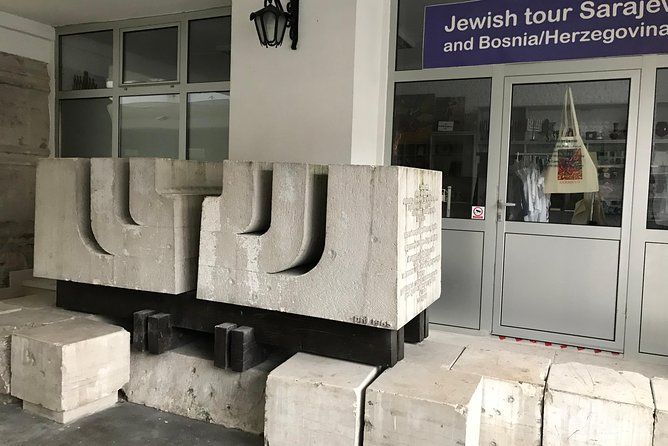
1) Jewish Museum of Bosnia and Herzegovina: start with the oldest synagogue feeling
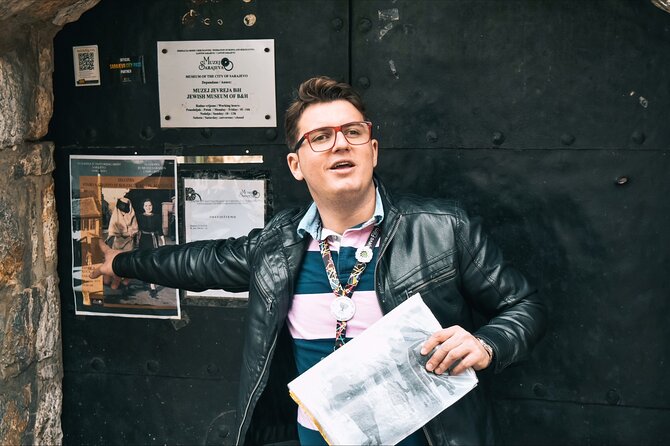
You begin at the Jewish Museum of Bosnia and Herzegovina, housed in the oldest synagogue in Bosnia and Herzegovina, built in 1581. That detail changes how you experience the tour. You’re not looking at history from behind glass only; you’re stepping into a structure that’s part of the long continuity of Jewish presence here.
Inside, you’ll watch a short 20-minute movie focused on Sarajevo Haggaddah—the famous book kept at the National Museum of Bosnia and Herzegovina. The museum stop lasts about 45 minutes, and admission is not included.
Why this is a smart first stop: it gives you the “what to look for” before you walk into the main Haggadah story later. If you jump straight to the National Museum without this context, you’ll still enjoy the artifacts, but you’ll connect fewer dots.
Possible drawback: because admission is not included, you’ll want to have whatever payment approach the museum uses ready. Also, a museum ticket here can add to the total day cost.
2) Eternal Flame area: Jewish everyday life, not only big monuments
Next comes the Eternal Flame stop, where the guide ties Jewish community history to specific locations. This is one of the most “walk-and-think” parts of the route.
You’ll explore what the guide calls important Jewish “investments,” plus clues about:
- where the first hotel in Sarajevo was opened
- where Jewish shops operated
- where the first Jewish school opened
- where a synagogue referred to as the singing synagogue used to be
This stop is free and lasts about 30 minutes.
I like this kind of stop because it turns “Jewish history” into street-level reality. Instead of only dates and names, you start picturing daily life: commerce, education, and community gathering spaces.
The tradeoff is that some references may feel location-dependent. If you’re the type who wants everything clearly marked with plaques, you may wish you had a minute to ask your guide to point out exactly how they’re connecting the dots.
3) National Theatre square: a city landmark with community connections
Between the major synagogue sites, the tour also includes a look at the National Theatre square and its connection to the Jewish community in Sarajevo. This is a shorter segment (time isn’t specified), but it’s the kind of place that helps you understand how Jewish presence fits into the broader city story.
The value here is perspective. You’re learning that heritage isn’t trapped in one neighborhood or one building. It shows up in the main public spaces too.
4) Bosnian Cultural Center: a major Sephardic synagogue repurposed
Then you head to the Bosnian Cultural Center, which uses a building tied to Jewish religious life. The tour notes it as one of the largest Sephardic synagogues in Europe today, now serving another function. The stop is about 10 minutes and admission is free.
This is a great “pause and notice” stop. Repurposed religious buildings are common across Europe, and they can feel complicated at first. But on this tour, the guide’s job is to help you see the continuity and the change without turning it into a lecture.
Because the stop is short, you’ll get the main idea but not a long architectural analysis. If you’re deeply into building history, you might want to ask your guide one targeted question about what changed and what stayed.
5) Ashkenazi Synagogue: the center of Jewish life today
The next stop is the Ashkenazi Synagogue, described as the center of Jewish life in Sarajevo today. This is a longer stop at about 45 minutes, and admission is not included.
This part of the route matters because it shows the living side of the story. Even when you’re looking back centuries, the tour keeps a current anchor: what Jewish community life looks like now, in Sarajevo.
In the feedback for this tour, the strongest praise consistently points to guides who can explain the context clearly while staying respectful. That’s important here, because a synagogue can mean different things depending on your own comfort level with religious spaces.
Possible consideration: since admission is not included, you’ll want to factor in the extra ticket and the time it can take to enter.
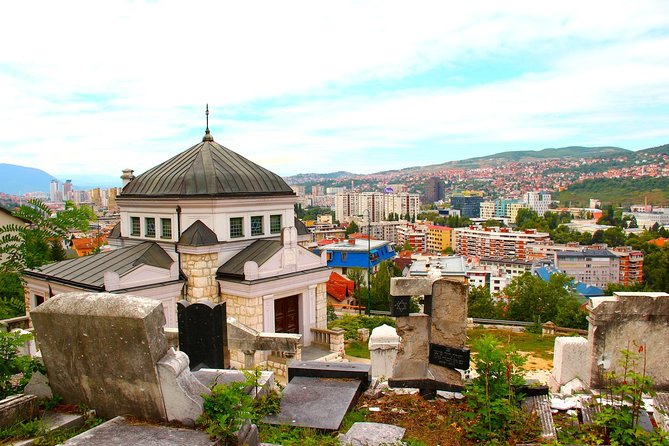
6) Jewish Cemetery Sarajevo: almost 500 years of layers
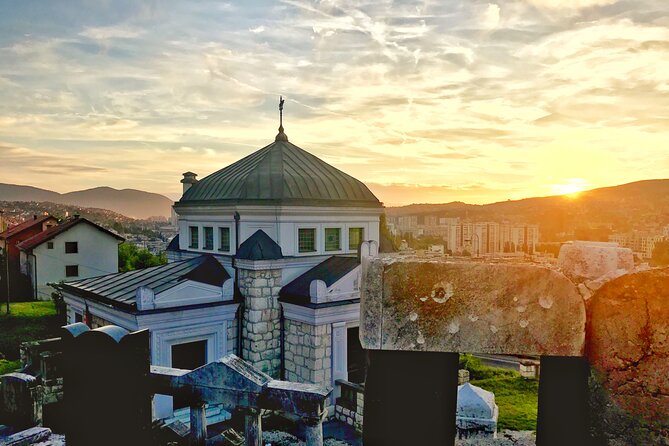
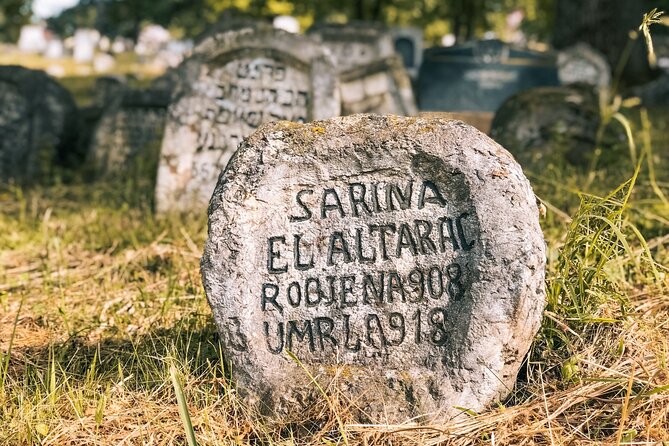
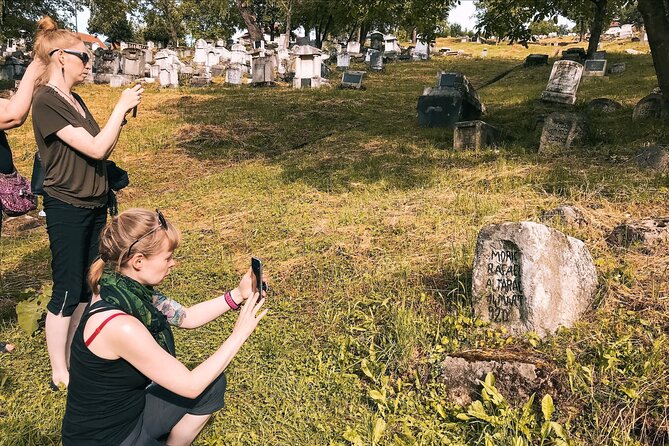
Then you visit the Old Jewish Cemetery, described as almost 500 years old. The tour explains the cemetery’s evolution clearly:
- established by Sephardic Jews during the Ottoman period
- later also became burial ground for Ashkenazi Jews after they arrived in Sarajevo in the late 19th century with the Austro-Hungarian Empire
This stop is free and lasts about 30 minutes.
This is the “quiet, thoughtful” section of the tour. Even if you’re not religious, cemeteries can hit differently because you’re dealing with personal histories rather than broad events. Here, the guide connects the burial story to the broader migration story, which makes the cemetery feel like a timeline you can walk through.
One practical thought: this is not a stop where you rush. Give yourself a moment before you start asking questions. Let the place settle in first.
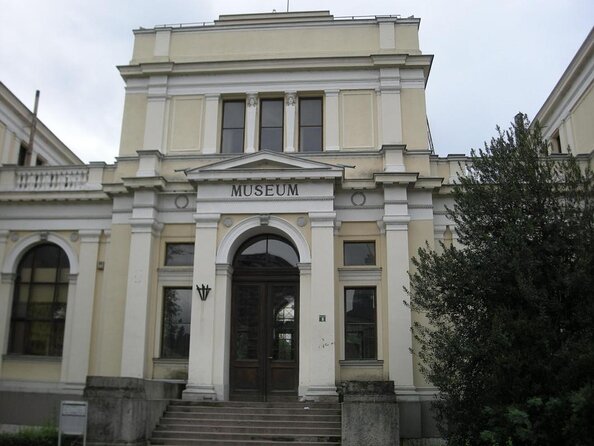
7) National Museum of Bosnia and Herzegovina: the Sarajevo Haggadah story you came for
The final major stop is the National Museum of Bosnia and Herzegovina, with a special focus on the Sarajevo Haggadah.
The tour emphasizes why this book matters:
- it’s a compilation of stories written in Barcelona in the 14th century
- it was brought to Sarajevo by a Jewish family in the 16th century
- it survived three wars
- it’s described as the most important item of Jewish heritage in Bosnia
- the story includes how a Muslim librarian saved it from the Nazis
This museum stop lasts about 20 minutes, and admission is not included.
This is also where the tour’s earlier context pays off. You’ve already seen the Haggadah film at the Jewish Museum, so by the time you’re here, you’re not just looking for an artifact—you understand what you’re seeing and why the story is so widely told.
One very practical tip from the experience details: if you specifically care about seeing the Haggadah on display, plan your day. The notes provided indicate it is displayed on Tuesdays and Thursdays, and the Meet Bosnia staff can arrange this if you tell them you’re interested.
Guides are the real differentiator here (and it shows)
The best part of this tour isn’t only the lineup of sites. It’s the way the guides connect them into a coherent story.
In the feedback for this experience, Armina Pijalovic stands out for being exceptionally informative and compassionate in her explanations. Ahmed is noted for being a strong storyteller with serious research, able to answer questions and even help with practical needs in the city. Edin Ogrešević also appears in feedback as kind and hospitable, with deep knowledge and personal insight.
A couple of practical points worth keeping in mind from the experience notes:
- If you’re sensitive to fast speech, ask the guide to slow down if needed. One piece of feedback mentions English spoken so fast that parts were missed on a previous walk.
- If you’re with an older traveler or you want a pace that stays comfortable, this tour has been described as considerate and patient.
With a route that includes synagogues and a cemetery, that human factor matters. You want clear context and respect, not a rushed script.
Who this tour is best for
This tour is a strong fit if you:
- want a focused walking route with major Jewish heritage sites in central Sarajevo
- like history explained through specific locations, not only general timelines
- care about the Sarajevo Haggadah story and want the key context in the right order
- prefer a small group experience (max 8) where questions feel welcome
You might skip it if you:
- want only places with included admission and you hate paying extra ticket fees
- only have a tiny window and can’t handle a fixed 9:00 am start
- dislike any sites that may involve quiet, somber spaces like a cemetery
Should you book this Sarajevo Jewish Heritage tour?
Yes, if your goal is to understand Jewish Sarajevo in a structured, respectful, street-level way in just a few hours. For the price, you’re getting strong guidance, a compact route, and a clear line from Sarajevo Haggadah context to the key museum story.
I’d book it especially if you can plan around seeing the Haggadah on Tuesdays or Thursdays. If your dates don’t match, message the tour provider in advance and ask what’s possible—staff can help arrange attendance when you’re interested.
Just budget for admission that’s not included at key stops, and plan for no food included. Do that, and you’ll get a meaningful walk through a part of Sarajevo that’s both historical and still present in the city’s identity.
FAQ
How long is the Sarajevo Jewish Heritage Tour?
The duration is approximately 2 to 3 hours.
What is the tour price per person?
The price is $72.18 per person.
Is pickup available?
Hotel pickup can be organized upon request. The tour starts at Meet Bosnia Tours in Sarajevo.
Where is the meeting point?
The meeting point is Meet Bosnia Tours – Sarajevo Tours, Days Out, Excursions and Activities at Gazi Husrevbegova 75.
What time does the tour start?
The start time is 9:00 am.
Is the tour in English?
Yes, it is offered in English.
What group size should I expect?
The tour has a maximum of 8 travelers.
Are museum and synagogue admission tickets included?
Admission tickets are not included for the Jewish Museum, the Ashkenazi Synagogue, and the National Museum (and the tour notes admission ticket not included for those stops).
Does the tour include food and drinks?
No. Food and drinks are not included.
Are children allowed?
Children must be accompanied by an adult.