REVIEW · SARAJEVO
Sarajevo Under Siege: A War History Tour
Book on Viator →Operated by The Globe Balkans · Bookable on Viator
Sarajevo looks calm today, but it wasn’t always safe. This tour strings together city viewpoints, personal war stories, and the lifeline beneath the airport runway—so you understand the siege, not just the dates.
I love the way the route connects big landmarks with small, human details: a guide’s father’s burial place and the street where he played during the war make the history feel close. I also really like the Tunnel of Salvation stop—walking through the passage and seeing wartime artifacts gives the siege a physical shape you can’t forget. The one drawback: the subject matter is heavy and politically charged, so come prepared for an emotional afternoon rather than a casual sightseeing loop.
If you want a respectful, well-organized way to grasp what happened in the 1990s, this is a strong pick. Just remember that entrance fees can add to the total cost, so check what you’ll pay on site.
In This Review
- Key Things That Make This Tour Worth Your Time
- Meeting at Vijećnica and Getting Oriented Fast
- Bijela Tabija White Fortress: Views That Explain Why Sarajevo Mattered
- Zetra Olympic Hall Area: War Stories Told Through One Family
- Sniper Alley Drive: When Crossing a Street Became a Risk
- Tunnel of Salvation: A Lifeline You Walk Through
- Lukavica and the Dayton Agreement: How the Siege Changed Bosnia’s Map
- Vijećnica (Sarajevo City Hall): The Burned Library and the Meaning of Rebuilding
- Price and Value: What You’re Paying For (and What’s Extra)
- How to Make the Most of This Afternoon
- Should You Book Sarajevo Under Siege?
- FAQ
- Where does the tour start and end?
- How long is the tour?
- What time does it start?
- Is pickup available?
- What languages is the tour offered in?
- Are entrance fees included?
Key Things That Make This Tour Worth Your Time
- Bijela Tabija panoramic views plus a clear explanation of Sarajevo’s strategic position across centuries
- Personal testimony in the Zetra Olympic Hall area, tied to a guide’s own family history
- Sniper Alley on the drive—a plain description of how daily errands became dangerous
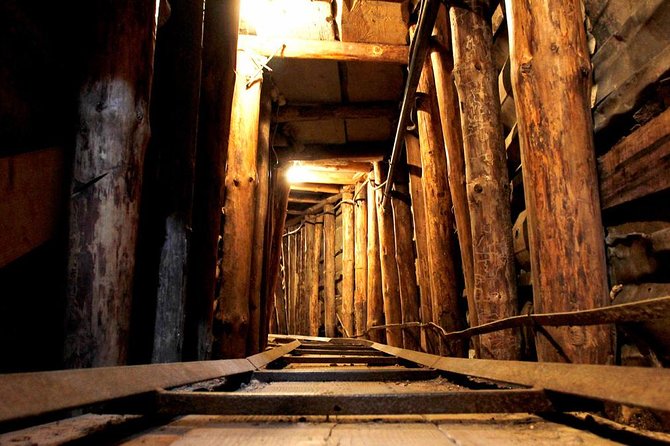
- Tunnel of Salvation walkthrough with authentic artifacts and a short documentary
- Lukavica and Dayton’s aftermath—front lines moving into politics and memory
- Vijećnica (Sarajevo City Hall) ruined library story and what rebuilding meant for Sarajevo’s identity
Meeting at Vijećnica and Getting Oriented Fast
The tour starts at Vijećnica, Sarajevo’s City Hall, at 1:30 pm. That’s a smart choice because it immediately anchors you in the city’s layered history: Austro-Hungarian architecture, wartime destruction, and restoration all in one spot. You’ll end back near the meeting point, which makes logistics easy.
You’ll ride in an air-conditioned vehicle with WiFi on board, and the format is private for your group. The operator also offers pickup from hotels or city-center locations, starting about 15 minutes before the tour begins. If you’re staying outside the center, you’ll need to coordinate—so plan to send your pickup details when booking.
You can also read our reviews of more historical tours in Sarajevo

Bijela Tabija White Fortress: Views That Explain Why Sarajevo Mattered
Your first stop is Bijela Tabija (White Fortress), where you get a scenic overlook over Sarajevo. The fortress dates to the 16th century, but the guide uses that setting to talk about what made Sarajevo strategically important—linking Ottoman-era context to the Siege of Sarajevo.
This part is about perspective. From the viewpoint, you can see how a city’s shape can matter in conflict—where lines of observation and movement would be. It’s also one of the few moments where you can breathe, look around, and then let the guide connect the present view to the wartime reality.
It’s also efficient: the visit is about 30 minutes, and the admission ticket for this stop is listed as free. Wear something comfortable; viewpoints can be breezy depending on the season.
Zetra Olympic Hall Area: War Stories Told Through One Family
Next you head toward the Zetra Olympic Hall neighborhood. This stop is different from many “war tours” because it’s not only about a place—it’s about a person’s life. Your local guide shares what his area looked like during the siege, describing day-to-day survival under shelling conditions.
You’ll also visit two very personal points: the place where the guide’s father was buried and the street where the guide grew up and used to play during the war. That adds weight quickly. It’s hard to treat the subject like a museum label when it’s tied to family and childhood.
The stop is short—about 15 minutes—but it’s the kind of stop where you’ll probably find yourself listening more than looking. This is also where the tour’s tone matters: the best moments come from respectful attention, not quick photos.
Sniper Alley Drive: When Crossing a Street Became a Risk
After Zetra, you’ll drive along one of Sarajevo’s most infamous wartime streets, known as Sniper Alley. This is described as a main avenue under constant sniper fire, so even simple actions—crossing the road, reaching safety, fetching food or water—could be deadly.
Today the street looks like a normal city thoroughfare, with modern buildings around it. That contrast is the point. Your guide will walk you through how residents adapted their routines in response to danger, and it’s a sobering reminder that “life under siege” wasn’t one dramatic event. It was a pattern.
Since this is a drive rather than a long walking segment, it tends to work well even if you’re tired or the weather isn’t perfect. Still, I’d mentally prepare for a moment where your brain has to reframe what you’re seeing.
Tunnel of Salvation: A Lifeline You Walk Through
The tour’s centerpiece is the Tunnel of Salvation, visited for about 1 hour 20 minutes. This narrow underground passage was dug secretly in 1993 beneath the airport runway to connect besieged Sarajevo with the outside world.
This is where history turns physical. You’ll walk through a section of the original tunnel, and you’ll see authentic wartime artifacts. There’s also a short documentary as part of the experience. Even if you’ve read about the siege before, walking through the space helps you understand why this wasn’t just a clever engineering idea—it was a daily lifeline for food, medicine, and hope.
A practical consideration: tunnels are tight by nature. If you get claustrophobic, go in with that awareness. Closed-toe shoes are a good idea because you’ll be moving through confined areas, and you’ll want something comfortable for the longish visit.
Lukavica and the Dayton Agreement: How the Siege Changed Bosnia’s Map
After the tunnel, the tour turns to what happened afterward. You’ll drive through Lukavica, an area that was once part of the front line during the siege, and is now part of Republika Srpska. This stop helps you understand that the war’s impact didn’t end when the fighting stopped.
Your guide will explain the post-war division of Bosnia and Herzegovina into two entities: the Federation of BiH and Republika Srpska. You’ll also hear how the Dayton Peace Agreement reshaped the city and its political reality.
This is also where you’ll see how memory remains contested. The guide points out graffiti and murals that glorify wartime figures such as Ratko Mladić. It’s not presented as a debate for you to solve during a tour. It’s meant as a reminder that reconciliation takes time, and public reminders of war can keep tensions alive.
If you’re sensitive to political messaging, this part may hit hard. I’d approach it as context—what shaped identity, boundaries, and daily life after the siege.
Vijećnica (Sarajevo City Hall): The Burned Library and the Meaning of Rebuilding
The tour culminates back at the symbolic Sarajevo City Hall, Vijećnica. Built in 1896 during the Austro-Hungarian period, it once housed the National Library. In August 1992, Serbian forces shelled the building, and it burned nearly two million books and manuscripts.
Today it’s restored, and your guide will share how that loss and rebuilding fit into Sarajevo’s cultural identity. This stop helps you end with something more than tragedy. It connects destruction to the stubborn decision to rebuild a shared cultural space.
Vijećnica also works well as a final point because you can look at the restored façade and try to hold two timelines in your head at once. That’s the siege’s legacy in one building.
Price and Value: What You’re Paying For (and What’s Extra)
The tour costs $30.10 per person for about 3 hours. That’s not just you buying a ride—this price usually covers a lot of “soft value” that many budget tours skip: private transport, air-conditioning, WiFi on board, and a guide who stays with you through all the key points.
One important cost detail: entrance fees are not included. Adults pay €10.25 per person, while students pay €5.25 per person. So the real out-of-pocket total depends on who’s in your group. If you’re comparing options, make sure you include that entrance fee so you’re not surprised at checkout.
For me, the value comes from the mix: panoramic viewpoint context, a deeply personal family-linked stop, the tunnel walkthrough, and the political aftermath at Lukavica—plus Vijećnica’s library story to tie it all together. This isn’t a long museum day, but it covers the “must-understand” pieces of the siege story.
How to Make the Most of This Afternoon
If you’re booking for learning and empathy, you’ll likely enjoy this more when you arrive ready to focus. This tour isn’t designed for casual “walk and snack” pacing.
A few tips that help:
- Ask questions when something feels unclear. The tour is built around storytelling and explanation, and the guide’s answers are a big part of the impact.
- Bring a layer if you get cold easily; viewpoints and outdoor drives can feel sharper than you expect.
- Expect emotional moments. This is a war history tour, and the strongest parts are personal and somber.
Also, the experience requires good weather, so if conditions aren’t right, it may be rescheduled or refunded. That’s worth keeping in mind if you’re visiting during a rainy stretch.
Should You Book Sarajevo Under Siege?
I’d book this tour if you want a clear, respectful way to understand the siege of Sarajevo through specific places—Bijela Tabija, Zetra’s neighborhood testimony, Sniper Alley, the Tunnel of Salvation, and Vijećnica. The personal family connection shared by guides such as Suvad and Evan (heard in prior visits) is exactly the kind of detail that turns facts into meaning.
I’d hesitate only if you’re seeking upbeat sightseeing or you don’t handle heavy historical content well. If that’s you, you might prefer a lighter city tour first and come back later when you’re ready for the emotional weight.
If you’re the type who likes your history grounded in real streets and real buildings, this one is a strong choice.
FAQ
Where does the tour start and end?
The tour starts at Vijećnica in Sarajevo and ends back at the same meeting point.
How long is the tour?
The tour is listed as approximately 3 hours.
What time does it start?
The start time is 1:30 pm.
Is pickup available?
Yes. Pickup is offered from any hotel or location within Sarajevo city center. Pickup begins about 15 minutes before the tour starts, and you’ll need to provide your preferred pickup location when booking.
What languages is the tour offered in?
The tour is offered in English.
Are entrance fees included?
No. The adult entrance fee is listed as €10.25 per person, and the student entrance fee is €5.25 per person.