REVIEW · CAIRO
12 Days Cairo – Alexandria and Nile Cruise by Flight (Ancient Egypt)
Book on Viator →Operated by Luxor and Aswan Travel · Bookable on Viator
Twelve days, and Egypt never feels rushed. This private itinerary strings together Cairo, Alexandria, and a Nile cruise with an English-speaking Egyptologist guide, plus domestic flights to cut down on long overland travel. You get a smooth path through pyramids, temples, tombs, and even Cairo’s mosques, churches, and synagogues—without having to organize the logistics yourself.
I love how private transfers keep things moving: you’re met on arrival, taken between cities, and handled again at departure. I also like the built-in comfort details, including breakfast, lunch, and dinner on most days, along with mineral water/soft drinks during tours and bottled water.
The main thing to consider is the pace: you’ll face a big travel day for Abu Simbel (about 8 hours) plus multiple early starts and lots of museum/temple time.
In This Review
- Key things that make this tour worth your attention
- Price and what you actually receive for $3,333
- Arrival in Cairo: the first stress you don’t have
- Pyramids of Giza plus Step Pyramid at Saqqara: the classic day done right
- Egyptian Museum, Citadel, and Khan el Khalili: Cairo’s layers beyond temples
- Fly to Luxor and step into the Theban temple circuit
- Valley of the Kings, Hatshepsut at Deir el-Bahari, and Colossi of Memnon
- Edfu’s Temple of Horus and Kom Ombo’s dual-god temple
- Abu Simbel: the day trip that defines the Aswan stretch
- Aswan essentials: High Dam, Philae on Agilkia, and the Unfinished Obelisk
- Alexandria Library and Roman-era stops back in the north
- Cairo’s Islamic monuments and Coptic-Christian route: mosques, church, and synagogue
- Free day in Cairo and your final airport transfer
- Guide quality and the “right kind of help” on a private trip
- What to watch for: comfort, timing, and how much is included
- Should you book this Cairo–Alexandria and Nile cruise tour?
Key things that make this tour worth your attention
- Egyptologist guide in English for the big sites, not just a bus stop and a ticket
- Flights included (Cairo–Luxor and Aswan–Cairo) to protect your time
- Private transfers from airport and hotel, with meet-and-assist support
- Nile cruise accommodation plus temple visits timed to the river rhythm
- Cairo and Alexandria together so you see more than the usual Nile-only circuit
- Major monuments + religious sites (mosques, Hanging Church, and Ben Ezra Synagogue)
Price and what you actually receive for $3,333
At $3,333 per person, this is not a budget-only trip. But the price makes more sense when you look at what’s bundled: domestic flights, private air-conditioned vehicle transfers, Egyptologist-guided sightseeing, nightly accommodation (including the Nile cruise), and a lot of meals. You also get mineral water/soft drinks during tours and bottled water, which quietly adds value in Egypt where drinks and snack runs can become an everyday cost.
You don’t just buy attractions—you buy time-saving. Flying between Cairo, Luxor, and Aswan reduces the long road days that can drain energy. And because it’s a private setup, you’re not stuck with a slow-moving group trying to time photos around everyone else’s pace.
One caution: meals are included, but not every single one. The plan lists 11 breakfasts, 8 lunches, and 4 dinners, so you should expect some meal flexibility on free or travel-heavy days.
You can also read our reviews of more tours and experiences in Cairo.
Arrival in Cairo: the first stress you don’t have
Day 1 is simple on purpose. You land in Cairo International Airport, get met by an English-speaking representative, and are guided through formalities before transfer to your hotel for the night. That “meet at the airport” part matters more than it sounds—Cairo can feel chaotic if you’re arriving cold, especially when you’re tired and your brain is still adjusting to time zones.
You’ll also get a clear handoff for what comes next. Day 2 and onward are scheduled with guided sightseeing, so the first day is about getting you settled, not about cramming. If you’re traveling with jet lag, this is the kind of pacing that helps you enjoy the monuments instead of just surviving them.
Pyramids of Giza plus Step Pyramid at Saqqara: the classic day done right
On Day 2, you start with the Pyramids of Giza—Khufu, Khafre, and Menkaure—with the Sphinx statue overlooking the area. This is the moment most people dream about before they ever buy a ticket to Egypt, and the value here is that you’re not touring solo. With your English Egyptologist guide, you’ll get context for what you’re seeing rather than only knowing where to stand for a photo.
Then the day keeps rolling south to Saqqara for the Step Pyramid of King Djoser. This pyramid is often explained as a “breakthrough” in design: instead of a smooth-sided pyramid, the Step Pyramid represents an earlier stage of Egyptian royal burial architecture. It’s a smart pairing because it gives you a bigger story arc—early experimentation leading toward the more famous pyramid forms.
Drawback? This is an 8-hour day with a lot of outside time. Wear good walking shoes, and plan for sun and heat. You’ll want water habits that match the weather.
Egyptian Museum, Citadel, and Khan el Khalili: Cairo’s layers beyond temples
Day 3 hits multiple Cairo worlds. First, the Egyptian Museum, including the chance to visit the Mummies’ Room and see major Pharaonic collections, including famous Tutankhamen-related highlights. The museum is a must if you want context for the temples and tombs you’ll see later. Seeing royal artifacts helps you understand why certain iconography repeats across monuments.
Next comes Old Cairo: the Citadel of Salah El-Din, a seat of power for centuries, and then Khan el Khalili, one of the region’s well-known bazaars. This isn’t just shopping. It’s a way to experience Cairo’s street-level energy between the big-ticket sites.
One practical note: this day is guided and structured, so you don’t get much free wandering time until the drive back to your hotel. If you love slow exploring, you may want to save extra bazaar time for your free day.
Fly to Luxor and step into the Theban temple circuit
Day 4 is your transfer day. You leave Cairo for Luxor by domestic flight, then board the Nile cruise with embarkation before noon. That timing matters—you avoid the “half-day loss” that happens on itineraries that land too late.
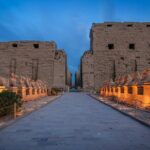
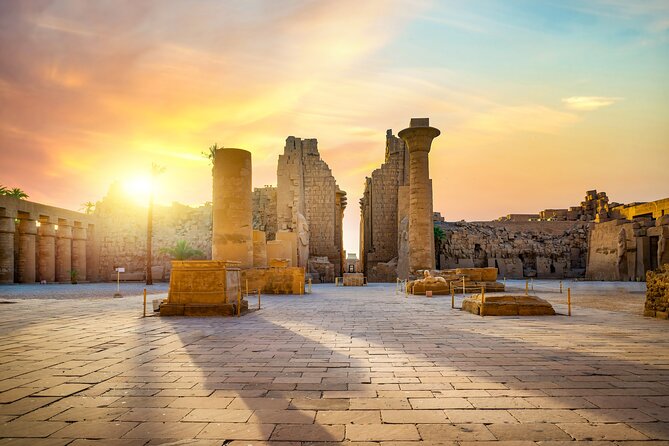
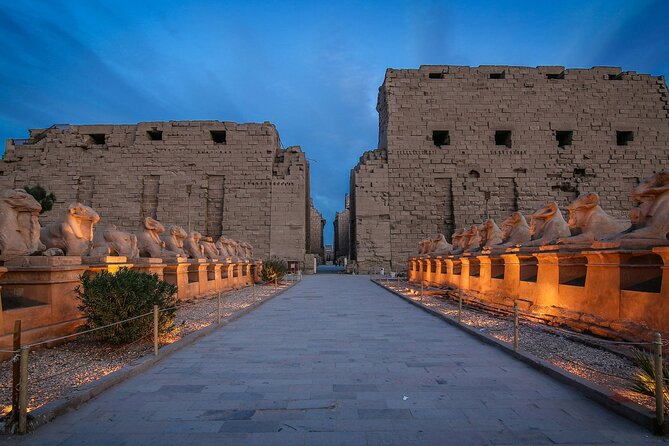
Your afternoon focuses on Luxor’s east bank, starting with Karnak Temple Complex. Karnak is described as the largest of its kind, and it’s easy to feel overwhelmed without guidance. Your Egyptologist guide helps connect the buildings to the religious and political story of Thebes.
Then you move to Luxor Temple, built by earlier rulers and completed with major work under Ramses II, also tied to Amun Re. After that, you return to the ship, eat dinner, and enjoy an Egyptian folkloric show performed by the cruise staff.
This is a strong way to start a cruise because you get temple “wow” immediately, while you still have fresh energy from arriving.




Valley of the Kings, Hatshepsut at Deir el-Bahari, and Colossi of Memnon
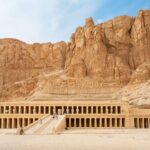
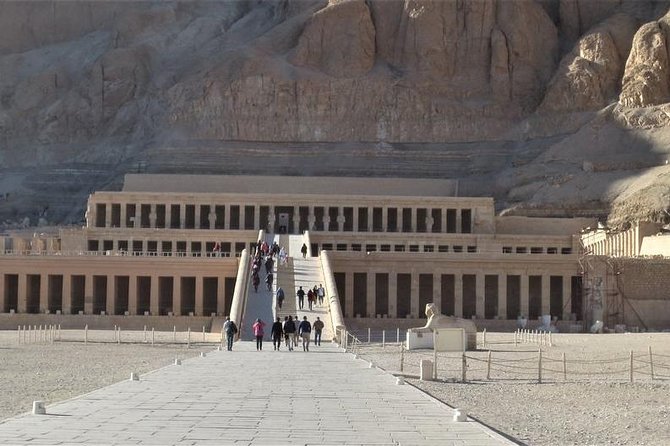
Day 5 is the kind of day that can feel like a film montage: Valley of the Kings, Temple of Hatshepsut, and the Colossi of Memnon. The key is how they’re arranged. Valley of the Kings gives you the royal burial world—tombs carved into a dramatic landscape of rock and secrecy. Then Deir el-Bahari offers the architectural contrast: Hatshepsut’s temple is known for being carved into the mountain, giving you a sense of power and planning rather than only burial mystique.
Finally, you finish with the Colossi of Memnon, two massive statues linked to Amenhotep III. Short sites can still hit hard when you understand what you’re looking at—these statues aren’t just “big stones,” they’re part of a larger funerary tradition.
The day ends with time on the ship and sailing. That’s a quiet advantage of a Nile cruise: you get movement between sites without constantly changing hotels.
Edfu’s Temple of Horus and Kom Ombo’s dual-god temple
Day 6 moves you from one famous temple to another. After breakfast on board, you visit Temple of Horus in Edfu, highlighted for being one of Egypt’s best-preserved temples. With an Egyptologist guide, you’ll likely connect the temple layout to the roles of different gods and rituals—something you can’t easily get from a quick audio guide.
After returning to the ship, you sail to Kom Ombo and explore Temple of Kom Ombo, where worship centered on Sobek and Haroeris. The tour then loops back into cruise life: lunch on board, time on the sun deck, and dinner while the ship continues toward Aswan.
If you like photos, this is a great day because you get both built monuments and river views. Just remember: you’ll still be outside during temple visits, so sun protection is not optional.
Abu Simbel: the day trip that defines the Aswan stretch
Day 7 is the long one. You transfer by private air-conditioned van to Abu Simbel, then tour the temple complex built by Ramses II. The schedule notes the first, larger temple dedicated to Ramhases II’s associated divine devotion to Rahorakhty, and the second, smaller temple dedicated to Ramses II and Queen Nefertari.
What makes Abu Simbel special, beyond its fame, is that it’s a rare chance to see how royal propaganda and devotion were built into stone at a scale meant to impress—far from the typical river temple zone. The day is also structured for you: you don’t have to coordinate timing or transportation.
The consideration is obvious: 8 hours with driving time included, plus a lot of time on site. If you’re sensitive to long travel days, plan to rest well the night before and keep your water and snacks ready.
Aswan essentials: High Dam, Philae on Agilkia, and the Unfinished Obelisk
Day 8 starts with Aswan’s modern-to-ancient bridge: Aswan High Dam is included, built in 1960 to protect Egypt from Nile flooding. It’s a different kind of history than what you’ll see in temples, but it matters because it explains why the Nile’s story changed in the modern era.
Next is Agilkia Island and Temple of Philae, described as erected during the Graeco-Roman period and dedicated to Isis. Then you visit the Unfinished Obelisk, made of red granite and dedicated to Amun Ra. Even though it’s unfinished, it can be one of the most fascinating stops because it hints at the engineering and planning behind monumental Egyptian stonework.
Later, the day includes a flight back to Cairo and transfer to your Cairo hotel. That’s a clean way to end the Nile section without dragging your cruise to the finish point.
Alexandria Library and Roman-era stops back in the north
Day 9 shifts you from the Nile to the Mediterranean world. You start at the Alexandria Library, presented as a key source of knowledge tied to the ancient city’s legacy. After lunch, you visit the Roman Amphitheatre, then Pompey’s Pillar, and finish with Sultan Qaitbay Citadel (from outside).
This is a different texture of Egypt. You’re not only dealing with pharaonic burial or temple religion. You’re dealing with the city as a meeting point of Greek, Roman, and local traditions. It also makes the whole trip feel less repetitive: pyramids and temples are the spine, but Alexandria is a whole extra chapter.
One practical note: you return to Cairo the same day. That means your energy has to handle one more drive day after the city tour.
Cairo’s Islamic monuments and Coptic-Christian route: mosques, church, and synagogue
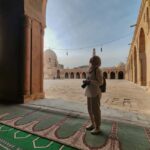
Day 10 is one of the most interesting “culture days” on the schedule because it’s not limited to one religious tradition. You tour major Islamic monuments first: Ahmed Ibn Tulun Mosque (described as the oldest intact functioning Islamic monument in Cairo) and Mosque of Sultan Hassan (1256, also a school for different sects). Then you add El Refa’i Mosque and take lunch at a local restaurant.
After that, the plan switches to Coptic and Jewish heritage. You visit the Hanging Church (Church of the Virgin Mary), the Church of St. Sergius (Abu Serga), and then the Ben Ezra Synagogue. These stops are packed, but they’re also meaningful because you see how different faith communities shaped the city over centuries.
The value for you is that this day helps you understand Egypt as a living society, not only as an archaeological site.
Free day in Cairo and your final airport transfer
On Day 11, you get a free day in Cairo. That’s smart because after a string of temple and museum visits, you’ll want time to pace yourself. You can use this day for personal shopping, easy sightseeing near your hotel, or just recovering from sun and walking.
Day 12 is purely operational: check out and transfer to Cairo International Airport for departure. That keeps the end clean, especially if you’ve had a tight schedule up to this point.
Guide quality and the “right kind of help” on a private trip
With a private tour, the guide often decides whether a trip feels like a checklist or a story. This one is built around an English-speaking Egyptologist guide for the key historical sites, and that makes a real difference when you’re looking at complex temple layouts, tomb traditions, and religious symbolism.
From the names that have come up in published feedback, the support team has included people like Hany, and guides such as Amani and Safwat. There’s also mention of Shimaa Esmail in connection with past trips and repeat travelers. That kind of recurring attention is usually a good sign: it suggests the company pays attention to guide matching and follow-through, not just collecting bookings.
What to watch for: comfort, timing, and how much is included
A tour like this is a marathon with several “big ticket” pushes. Here are the main practical points I’d plan around:
- Expect hot, bright outdoor time at Giza, Saqqara, Karnak, and the Valley of the Kings area. Bring sun protection and stay hydrated.
- Plan for long days. Day 7 (Abu Simbel) is the standout long transfer/temple day. Day 2 is also long, and Day 3 blends museum and two Cairo highlights.
- Meal coverage is strong but not total. You’ll have breakfast on 11 days, plus many lunches and some dinners, but you should still be ready for a meal or two that’s not included.
- You’ll rely on private A/C vehicle transfers for most hops, which helps a lot—just keep a light, flexible schedule in your head for airport timing and embarkation.
Should you book this Cairo–Alexandria and Nile cruise tour?
I think you should book this if you want a private Egyptology-focused itinerary with flights to reduce travel fatigue, and you’re excited about more than just the obvious Nile circuit. The mix of Giza + Saqqara, Luxor + Edfu + Kom Ombo, a dedicated Abu Simbel day, and then Alexandria plus Cairo’s layered religious sights makes it feel like “real Egypt,” not only the highlight reel.
Skip it if you strongly dislike long days, hate being on a fixed schedule, or you’re hoping for lots of unscheduled time in each city. This is a guided, structured experience—and that structure is the point.
If you want Egypt at a comfortable pace with someone else handling the connections, this route is a solid bet.