REVIEW · TAORMINA
Taormina: Ancient Theater Entry Ticket and Guided Tour
Book on GetYourGuide →Operated by Distributor: GetYourGuide Tours & Tickets GmbH · Bookable on GetYourGuide
You’ll feel history working on your feet. This 50-minute guided visit takes you through the Ancient Theater of Taormina, with skip-the-line entry and enough context to make the stones make sense.
I like the quick, focused format and the way the guide explains how the theater changed over time, from Greek foundations to Roman upgrades. I also like that you get sweeping sea and landscape views while you learn, so it is not just standing in place.
One possible snag: this site is small and security lines can still happen, so it helps to plan ahead and arrive with comfortable shoes and patience for the pre-entry check.
In This Review
- Key things to know before you go
- Ancient Theater of Taormina: what the $37 gets you in real life
- Entering the site: skip-the-line plus the one thing you can’t skip
- The 50-minute guided route: how the guide keeps the place understandable
- Expect the story to move in layers
- Greek foundations: the 3rd to 2nd century BCE moment you’ll want to picture
- Romans under Trajan and Hadrian: what changed and why it matters
- The amphitheatre and orchestra: how the space gets re-used
- Gladiator tales: the entertainment side of Roman Taormina
- Views from the theater: why timing can make or break your photos
- Meeting point reality check: the two-palms problem
- What to listen for during the tour (so you don’t miss the best parts)
- Is it worth $37? How to judge the value for your style of travel
- Who should book this guided theater ticket
- Should you book this tour?
- FAQ
- How long is the Ancient Theater of Taormina guided tour?
- Does the ticket include skip-the-line entry?
- Where do I meet the guide?
- What languages is the live tour guide available in?
- Do I need ID or a passport?
- Is there a security check before entering?
- Can I enter the theater more than once with this ticket?
- What should I wear?
- Are there special closing times in August?
- What is the cancellation policy?
- Is there an option to reserve without paying right away?
Key things to know before you go
- Skip-the-line entry means you spend less time stuck at the entrance.
- 50 minutes with a live guide gives you real explanations, not just a quick look.
- Greek to Roman changes are the core story, including updates tied to major emperors.
- Orchestra and amphitheatre walkthroughs help you visualize how it worked in different eras.
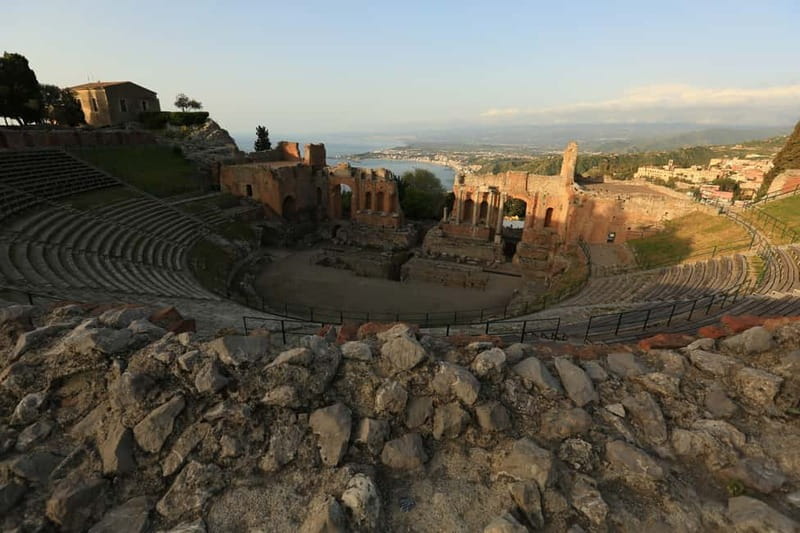
- Sea views from the theater area are a big part of the payoff, especially later in the day.
- One ticket, single entry means you should plan your time inside.
Ancient Theater of Taormina: what the $37 gets you in real life
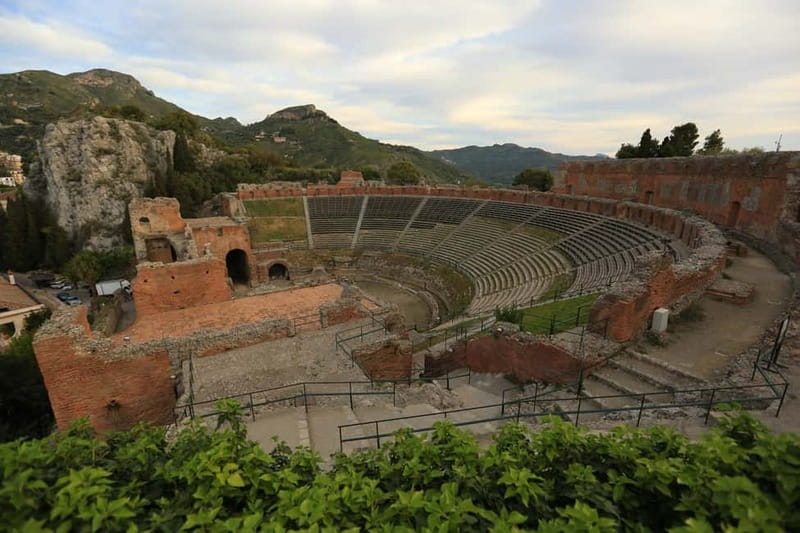
For $37, you are not paying for a long tour. You are paying for the part most people miss when they wander on their own: what you are looking at, and why it matters. With a live guide leading a 50-minute route, the ruins feel like a story instead of scattered seating.
And yes, you also get practical value. Skip-the-line entry is the difference between “we’ll go whenever” and “we can actually enjoy the site.” Taormina’s top spots can be time-sensitive, and this ticket is built to move you through efficiently.
A few more Taormina tours and experiences worth a look
Entering the site: skip-the-line plus the one thing you can’t skip

Your tour starts at the main entrance. Before you go in, you will need to pass a security check—so even with skip-the-line access, expect some form of screening before entry.
This matters because you want your head in the right place. If you arrive rushed, you will feel it. If you arrive calm, you get to start the tour listening instead of bracing.
What to bring
- Passport or ID card
- Comfortable shoes (you’ll be walking around a compact but uneven archaeological area)
The 50-minute guided route: how the guide keeps the place understandable
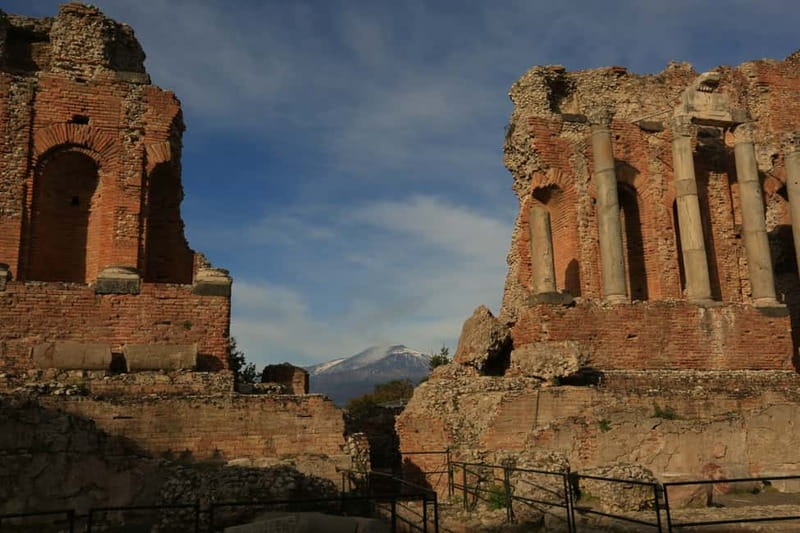
This is a guided walk through the archaeological complex, built around the main features of the Ancient Theater of Taormina. The pacing is short on purpose, so your guide focuses on the biggest changes and the most helpful details for reading the space.
A good sign here: the site can be understandable on your own, but the guide’s job is to translate it. That translation is what turns “rows of stone” into “this was used for performances, then repurposed, then re-shaped.”
Expect the story to move in layers
The tour follows the theater’s timeline, starting with the Greek era and continuing through Roman alterations. You will also hear dramatic context—like how the theater’s function shifted under later Roman influence.
Guides can vary, but the best experiences hinge on that storytelling style. People have specifically highlighted guides such as Serena, Saro, Gratzia, Maria, Julia, Grazie, Freda, and Irena for keeping the tour lively and clear.
Greek foundations: the 3rd to 2nd century BCE moment you’ll want to picture
The Ancient Theater of Taormina dates back to the 3rd to 2nd century BCE. The guide’s main task in this part is helping you see how Greek theater design worked: where the space would have directed attention, how the seating would have framed the performance area, and why the setting mattered.
If you care about architecture, this is the “slow down” portion. Even though the tour is only 50 minutes, this early framework helps you understand what later Romans were changing.
Think of it like learning the theater’s first language. Once you know the baseline, the Roman updates make more sense.

Romans under Trajan and Hadrian: what changed and why it matters
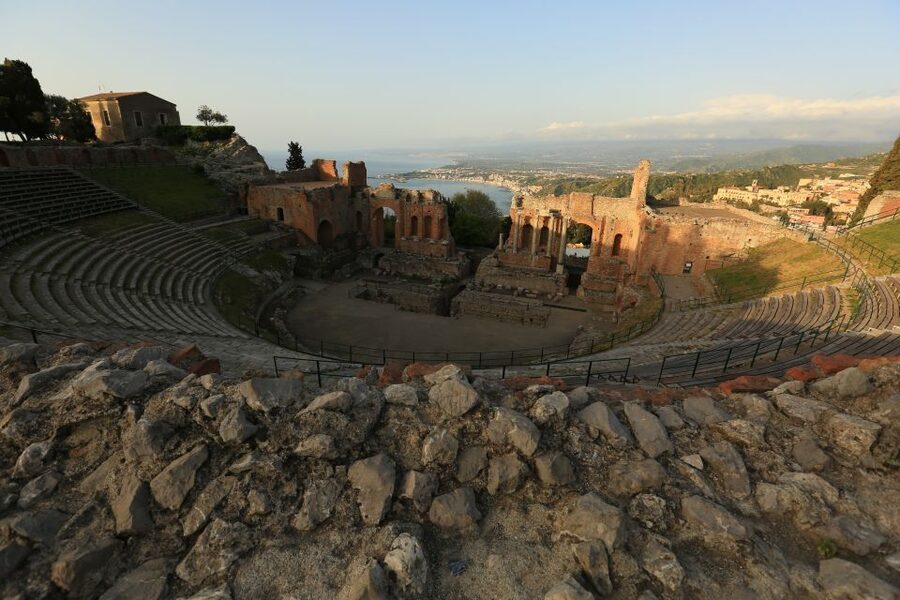
Next comes the Roman chapter. The tour describes how the monument was changed under Emperor Trajan and Hadrian. You do not need a degree in Roman engineering to benefit from this—what you need is context for what the modifications likely intended to improve.
This is where a guided visit pays off most. Without explanations, you can easily miss subtle cues that signal new construction phases or different uses.
When the guide points out the changes, I find you start noticing shape and function instead of just looking for the “pretty view” (though the view is coming, don’t worry).
The amphitheatre and orchestra: how the space gets re-used
The tour highlights the amphitheatre and orchestra, and notes that these areas were converted under Emperor Caracalla. The key idea is not just that it was altered—it was adapted.
In other words: the theater was not museum-still. It stayed useful as tastes and events changed. Seeing the orchestra area and hearing how it was repurposed helps you visualize how crowds would experience the performances differently across eras.
This is also where you’ll likely pause for photos. The structure gives you natural lines for framing the sea and the surrounding hills, so your brain gets two jobs at once: listen to the history and compose the shot.
Gladiator tales: the entertainment side of Roman Taormina
The tour also includes stories about gladiator fights during the Roman period. Even if you are not a “Roman gore” person, the value here is understanding how the same space could host different kinds of public spectacle.
The theater becomes a cultural stage with evolving roles. A guided tour makes that evolution feel immediate instead of abstract.
If you like history that reads like lived experience—noise, crowds, spectacle—this part tends to land well.
Views from the theater: why timing can make or break your photos
Taormina’s Ancient Theater is famous, and a big reason is what you see from it. The tour includes time and context that pairs the ruins with sweeping views of the surrounding area and the sea.
Here’s the practical tip: if you can, choose a later entry when heat is easing and the light is more forgiving. One guide experience specifically recommended a 6pm slot for sunset views and less oppressive temperatures.
Also, once the tour finishes, you might be able to stay in the complex afterward. People have mentioned that you can remain on site for the rest of the day, so if you enjoy wandering slowly and taking in different angles, this fits your pace.
Meeting point reality check: the two-palms problem
The official meeting point is the main entrance, but in real life that can still feel confusing—especially in Taormina where everything is compact and crowded.
One practical workaround: arrive early and look for the guide signage or the group gathering near the entrance area. There has been a report of the meeting point being marked by two palm trees, which is exactly the kind of detail that can save your sanity if you are trying to find the right start point.
If you travel with a child, you’ll also appreciate that guides can be accommodating, but you’ll still want to stay organized at the entrance so you do not lose time before the tour begins.
What to listen for during the tour (so you don’t miss the best parts)
Because this is short, you should go in with “active listening” energy. Use your guide’s cues to orient yourself.
Here are the moments I’d pay extra attention to:
- The explanation of what the theater looked like in the Greek period
- The guide’s descriptions of changes tied to Trajan and Hadrian
- Any pointing out of the orchestra and how it functioned after Roman conversion
- The shift in use connected to Caracalla
- The stories that link the architecture to real events (including gladiator fights)
And if the group is large or noisy, ask the guide to repeat key points. In one experience, people struggled to hear when others talked during the tour. You do not have to suffer through bad audio.
Is it worth $37? How to judge the value for your style of travel
At $37 per person, this ticket sits in the “small splurge” range for a single site visit. The value depends on what you want from Taormina.
If you like:
- understanding what you are looking at,
- learning how one era replaced another,
- and getting sea views without spending hours,
then $37 buys you more than access. It buys you interpretation. This is especially true because the tour lasts 50 minutes, so you’re not sacrificing half a day.
If you are the kind of visitor who:
- prefers self-paced exploring,
- wants more time on-site than a quick guide walk,
- or expects something bigger than a focused ruins tour,
then you might find it a bit “basic” for your taste. A couple of experiences mentioned that the theater itself is small, which makes the guide’s role even more important—if the guide doesn’t click with you, the experience can feel less special.
Still, with an overall rating around 4.2 and lots of praise for engaging guides, this is one of the more dependable ways to get meaning out of the stop.
Who should book this guided theater ticket
This tour fits best if you:
- want a high-impact history stop without a big time commitment,
- enjoy Greek-and-Roman explanations,
- are traveling in a busy schedule and want skip-the-line value,
- and plan to be flexible with short tours in crowded places.
It can also work well for families, since at least one guide experience was noted as accommodating for a child. Just remember: you will be doing walking and standing, so comfortable shoes matter.
If you hate groups or expect total quiet, you might want to choose your time slot carefully. Noise has been an issue for some groups, and the theater’s open air can carry voices.
Should you book this tour?
I’d book it if you want your Taormina theater visit to feel like a guided experience instead of a quick pass. The combination of skip-the-line entry, a live guide, and a clear timeline—from Greek origins to Roman transformations—makes the $37 feel earned.
I would skip it only if you strongly prefer independent pacing or you already plan to spend much longer onsite reading interpretive signs (since the guide is what supplies the storyline). In most cases, though, this is a smart way to turn a short visit into the part you remember later.
FAQ
How long is the Ancient Theater of Taormina guided tour?
The tour duration is 50 minutes.
Does the ticket include skip-the-line entry?
Yes. The ticket includes skip-the-line entrance to the Ancient Theater of Taormina.
Where do I meet the guide?
Meet your guide at the main entrance.
What languages is the live tour guide available in?
The live guide offers tours in Italian and English.
Do I need ID or a passport?
Yes. You should bring your passport or ID card.
Is there a security check before entering?
Yes. You will need to pass a security check before entering the archaeological site.
Can I enter the theater more than once with this ticket?
No. Your ticket allows a single entry into the Ancient Theater of Taormina.
What should I wear?
Wear comfortable shoes since you will be walking around the site.
Are there special closing times in August?
Yes. On August 1st, 2nd, and 3rd, the attraction closes at 17:30, with the last guided tour at 4pm.
What is the cancellation policy?
You can get a full refund if you cancel up to 24 hours in advance.
Is there an option to reserve without paying right away?
Yes. You can reserve now & pay later, meaning you can book your spot and pay nothing today.