REVIEW · TAORMINA
Taormina: Ancient Theater Skip-the-Line Ticket & Audio Guide
Book on GetYourGuide →Operated by GetYourGuide Tours & Tickets GmbH · Bookable on GetYourGuide
Skip the line and time-travel in stone. Pre-booking a skip-the-line ticket gets you into the Ancient Theater of Taormina with far less waiting, and the included multi-language audio guide lets you explore at your own pace. I like that you’re not forced into a rigid schedule, yet you still get solid context as you walk.
One thing to plan around: this experience does not include a live guide. If you want a person talking you through every detail, you’ll need to rely on the audio and your own curiosity.
In This Review
- Key highlights I’d center your visit on
- Taormina’s Ancient Theater: a ruin with real stage energy
- Fast-track entry: what you do when you arrive
- The audio guide setup: a self-paced visit that still teaches
- What you’ll see inside: Greek layout, Roman upgrades, gladiator-era use
- The views from the theater seats: how to make them worth your time
- How long to spend and when to go in Taormina
- Price and value: what you’re really paying for
- Things that can affect your mood once you’re there
- Should you book this Taormina theater ticket?
- FAQ
- How do I use my digital voucher to enter?
- Does the ticket include an audio guide?
- Is a live guide included with this ticket?
- How long is the ticket valid?
- Can I enter more than once with the same ticket?
- Is the Ancient Theater free on any days?
- What are the cancellation and pay-later options?
Key highlights I’d center your visit on
- Fast-track entry after exchanging your voucher at the box office
- Self-guided touring with a multi-language audio guide (English, Spanish, French, German)
- A major performance venue on the Italian Peninsula, with Greek-to-Roman transformations
- Sweeping views over Taormina and the sea from inside the theater
- Flexible timing with a 1-day ticket that supports an easy pace
Taormina’s Ancient Theater: a ruin with real stage energy
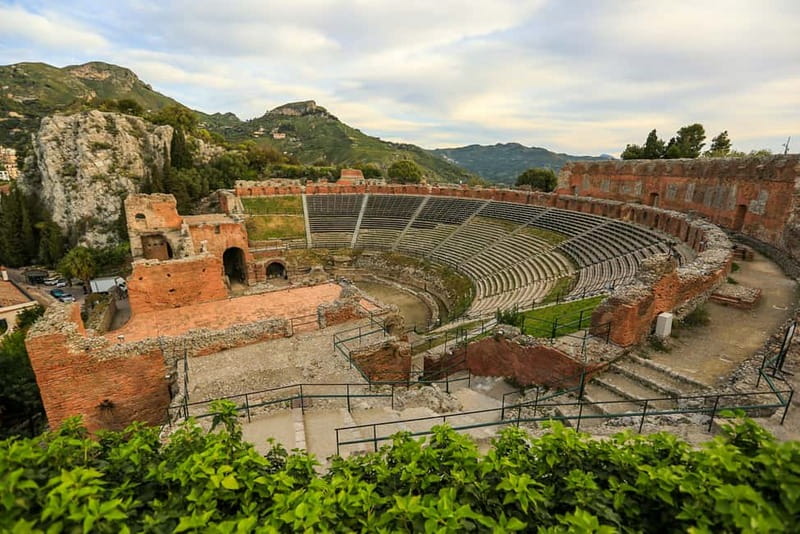
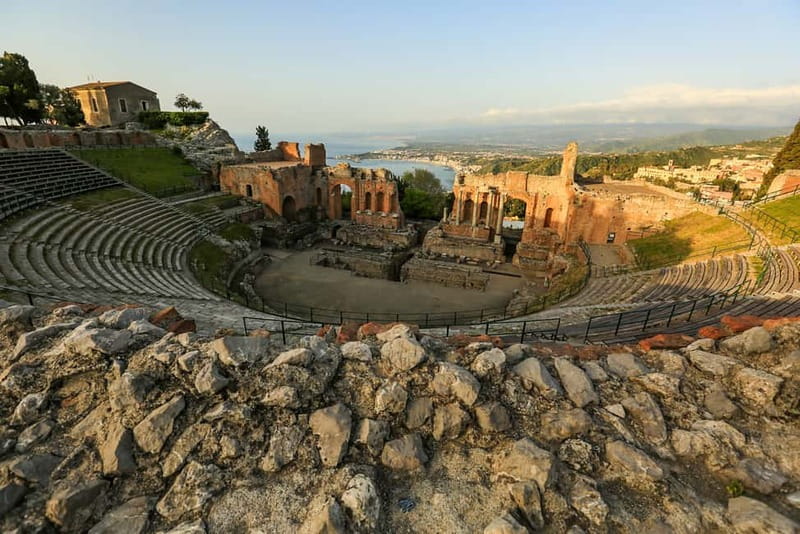
The Ancient Theater of Taormina is one of those places where the setting does half the work. It’s big, dramatic, and positioned to be seen—over the rooftops of Taormina and out toward the water. Even if you know nothing about ancient Greece or Rome, you’ll quickly understand why this kind of venue mattered.
The building’s story is layered. The theater’s layout dates by style to the 3rd–2nd century B.C. (Greek influence), but what you see today reflects major changes in the Roman imperial age, especially during the reigns of Trajan or Hadrian. Later, in the Caracalla period, it took on a more amphitheater feel, and the orchestra area was converted into an arena for gladiator fights. That shift—from theater performances to arena spectacle—is the kind of thing that makes the stone feel alive.
And then there’s a surprising turn: after centuries of neglect, part of the monument was used as a palace residence by the Zumbo family in 1465. It’s not just an archaeological site. It’s also a record of how people kept reusing powerful structures long after the original purpose faded.
A few more Taormina tours and experiences worth a look
Fast-track entry: what you do when you arrive

The whole experience is built around one practical goal: getting you through the busiest moment—ticket lines—without stress. When you arrive, your digital voucher needs to be exchanged at the box office to enter. That exchange is your key step.
After that, you’ll need to pass a security check before entering the archaeological site. This matters because even with skip-the-line access, you’ll still go through the normal control steps. In plain terms: expect the entry process to be quicker than the standard line, not instant with no waiting at all.
The meeting point is simply the Ancient Theater of Taormina itself, and the activity ends back at that same meeting point. That’s a good sign if you don’t want to spend your day herded around or worry about catching a guide at a later time.
Accessibility note: this ticket is marked wheelchair accessible. If you rely on wheelchair access, I’d still plan for uneven ancient stone and take your time on approaches, but you’re not being left out of the experience.
The audio guide setup: a self-paced visit that still teaches
Because there’s no live guide, the audio guide becomes the brain of your visit. The great thing here is control: you can move as slowly as you want, stop when something grabs your attention, and rewind mentally by re-listening to nearby segments if the timing feels off.
You’ll have a multi-language audio guide in English, Spanish, French, and German. That’s useful in Taormina, where you’ll hear a mix of languages in the ticket areas and around the site.
Here’s why this works so well for this particular theater: the building changes meaning as you walk. In some zones you’ll be reading the Greek-inspired layout; in others you’ll be seeing Roman-era modifications. The audio helps stitch those stages together so you’re not standing in one spot thinking, I know this is old, but what exactly am I looking at?
One small real-world tip from the way people describe their day: arriving early helps. You get in before crowds bunch up, and you can actually hear yourself think while listening. Even if your ticket doesn’t force a strict time, your first 30–60 minutes at the theater can feel much calmer if you start early.
What you’ll see inside: Greek layout, Roman upgrades, gladiator-era use
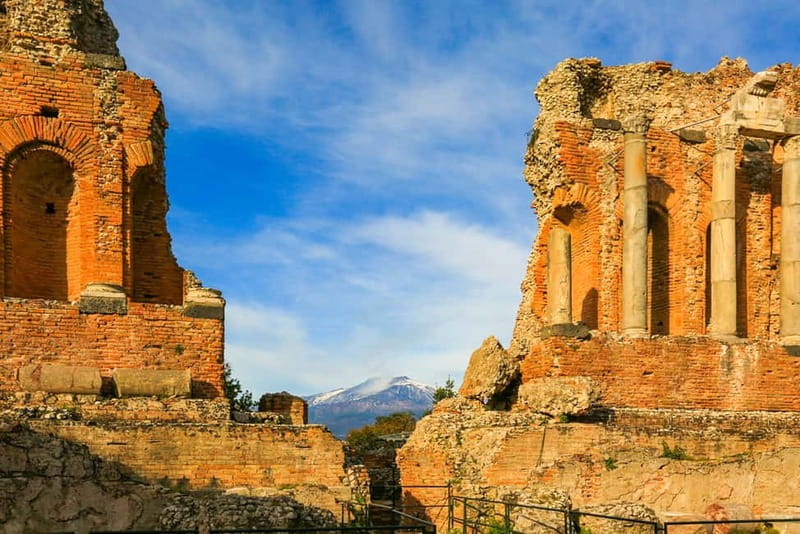
This is where the Ancient Theater earns its keep. You’re not just looking at seats and walls—you’re walking through a history of how Romans and Greeks repurposed performance spaces.
Start with the big-picture design. The theater’s position and layout come from the Greek idea of a dominant venue—built to carry sound and draw crowds. You’ll feel it fast because the space is arranged like a natural viewing machine: it was meant for audience focus, not casual wandering.
Then the Roman imperial changes become the real clue. Parts of the monument appear in the forms developed in the Roman imperial age, tied to Trajan or Hadrian. The audio guide context is especially helpful here because Roman modifications can be subtle when you’re standing on uneven ground with sun overhead. With the audio playing, the same stones start to read like a sentence rather than random fragments.
A key story point is the Caracalla-era transformation. In that phase the venue became more of an amphitheater, and the orchestra was turned into an arena for gladiator fights. Even if you’re not imagining specific combat scenes, this change explains why certain areas feel more like a stage for direct spectacle than a traditional “sitting and watching from above” theater.
Finally, there’s the medieval chapter. When part of the monument became a Zumbo family residence in 1465, the site stopped being only a civic performance machine. People lived inside history, adapting it to practical needs. That’s the kind of detail that makes you look at the structure with new eyes—less postcard, more living timeline.
The views from the theater seats: how to make them worth your time
Taormina’s views are a major reason people come. But the theater views are different from the usual viewpoints because they’re framed by the ruins themselves. You get a “window” effect: ancient seating in the foreground, and sea or town lines in the distance.
So use the space like this:
- Plan at least one slow pause where you turn in place and scan the horizon, not just snap a photo and move on.
- Let the audio guide pull you toward major areas, then step off the route for a short visual break.
- If you care about photos, you’ll want a spot that lets the theater features show while still keeping the sea or town view visible.
One reason the self-guided format shines is that you can time your own moments. If the light changes or you just want a calm minute away from the busiest section, you can take it without waiting for a group or stopping because a schedule says so.
Also, don’t forget there’s value beyond the view. The theater is an all-in-one mix: architecture, performance history, and scenery. If you only treat it like a viewpoint, you’ll miss the best part—the way the site tells you what changed over centuries.

How long to spend and when to go in Taormina

Your ticket is valid for 1 day, and the listing notes that you should check availability to see starting times. That usually means the experience supports particular entry windows, even if it’s not a timed, minute-by-minute tour inside.
Practically, plan on a visit that fits a couple of hours. One person described spending about two hours there, and that feels about right if you want time for the audio and time for real looking—especially since there’s a lot to take in as you move through the theater.
If you want the smoothest experience, go earlier in your day. People specifically highlight how helpful it is to bypass long lines and avoid waiting in hot sun conditions. Even with the skip-the-line advantage, early entry gives you better breathing room around the entrance and helps you start with a calmer pace.
There are also days when you might not need to pay (but you still might want to go early). The theater has free access on the first Sunday of each month, and June 2, 2025 is listed as free entry due to Republic Day celebrations. If you’re traveling around those dates, factor that in when you decide whether the ticket convenience is worth the extra cost for you.
Price and value: what you’re really paying for
The price is listed around $25 per person, and the breakdown for adults is pretty revealing:
- €12.00 for the Ancient Theater ticket
- €5.00 for the audio guide
- the remaining amount is GetYourGuide’s booking fee
So yes—you’re paying extra compared to buying only the venue ticket at the gate. The question is whether that extra cost buys you value you’ll feel.
In this case, it probably does, because the big benefit is skip-the-line entry plus the audio guide. Taormina is popular, and the Ancient Theater is one of the must-see stops. If you’ve ever spent time standing in line under intense sun, you already understand why pre-planning matters here. The skip-the-line part is the practical time-saver, and the audio guide is the knowledge-saver.
If you’re traveling solo, on a tight schedule, or you want to spend your day exploring Taormina instead of waiting for tickets, this package tends to make a lot of sense. If you’re very relaxed about crowds and you’re okay with lines, then paying for convenience might feel less important—but you’d still likely appreciate having the guide ready to go.
Things that can affect your mood once you’re there
Even with a smooth entry process, a few factors can shape the experience.
First: you must pass a security check. So expect some friction at the entrance, even if you skip the long ticket line.
Second: your ticket allows single entry. That matters if you like popping out for a quick coffee and coming back later. You can still stop for food, but plan your route so you’re not tempted to leave and return thinking you’ll be able to re-enter with the same ticket.
Third: you’re using a self-guided audio format. That’s great for flexibility, but it’s not the same as a live expert walking you through. If you want story-telling on the spot or answers to your specific questions, you may feel that gap.
Lastly, there can be optional staging effects. One person didn’t love the added electric and staging elements at the site (even though they understood why it helps the theater function as a venue). If you prefer a strictly archaeological feel, keep your expectations aligned: this is also an active space for performance.
Should you book this Taormina theater ticket?
Book it if you want the easiest entry to a top Taormina sight—especially if you hate lines or you’re trying to protect time in your day. The combination of skip-the-line access and a multi-language audio guide is a strong match for a self-paced venue where the details only click when you can take your time.
I’d also book it if you’re the type who likes to learn while walking, not only read plaques. The audio support works well for a place with multiple eras—Greek layout origins, Roman imperial changes under Trajan/Hadrian, the amphitheater shift under Caracalla, and even the later Zumbo residence chapter.
Skip booking only if you’re traveling with a very flexible schedule, you’re okay with waiting, and you don’t care about having the audio guide ready. Otherwise, this is a practical way to turn a must-see ruin into a smoother, more informative hour or two.
FAQ
How do I use my digital voucher to enter?
You exchange your digital voucher at the box office upon arrival, then you can enter the Ancient Theater of Taormina.
Does the ticket include an audio guide?
Yes. The ticket includes a multi-language audio guide in English, Spanish, French, and German.
Is a live guide included with this ticket?
No. A live guide is not included.
How long is the ticket valid?
The ticket is valid for 1 day. Availability shows starting times, so check what time slots are offered for your date.
Can I enter more than once with the same ticket?
No. The ticket allows single entry into the Ancient Theater of Taormina.
Is the Ancient Theater free on any days?
Yes. It has free access on the first Sunday of each month, and June 2, 2025 is listed as free entry for Republic Day celebrations.
What are the cancellation and pay-later options?
You can cancel up to 24 hours in advance for a full refund. You can also reserve now & pay later, keeping your plans flexible.