REVIEW · THE HAGUE
The Hague: Hop-on Hop-off Heritage Tram Tour
Book on GetYourGuide →Operated by Tourist Tram The Hague · Bookable on GetYourGuide
A 65-year-old tram makes The Hague feel close-up. I love the hop-on hop-off freedom plus the 10-language audio that explains major sights as you roll past them. One drawback to plan around: the tram runs on a fixed loop every 30 minutes, so you’ll want a simple timing strategy instead of expecting constant departures.
This is the kind of tour that helps you get your bearings fast without juggling multiple tickets or transfers. You can start at any stop, ride as much as you want in one day, and hop off at the landmarks you care about—then come back later when you’re ready.
In This Review
- Key highlights at a glance
- A 65-year-old heritage tram that actually helps you move
- Price and value: why $21 can make sense for a full day
- When the tram runs (and how to plan your hopping)
- Finding your stop fast: Tourist Tram stickers and plus codes
- The audio guide: 10 languages with earphones, timed to the ride
- The 16 stops: what to do and what to watch for
- Stop 1: Gravenstraat (city center start point)
- Stop 2: Centrum
- Stop 3: Centraal Station
- Stop 4: Malieveld
- Stop 5: Madurodam
- Stop 6: Nieuwe Duinweg
- Stop 7: Kurhaus (the seaside anchor)
- Stop 8: Zwarte Pad
- Stop 9: Keizerstraat
- Stop 10: Statenlaan
- Stop 11: Frederik Hendriklaan
- Stop 12: World Forum / Johan de Wittlaan
- Stop 13: Vredespaleis / Peace Palace (major landmark stop)
- Stop 14: Mauritskade
- Stop 15: Kneuterdijk
- Stop 16: Kerkplein
- Scheveningen and the Kurhaus: turning the coast into real time
- Board rules and comfort: what matters on a historic tram
- Is this the right kind of tour for you?
- Should you book the Hop-on Hop-off Heritage Tram in The Hague?
- FAQ
- What is the duration of the The Hague Hop-on Hop-off Heritage Tram tour?
- How much does it cost?
- What time does the tram operate?
- How often does the tram come?
- Can I start at any stop?
- Which landmarks can I reach on this route?
- Is the audio guide included, and what languages are available?
- Are there restrictions on board?
- Is it wheelchair or stroller-friendly?
Key highlights at a glance
- Unlimited day ticket on a classic heritage tram
- 16 hop-on stops, including Centrum and Central Station
- 10-language audio with earphones provided at boarding
- Frequent service: every 30 minutes from 10:15 to 16:45
- Easy access to top areas like Peace Palace and the Kurhaus/Scheveningen coast
A 65-year-old heritage tram that actually helps you move
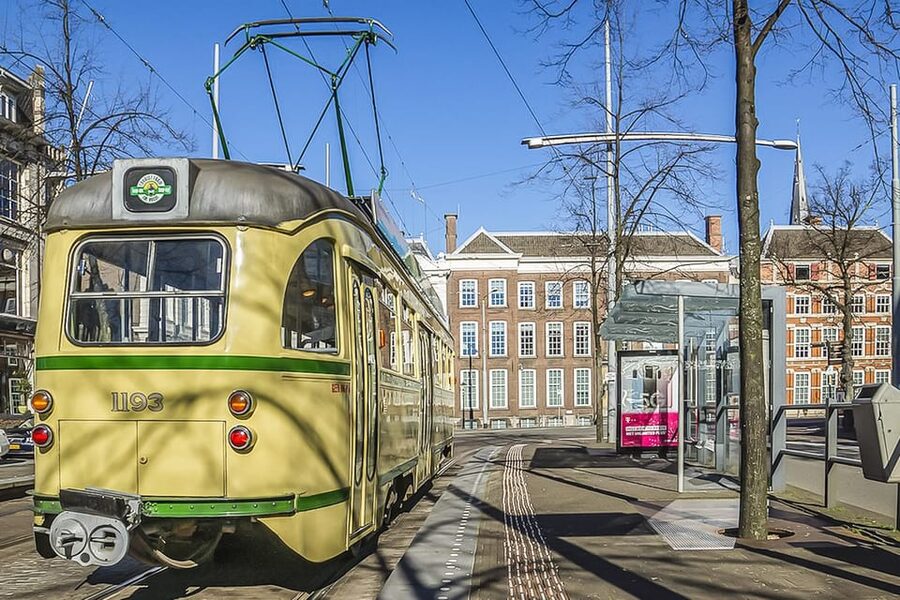
The best part of this experience is simple: you’re not stuck with one guided route. You’re on a real historic tram, rolling through The Hague at an easy pace, with enough time to look out the windows and enough control to decide what you do next.
I like tours where the vehicle isn’t just a means to an end. Here, the tram itself adds character. It’s a 65-year-old The Hague heritage tram, and the whole setup is designed for a “ride, listen, then step off” rhythm. The audio guide comes with earphones (provided when you board), so you’re not stuck reading along while you’re trying to enjoy the views.
Just remember the pace: the tram follows a schedule and comes around every 30 minutes. That’s great when you’re planning calmly, but it means you can’t treat it like a subway every minute.
Price and value: why $21 can make sense for a full day
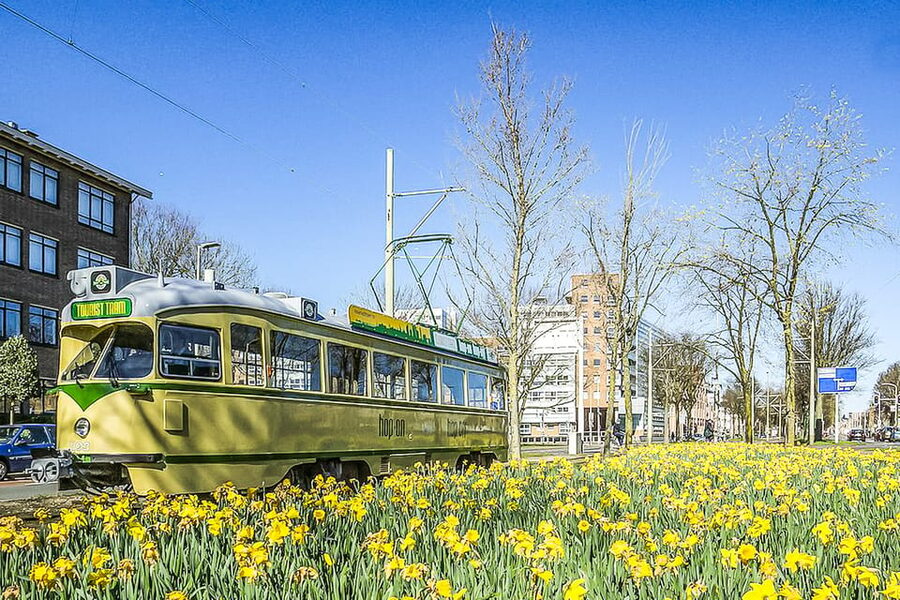
$21 per person sounds like a lot until you do the math the way you travel. With this day ticket, you get unlimited access to the hop-on hop-off tram for the entire day, so you’re not paying again for each hop-off. If you were to rely on taxis or piecemeal transport to bounce between the city center, major landmarks, and the seaside, the cost can climb fast.
You also get an audio guide in 10 languages, and earphones are included. That’s a real value add because you’re hearing guidance timed to what’s outside your window, not just generic information you read later.
Here’s the trade-off: if you only ride a stop or two and then leave, you’ll feel less value. This ticket works best when you actually use it like a day pass and do multiple hop-offs—especially around Peace Palace, the Parliament area, and the Kurhaus/Scheveningen side of town.
When the tram runs (and how to plan your hopping)
The tram operates every 30 minutes from 10:15 AM to 4:45 PM. The first departure from stop 1 is at 10:15 AM, and the last full round departs at 4:45 PM from stop 1. In plain terms: you have a solid window for one full circuit plus some extra hopping, but you don’t want to wait until late afternoon to start.
Here’s how I’d plan it so it feels smooth:
- Start somewhere convenient for you (you can board at any of the 16 stops).
- Do one main loop early or mid-morning to get oriented.
- Then add a second pass at the places you liked most—because you can hop on and off as many times as you want.
Also, don’t count on the tram being near you at every moment. One review noted that knowing which stop the tram is currently stopping at would be nice—so treat the stop names on the posts and your route map as your “source of truth.”
Finding your stop fast: Tourist Tram stickers and plus codes
Good news: you can board at any stop along the route. Less fun: the stops aren’t always obvious at a glance, so give yourself a little buffer time when you first try this.
Each tram stop is indicated by a Tourist Tram sticker on the stop post. For exact locations, the operator provides a map image and plus codes that you can copy into Google Maps by using the city name Den Haag. Stop 1, for example, is Gravenstraat (plus code 38H5+5H Den Haag).
If you’re the type who likes to know where you’re going before you arrive, I recommend you do this once:
- Save the route map image.
- Pick your first boarding stop and verify it in Google Maps using the plus code.
- Then you can rely on the sticker signage from there.
This is the part where you’ll feel the biggest difference between a relaxed start and a stressful one.
The audio guide: 10 languages with earphones, timed to the ride
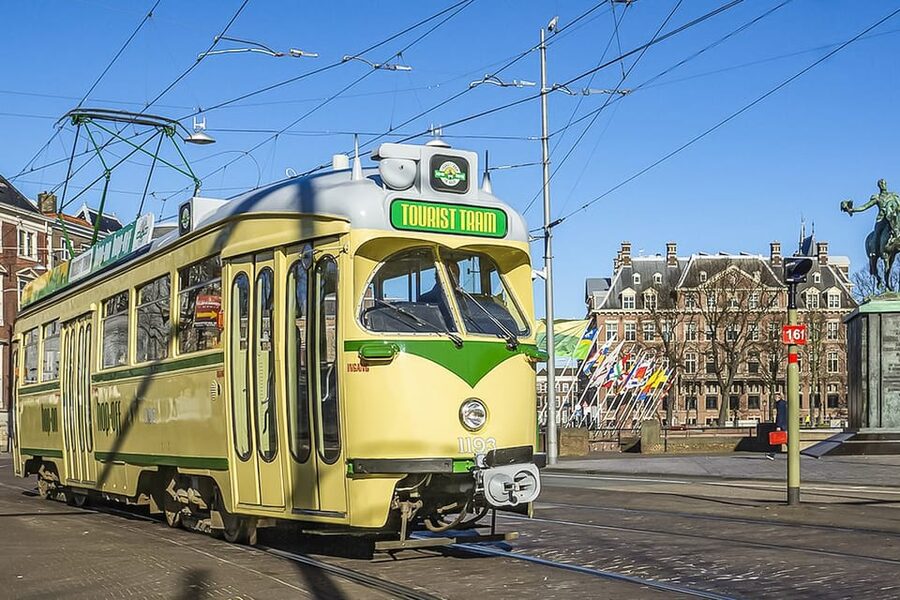
The audio tour is a big reason to choose this over wandering by yourself. You get guidance in Dutch, English, German, French, Spanish, Italian, Russian, Chinese, Japanese, and even the The Hague dialect.
Earphones are included, and you get them when you board. You’re listening in sync with what you see outside, which makes the big landmarks easier to place in your head when you’re walking around later.
One small heads-up: some recordings can feel loud, and there can be odd audio moments on certain stretches. That’s not a deal-breaker, but it is worth knowing so you don’t assume your earphones are broken. If something feels off, lower your volume and keep moving your focus back to the windows.
The 16 stops: what to do and what to watch for
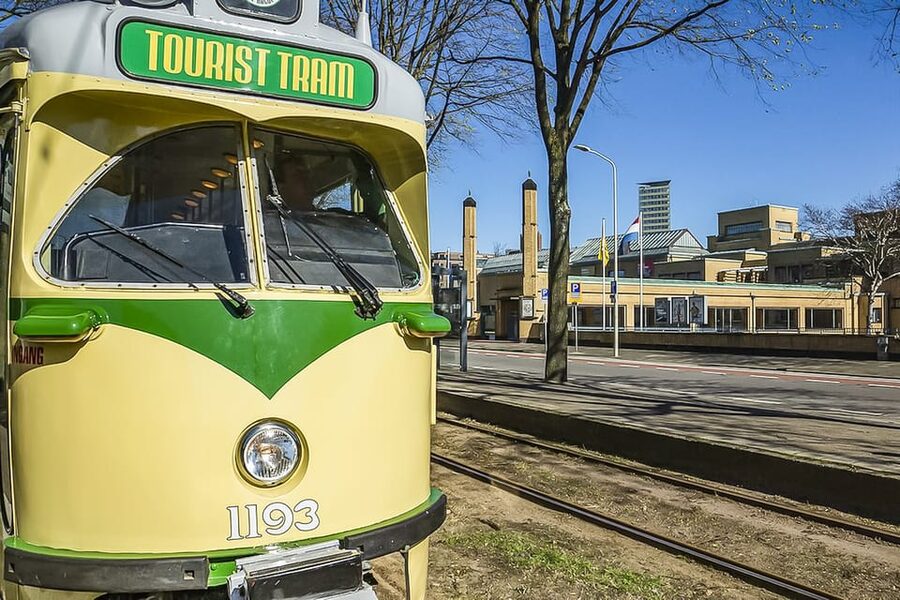
You can start at any stop, but it helps to think of the route as a set of “targets” you can reach without planning local transport.
I’ll walk you through the stops in order so you can build your own day.
Stop 1: Gravenstraat (city center start point)
This is the central hub for the route. If you’re staying near the center, starting here makes it easy to time your first circuit.
Tip: use this as your orientation ride. Don’t hop off too early. Let the audio set the scene first, then get off when you actually want to explore.
Stop 2: Centrum
Centrum is where you’ll likely want to linger if you enjoy walking around city areas at street level. It’s also a convenient stop to reposition if your next hop-off is nearby.
Practical approach: hop off at Centrum only if you have a specific idea of where you want to go next. Otherwise, stay on and save the walking time for the bigger targets.
Stop 3: Centraal Station
This stop is useful for practical reasons: it’s a familiar landmark and a good “reset” point if your day plan changes. It also helps you get back into the rhythm of the loop.
One drawback to know: audio segments on this general stretch can include strange sound moments for some listeners. Not dangerous—just unexpected. If you’re sensitive to audio effects, keep your volume comfortable.
Stop 4: Malieveld
Malieveld is another area where you can choose to step off and wander. Since the tram is your main transport, you can treat this stop as a flexible buffer between major sights.
If the timing doesn’t line up with your next hop, Malieveld can be a calm place to move slowly until the tram returns.
Stop 5: Madurodam
This is a prime stop if you’re traveling with kids or you want a shorter visit option between bigger landmarks. I’d use it as a quick hop-off rather than planning your whole day around it, unless that’s exactly what you came to see.
Stop 6: Nieuwe Duinweg
This stop helps bridge you toward the seaside side of the route. If your goal is to avoid rushing, you can use it as a transition point before you head toward Kurhaus and the coast.
Stop 7: Kurhaus (the seaside anchor)
Kurhaus is one of the headline stops. The tram highlights include visiting the Kurhaus area and getting to the beach of Scheveningen.
My advice: this is where I’d carve out the longest block of time. Even if you don’t stay all day, you want enough daylight time to enjoy the coast without counting minutes.
Stop 8: Zwarte Pad
This stop sits between the Kurhaus area and the next set of inland landmarks. Use it if you want to cut your walking time or just prefer a different angle for your photos.
Stop 9: Keizerstraat
Another workable hop-off for exploring on foot. If your schedule is tight, you can treat Keizerstraat as a “quick look” stop and then return to the tram for your next major target.
Stop 10: Statenlaan
This is a convenient mid-route stop that can help you stay efficient. If you’re using the tram to avoid transit hassle, you’ll appreciate stops like this because they let you stay flexible.
Stop 11: Frederik Hendriklaan
Same idea: use it to reposition around neighborhoods without planning a new ride. It’s a good stop if you like slow walking breaks rather than only big landmark stops.
Stop 12: World Forum / Johan de Wittlaan
This stop connects you to a major named area. If you’re into architecture or city planning vibes, it can be worth hopping off just to take in the scale and setting.
Since the audio guide is playing through all these stops, you’ll get context while you ride—so you can decide whether to stay off longer or move on quickly.
Stop 13: Vredespaleis / Peace Palace (major landmark stop)
Peace Palace is one of the big “get off and go look” stops. This is where you’ll probably want a more deliberate visit rather than a quick photo.
How to do it well: hop off, take your bearings using the audio info, and then give yourself time to walk around at your own pace before getting back on at the next opportunity.
Stop 14: Mauritskade
This stop can serve as a connector between your Peace Palace experience and your next city-center direction. If you found the landmark area enjoyable, you may want to use the tram to reposition rather than fight your way back on foot.
Stop 15: Kneuterdijk
Useful for another round of strolling options. I’d treat this as a “check the map, then decide” stop—if it lines up with what you still want to see, hop off. If not, stay on and watch the city roll past again.
Stop 16: Kerkplein
This is your ending stop for many day plans. If you started late or you want a smooth final loop back toward central areas, Kerkplein is a good place to wrap up.
One timing note: you’re working with that 10:15 to 4:45 window. If you want a final hop-off and a longer walk, don’t leave it for the last tram minutes.
Scheveningen and the Kurhaus: turning the coast into real time
This is one of the tour’s best reasons to exist: the tram takes you to the Kurhaus and the beach of Scheveningen in the same day without the stress of switching plans.
I’d do it like this:
- Pick a stop time that gets you to Kurhaus with enough daylight.
- Spend your time on the coast, then decide whether you want to stay longer or return to city-center sights.
Because you can hop on and off as often as you like, you can also use the tram as your “weather and energy tool.” If you start feeling tired, get back on and keep moving. If you’re still energized, stay out a bit longer and return later.
Board rules and comfort: what matters on a historic tram
A few practical points make the day easier:
- No food in the vehicle.
- No alcohol and drugs.
- Baby strollers and wheelchairs only fit if they can be disassembled or collapsed, since doors are narrow.
- There’s no step-free access between the platform and the tram, and this isn’t suitable for people with mobility impairments.
For most people, the vehicle will feel like a pleasant throwback. But narrow doors and older tram design can slow boarding. So if you’re traveling with anyone who needs extra time to get on, plan a slightly relaxed pace when the tram arrives.
Is this the right kind of tour for you?
This heritage tram works best for you if:
- you want an easy way to reach major highlights in one day
- you like audio guidance in your own language without a crowd of fixed tour group rules
- you’d rather ride and decide than follow a strict walking schedule
It may not be the best fit if:
- you need step-free access
- you only want a quick look at one or two places and won’t use the unlimited all-day ticket much
- you prefer transit that comes every few minutes instead of on a set loop every 30 minutes
Should you book the Hop-on Hop-off Heritage Tram in The Hague?
Yes, if you want a straightforward, low-stress day built around The Hague’s best-known sights, with a classic tram ride and audio in many languages. The biggest reason to book is value through flexibility: unlimited rides, 16 stops, and a full-day window that lets you come and go as you please.
Book it especially if you’re using your first visit to the city to get your bearings and you want to reach Parliament, Peace Palace, and the coast without overthinking logistics.
If you’re expecting a perfectly marked, always-obvious experience with constant tram arrivals, do yourself a favor: look for the Tourist Tram sticker, confirm your first stop with the provided plus code map, and don’t plan on being at a specific stop at an exact minute. Use the 30-minute rhythm, and you’ll enjoy the day a lot more.
FAQ
What is the duration of the The Hague Hop-on Hop-off Heritage Tram tour?
It’s a 1-day experience with unlimited access to the hop-on hop-off tram for the entire day.
How much does it cost?
The price is $21 per person.
What time does the tram operate?
The tram runs every 30 minutes from 10:15 AM to 4:45 PM.
How often does the tram come?
Departures are every 30 minutes.
Can I start at any stop?
Yes. You can board at any of the 16 tram stops of the hop-on hop-off tram.
Which landmarks can I reach on this route?
The tram route is highlighted for places like the Houses of Parliament, Peace Palace, Kurhaus, and the beach of Scheveningen, along with other stops in the city.
Is the audio guide included, and what languages are available?
Yes. The audio guide is included with earphones and is available in multiple languages including Dutch, English, German, French, Spanish, Italian, Russian, Chinese, Japanese, and even The Hague dialect.
Are there restrictions on board?
Food is not allowed on the vehicle, and alcohol and drugs are not allowed.
Is it wheelchair or stroller-friendly?
Baby strollers and wheelchairs only fit if they can be easily disassembled or collapsed, and there is no step-free access between the platform and the tram. It is not suitable for people with mobility impairments.