REVIEW · RIO DE JANEIRO
Rio Jewish Heritage Half-Day Tour
Book on Viator →Operated by Carioca Tropical Tour Operator · Bookable on Viator
Rio’s Jewish heritage is one of those stories that fits in your hand. In a compact morning tour, you’ll connect synagogue architecture, neighborhood history, and museum artifacts into one clear picture of Jewish life in Rio. The heart of the experience is guided site time at major landmarks, plus the ride between them with context you can actually use afterward.
I especially love the small-group feel (max 19) and the way guides like Efraim or Leonardo turn what could be dry facts into real stories from Brazilian Jewish community life. Second, I like that the itinerary mixes big monuments with places people still use today, like active synagogues and community spaces.
One consideration: entry costs for some stops are not included, so you’ll want to budget a little extra on the day for the museum and a tzedakah-based entrance at the Grande Templo.
In This Review
- Key Stops and Why They Matter
- A Small-Group Morning That Gets You Oriented in Jewish Rio
- Hotel Pickup, Air-Conditioned Transport, and a Day That Moves at Human Speed
- Stop 1: Hebrew Union Shel Guemilut Hassadim, Rio’s Oldest Synagogue
- Yitzhak Rabin Park and the View Over Botafogo Beach and Sugar Loaf
- Downtown Landmarks: Chaim Weizmann Square and the Anne Frank School
- The Holocaust Memorial Stop: Powerful, but Opening Days Matter
- Grande Templo Israelita do Rio de Janeiro: Inside a 1932 Landmark
- Museu Judaico do Rio de Janeiro: Museum Time That Still Feels Personal
- Price and Entrance Fees: Is $99.50 Worth It?
- Who This Tour Fits Best, and Who Might Want More Time
- Should You Book Rio Jewish Heritage Half-Day Tour?
- FAQ
- What is the duration of the Rio Jewish Heritage Half-Day Tour?
- How much does the tour cost?
- What time does the tour start, and where does it meet?
- Is hotel pickup and drop-off included?
- Are entrance fees included for the Jewish Museum and synagogues?
- Is the Holocaust memorial included, and when is it open?
- Is kosher lunch available?
- What group size should I expect?
Key Stops and Why They Matter
- Mirante do Pasmado / Yitzhak Rabin Park views over Botafogo Beach and Sugar Loaf, timed for easy sightseeing.
- Hebrew Union Shel Guemilut Hassadim, described as Rio’s oldest synagogue, and a strong place to start.
- Chaim Weizmann Square and an Anne Frank–named school, tying world history to Rio geography.
- Holocaust Memorial As Vitimas Do Holocausto, powerful and moving, but opening hours matter.
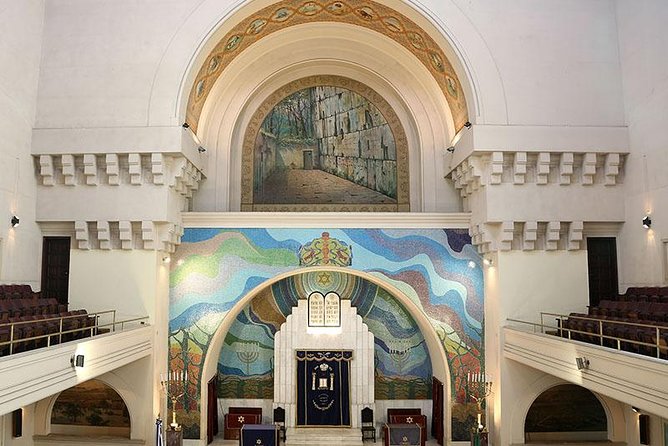
- Grande Templo Israelita do Rio de Janeiro, a 1932 landmark with mosaic details inside.
- Museu Judaico do Rio de Janeiro, with permanent exhibits on the Jewish community’s history and traditions.
A Small-Group Morning That Gets You Oriented in Jewish Rio
This is built for people who want meaning without burning half a day. The tour runs about 3 hours, starting at 9:00am and using an air-conditioned minivan or car to keep the pacing realistic. With a maximum of 19 travelers, you’re less likely to feel herded, and more likely to hear answers when questions pop up.
You also get a practical deal: hotel pickup and drop-off are included, so you’re not spending your time figuring out where to meet and how to get back. The meeting point is listed at Hilton Rio de Janeiro Copacabana (Av. Atlântica, 1020), but pickup makes this easier if you’re staying nearby.
The other quiet win is focus. Instead of a generic “city highlights” loop, this routes you through Jewish sites spread across Rio’s zones, so you begin to notice how history sits next to everyday life.
You can also read our reviews of more historical tours in Rio de Janeiro


Hotel Pickup, Air-Conditioned Transport, and a Day That Moves at Human Speed
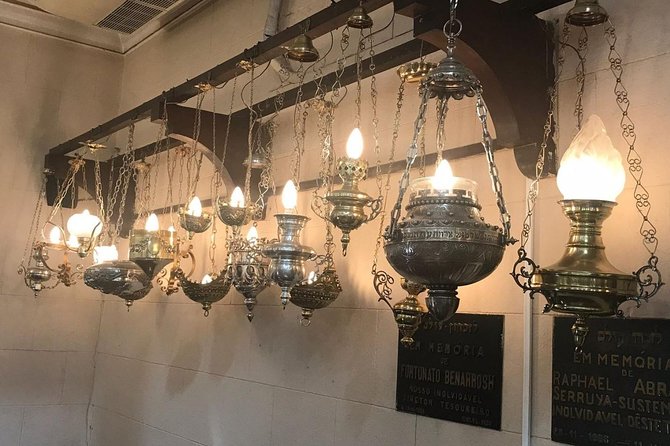
The day starts with pickup (from your hotel) and a ride that sets the tone. You’ll have a professional guide with you, and you’ll get brief framing before stepping out. That matters because Jewish history in Rio is not one single timeline. It’s migration, adaptation, community building, and then decades of continuity and change.
You’ll also move efficiently between neighborhoods. Expect short, purposeful stops rather than long free time. The itinerary includes multiple around-20 to 30 minute windows at specific places, plus time for the guide to explain what you’re looking at.
Dress matters a bit more than you might expect. You’re going into religious and historical buildings, so keep it respectful and comfortable enough for walking and indoor viewing.
Stop 1: Hebrew Union Shel Guemilut Hassadim, Rio’s Oldest Synagogue
You begin at Hebrew Union Shel Guemilut Hassadim, described as the oldest synagogue in Rio de Janeiro. The guide’s framing here is important: the founding is linked to Moroccan Jews, and the context matters because, at the time, non-Catholic worship was prohibited in Brazil. That one detail turns this from a pretty building into something with real stakes.
This is a short visit—about 20 minutes—but it’s the kind of starting point that sets your “filter.” Once you see an older synagogue, later stops stop feeling like random landmarks. You start noticing continuity: how communities established worship spaces, how they survived legal restrictions, and how they carried traditions forward.
Good to know: admission is listed as free for this stop. So you can focus on the experience instead of pulling out your wallet early.
Yitzhak Rabin Park and the View Over Botafogo Beach and Sugar Loaf
After the synagogue start, the tour moves into scenery. You’ll go to Park Itzhak Rabin, also noted as Mirante do Pasmado, and the payoff is the view. From here, you get privileged sightlines across Botafogo Beach and toward Sugar Loaf Mountain.
This stop feels like a breather, but it’s not just photo time. The guide uses this vantage point to connect geography to community life. Even if you’ve never traced Jewish settlement patterns in Rio before, a viewpoint gives you a mental map you can reuse later.
The time here is again around 20 minutes, so it’s enough to look around, take a few pictures, and hear how the story connects to the city’s layout—without turning into an endless lookout.
Also, watch for the rhythm: the tour keeps stops short, which is great if you’re traveling with limited time. It can be less ideal if you love long, slow museum wandering.
Downtown Landmarks: Chaim Weizmann Square and the Anne Frank School
Next you head toward the downtown area for Chaim Azriel Weizmann Square (spelled as Chaim Weizman/Weizmann in different parts of the tour description) and a school named after Anne Frank. This is one of the tour’s smartest touches: it shows how Jewish-related history echoes beyond synagogues.
There’s also a neighborhood detail that makes the city feel more specific. On the way through the Catete area, the tour notes a time when resident Jews had a thriving furniture business. That’s the kind of detail that helps you picture community life as economic and social, not only religious.
You’ll likely find yourself looking differently at what seems ordinary. Street-level history is easier to ignore than big monuments. This stop pushes you to notice how public spaces can hold memory.
The visit window is short, roughly 20 minutes, so the big value here is the guide’s explanation rather than time to wander.
The Holocaust Memorial Stop: Powerful, but Opening Days Matter
The itinerary includes Memorial As Vitimas Do Holocausto. The purpose is straightforward and serious: to preserve and share the stories of victims and survivors of the genocide, so the harm is not repeated.
Here’s the practical note you should not skip: this memorial space only opens from Thursday till Sunday. If you’re traveling earlier in the week and your heart is set on seeing it, plan your schedule around those days. If your tour date falls on a closed day, you might end up missing the interior visit you came for.
Time on this stop is listed at 20 minutes, and admission is not included. That combination can make it feel like a brief interruption—so mentally prepare for it as a moment to slow down, not a checkmark.
Even if you’ve seen Holocaust memorials elsewhere, the local framing matters. In Rio, it helps place the Jewish story within both local and global memory.
Grande Templo Israelita do Rio de Janeiro: Inside a 1932 Landmark
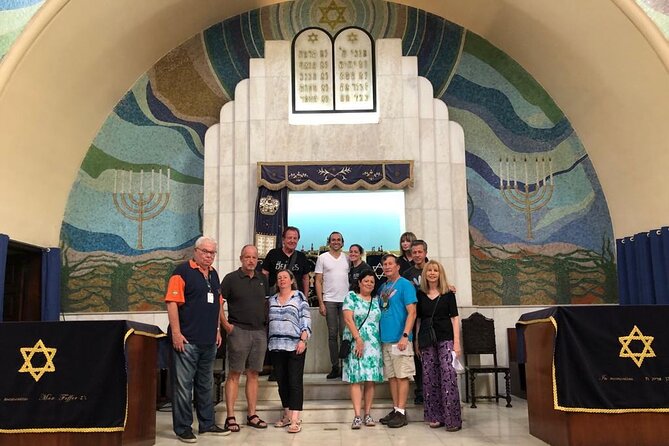
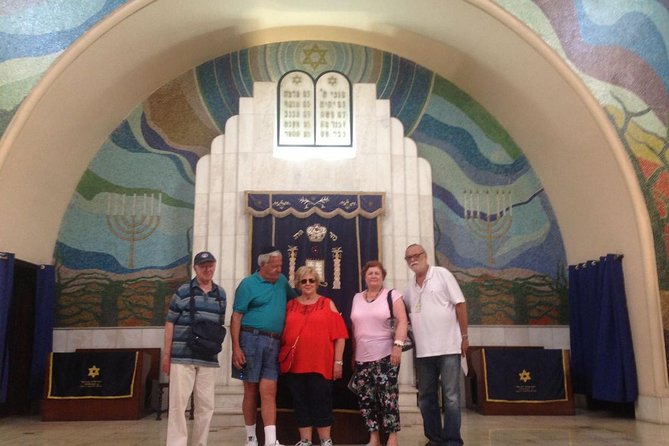
One of the main architectural highlights is the Grande Templo Israelita do Rio de Janeiro. It’s described as one of the first synagogues in Rio, completed in 1932, and it shows off details that catch the eye quickly: a grand archway topped with five smaller arches and mosaics depicting Jewish life.
You’ll spend time inside with your guide. The tour gives this stop extra weight because it’s not just a building you pass by. It’s a structure that helps you understand how communities expressed identity in physical form—through design, symbolism, and craftsmanship.
Admission is handled a specific way: entry is included as a tzedakah request of $5.00 per person. In plain terms, you’re not only paying to enter; you’re participating in a tradition of giving. If you’re sensitive to costs, keep this in mind and bring small bills or confirm how the tzedakah is collected so you’re not scrambling at the door.
You’re allotted about 20 minutes for this stop, which is tight but workable given the guide’s context.
Optional swap note: the tour description also says that the synagogue visit can be replaced at your request with Beth Yacov and Beit Lubavitch. If your interests point more toward those specific congregations, this is the kind of flexibility worth using.
Museu Judaico do Rio de Janeiro: Museum Time That Still Feels Personal
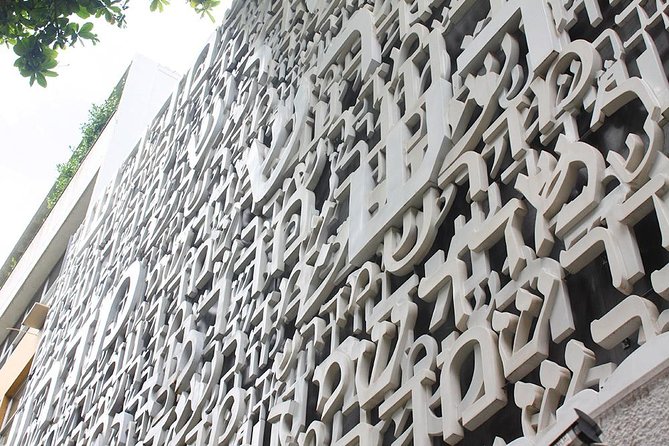
The final major stop is Museu Judaico do Rio de Janeiro, founded in 1977. This is a cultural center, and the mission is explained in terms of preserving memory while supporting the ongoing energy of Jewish culture.
What I like here is that it’s not only about historic documents. The museum keeps permanent exhibitions on the history of the Jewish community in Rio and Jewish traditions across religious, cultural, and historical angles. It also supports activities that extend beyond the walls, including academic research and student competitions.
Your time is about 30 minutes. That’s enough to get oriented, read key panels, and see a few artifacts without feeling like you must sprint. Admission is listed as not included, at $2.00 per person, so it’s a small add-on that can make the tour feel more rounded.
If you’re the type who likes to understand context after the bus ride, this is the best placement of the museum stop. You’ve already seen places of worship and memorial space, so you’re ready to connect the visual story to objects and documentation.
Price and Entrance Fees: Is $99.50 Worth It?
At $99.50 per person for the half-day, this doesn’t compete with the cheapest walking tours. You’re paying for three things that matter: a professional guide, transport, and hotel pickup/drop-off. That combination is often what turns a “could be great” idea into a “actually great because I didn’t waste time getting there.”
Then there’s the matter of extra costs:
- Museu Judaico: $2.00 per person (not included)
- Grande Templo: $5.00 per person as a tzedakah entrance
Those add-ons are modest. The bigger question is whether the tour’s format fits you. If you want a fast overview of major Jewish Rio landmarks with clear guidance and minimal logistics hassle, the value is strong. If you already know the history well and prefer long museum time, you may feel the short visit windows.
A smart strategy: bring cash or a payment method ready for the museum and tzedakah costs. It keeps the experience smooth and prevents the stop from turning into an administrative moment.
Who This Tour Fits Best, and Who Might Want More Time
This works best for:
- You if you want an organized introduction to Jewish heritage in Rio without making your own itinerary.
- You if architecture and place-based history matter to you.
- You if you appreciate guides who tell stories with local context. Names like Ephraim and Leonardo come up repeatedly for their engaging, personal style and strong storytelling.
You might want a different plan if:
- You’re craving long, quiet time inside museums or deep study on your own.
- You’re only available on days outside Thursday–Sunday, if the Holocaust memorial is a must-see for you.
- You prefer avoiding any situation with optional donation expectations. The Grande Templo uses tzedakah as an entrance approach, and while it’s relatively small, it is still part of how access works.
Also, keep an eye on pacing. Because the tour uses short time blocks, you’ll need to decide what you want most: context and coverage, or lots of unscheduled wandering.
Should You Book Rio Jewish Heritage Half-Day Tour?
Book it if you want a guided, time-efficient way to understand Jewish Rio through synagogues, memory sites, and the Museu Judaico—with pickup and transport handled for you. The best reason to go is the way the stops connect into a story you can actually carry with you when you continue exploring on your own.
Skip it or pair it with extra time elsewhere if your schedule makes the Holocaust memorial hard to see, or if you know you need deeper museum hours than this tour allows.
If you’re planning a first trip and you want one thoughtful half-day that adds a different layer to Rio, this is a strong choice.
FAQ
What is the duration of the Rio Jewish Heritage Half-Day Tour?
It lasts about 3 hours.
How much does the tour cost?
The price is $99.50 per person.
What time does the tour start, and where does it meet?
The start time is 9:00am, and the listed meeting point is Hilton Rio de Janeiro Copacabana on Av. Atlântica, 1020.
Is hotel pickup and drop-off included?
Yes. Hotel pickup and drop-off are included, and you travel by air-conditioned minivan or car.
Are entrance fees included for the Jewish Museum and synagogues?
The Jewish Museum entrance is not included and costs $2.00 per person. Entrance to the Grand Synagogue is handled as a tzedakah donation of $5.00 per person.
Is the Holocaust memorial included, and when is it open?
The Holocaust memorial stop is included in the route, but the space only opens Thursday through Sunday. It is not included in the entrance pricing.
Is kosher lunch available?
Kosher lunch is available if you request it in advance.
What group size should I expect?
The tour has a maximum of 19 travelers.