Coventry tells stories in plain sight. This 2h45 walk turns everyday streets into a “jigsaw” of post-war planning, engineering, and theatre culture you can actually see. I especially love the way the route links major figures—like Sir Frank Whittle—to real street-level landmarks, and I like that most stops are free to enjoy on the spot.
One possible drawback: the meeting point can be easy to miss unless you know exactly where to stand—aim for the start beside the Lady Godiva statue area in Broadgate, not just a pin.
In This Review
- Key highlights you’ll feel right away
- Why this Coventry walk feels like a history jigsaw
- Price and logistics: $17.05 for nearly 3 hours of guided meaning
- Starting in Broadgate: Lady Godiva and Donald Gibson’s City of Tomorrow
- Ribbon weaving to a cathedral wall: seeing Coventry’s layers close up
- Sir Frank Whittle: when a statue points to a real invention
- Lady Herbert’s Garden: bicycles, Coventry’s city wall, and the English Civil War hook
- The Coventry Ring Road (A4053): engineering that reshaped daily life
- Millennium Place near the Transport Museum: motor-making rise and disappearance
- Palmer Lane: the off-the-beaten-track pause
- Old Grammar School corner: Coventry’s motor industry in art and names
- Belgrade Theatre outside: plays, public art, and Ira Aldridge
- Bond’s Hospital (built 1505): a centuries-old building still doing its job
- “Sent to Coventry” outside St John the Baptist
- Historic Spon Street: where dying trades, tanning, watchmaking, and bicycles meet
- Coventry Market shopping centre: a quick stop that’s off-limits on Sundays
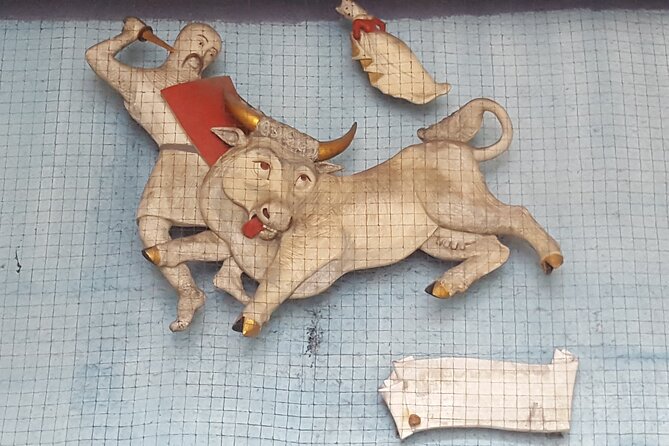
- Bull Yard and Shelton Square: City of Tomorrow plus quirky public art
- Cheylesmore Manor House: a 700-year-old royal palace in the middle of town
- New Union Street and Greyfriars Spire: Coventry’s survivor
- Ford’s Hospital: a famous compliment from 1902
- Ending on Hertford Street: the jigsaw put back together
- Who should book this tour (and who might not)
- So, should you book the Jigsaw of History Tour?
- FAQ
- Where does the tour start?
- What time does the tour begin?
- How long is the tour?
- How far do you walk?
- Is the route flat or does it have hills?
- Is the tour offered in English?
- Are tickets included for the stops?
- How big is the group?
- Can I bring a service animal?
- Does Coventry Market stop work on Sundays?
- FAQ
- Is free cancellation available?
Key highlights you’ll feel right away
- Post-war Coventry’s City of Tomorrow plan is explained as you walk the streets, not as a slideshow.
- Industry comes in chapters: ribbon weaving, bicycles, jet engines, and the rise-and-fall of car-making.
- Engineering you can touch: the Coventry Ring Road (A4053) and the City Wall story are part of the same conversation.
- Belgrade Theatre has you looking outward at public art while learning why Coventry was known for plays.
- “Sent to Coventry” gets traced outside St John the Baptist, with a guide-led explanation.
- Small group format (up to 12) helps you keep the pace without feeling rushed.
Why this Coventry walk feels like a history jigsaw
If Coventry feels a bit confusing at first, this tour is the fix. It doesn’t ask you to memorize years. It shows you how the city’s identity is built from pieces—statues, walls, hospitals, and street corners—then connects those pieces to inventions and big changes in everyday life.
The best part is the way the guide uses what’s visible right there to explain bigger themes. The “City of Tomorrow” plan by Donald Gibson is a perfect example. You don’t just hear the phrase—you walk through the spaces where that post-war vision was put into practice.
And because it’s a compact loop, you don’t spend time commuting across town. You stay in the core, moving from one clue to the next.
Price and logistics: $17.05 for nearly 3 hours of guided meaning
At $17.05 per person for about 2 hours 45 minutes, this is strong value if you like walking tours that do more than recite dates. Most stops are Admission Ticket Free, so your money stays on the guide and the story, not on paid entry fees.
The pacing also helps. The tour covers just over two miles, mostly flat, with some inclines and ramps. There’s one small area of cobbles—nothing dramatic, but you’ll be glad you wear shoes with decent grip.
It’s also capped at 12 travelers, so the guide can keep the flow and handle questions without turning it into a lecture hall. The tour is in English, with a mobile ticket format (so you don’t need to hunt for paper).
Starting in Broadgate: Lady Godiva and Donald Gibson’s City of Tomorrow
You begin at Sky Blue City Walks in Broadgate (CV1 1NE) and the route kicks off around the Lady Godiva statue. This first stretch is all about setting the “why” behind Coventry’s layout.
From the start, you’ll hear about Donald Gibson’s masterplan for post-war reconstruction—what the city was trying to rebuild, and what it chose to prioritize. It’s a good opener because it trains your eyes. Instead of seeing buildings as random scenery, you start looking for intent: what was saved, what was replaced, and what the city wanted to become.
Practical tip: stand near the Godiva statue area so you don’t waste time circling for the group.
Ribbon weaving to a cathedral wall: seeing Coventry’s layers close up
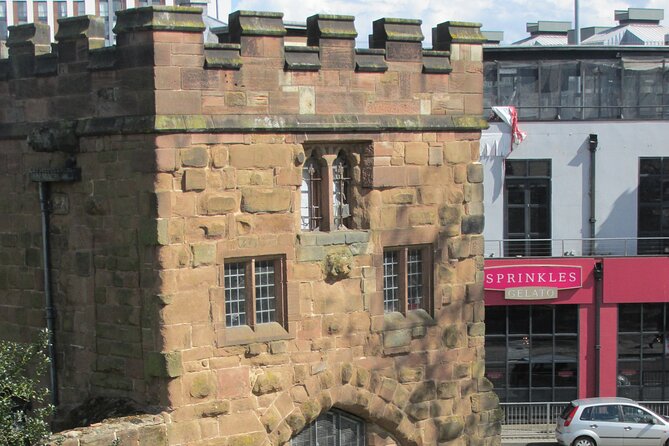
Next you move to the last surviving former ribbon weaving factory in the city centre. This is a short stop, but it matters because it reminds you that Coventry’s famous industries weren’t always “big modern engineering.” Ribbon weaving shows how jobs, craft, and manufacturing shaped the city.
You also get a fascinating pairing here: that weaving factory sits next to the surviving wall of the original Coventry Cathedral, St Mary’s. Even if you’ve seen cathedrals elsewhere, this adjacency changes the mood. It shows how sacred space and working industry can occupy the same urban story.
Sir Frank Whittle: when a statue points to a real invention
Then it’s on to the Sir Frank Whittle statue. The guide connects Whittle to his Earlsdon roots as an engineer and RAF officer, and to his role as the inventor of the jet engine.
This stop works best if you like quick, focused science-and-local-pride moments. It’s not a museum stop. It’s a moment where a statue becomes a shortcut into the history of modern flight—and a reminder that major breakthroughs often come from the most specific local places.
Lady Herbert’s Garden: bicycles, Coventry’s city wall, and the English Civil War hook
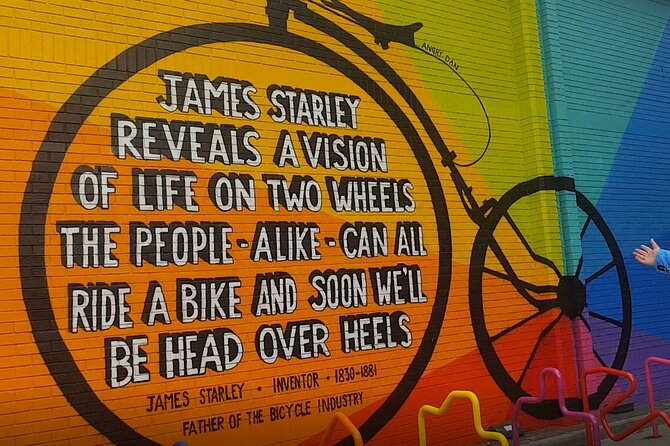
This is one of the longer stops, and it’s where the tour starts feeling like a true “jigsaw.” In and around Lady Herbert’s Garden, you learn about the birth of the bicycle industry and how the modern bike came into being.
Then the story expands again—because the tour doesn’t treat bicycles as a separate topic. It folds them into the same industrial thread as other Coventry inventions and manufacturing strengths.
Right after that, you pivot to the best preserved section of the Coventry City Wall. The guide explains how the wall was built, and why industrialist Alfred Herbert saved it from destruction. That detail matters: you’re watching conservation explained in the language of real decisions and real power, not just romantic nostalgia.
And then comes a curveball: the story of when the wall was needed, with the “true beginning of the English Civil War” angle. Even with the uncertainty of any historical framing, the takeaway is clear—you’re seeing how defensive structures became part of political conflict.
The Coventry Ring Road (A4053): engineering that reshaped daily life
Now you hit the A4053 briefly, but you’ll get the “engineering marvel” explanation for how the Coventry Ring Road works.
What I like about this segment is that it reframes infrastructure as history. A road isn’t just transport. It changes where people can work, shop, and move—and it changes what gets built around it. In a short time, you understand how a city can reinvent itself through planning choices.
Millennium Place near the Transport Museum: motor-making rise and disappearance

At Millennium Place, by the Coventry Transport Museum, the focus turns to the Coventry motor industry.
You’ll hear how Coventry became the motor city of England and a global centre of car manufacture, then how so much of it almost disappeared forever. It’s emotional without being dramatic. The guide keeps bringing you back to what it meant locally—jobs, identity, and the effect of industrial change on a city’s confidence.
Even if you don’t go into the Transport Museum, this stop gives you a framework to interpret what you might see if you do later.
Palmer Lane: the off-the-beaten-track pause
A small stop at Palmer Lane gives you a change of pace. You’ll see a few things in the heart of the city that many locals don’t know about.
This is the “walky-walk” part that still feels useful. It keeps your attention sharp and breaks up the bigger history blocks so you don’t feel like you’re being rushed through facts.
Old Grammar School corner: Coventry’s motor industry in art and names
At the corner associated with what people shouldn’t call the Old Grammar School, you’ll look for an artwork celebrating Coventry’s motor industry.
The guide also points out building names after the most famous poet from the city. This is a reminder that Coventry’s pride isn’t only mechanical—it also shows up in culture, branding, and public naming.
Tickets are listed as not included here, so plan on enjoying what you can see from outside and follow the guide’s lead on what’s accessible.
Belgrade Theatre outside: plays, public art, and Ira Aldridge
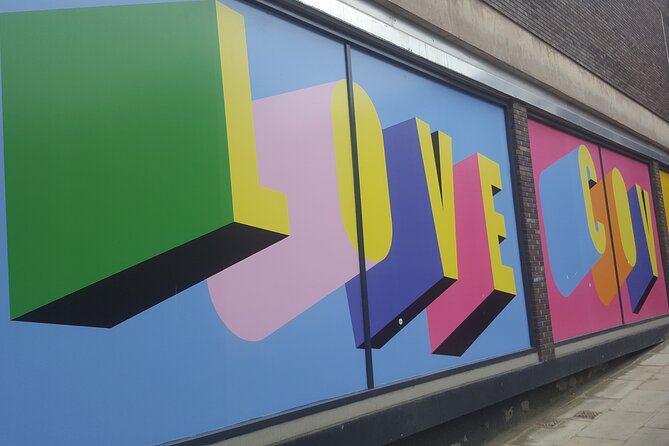
Outside the Belgrade Theatre, you’ll wander around the exterior artworks used to tell the theatre’s stories. This stop is about theatre history and Coventry’s reputation for plays.
A highlight here is Ira Aldridge. The guide explains that roughly 200 years after Othello was written, he became the first Black man to play the leading character. This isn’t just a trivia moment—it’s a story about who had access, who changed expectations, and how performance history echoes long after the curtain falls.
It’s a good stop if you like cultural history you can see without paying for an indoor ticket.
Bond’s Hospital (built 1505): a centuries-old building still doing its job
Then you’ll move to Bond’s Hospital, built in 1505 by Thomas Bond, with a note that it’s still used for the purpose he intended.
This stop is quick, but it’s satisfying. It gives you a sense of continuity: Coventry has changed industries and buildings, but some institutions have lasted through the churn. Tickets aren’t listed as included here, so you’ll likely focus on what you can observe around the site.
“Sent to Coventry” outside St John the Baptist
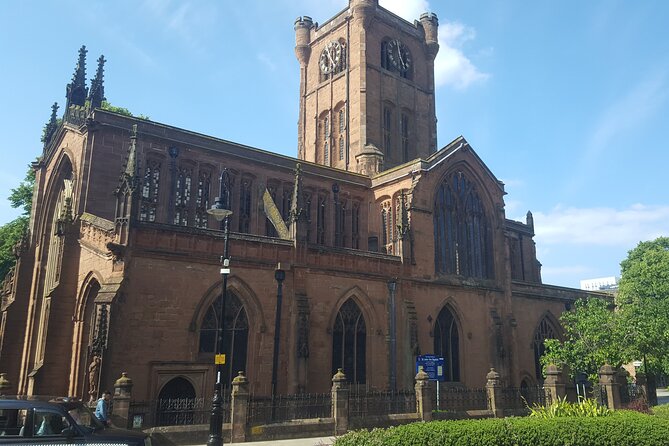
Next is the Parish Church of St John the Baptist. The guide explains why it’s claimed to be the original connection behind the phrase Sent to Coventry.
I like phrase-based stops because they train you to notice how language gets grounded in real places. Even if you’ve heard the phrase before, this gives it a location and a story chain that makes it stick.
Tickets aren’t included for this stop, so think of it as an exterior storytelling moment.
Historic Spon Street: where dying trades, tanning, watchmaking, and bicycles meet
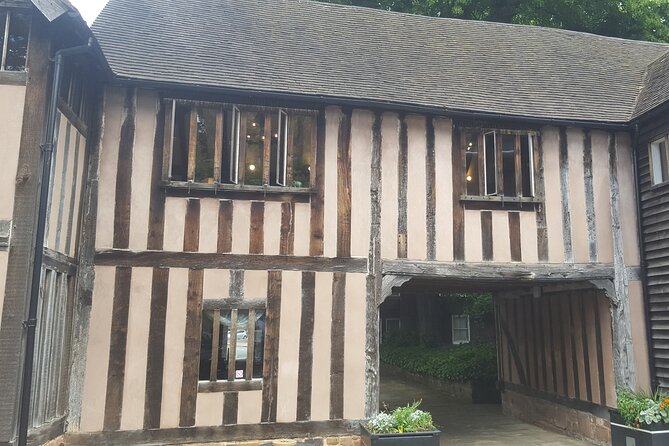
Spon Street is one of the most time-consuming segments at about 20 minutes. Here you get an “industry sampler” feel: dying, tanning, watchmaking, and bicycles all show up in the conversation.
You’ll also hear that for centuries it was one of the major roads in the country. Then you get a twist: while not everything is as it may first seem in the area, the guide helps you read the street with a more careful eye.
If you’ve ever walked through a city and felt like you were looking at the present only, Spon Street is the cure. It shows you how streets carry old economies even when the businesses have changed.
Coventry Market shopping centre: a quick stop that’s off-limits on Sundays
A short pop into the Coventry Market Shopping Centre rounds things out at about 5 minutes.
One practical note: it’s not on Sundays. If you’re visiting on a Sunday, don’t plan on counting on this brief indoor moment—your time may be focused elsewhere.
Bull Yard and Shelton Square: City of Tomorrow plus quirky public art
At Bull Yard and Shelton Square, the guide ties the City of Tomorrow story back into the spaces where you can see different public artworks.
You’ll also learn about what the area had been like in days gone by. This is the “small details matter” stop: it’s less about one giant monument and more about the way public space can keep multiple stories visible at once.
Cheylesmore Manor House: a 700-year-old royal palace in the middle of town
Next comes Cheylesmore Manor House, described as a 700-year-old Royal Palace sitting in the city heart.
This is another “pause and look” stop. Tickets are not included, so you’ll likely focus on the external feel and the guide’s highlight points rather than any full interior experience.
New Union Street and Greyfriars Spire: Coventry’s survivor
Then you head to New Union Street, where the guide tells the story of Greyfriars Spire, described as Coventry’s great survivor.
Even in a short 5-minute window, this stop works because it gives you a single image to hold onto as you continue. When a city loses pieces to war, redevelopment, or neglect, “survivors” become anchors for identity. You’ll feel that here.
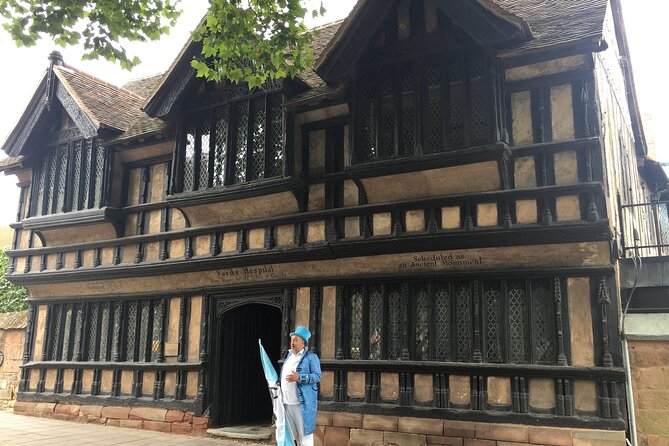
Ford’s Hospital: a famous compliment from 1902
A final key site is Fords Hospital, where the guide references a 1902 travel writer who praised it as exquisite in the whole kingdom.
This stop is short, but it adds flavour. It reminds you that visitors have long noticed the charm of Coventry’s institutions—even when industries changed and crowds moved on.
Ending on Hertford Street: the jigsaw put back together
You wind up in Hertford Street, with a couple of minutes to spot a handful of details as you make your way back to the start.
This last stretch matters because it’s where the “jigsaw” clicks. You stop seeing a pile of unrelated sights. You see patterns: industrial innovation, conservation choices, cultural milestones, and the way a city rebuilds its identity again and again.
Who should book this tour (and who might not)
This is ideal for you if:
- You like walking and want practical, on-the-ground context.
- You’re drawn to Coventry’s mix of engineering + culture (jet engines, bicycles, theatre, major roads).
- You prefer short stops with story cues you can carry into your own exploring later.
You might think twice if:
- You want long museum-style time inside major sites. Several stops are exterior or story moments, and tickets aren’t included for a few of them.
- You have very limited walking ability. The tour is mostly flat, but it’s still a loop of just over two miles with inclines/ramps and one small cobbled area.
So, should you book the Jigsaw of History Tour?
I’d book it if you want Coventry to make sense fast. For $17.05, you get a compact route with most stops ticket-free, and you come away with a mental map that’s based on how the city actually grew and reinvented itself.
Just do two things to make it smoother:
- Arrive a few minutes early and meet near the Godiva statue in the Broadgate square area, not only at a map pin.
- Wear comfortable shoes, since you’re walking a bit more than two miles and one spot has cobbles.
If that sounds like your kind of city day, the Jigsaw of History Tour is a smart way to spend your time in Coventry.
FAQ
Where does the tour start?
It starts at Sky Blue City Walks on Broadgate, Coventry CV1 1NE, UK. The walk ends back at the same meeting point.
What time does the tour begin?
The listed start time is 9:50 am.
How long is the tour?
It runs about 2 hours 45 minutes (approx.).
How far do you walk?
The tour is just over two miles.
Is the route flat or does it have hills?
It’s mostly flat, but there are some inclines and ramps, plus one small area of cobbles.
Is the tour offered in English?
Yes. The tour is offered in English.
Are tickets included for the stops?
Most stops are marked as admission ticket free. A few stops list admission ticket not included, so those parts are not covered by the tour price.
How big is the group?
The tour has a maximum of 12 travelers.
Can I bring a service animal?
Yes, service animals are allowed.
Does Coventry Market stop work on Sundays?
The Coventry Market Shopping Centre stop is not on Sundays.
FAQ
Is free cancellation available?
Yes. You can cancel for a full refund for free up to 24 hours in advance of the experience start time. If you cancel less than 24 hours before, the amount paid is not refunded.