REVIEW · TUCSON
Tucson Food Tours- Locally Owned Mural and History Tour
Book on Viator →Operated by Tucson Food Tours · Bookable on Viator
Tucson’s walls tell stories on every corner. This mural and history walk with Tucson Food Tours covers classic downtown landmarks in about 2.5 hours, using a mobile ticket so you can focus on what’s outside your window. The vibe is part art stroll, part time machine, with a friendly guide keeping the route logical as you move.
I love the mix of stops that are visually impressive and historically anchored—especially the restored Southern Arizona Transportation Museum and the Presidio site tied to Tucson’s early Spanish military era. I also really liked the way the guide (Karen) points out details people miss, like how the murals connect to the city’s changing communities and building stories.
One thing to plan for: this tour needs good weather, and it’s non-refundable if you cancel for reasons other than poor-weather operation.
In This Review
- Key things I’d prioritize on this Tucson mural and history tour
- How the tour works: a 2.5-hour mural-and-history route on foot
- Stop 1: Southern Arizona Transportation Museum (1907) and the railroad backbone
- Stop 2: Presidio San Agustin Del Tucson Museum and the 1775 fort site
- The tragic 1970 fire landmark: learning how big events shape a city
- Stop 3: Pima County Courthouse and Spanish Colonial Revival details
- Where the murals come in: Tucson’s community voice in public space
- What I liked most (and what you should watch for)
- Who this tour is best for
- Value check: admissions, duration, and what you actually get
- Booking tips: timing, weather, and your expectations
- Should you book Tucson Food Tours: Locally Owned Mural and History Tour?
- FAQ
- Where does the Tucson Food Tours mural and history tour start?
- How long is the tour?
- What time does the tour begin?
- Is the tour offered in English?
- Do I need a mobile ticket?
- Which stops include admission?
- What happens if the tour is canceled due to poor weather?
Key things I’d prioritize on this Tucson mural and history tour
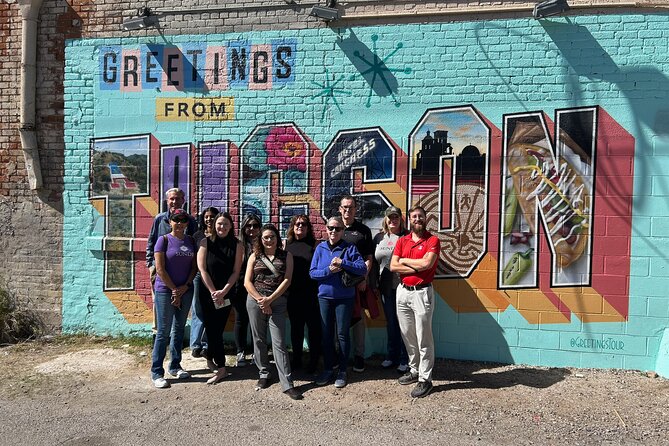
- A small group cap of 16 means you get answers without feeling rushed.
- Mobile ticket makes it easy to show up and get moving from the start point at 311 E Congress St.
- Built-in landmark pacing: you’re not just reading plaques—you’re walking from site to site with context.
- Presidio San Agustin del Tucson Museum includes admission, while other stops are listed as free.
- Karen-style guiding focuses on what you’re actually seeing, not a generic script.
- Weather-dependent schedule—best day choices matter here.
How the tour works: a 2.5-hour mural-and-history route on foot
This experience runs about 2 hours 30 minutes and starts at 9:00 am at 311 E Congress St, Tucson, AZ 85701. It’s offered in English, and the group size is capped at 16, which keeps it from turning into a stampede at every corner.
The tour is built around walking between historic buildings along what’s described as a brew-tour route. Even if you’re not there for food or drink, that “downtown walking loop” makes sense—you’ll be moving through parts of Tucson where the streets, architecture, and public art all overlap.
For me, the real win is pacing. You’re not stuck in one museum room for a long stretch. You get short stops—generally around 15 minutes each—so you can absorb the essentials, ask questions, and still cover several major landmarks without getting worn out.
You can also read our reviews of more tours and experiences in Tucson.

Stop 1: Southern Arizona Transportation Museum (1907) and the railroad backbone
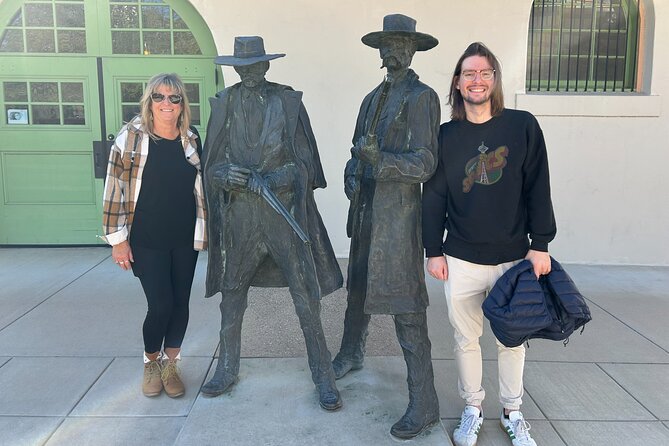
Your first stop is the Southern Arizona Transportation Museum, built in 1907. It’s described as a beautifully restored landmark that once served as a key hub for the Southern Pacific Railroad, and today it houses a museum and café.
Even if you don’t consider yourself a “railroad person,” this building helps you understand Tucson’s growth logic. Rail connections shaped where people settled, where goods moved, and which parts of town became important. Standing in a structure like this early in the tour gives you a reference point before the story shifts to forts, public buildings, and public art.
Practical note: admission for this stop is listed as free, and the stop time is about 15 minutes. That’s enough time to see the space and grasp the big idea without needing a full museum visit. If you like quick context before you go deeper on your own later, this is a strong opener.
Stop 2: Presidio San Agustin Del Tucson Museum and the 1775 fort site
Next up is the Presidio San Agustin Del Tucson Museum. Founded in 1775 by the Spanish military, it’s tied to the fort’s position along the Santa Cruz River near the Native American village of Chuk-shon. The fort originally covered 11 acres and was surrounded by a thick adobe wall.
Today, the museum sits on the site of the northeast corner of the original presidio, and the area has been reconstructed to help visitors picture the early layout of Tucson’s defense and settlement. This stop is the one that feels especially grounded in place—because you’re talking about where structures were meant to stand, not just what happened in the abstract.
Admission is listed as included here, and the stop is again about 15 minutes. That combination—short but included—works well because it removes friction. You’re more likely to actually go inside and look, instead of deciding on the fly whether it’s “worth the ticket.”
The tragic 1970 fire landmark: learning how big events shape a city
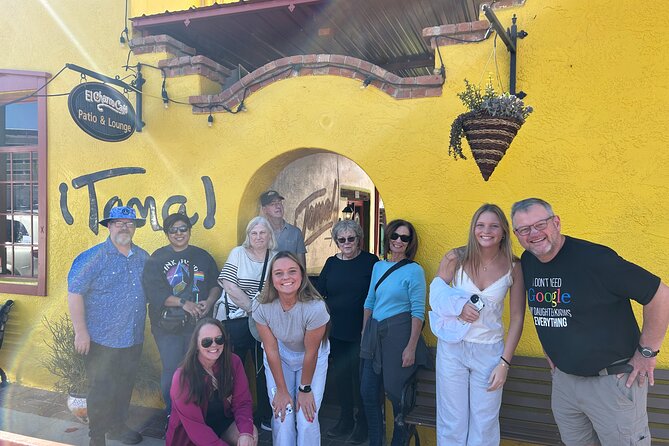
There’s another landmark stop on the route described as famous for a luxurious past, followed by a tragic 1970 fire that claimed 29 lives. The tour uses this to bring a darker, more human storyline into the mix—because Tucson’s buildings aren’t just pretty facades. They’re witnesses.
I appreciate including something like this in a mural and history walk. It prevents the tour from feeling like only a postcard tour of pretty walls. When you connect public spaces to real events, you start noticing how communities respond over time—through rebuilding, memory, and what gets honored in the public realm.
The key thing to know is that this segment is time-limited (about 15 minutes). You won’t walk out with every detail of the event, but you will leave with a clear starting point for what to read or research later if the topic grabs you.
Stop 3: Pima County Courthouse and Spanish Colonial Revival details
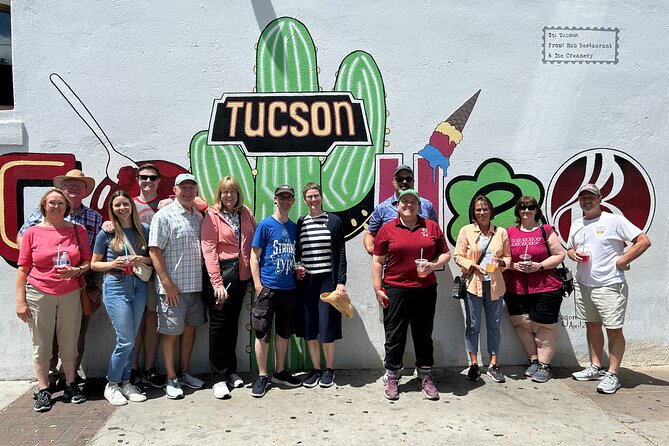
Then you hit the Pima County Courthouse, known for its Spanish Colonial Revival style. The building is famous for its pink facade and the iconic mosaic dome.
This is a great stop if you like architecture that’s both dramatic and readable. Spanish Colonial Revival tends to be about ornament, texture, and an almost “crafted” look to surfaces. On a walking tour, that matters because you can actually see the style cues up close—curves, color, and decorative features that are hard to appreciate from far away.
Admission for this stop is listed as free, with about 15 minutes on site. That makes it ideal for people who want a meaningful architectural moment without committing to a longer formal visit. It also helps connect the dots: earlier stops give you Tucson’s early and transportation roots; this one shows the later public-facing civic identity.
Where the murals come in: Tucson’s community voice in public space
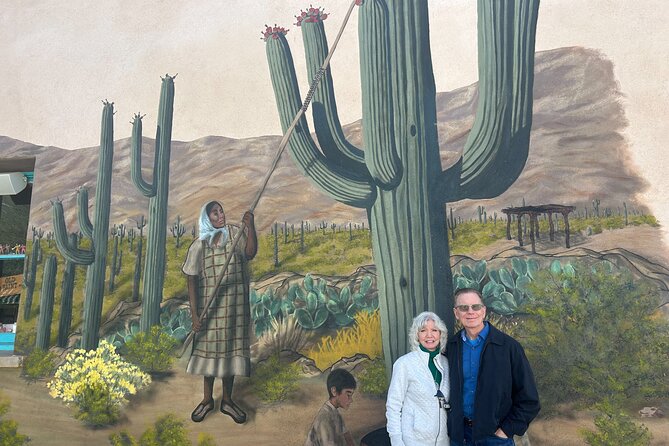
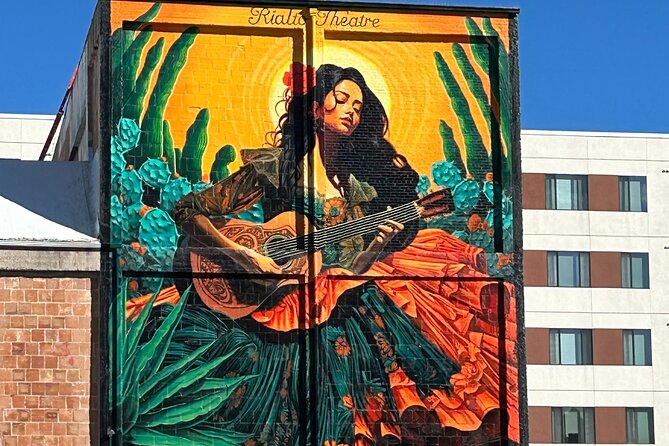
After the courthouse, the tour focuses directly on Tucson murals—described as colorful expressions of the city’s cultural heritage and community spirit. This part matters because murals are one of the most accessible “archives” a city has.
Instead of treating murals like just decoration, the guiding approach here helps you connect art to lived experience: which communities show up, what stories get highlighted, and how visual style can reflect local identity. When you’ve just walked past a courthouse and historic sites, the murals feel less random. They start to read like commentary on place—what people want you to notice about Tucson right now.
If you enjoy street art, this is the section where I’d slow down. Don’t just glance at the big figures. Look for small cues—signs of heritage, symbolic color choices, and recurring themes. The tour is short, so you’ll do best if you come with curiosity and a willingness to look for details.
What I liked most (and what you should watch for)
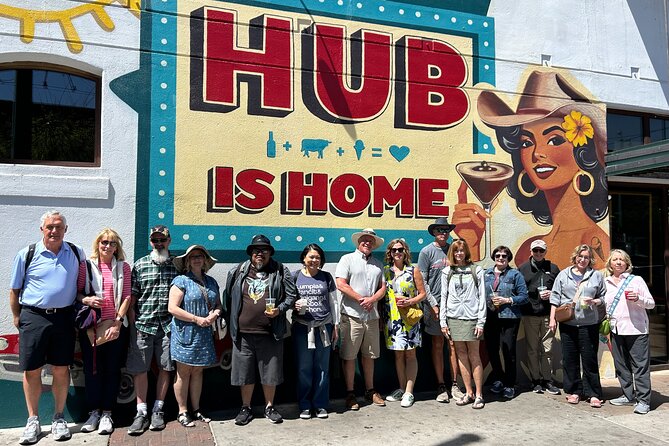
The most praised part of this experience is the guiding. Karen is described as friendly and well-informed, with the kind of attention that makes murals and old buildings feel connected rather than separate. I like that because it helps you leave with more than a list of stops. You leave with context you can actually use while walking around Tucson afterward.
The second big win is the stop selection and how it supports the theme. You’re not only seeing art; you’re seeing the kind of buildings that shape city life—rail infrastructure, military foundations, and civic architecture—then watching murals tie it together. That structure gives you a more complete sense of Tucson than a single-thing walking tour.
For a possible drawback, plan around comfort. This is about 2.5 hours on foot, and the stops are outdoors and timed tightly. If you need lots of long indoor breaks, you may wish you had more time at each location. Also, the tour explicitly requires good weather, so choose a day when Tucson is likely to cooperate.
Who this tour is best for

This works especially well if you want:
- A compact way to learn Tucson’s historical anchors and see murals in the same outing
- A walking-style format that doesn’t strand you in one museum the whole time
- A guide who connects what you see to why it matters, with Karen’s friendly approach
It’s also a good fit for first-timers who want a downtown orientation. You’ll start at Congress Street, cover multiple key landmarks, and end back at the start point, which makes it easy to keep exploring on your own afterward.
If you’re visiting mainly for deep museum time or very long, slow tours, you might prefer something longer at fewer stops. This one is designed for efficient, story-connected sightseeing.
Value check: admissions, duration, and what you actually get
No single stop is treated as “extra.” The structure is clear: several 15-minute segments that add up to an easy half-day walking plan.
In terms of value, what stands out is the admission mix you can actually plan around. The Presidio San Agustin Del Tucson Museum includes admission, while the Southern Arizona Transportation Museum and the Pima County Courthouse are listed as free. Even though price isn’t provided here, that combination generally helps value because you’re getting both outdoor landmark time and at least one ticketed location without extra pay-at-the-door stress.
Also, the mobile ticket is a small but real convenience. In a morning tour, that kind of friction reduction matters.
Booking tips: timing, weather, and your expectations
This tour starts at 9:00 am, so you’ll want to be ready to move early. If you’re the type who likes coffee first, you may want to grab it near 311 E Congress St before meeting up.
The bigger planning factor is weather. The experience requires good weather, and if it’s canceled due to poor weather, you’ll be offered a different date or a full refund. If you’re trying to lock in plans on a schedule-heavy week, pick a day with less forecast risk.
One more expectation to set: it’s non-refundable and cannot be changed for any reason, based on the cancellation policy. So treat it like a firm commitment when the day is set.
Should you book Tucson Food Tours: Locally Owned Mural and History Tour?
I’d book it if you want a smart, walkable way to connect Tucson murals to the places that shaped the city—from rail-era buildings to Spanish military foundations, civic architecture, and a landmark tied to the 1970 fire tragedy.
I’d skip it or look for another option if you hate tight schedules, struggle with walking for about 2.5 hours, or you’re traveling when good weather is unlikely. The weather requirement is real, and the cancellation rules are strict.
If you’re aiming for an outing that teaches you how to read Tucson—its walls, its buildings, and the stories between them—this is the kind of tour that leaves you looking around differently the rest of your day.
FAQ
Where does the Tucson Food Tours mural and history tour start?
It starts at 311 E Congress St, Tucson, AZ 85701, USA, and the activity ends back at the same meeting point.
How long is the tour?
The tour lasts about 2 hours 30 minutes.
What time does the tour begin?
The start time listed is 9:00 am.
Is the tour offered in English?
Yes, the tour is offered in English.
Do I need a mobile ticket?
Yes, the tour uses a mobile ticket.
Which stops include admission?
Admission is included at the Presidio San Agustin Del Tucson Museum. The Southern Arizona Transportation Museum and the Pima County Courthouse are listed as free.
What happens if the tour is canceled due to poor weather?
If it’s canceled because of poor weather, you’ll be offered a different date or a full refund.