REVIEW · CASABLANCA
8 Days Private Historical Tour in Morroco
Book on Viator →Operated by Good Travelling In Morocco · Bookable on Viator
Eight days across Morocco feels like time travel. This private route strings together Fez’s old Medina and the camel trek in the Merzouga dunes, with a real focus on places you can explain afterward, not just snap and scroll.
I also like how the trip is built around strong guide-led storytelling, so sites like Al Qarayyin University and the Mellah in Fez feel connected instead of random stops. One consideration: you’ll still want to budget for lunches and monument entrance fees, and some driving days are long.
In This Review
- Key Highlights I’d Book This For
- Casablanca and Rabat: Hassan II Mosque as a Big First Wow
- Volubilis and Meknes Walls: Roman Ruins to Imperial Morocco
- Fez Old Medina with Al Qarayyin University and the Mellah: Where the Stories Line Up
- Middle Atlas to Merzouga Sahara: Cedars, Monkeys, Ziz Gorges, and a Real Sunset
- ATV Transfer, Fossils in Erfoud, and Todra Gorge’s 300-Meter Cliffs
- The Road of a Thousand Kasbahs: Ouarzazate and Ait Ben Haddou UNESCO
- Marrakech Medina With Koutoubia, Bahia, Majorelle, and the Souks
- Price and Value: What You’re Really Buying
- Guides and the Private-Tour Advantage (Including Language Help)
- Who Should Book This 8-Day Morocco Historical Tour
- Should You Book This Tour?
- FAQ
- What time does the tour start?
- Do you pick up from the hotel or riad?
- What meals are included?
- Where do you spend the nights?
- Is there camel riding in the desert?
- Do you visit UNESCO sites?
- Can I get a full refund if I cancel?
Key Highlights I’d Book This For
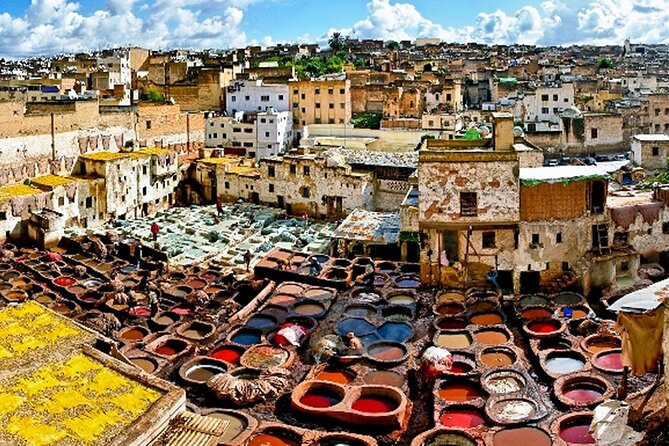
- Fez medina with Al Qarayyin University: a guided walk through the places that made the city a learning hub
- Merzouga sunset on a dune: camel riding with mint tea and a clear sunset moment built in
- Todra Gorge walk in 300-meter cliffs: a dramatic canyon stretch with real walking time
- Ait Ben Haddou UNESCO kasbah views: the film-famous setting on the road to Marrakech
- Marrakech Medina with a local guide: Koutoubia, souks, Bahia Palace, Ben Youssef, Saadian tombs, and Majorelle Gardens
Casablanca and Rabat: Hassan II Mosque as a Big First Wow
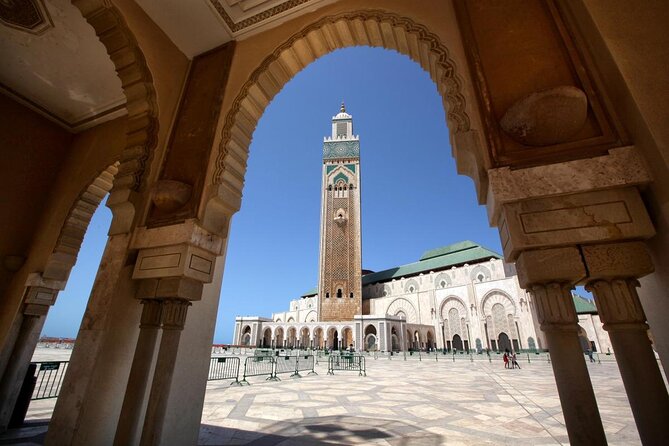
Your day starts with airport pickup, then you head straight toward Casablanca. You don’t waste the first hours settling in with paperwork or waiting around—you’re out looking at one of Morocco’s most famous sights early, when your energy is high.
The main stop is the Hassan II Mosque area in Casablanca. It’s the kind of landmark that anchors the whole trip, because it makes Morocco feel modern and historic at the same time: grand scale, religious importance, and a city setting that’s still very much alive. Even the schedule’s “admission ticket free” note signals that the day is designed to get you there without extra friction.
After Casablanca, you drive on to Rabat for your first hotel night with breakfast. I like this pacing. It breaks up the coast-to-capital energy with a quieter base before the itinerary ramps up into imperial cities and the Sahara.
Practical note: this is a history tour, so expect more time looking at sites than hanging out in cafes all day. If you want ultra-slow travel, you may find Morocco’s road times a little assertive.
You can also read our reviews of more private tours in Casablanca
Volubilis and Meknes Walls: Roman Ruins to Imperial Morocco
Day 2 leans into Morocco’s layered past. You start by driving toward Volubilis, a Roman archaeological site where you can see how old trade routes and empires left physical traces. Even if you’re not a hardcore archaeology person, this stop works because the ruins are still legible as a real, once-busy place.
Next comes Meknes, one of Morocco’s imperial cities, with a UNESCO-listed Medina. This is where the mood shifts from “ruins in the countryside” to “walls, gates, and city power.” You’ll pass through impressive historic areas like Bab El Mansour, and you get a chance to explore the medina area at the scale it deserves.
The day also includes time tied to Moulay Ismail’s shrine, which adds a living-cultural layer to the story you’re following. This part matters because it turns “history” from museum-quiet into something people still relate to today.
Then you push onward to Fez for your riad stay. I like that transition because Fez is the kind of city where you want your own base and time to slow down.
Fez Old Medina with Al Qarayyin University and the Mellah: Where the Stories Line Up
If you care about Morocco’s intellectual and cultural history, Fez is the centerpiece of this route. You start with breakfast, then set out with a local guide for a full guided day.
You’ll cover major Fez stops that connect directly to how the city grew:
- Royal Palace Gate for the city’s power center
- The Jewish quarter and the early Mellah (described as the first Mellah built in Morocco)
- Al Qarayyin University, highlighted as the oldest in the world
- Tanneries and the Attarine museum
- Moulay Idriss mausoleum
This mix is why the day feels more than just sightseeing. You’re moving through education, community history, craft, and religion, and the guide’s job is to stitch the meaning together so you leave with clear takeaways.
After lunch, you visit a tiles cooperative. I find these stops useful when they’re not just “buy stuff” interruptions. The point is to see how an art form becomes part of everyday architecture and identity in Fez.
To close the day, you get a panoramic view over the Medina of Fez from a tower. That view matters because medinas can feel like one big maze from street level. From above, you start to understand how the city breathes and why locals navigate so confidently.
If you want to avoid sensory overload, pace yourself here. Fez rewards patience. Give yourself little breaks, drink water, and let the guide lead you at a human speed.
Middle Atlas to Merzouga Sahara: Cedars, Monkeys, Ziz Gorges, and a Real Sunset
Day 4 is where Morocco turns cinematic. You start at 8:00 AM, then drive through the Middle Atlas Mountains. This part of the trip changes your expectations because the terrain and vegetation shift fast.
You pass through Ifrane, often described as the Switzerland of Morocco. Then you head to a cedar forest area, described as the biggest cedar forest in Africa, and you’ll see Barbarian apes (monkeys). It’s an unexpectedly lively break in the middle of a history-focused trip, and it also helps reset your eyes before the Sahara days.
The drive includes Tizi n Talghamt pass and the route through Midelt, with big scenery moments like the Ziz Gorges, carved through volcanic rock. That volcanic detail gives you something concrete to look for besides “mountains are pretty.”
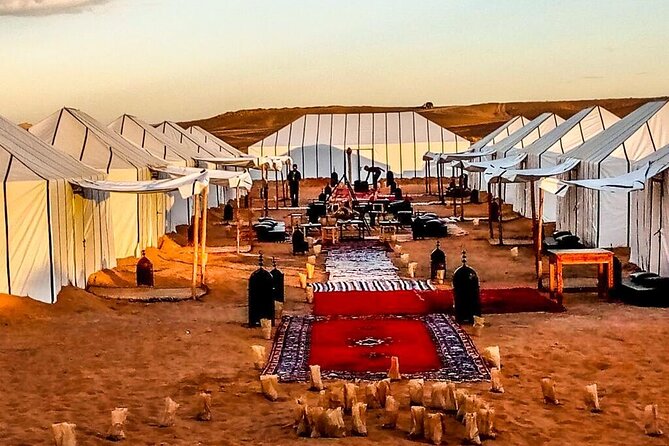
Then you land in the Sahara region around Merzouga. The day builds toward a classic payoff: after a glass of mint tea, you cross sand dunes by camel, with stops and time to enjoy the sunset from the top of a dune.
This is one of the most praised moments in the tour concept, and it’s easy to see why. The sunset isn’t just a photo stop—it’s a time-change in your whole pace. The dunes feel wide and quiet in a way that city sights don’t.
Practical tip: bring layers. Nights in the desert region can get chilly, and you don’t want to be cold during what should be a relaxed moment.
ATV Transfer, Fossils in Erfoud, and Todra Gorge’s 300-Meter Cliffs
Day 5 keeps momentum but adds variety. You start with breakfast, then drive back toward the dunes area by ATV for about 30 minutes before the longer road continues. This helps connect the end of the desert night to the next section without making you feel rushed.
Next comes Erfoud, described as the capital of fossils. This stop is your “science and local geology” moment. You’ll have a chance to discover fossils and minerals found in the region—examples mentioned include ammonites, trilobites, and star fishes. Even if you don’t buy anything, seeing what’s been uncovered from the ground gives the landscape a second story.
Then you head toward Tinghir, described as historically significant to Moroccan Jewish communities. It’s paired with panoramic views over the Todra valley and then the big physical highlight: Todra Gorge.
At Todra Gorge, you walk inside cliffs that reach about 300 meters high. This is the kind of “move your legs and feel the scale” stop that you’ll remember. It also breaks up long driving with something active and grounded.
Finally, you continue to Dades Valley for your overnight stay with breakfast and dinner. This is a good setup if you want the road ahead (including the kasbah route) to feel dramatic rather than repetitive.
The Road of a Thousand Kasbahs: Ouarzazate and Ait Ben Haddou UNESCO
Day 6 is the kasbah-and-cinema day, and it’s one of the most fun sections if you like Morocco as a place with pop-culture visibility.
You head through Kalaa M’gouna (Rose’s town), noted for an annual festival in May, then onward to Ouarzazate, often described as the Hollywood of Africa. The itinerary points to films shot here, including Gladiator, The Mummy, and Kingdom of Heaven.
Then you reach the famous Ait Ben Haddou village, described as the largest and most famous kasbah setting in Morocco. This area is also noted as UNESCO world heritage, and the tour description mentions it being used as a film location for shows like Game of Thrones and Scorpion.
Even without catching the film reference, the kasbah site works. It’s built for imagination. You stand in a place designed by sun, stone, and time, and it’s easy to picture how travel writers and filmmakers get inspired here.
After the kasbah visit, you cross the High Atlas Mountains. The description notes Africa’s highest altitude at 4,167 meters, with stops on the way and mention of Berber villages and changing landscapes. That “changing landscapes” part is important for a history tour because it makes the geography part of the story.
You end the day in Marrakech for your next night with breakfast.
Marrakech Medina With Koutoubia, Bahia, Majorelle, and the Souks
You finish your sightseeing in Marrakech on Day 7 with a private guided tour led by a local guide. Marrakech is where the trip becomes sensory again: medina streets, souks, and landmark architecture all in one concentrated day.
The plan includes:
- Koutoubia Mosque
- Marrakech Medina and souks
- Ben Youssef madrassa
- Saadian tombs
- Bahia Palace
- Majorelle Gardens
This is a solid mix because it hits different “Marrakech modes.” Religious architecture through Koutoubia. Education through Ben Youssef. Power and dynasties through Saadian tombs. Residential design and decorative planning at Bahia Palace. Then a visual reset at Majorelle Gardens.
After the sightseeing, you drive toward Casablanca for your overnight, and the next morning you’re set up to head to the airport to end the service.
If you want to shop, Marrakech souks are where that happens. But set expectations: for a lot of people, shopping is less about fixed prices and more about taking your time and learning the rhythm.
Price and Value: What You’re Really Buying
At about $1,529.02 per person for this 8-day private tour, the value comes from bundling a lot of moving parts into one package: transport via 4×4 car or small van, a dedicated guide/driver, hotel nights in key bases (Rabat, Casablanca, Fez riad, desert camp, Dades, Marrakech), plus major activities like camel trekking and structured guided time in Fez and Marrakech.
Breakfast is included each morning (7 breakfasts), and dinner is included twice (desert camp and Dades Valley). Lunches and drinks are not included, and tips are not included.
Entrance fees are described as not included, with a guideline of about 10 euros per day for historical monuments. There are also notes that some days show admission as free, so don’t assume every site is zero-cost. I’d treat that 10-euro-per-day figure as your reality check and carry some cash just in case.
So is it “worth it”? If you’re the kind of traveler who wants a private setup, hates juggling maps and transport between far-flung regions, and you care about historical context, the price is defensible. If you’d rather travel independently and you’re comfortable planning long intercity legs yourself, it might feel expensive.
Guides and the Private-Tour Advantage (Including Language Help)
This is a private tour, meaning it’s your group only, not a bus of strangers. That matters on Moroccan days where you’re moving through cities like Fez and Marrakech. You’ll get more flexibility if someone needs a break, and the guide can slow down when a question sparks.
Feedback about guides like Rachid and Moha highlights what you’re hoping for: strong local knowledge and a friendly, helpful approach. One account also notes language comfort, which can make a big difference in Fez when you’re hearing details about quarters, institutions, and religious sites.
Because you’re traveling through multiple regions—coastal cities, imperial cities, desert dunes, mountain valleys—having a guide who can explain the “why” is what turns this into a historical tour rather than a checklist.
Who Should Book This 8-Day Morocco Historical Tour
You’ll love this if:
- You want a history-heavy route through Casablanca, Rabat, Meknes, Fez, and Marrakech
- You like guided walking days (especially in Fez and Marrakech)
- You’re excited for a real desert day in Merzouga with camel riding at sunset
- You want the legwork handled: transport, hotels, and timing between regions
You might want to rethink if:
- You’re very sensitive to long driving days
- You prefer independence over a structured itinerary
- You don’t want to budget extra for lunches and possible entrance fees
Should You Book This Tour?
I think this is a strong choice if you want Morocco that feels connected: Roman ruins, imperial gates, scholarly Fez, desert silence, then kasbah drama and Marrakech landmarks. The best part is that the days are built around meaning, not just movement.
If you book, pack for temperature swings, plan for paid lunches and some monument costs, and give yourself enough mental energy for Fez and Marrakech medina time. When you do that, the tour’s pace stops feeling like rushing and starts feeling like a well-built story you can follow.
FAQ
What time does the tour start?
The tour starts at 8:00 AM.
Do you pick up from the hotel or riad?
Yes. Pickup and drop-off at your hotel or riad are included.
What meals are included?
Breakfast is included for 7 days. Dinner is included 2 times (at the desert camp and in Dades Valley). Lunches and drinks are not included.
Where do you spend the nights?
You’ll have nights in Rabat (with breakfast), Casablanca (with breakfast), Fez (2 nights with breakfast), a desert camp (with breakfast and dinner), Dades Valley (with breakfast and dinner), and Marrakech (with breakfast).
Is there camel riding in the desert?
Yes. You’ll do camel trekking in the Merzouga dunes, with mint tea and time to watch sunset from a dune.
Do you visit UNESCO sites?
Yes. The itinerary includes UNESCO World Heritage sites, including Meknes Medina and Ait Ben Haddou.
Can I get a full refund if I cancel?
Yes. You can cancel up to 24 hours in advance for a full refund. If you cancel within 24 hours of the start time, you don’t receive a refund.