REVIEW · NAFPLIO
Visit Ancient Corinth Mycenae Nafplio Canal Private Tour 8H
Book on GetYourGuide →Operated by Yomadic.Tours · Bookable on GetYourGuide
History turns into real sights fast. This private Peloponnese route links the Corinth Canal and the rock-top fortress views with the Mycenae royal stronghold, all explained by an English-speaking driver who keeps the day moving. I especially like the driver-led storytelling—names like Dimitri (Jimmy) and Panos show up in standout feedback—and the practical, safety-first driving that makes the long roads feel manageable. One consideration: entrance fees for the sites are extra, so budget for tickets on top of the tour price.
The payoff is that you’re not stuck on a fixed bus rhythm. I like the flexible pacing for a private group, with time for a proper stop in Nafplio and chances to pause for views, photos, and even snack breaks. You’ll ride in a private vehicle with WiFi, A/C, and bottled water, which matters when you’re bouncing between hilltop ruins and the coast.
In This Review
- Key things to know before you go
- Corinth Canal: the geography stop that makes everything else click
- Ancient Corinth and Acrocorinth: Paul’s Corinth meets the fortress rock
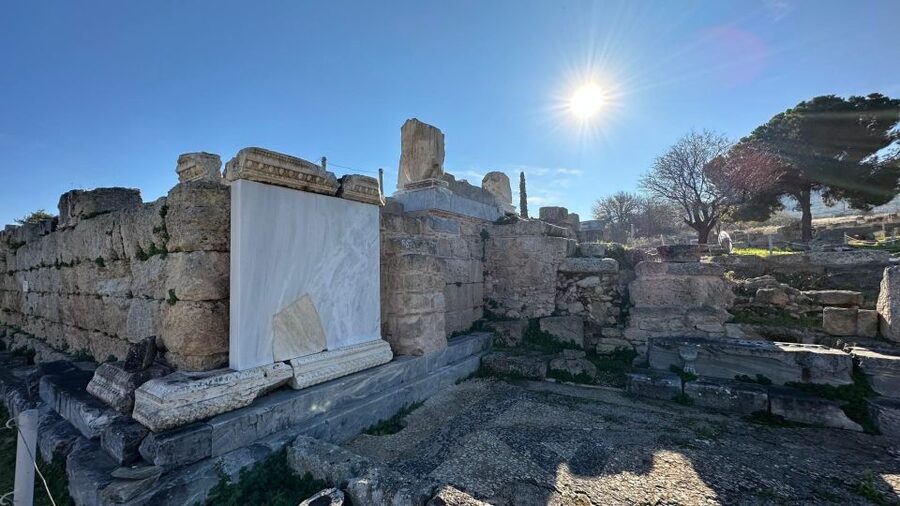
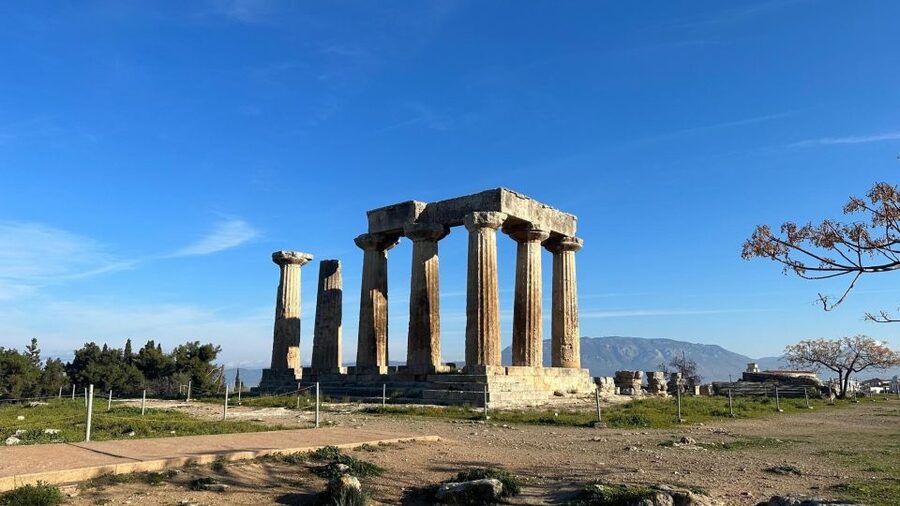
- Ancient Corinth (Archaia Korinthos) and what to look for
- Acrocorinth (the Upper Corinth fortress)
- Archaeological Museum of Corinth: the shortcut to understanding ruins
- Mycenae: Lion Gate and the royal citadel behind the myth
- Lion Gate: the famous entrance
- Citadel highlights and the Treasury of Atreus area
- Nafplio: coast time, Palamidi views, and fortress-town atmosphere
- Palamidi Castle: viewpoints with real defensive logic
- Akronafplia Fortress and Bourtzi
- Lunch and free time in Nafplio: how to make it work without rushing
- Private tour value: why this price can make sense
- Comfort and practical setup: what will make or break the day
- Who this tour suits best (and who should choose something else)
- Should you book the Ancient Corinth–Mycenae–Nafplio private tour?
- FAQ
- How long is the tour?
- Is this a private tour?
- What are the main stops on the route?
- Where can I get picked up and dropped off?
- Are entrance fees included?
- Is lunch included?
- What’s included with the transportation?
- Is the tour wheelchair accessible?
- Can I cancel and still get my money back?
- Can I reserve now and pay later?
Key things to know before you go
- Corinth Canal in one clean stop: you get the geography moment where Greece’s mainland “splits” the Peloponnese like an island.
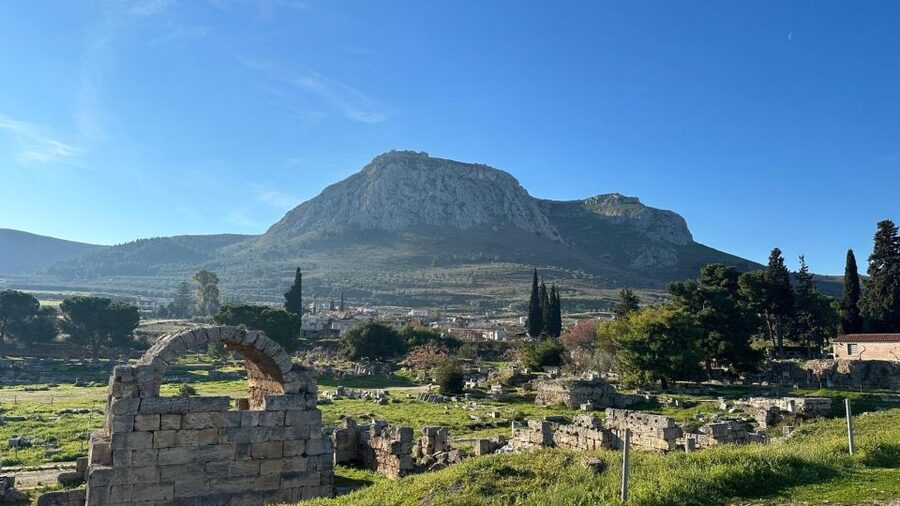
- Ancient Corinth plus Acrocorinth: you see the city and then the fortress rock that guarded the Isthmus.
- Mycenae’s major hits: Lion Gate and key citadel areas tied to the Agamemnon legend.
- Nafplio with serious viewpoints: Palamidi Castle and the harbor area, with time to wander.
- Private-group comfort: sedan for 1–3 people, mini van for 4–7, with WiFi, A/C, and water.
- Driver quality is consistently praised: good history, smooth communication, and accommodating pacing (including families and mixed mobility).
Corinth Canal: the geography stop that makes everything else click
Most Peloponnese days start with ruins. This one starts with a shortcut that explains why those ruins mattered.
The Corinth Canal runs through the narrow isthmus at Corinth, linking the Gulf of Corinth to the Saronic Gulf. Practically, it’s the moment you see how the mainland and Peloponnese are separated by water—so the Peloponnese stops feeling like just “another region” and starts feeling like a strategic world of its own.
I like this stop because it sets context fast. When you later look at Acrocorinth (Upper Corinth), you’ll understand why someone built a fortress where they could control land access. The canal is the geography lesson you can feel in your body: narrow route, tight passage, big consequences.
You also get an easy rhythm here. The time is planned around about 20 minutes, so it doesn’t burn your day. And since the canal is outside, it’s a good first leg if you’re trying to dodge the hottest part of the afternoon at higher sites.
Tip for your day: if the light is good, take a minute for photos at the canal viewpoint areas your driver shows. This is one of those “once you get it, you get it” stops.
You can also read our reviews of more tours and experiences in Nafplio.


Ancient Corinth and Acrocorinth: Paul’s Corinth meets the fortress rock
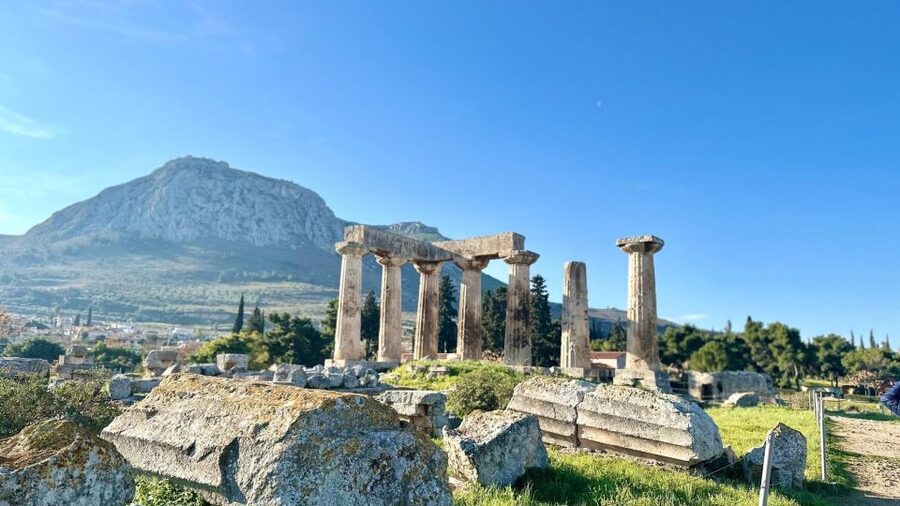
After the canal, the tour turns into two layers of Corinth: the ancient city footprint and then Acrocorinth, the upper stronghold.
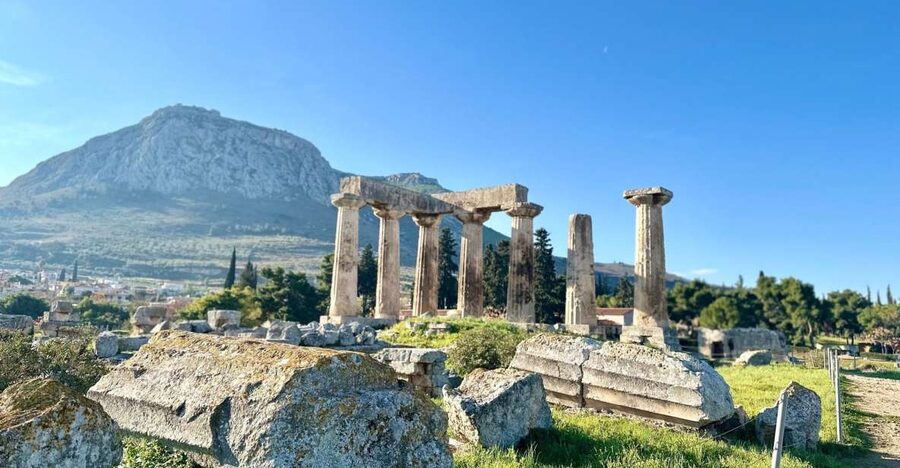
Ancient Corinth (Archaia Korinthos) and what to look for
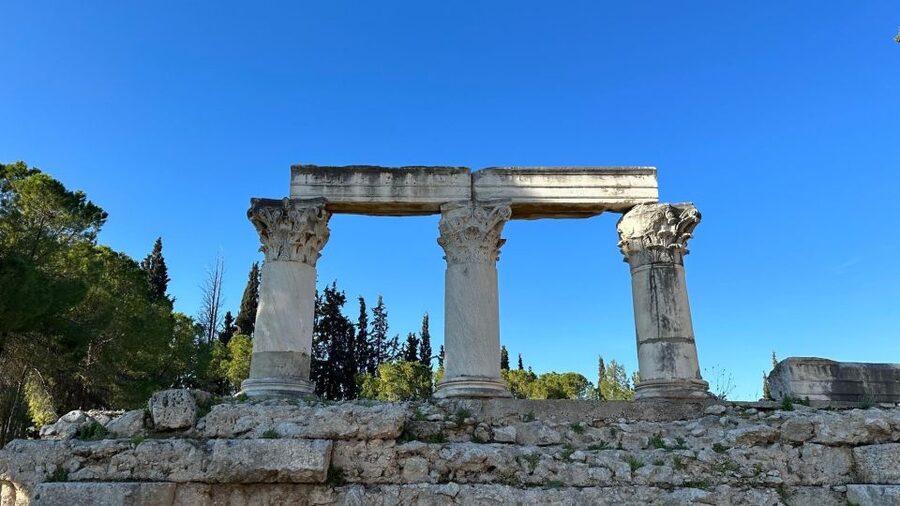
Ancient Corinth was a city-state on the Isthmus. It sat between major powers, halfway between Athens and Sparta by the region’s classic logic. That position is why Corinth kept showing up in different eras of Greek life—and why its ruins feel so “connected” to wider history.
This is also one of those places you can connect to the New Testament. Corinth is referenced through Saint Paul’s letters (First and Second Corinthians) and is mentioned in Acts as part of Paul’s missionary travel. Even if you’re not chasing religious history, this helps you read the site as a crossroads city, not just a collection of broken columns.
A practical note: you’ll have around 1.5 hours in the area. That’s enough to get oriented, see the main archaeological zone, and still breathe between stops rather than racing every single marker.
Acrocorinth (the Upper Corinth fortress)
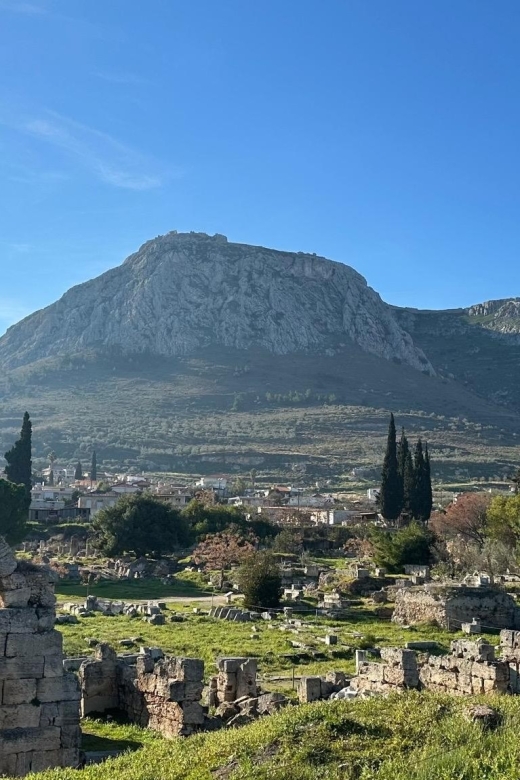
Then you go higher—to the monolithic rock of Acrocorinth. “Upper Corinth” is exactly that: a huge rock fortress overlooking the ancient city, with defensive strength built into the natural landscape.
The fortress was repeatedly used as a last line of defense because it controlled entry by land into the Peloponnese peninsula. It also had its own secure water supply, which is a quiet but important detail. A fortress without water isn’t a fortress for long.
This is one of the reasons I think Acrocorinth is a highlight. You’re not just sightseeing. You’re translating the terrain into strategy.
Time is planned around 30 minutes here, so keep your shoes comfortable. If you’re the type who likes to linger for big views, you’ll likely want your driver to adjust the pace a touch so the fortress doesn’t feel like a drive-by.
Archaeological Museum of Corinth: the shortcut to understanding ruins
After you’ve seen the site, the Archaeological Museum of Corinth helps you connect objects to what you just walked past.
You’re given around 30 minutes in the museum area. That’s not a full museum day, but it’s the right length for most people: long enough to pick up key context, short enough that you don’t feel like you’re trading the outdoors for glass cases.
If you’re the kind of traveler who likes to leave ruins with “what did I just see?” answers, the museum stop is one of the more efficient parts of the itinerary. You’ll likely get quicker at spotting patterns in the site when you return outside.
Also: museums tend to be a relief from sun. Even on a warm day, this can feel like a reset.
Mycenae: Lion Gate and the royal citadel behind the myth
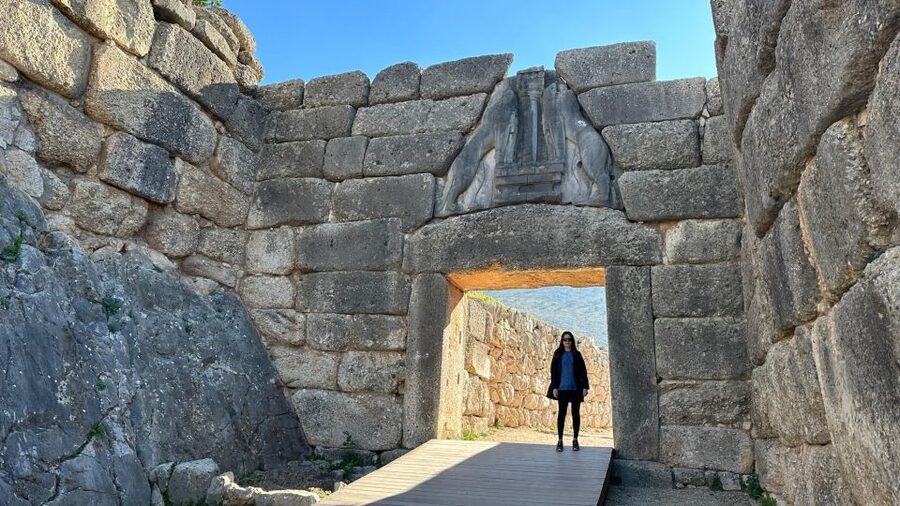
Now you reach the big-ticket stop: Mycenae. This is where the day shifts from “ancient city” to “power center.”
Mycenae is described as a fortified citadel and the seat of the mythical and mighty King Agamemnon. Even if you treat the legend as legend, the place still matters because the ruins show a society built around defense and authority.
Lion Gate: the famous entrance
Lion Gate is one of the most recognizable Mycenae images, and you’ll spend time in the area around 29 minutes. It’s a photo stop, yes—but it’s also a scale stop. Gate structures like this give you a feel for how people moved in and out of a stronghold and how much effort went into signaling power.
Citadel highlights and the Treasury of Atreus area
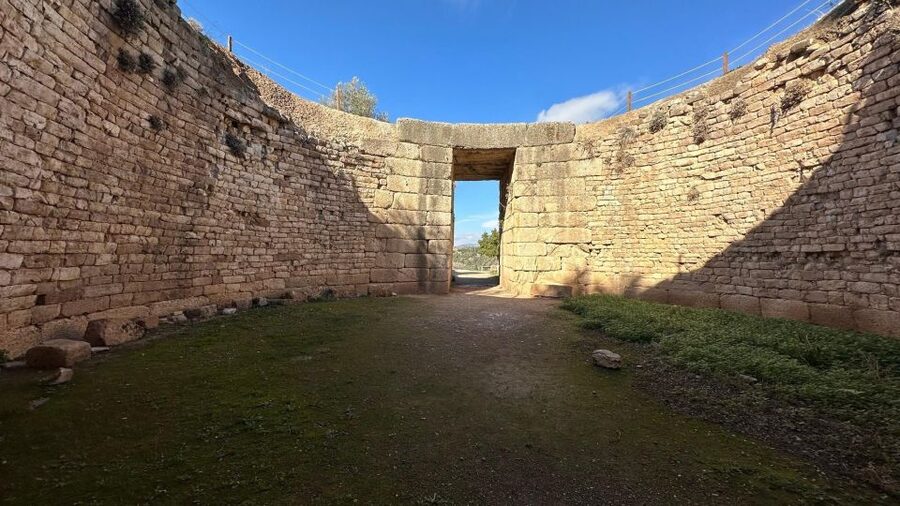
You’ll also have time for the citadel area and the Treasury of Atreus. The schedule includes multiple segments—around 45 minutes at Mycenae-related areas, plus additional time for the citadel and the Treasury of Atreus connection.
What I like about this portion is how it balances big moments and tighter, more focused viewing. If you try to see Mycenae on your own, it’s easy to miss why the spots you’re standing in mattered. With a driver who’s comfortable with Greek history, the site becomes easier to read.
Bottom line: you’ll leave with a strong sense of why Mycenae gets remembered in both archaeology and myth.
Nafplio: coast time, Palamidi views, and fortress-town atmosphere
Mycenae is about rule and defense. Nafplio is about sea access and the everyday feel of a port town that grew up along hills.
Nafplio is a seaport town in the Peloponnese, expanded up the hills near the north end of the Argolic Gulf. In the Middle Ages, it became an important seaport and was held under a succession of royal houses as part of the lordship of Argos and Nafplia. That layering is why the town feels like more than a postcard—there’s a sense of history stacked on top of daily life.
You get around 1.5 hours in Nafplio, plus targeted stops.
Palamidi Castle: viewpoints with real defensive logic
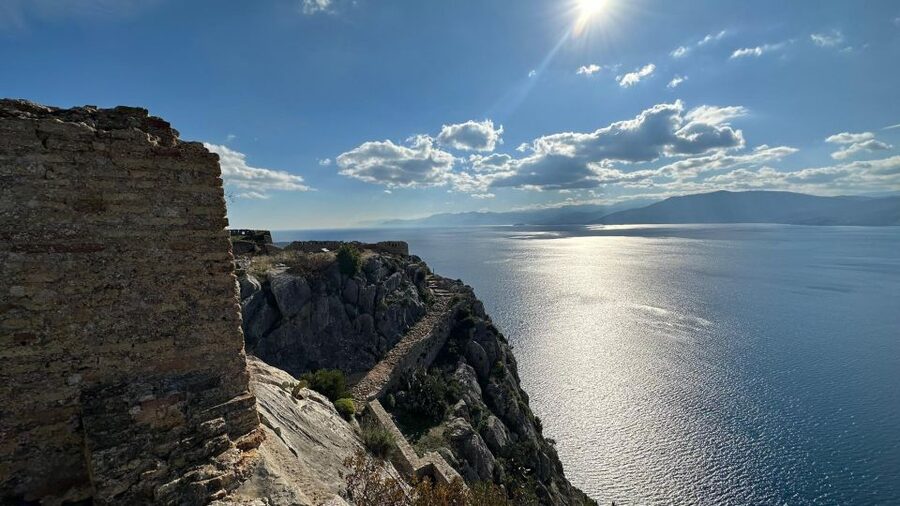
Palamidi Castle is one of Greece’s well-preserved castles, and the time you get is around 30 minutes.
It offers spectacular views through its loopholes, with routes inside and steep, rugged terrain in the Kolokotronis hole-prison area. Even if you don’t spend every minute reading inscriptions, the structure makes the point: this castle was built to watch, defend, and hold.
This is the kind of stop where good shoes pay off. It’s also where your driver’s pacing matters. If you have a mixed group—different walking comfort levels—private touring can prevent the day from feeling stressful.
Akronafplia Fortress and Bourtzi
You’ll also spend shorter chunks near:
- Akronafplia Fortress (around 10 minutes)
- Bourtzi and the harbor area (around 10 minutes)
These brief segments are smart. They give you a “full town picture” without swallowing time that you might want for the coast, shopping, or resting.
And yes, there’s time for wandering and shopping. The best use of it is simple: walk slow. Nafplio has a habit of pulling you into side streets and quick scenic pauses.
Lunch and free time in Nafplio: how to make it work without rushing
Lunch is not listed as included, but the day typically offers a traditional Greek taverna stop and some free time by the coast.
Here’s how I’d plan it so you get maximum value: use your driver’s timing. If you’re hungry, go early rather than waiting until you’re too tired. Then use the remaining Nafplio time for coastal wandering or a quick souvenir hunt.
One piece of feedback that’s worth taking seriously: drivers have suggested where to eat and have helped build a smooth schedule around site closing times. That kind of planning matters because a day like this has several “you only get one chance” moments.
Also, if you’re traveling with kids or people who move at different speeds, the private format can protect your pace. In feedback, drivers were flexible—letting the group spend more time where interest was highest and less where it wasn’t.
Private tour value: why this price can make sense
At $207 per person for a private day, you’re paying for three main things:
- Pickup and drop-off flexibility (hotel, Airbnb, or port; airport pickup is an option depending on vehicle type).
- A private vehicle (sedan for 1–3 people, mini van for 4–7), with WiFi, A/C, and bottled water.
- A driver who acts like a live guide, with English and Greek-history context.
Entrance fees and site tickets are not included, and lunch isn’t included either. That’s the trade-off. Still, compared with “pay-per-seat” group tours, private pricing starts to feel fair when:
- you’re traveling as a small group,
- you care about pacing more than checking boxes,
- and you want less time stuck figuring out logistics.
Also, the tour is set up to help you avoid dead time. It includes skip the ticket line. Even if you’re not a “line skipper” enthusiast, reducing waiting is one of the easiest ways to increase actual sightseeing time.
If you want the Peloponnese in one efficient day—without the stress of navigation—this format is a strong match.
Comfort and practical setup: what will make or break the day
This tour includes practical perks that quietly matter:
- Modern private vehicle
- WiFi, A/C, bottled water
- Driver pickup waiting with a sign (hotel lobby, apartment entrance, port gate, or arrival hall for airport pickup)
- Your group rides together with no mixing with other passengers
The best way to enjoy these stops is also very simple:
- Wear comfortable shoes
- Bring sunscreen and a sun hat
- Use closed-toe footwear
- Plan for heat and sun exposure, especially at elevated places like Acrocorinth and Palamidi
If you’re bringing kids, it helps that the vehicle is private and not packed. In feedback, families appreciated having space so kids weren’t stressed and the day stayed calm.
One note from the tour info: it’s not suitable for people over 95 years. That’s a good reminder that the route includes historical sites with terrain that may be challenging.
Who this tour suits best (and who should choose something else)
This is a great choice if you:
- want a private, driver-led day instead of a bus group,
- like the big pillars of the region: Corinth Canal, Ancient Corinth, Mycenae, Nafplio,
- care about understanding what you’re seeing, not just taking photos,
- and value flexible pacing for a mixed group.
You might consider a different style of tour if:
- you want a long sit-down pace and lots of free roaming with no structure,
- you prefer guided archaeology with official guides at every stop (the tour info indicates you might need an official guide for an extra charge),
- or you’re working with a strict budget that can’t absorb entrance fees and lunch on top.
Should you book the Ancient Corinth–Mycenae–Nafplio private tour?
If your goal is one high-value Peloponnese day that hits the key sites without headaches, I’d say this one is worth booking.
It’s especially smart when you care about how history connects: the Corinth Canal’s geography leading into Acrocorinth’s defense logic, then into Mycenae’s fortified power, ending in Nafplio’s sea-town atmosphere. The private format keeps you from feeling rushed, and the vehicle perks (A/C, WiFi, water) make the travel time feel less like a chore.
Just go in knowing the main extras: entrance fees and lunch are on you. If you budget for those, you’ll get a smooth, well-paced day built around the real highlights.
FAQ
How long is the tour?
The tour duration is listed as 6 hours.
Is this a private tour?
Yes. It’s a private group tour, meaning only your group participates.
What are the main stops on the route?
The tour includes the Corinth Canal (Isthmia), Ancient Corinth (including Acrocorinth), the Archaeological Museum of Corinth, Mycenae (including Lion Gate areas and the Treasury of Atreus/citadel area), and Nafplio (including Palamidi Castle and other harbor/fortress stops).
Where can I get picked up and dropped off?
Pickup and drop-off are offered from an Athens hotel, an Airbnb residence, or a port. Airport pick-up and drop-off are additional, depending on the vehicle type.
Are entrance fees included?
No. Entrance fees for attractions are not included.
Is lunch included?
Lunch is not included. The day includes time for Greek traditional taverna options in Nafplio.
What’s included with the transportation?
You’ll travel in a modern private vehicle with WiFi, A/C, and bottled water. Car seats can be booked in advance if needed.
Is the tour wheelchair accessible?
Yes, the tour is listed as wheelchair accessible.
Can I cancel and still get my money back?
Yes. Free cancellation is available up to 24 hours in advance for a full refund.
Can I reserve now and pay later?
Yes. It’s offered as reserve now & pay later, so you can keep travel plans flexible.