REVIEW · GRANADA
Water paths. Private adventure and history tour
Book on Viator →Operated by Andalucía 360 · Bookable on Viator
Granada’s water has stories worth walking for. This private water-and-history adventure connects Granada’s natural springs and man-made channels to what the city used water for, from forest trails near the Alhambra to public fountains and pillars. I love how the route makes the landscape of the city feel practical, not just pretty.
Two things I liked a lot: the small-group feel and the way the guide keeps the pace human while explaining why each water feature mattered. If your guide is Jose, you’re likely to get a historian’s eye for detail; if it’s Mikael, expect smooth logistics and a careful, attentive run of the walk.
One possible drawback: the tour calls for moderate fitness. You’ll cross sloping ground and end up in a maze of roads and ditches, so comfortable shoes matter, and it’s not a good fit if you have reduced mobility or sensory impairments.
In This Review
- Key highlights you’ll actually feel
- Water paths in Granada: how water became the city’s infrastructure
- 6:00 pm start at the Albayzín edge: timing and what to bring
- Stop 1: Cuesta de los Chinos and the legends along an artificial river
- Stop 2: Along the eastern Alhambra wall—how the fortress was fed
- Stop 3: La Silla del Moro viewpoint—medieval space planning, no ruins entry
- Stop 4: Cerro del Sol—the adventure stretch of roads and ditches
- Stop 5: Fuente del Avellano and the Romayla ditch—cool water and shade
- Price and value: what $109.90 gets you in the real world
- Who this tour suits best (and who should skip it)
- Tips to make your experience smoother
- Should you book this water paths tour?
- FAQ
- Where does the tour start?
- What time does the tour begin?
- How long is the experience?
- How much does the tour cost?
- Is this a private tour or a shared group?
- What fitness level do I need?
- What should I wear?
- Is the tour accessible for people with reduced mobility?
- Are children welcome?
- Are there tickets to pay for the stops?
- What’s the cancellation and weather policy?
Key highlights you’ll actually feel
- Water as the theme: every stop ties to how Granada depended on water
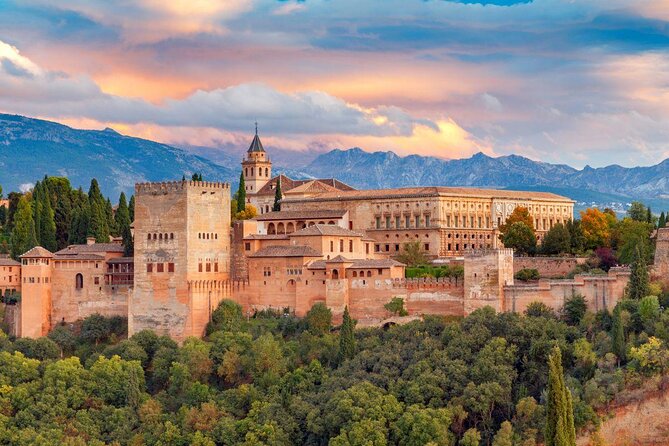
- Alhambra edge access without crowd pressure: you learn at the wall’s foot rather than inside the palace complex
- Viewpoint time at La Silla del Moro: you get the outlook even without entering the ruins
- Cerro del Sol’s maze of ditches and roads: part adventure, part engineering lesson
- Cool, green finish near Fuente del Avellano: a nature pause that stays pleasant year-round
- A private group experience: only your group participates, led by a specialized guide
Water paths in Granada: how water became the city’s infrastructure
This tour is built around one simple idea: in Granada, water isn’t just scenery. It’s the system that shaped daily life—where people could drink, how neighborhoods stayed alive, and how the city kept running even as the terrain got steep.
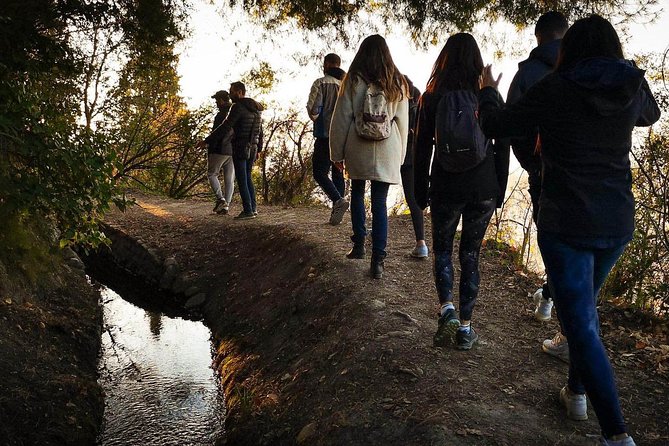
You’ll walk across the kind of paths most visitors don’t follow on their own. The route moves along natural and artificial waterways and repeatedly brings you to public fountains and water pillars. That matters because it turns the explanation into something you can see and feel: where the water travels, how it’s guided, and how it links to history right on the ground.
And yes, it’s also a nature walk. The route includes forest areas next to the Alhambra, so you’re not stuck in stone streets the whole time. You get a break from the usual sightseeing rhythm—more “hands-on city mechanics,” less “stand and stare.”
You can also read our reviews of more private tours in Granada
6:00 pm start at the Albayzín edge: timing and what to bring
The walk begins at Fuente del Paseo de los Tristes, in the Albayzín area (18010 Granada), with a 6:00 pm start. It runs about 3 hours and ends back at the same meeting point.
That evening timing is a smart choice for this specific theme. The day’s heat usually cools down, and water paths feel more inviting when you’re walking through shaded stretches and forest-adjacent ground. Still, check the forecast, because the experience requires good weather. If conditions are bad, they’ll offer a different date or a full refund.
Bring comfortable shoes. You’ll cross sloping slopes, and the “adventure” side is real at the key forest/ditch section. If you’re the kind of traveler who likes polished sneakers and smooth sidewalks only, you might want to reconsider. If you’ve got solid walking shoes, you’ll be in good shape.
Also note: this is private—only your group participates. That usually means you can ask questions without waiting your turn, and the guide can keep the route moving at a workable pace for your group.
Stop 1: Cuesta de los Chinos and the legends along an artificial river
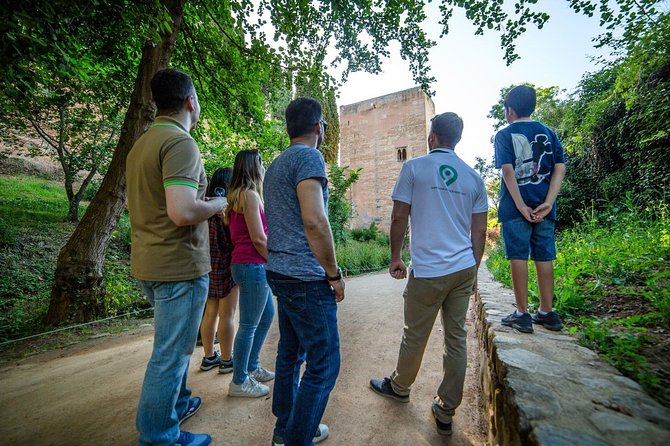
The tour kicks off at Cuesta de los Chinos, where you’ll walk alongside a small artificial river. The interesting twist here is that the “artificial” part doesn’t kill the romance; it adds context. You’re seeing how human engineering created movement for water and, with it, stories and local meaning.
You’ll also hear legends granainas—local tales tied to place. This is one of those moments that helps you read the city differently. Instead of treating water features as random decorative stops, you start connecting them to the way Granada thinks, remembers, and organizes space.
The stop is short (around 20 minutes), which keeps the momentum going. Expect to move quickly from introduction to explanation, not linger like you would at a museum.
Stop 2: Along the eastern Alhambra wall—how the fortress was fed
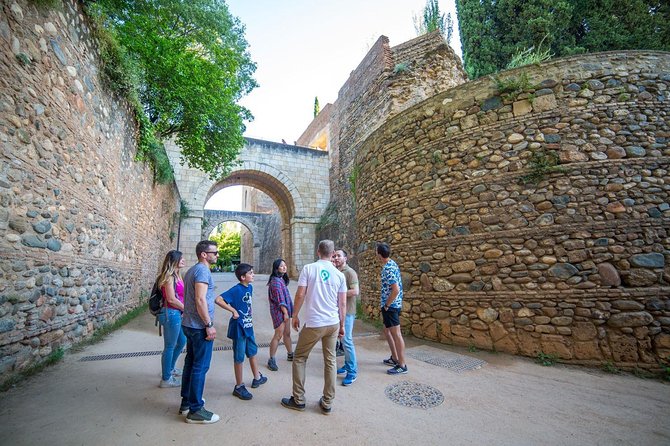
Next, you’ll travel to the Alhambra area, walking along the eastern part at the foot of its wall. You won’t be touring the palace interiors as part of this experience. What you will do is get the story of water supply and water use, right where the wall meets the outside world.
This part is valuable because the Alhambra isn’t just admired for architecture. It depended on systems—especially for water. Listening to how the fortress was supplied and how water was used makes the whole complex feel more grounded. It stops being an image and starts becoming an operation.
You also get a helpful perspective on “edge spaces.” The places around the Alhambra often feel like leftover terrain to visitors. Here, that leftover terrain becomes essential. The stop lasts about 20 minutes, enough time to understand the purpose without turning it into a lecture.
Stop 3: La Silla del Moro viewpoint—medieval space planning, no ruins entry
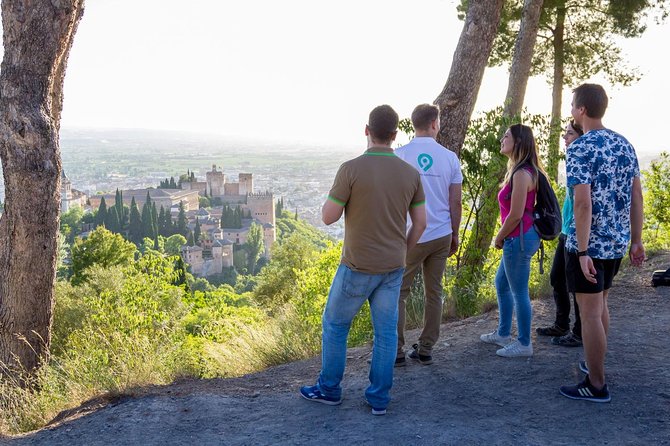
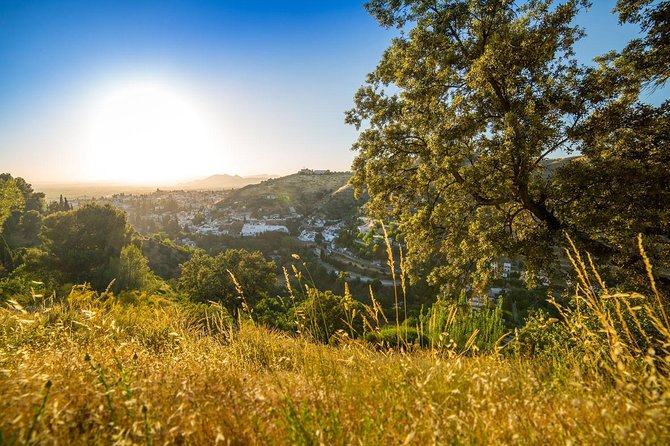
From the Alhambra boundary, you move toward height. At La Silla del Moro, you reach a top area and get time to enjoy the view as far as you can see.
You won’t access the archaeological ruins themselves, but you will learn about the organization of space in medieval times, including the infrastructure that supported life there. That’s the key difference: instead of pushing you into a site entry, the guide focuses on layout and function—how people used space, how water and routes likely shaped movement, and how the site connected to surrounding areas.
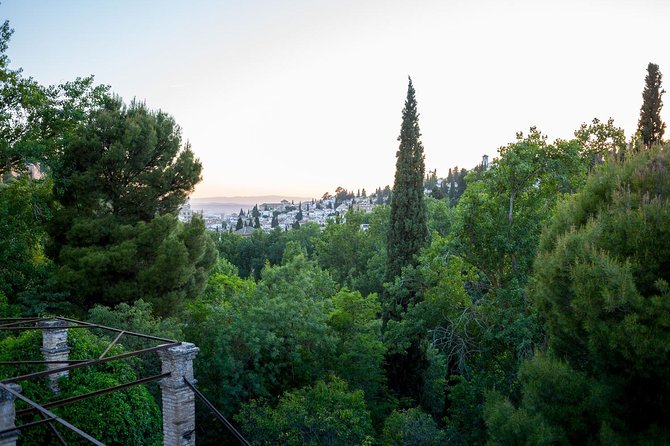
This stop is about 10 minutes. Short, yes, but it works as a mental reset. After walking through water paths and explanations, the viewpoint gives you scale. You can start picturing how water routes fit into Granada’s hills instead of imagining them as a map on paper.
You can also read our reviews of more historical tours in Granada


Stop 4: Cerro del Sol—the adventure stretch of roads and ditches
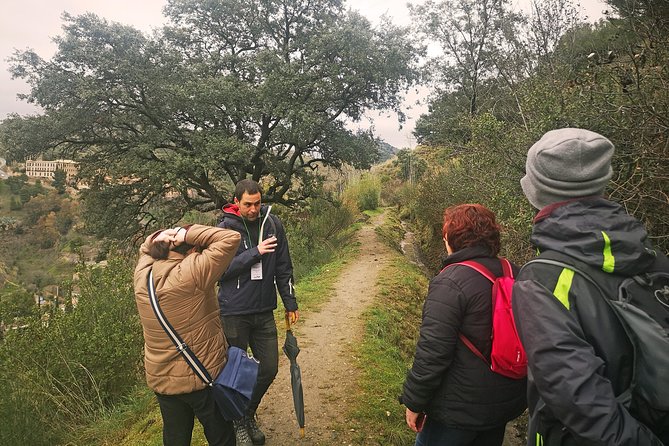
If there’s a moment that feels like the tour’s name—water paths with adventure—it’s Cerro del Sol. This is where you enter a labyrinth of roads and ditches, and a lush forest takes over the walking experience.
This stop lasts about 30 minutes, and it’s also where your shoe choice and footing matter. You’re not doing an extreme hike, but it’s not a flat stroll either. You’ll be moving across uneven ground and through a network-like path system, so keep your pace steady and let the guide lead.
What you gain here is more than scenery. The “ditches” and channel-like routes are part of the water story. You start to see that water management wasn’t only about big canals—it was about local routing and how water could be carried, diverted, and controlled through everyday terrain.
This is also the bridge between countryside and city. Even when you’re physically near the city, the feeling shifts as you move into the forest connection. It’s one of the reasons this tour is described as healthy and environmentally friendly. You’re using your legs and staying outdoors without being trapped inside another attraction ticket.
Stop 5: Fuente del Avellano and the Romayla ditch—cool water and shade
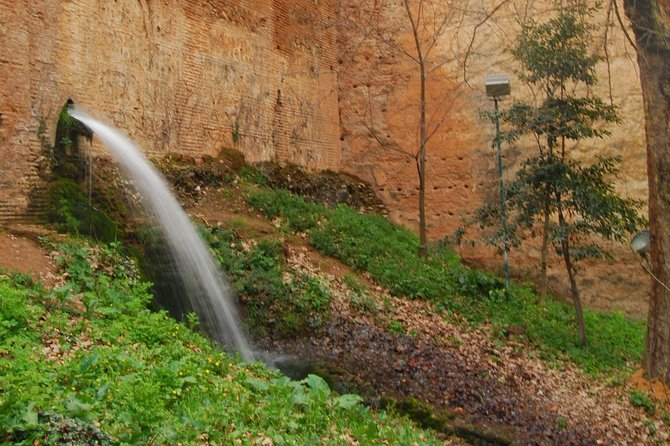
The final stretch leans into nature. At Fuente del Avellano, you’ll hear about a mythical source described as pure and healing waters. Whether you treat the myth as history or folklore, the point is the atmosphere: the area stays fresh and green shade all year, and it feels like a reward after the earlier maze-and-slope walking.
From there, you’ll continue alongside the ditch of Romayla. That’s the payoff for the whole experience. Earlier stops taught you what water systems were for. Here, the tour closes by walking with another segment of the channels that keep that water logic alive.
This stop takes about 10 minutes. It’s short, but it leaves you with a clear last impression: water doesn’t end when you leave a fountain. It keeps moving through the city’s hidden routes.
Price and value: what $109.90 gets you in the real world
The price is $109.90 per person, and the experience is typically booked about 17 days in advance. When you’re paying for a guided private walk, you’re not just buying access to a viewpoint—you’re buying a specialist who can connect details into a story you can actually use.
Here’s where the value shows up:
- You’re paying for expert interpretation of water systems, not just scenic walking.
- The stops you visit are marked as admission ticket free, so you’re not piling on extra entry costs during the walk.
- It’s 3 hours of structured time. You get a coherent route and don’t spend your evening guessing which paths matter.
- Private, small-group style makes questions and pacing easier than a large tour bus situation.
One extra note: group discounts exist, so if you’re traveling with friends, the cost per person can become more reasonable. Also, they provide a mobile ticket, which is convenient when you’re syncing with a specific meeting point.
Who this tour suits best (and who should skip it)
This tour is a strong fit if you want Granada to feel practical and alive—water systems, historical use, and a walking route that doubles as a history lesson. I also think it’s a good match for people who like nature breaks while sightseeing, since forest stretches near the Alhambra are part of the plan.
It’s less suitable if you:
- need reduced mobility accommodations (the route is not suitable)
- rely on support due to hearing or visual impairment (the route is not suitable)
- are bringing children under 7 (it’s not recommended, and the walk lasts about 3 hours)
- don’t handle sloping ground well or prefer only flat routes
The moderate fitness requirement is not about athletic ability—it’s about comfort walking uneven sections and navigating a ditch-and-road maze area.
Tips to make your experience smoother
These aren’t gimmicks. They’re the small choices that make the tour feel easy instead of tense:
- Wear comfortable shoes with good grip. You’ll cross sloping slopes and uneven ground.
- Go with the mindset of a guided walk with movement, not a museum-style sit-and-read pace.
- Plan around good weather. If it’s canceled for poor weather, accept the alternate date or refund offer—they treat conditions as part of the safety and comfort equation.
Should you book this water paths tour?
Book it if you want Granada to make sense through one theme: water. You’ll walk where channels, fountains, and ditches connect to real history, and you’ll do it with a specialized guide leading a private group through the Albayzín–Alhambra–forest area.
Skip it if you need fully accessible surfaces, or if a 3-hour walk across sloping terrain and ditch networks doesn’t match your comfort level. Also skip it if you’re traveling with young kids who can’t manage a longer outdoor route.
If you fit the fitness and accessibility profile, this tour is a smart evening plan. It gives you something different from the usual headline attractions: practical water history on foot, with views and forest shade as built-in rewards.
FAQ
Where does the tour start?
The meeting point is Fuente del Paseo de los Tristes, Albayzín, 18010 Granada, Spain.
What time does the tour begin?
Start time is 6:00 pm.
How long is the experience?
It lasts about 3 hours.
How much does the tour cost?
The price is $109.90 per person.
Is this a private tour or a shared group?
It’s private, meaning only your group participates.
What fitness level do I need?
The tour is listed for people with moderate physical fitness, since you will cross sloping slopes.
What should I wear?
Wear comfortable shoes, since you’ll be walking across uneven and sloped terrain.
Is the tour accessible for people with reduced mobility?
No. The route is not suitable for people with reduced mobility.
Are children welcome?
It’s not recommended for children under 7 years, since the tour lasts about 3 hours.
Are there tickets to pay for the stops?
The stops are described as having admission ticket free for the listed time at each point.
What’s the cancellation and weather policy?
You can cancel for a full refund up to 24 hours in advance. The experience requires good weather; if it’s canceled due to poor weather, you’ll be offered a different date or a full refund.