REVIEW · BEIJING
2-Hour “Ancient & Modern” Beijing Sidecar Tour (Day /Night)
Book on Viator →Operated by Beijing Sidecar Tours · Bookable on Viator
Beijing by sidecar cuts the city noise fast. This 2-hour “Ancient & Modern” ride is built for seeing old Beijing street life and the new downtown skyline in one sweep, with frequent photo stops and time to relax with drinks. I like that you get real hutong alley time, not just quick curbside views. I also think you should note the good-weather requirement—if the ride is canceled due to poor weather, you’ll need to switch dates or take a full refund.
The best part for me is how the route stitches together iconic landmarks you’ve heard of with everyday corners locals actually use. You move from the central-axis classics to lakeside scenery to modern Beijing landmarks, then back into smaller lanes where daily life shows up fast. One practical consideration: you’re on a motorcycle-style sidecar for the whole tour, so if you’re sensitive to wind or road noise, bring your “two-hour patience” mindset.
What I really like is the way comfort and momentum are handled for such a short tour: helmets, raincoat, bottled water, phone charge cable, and snacks plus hot coffee/tea in winter or cold soda/beer in summer. It’s a lot of stops for two hours, and it keeps the pace moving without turning it into a nonstop sprint.
In This Review
- Key things to know before you book
- Why a sidecar works so well for “ancient and modern” Beijing
- Where the tour starts: National Art Museum of China pickup feel
- The sidecar setup: helmets, seat positions, and the halfway switch
- Stop 1: Bell and Drum Towers for your “central axis” photo lineup
- Hutongs: how the tour delivers “local” without feeling staged
- Stop 2: Shichahai Scenic Resort and Houhai lakes with drinks
- Forbidden City north gate area: moats and watching-tower views
- Beijing Workers’ Stadium: a quick hit of sports-and-city identity
- CCTV New Mansion and the Central Business District skyline moment
- Site of Ming City Wall Park: the “old line” that still exists
- The included snacks and drinks that make the ride feel worth it
- Pricing and value: $89 for two hours with a lot of stops
- Who this sidecar tour fits best
- Small details that can change your experience
- Should you book the Ancient & Modern Beijing sidecar tour
- FAQ
- How long is the Ancient & Modern Beijing sidecar tour?
- How much does the tour cost?
- Is pickup available?
- Is this a private tour?
- How many people ride in each sidecar, and where do they sit?
- What’s included in the tour?
- Do you pay admission for the stops?
- What happens if the weather is bad?
- Where does the tour start and end?
Key things to know before you book
- Hutongs + CBD in one run: You’ll connect traditional alley life with Beijing’s modern center.
- A stop-heavy 2-hour plan: Expect frequent photo moments, not just one or two highlights.
- Comfort extras included: Helmets, raincoat, bottled water, and a phone charge cable are part of the package.
- Drinks and snacks included: Coffee/tea in winter, soda/beer in summer, plus Beijing special snacks.
- Sidecar seating setup: One passenger rides in the sidecar and one behind the driver, with a switch possible halfway.
- Good weather matters: The operator notes the experience depends on weather conditions.
Why a sidecar works so well for “ancient and modern” Beijing
Beijing is a city of layers, but most tours force you to choose. This one aims to do both. In two hours, you’re bouncing between the past and the present: bell-and-drum era landmarks, hutong alley texture, Forbidden City-area views, and then the Central Business District look.
A sidecar tour also changes how you “read” the city. You’re closer to street-level life than you’d be in a large bus. You’re also moving efficiently through different neighborhoods, which matters when you only have a short window.
That said, it’s not a leisurely stroll. You’re riding, stopping, and riding again. If you’re expecting a museum-like pace, this is more about seeing and feeling than lingering.
You can also read our reviews of more tours and experiences in Beijing.


Where the tour starts: National Art Museum of China pickup feel
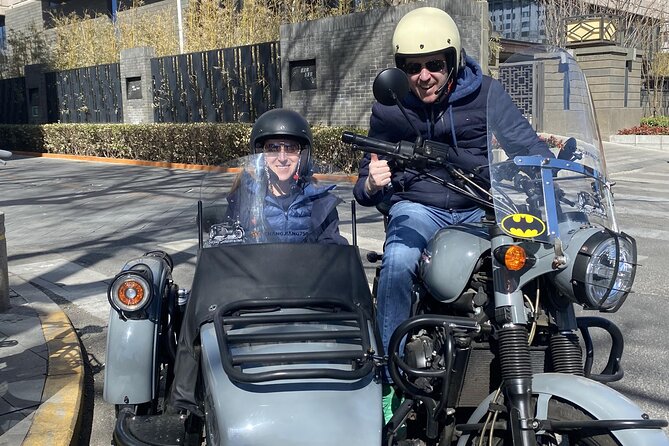
The meeting point is the National Art Museum of China, at 1 Wu Si Da Jie, Dongcheng District, Beijing (100875). The good news is the tour also offers pickup, so you may not need to find the exact spot yourself depending on what you book.
The tour format is private for your group. That means you’re not sharing the ride with strangers outside your party. For couples or small groups, that usually makes the photo stops feel smoother and reduces the “everyone cram in” moments.
If you’re coming with a larger group, there’s a helpful heads-up: for more than 08 people, you should contact the operator for availability. That’s the kind of detail that prevents last-minute surprises.
The sidecar setup: helmets, seat positions, and the halfway switch
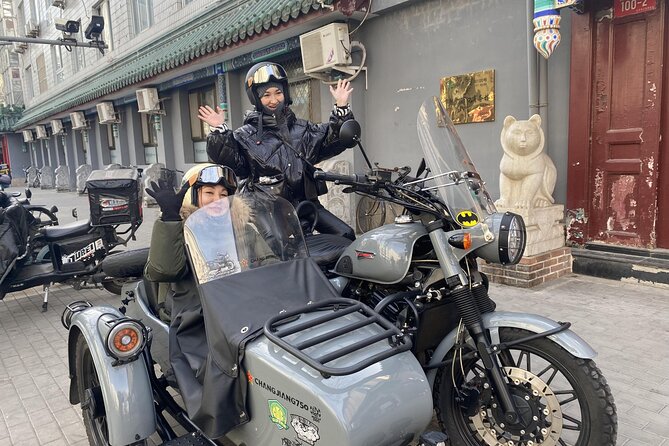
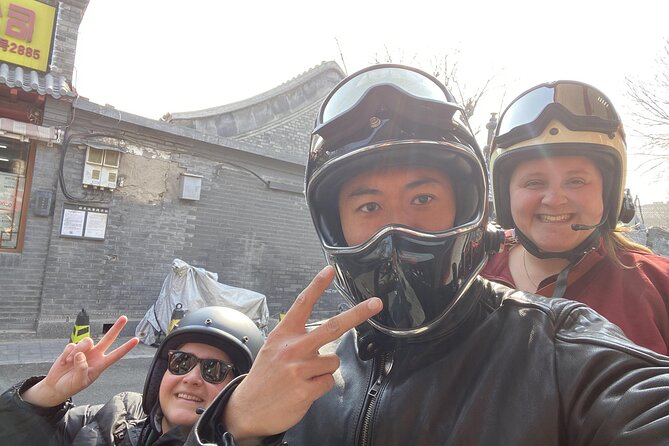
This tour includes helmets, which is both practical and reassuring. You also get bottled water, a raincoat (handy in sudden weather), and a phone charge cable so you can keep your camera and map apps alive.
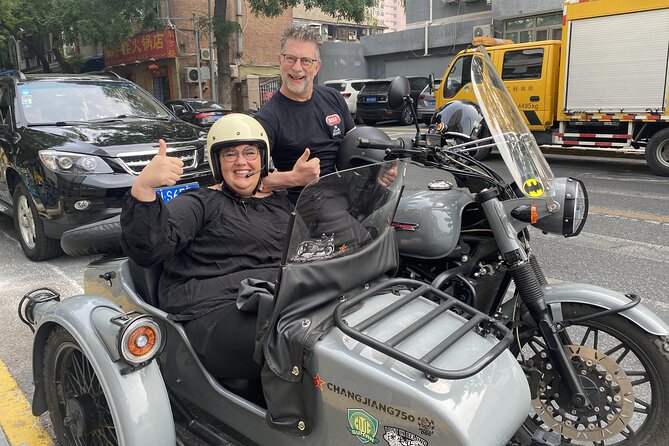
Each sidecar is set up for two passengers: one rides in the sidecar and one rides behind the driver. The tour notes that a switch is possible halfway through. That small detail matters more than it sounds. The front-side view and the rear view feel different, and trading positions helps you get photos and comfort from both angles.
If you’re traveling with someone who likes window-side views while you prefer a steadier ride position, the option to switch halfway is a nice compromise.
Stop 1: Bell and Drum Towers for your “central axis” photo lineup
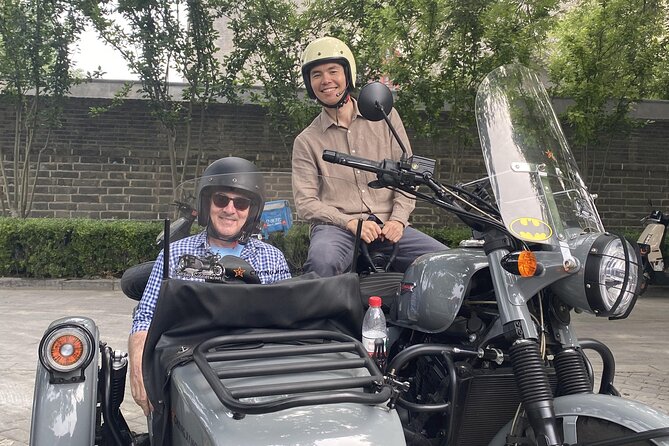
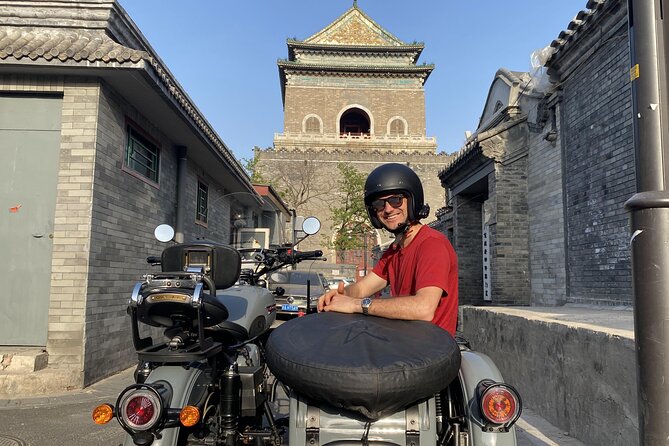
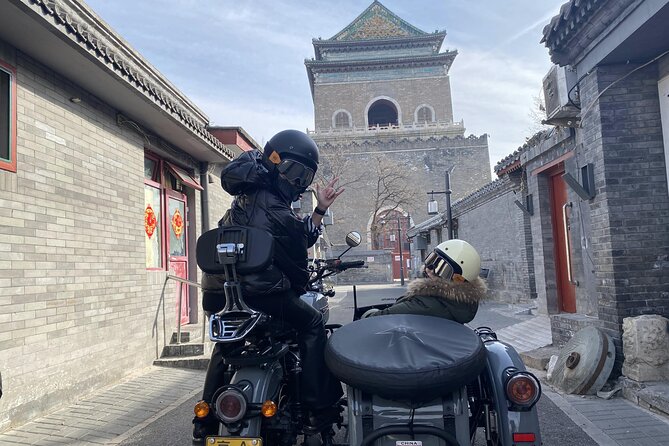
You’ll start with the Bell and Drum Towers—two key landmark buildings on Beijing’s historic central axis. The tour also calls out that this is an internet-famous check-in location, so expect a photo-friendly setup.
What makes this stop useful on a sidecar tour is visibility. Even if you don’t spend long on foot, you get an instant sense of Beijing’s formal geometry and major landmarks. It’s also a free-admission stop on the tour plan.
How to get the most out of it: use the stop time for photos from more than one angle, especially if the lighting is good. Bell and Drum Towers are one of those spots where the background scale helps you understand the city instantly.
Hutongs: how the tour delivers “local” without feeling staged
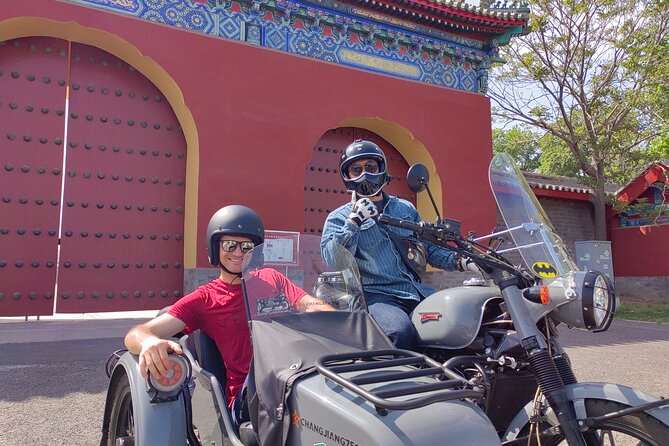
After the landmark-style start, you move into hutongs, the traditional small alley network that shapes everyday Beijing. The tour positions this as a chance to get close to daily life—less “tour show” and more neighborhood texture.
This is where you’ll feel the difference between seeing Beijing and being around it. The lanes are tighter, the streets feel more lived-in, and the ride style makes it easier to notice small details you’d miss from farther back.
Two practical notes for hutongs:
- Bring your patience for tight turns and slow moments. That’s part of the experience.
- Have your camera ready, but don’t worry about nonstop shooting. The tour is built with lots of stops for photos and breathing time.


Stop 2: Shichahai Scenic Resort and Houhai lakes with drinks
Next comes the Shichahai Scenic Resort, with riding along Houhai lakes. This stop is about views and a break from landmark density. The tour time here is listed at about 15 minutes, and admission is free.
What I like about this stop is the pacing. After hutong lanes and big-city icons, a lakeside moment gives your eyes room. And the tour notes that you’ll be enjoying the view with drinks. You’ll get Beijing special snacks as well, which makes this feel like a real pause instead of just a photo stop.
If you’re booking during a season with cooler evenings, the included hot coffee/tea (winter) is the kind of comfort that can turn a short break into a highlight.
Forbidden City north gate area: moats and watching-tower views
Then you reach the north gate of the Forbidden City area. The tour mentions riding through the moat and the Watching Tower of the Forbidden City.
Even when your time on foot is limited, this is a strong “context” stop. The Forbidden City is famous, but you often only see it from one direction. Approaching from the moat-and-tower perspective helps you understand the scale and defensive layout.
Admission is listed as free for this segment in the tour notes, and it’s a good chance to photograph from a moving-but-slow position. If you care about composition, this is where having both passengers switched (if available) can help you capture different angles.
Beijing Workers’ Stadium: a quick hit of sports-and-city identity
Next up is Beijing Workers’ Stadium, described as a famous landmark and the brand-new stadium of the Beijing football team. The stop time is listed at about 5 minutes, with admission free.
This is the “modern city identity” part of the route. Even if you’re not attending a match, it’s a recognizable anchor in Beijing’s contemporary map. It also gives you a fast break between larger photo hubs.
Because the stop is short, have your camera set before you arrive. This isn’t the kind of stop where you want to look for settings afterward.
CCTV New Mansion and the Central Business District skyline moment
From the stadium you roll into the Central Business District, stopping at the CCTV New Mansion. The tour calls out the famous CCTV building and also notes it as the tallest building in Beijing.
This is where the tour leans hard into the modern side. The architecture is designed for attention, and sidecar speed keeps you from staring too long. You get a quick, high-impact look and then you’re moving again.
The trick here is to focus on framing rather than zooming. Tall modern buildings can be hard to “fit” in a photo unless you capture a wider angle. Even in a short stop, you can get a stronger image by stepping a bit and adjusting your perspective.
Site of Ming City Wall Park: the “old line” that still exists
The final highlighted stop is the Site of Ming City Wall Park. The tour describes it as the only existing section of the original Beijing inter-city (interior) wall, and it’s positioned as where ancient and modern time blend.
This stop is usually the emotional payoff for “ancient and modern” tourism. You start with landmark structures, you ride through historic alley networks, you see modern towers. Then you end at a place that still physically signals the city’s older boundaries.
Admission is listed as free, and the stop time is about 15 minutes. That’s enough time to walk a little, read what’s around you if signs are available, and take photos with a calmer pace.
If you like “how cities grew” stories, this is the segment you’ll appreciate most, because it’s about continuity. Even when everything else changes, something of the older layout still marks the space.
The included snacks and drinks that make the ride feel worth it
A short tour can easily feel like you’re just paying for motion. This one tries to avoid that by including comfort items and food.
You’ll get Beijing special snacks, plus hot coffee/tea in winter or cold soda/beer in summer. You’ll also be stopping along the lakeside section with drinks.
This matters because the route includes multiple photo moments. If you’re managing cold hands, a tired phone battery, or plain hunger, those included basics keep the experience from feeling “just okay.”
My practical tip: if you’re sensitive to wind, keep the raincoat accessible even on partly dry days. You’ll thank yourself if weather flips.
Pricing and value: $89 for two hours with a lot of stops
At $89 per person for about two hours, the value depends on what you want to optimize.
This tour includes:
- helmets, raincoat, bottled water
- phone charge cable
- a professional driver/guide
- snacks and seasonal drinks
- a stop plan that includes multiple free-admission landmarks and a mix of old and new areas
For many visitors, the big advantage is not just the ride. It’s the pre-planned sequence: you get a connected route across different Beijing “moods” without needing to figure out transport and timing yourself.
Could it be pricey compared to a public-transport walking day? Sure. But it’s usually better value than spending half a day bouncing around on your own, especially when you want both hutongs and modern CBD highlights in one go.
Who this sidecar tour fits best
This is a great fit if you:
- want a first-day orientation feel and don’t want to spend your time wrestling maps
- like photography and quick, structured landmark stops
- enjoy street-level city life and want some hutong time
- prefer a smaller, private-group vibe rather than a huge bus
It may be less ideal if you:
- hate being on a motorcycle-style ride for around two hours
- need a super slow pace with lots of long walks
- expect a plan that works in any weather
If you’re flexible and you can handle short stops, this tour style is a strong way to get your bearings fast.
Small details that can change your experience
Two things that can make or break the comfort level:
- Seat position: the passenger in the sidecar and the passenger behind the driver experience the ride differently. If the switch halfway option is available for your booking, take it.
- Timing and outfit: with raincoat included, you can handle surprise drizzle, but wind can still affect how comfortable you feel. Dress for quick stops and cool air between areas.
Also, keep your expectations realistic. The tour is stop-heavy, but each stop is relatively short. Your job is to show up ready to take a few great photos, soak up street life, and enjoy the ride’s rhythm.
Should you book the Ancient & Modern Beijing sidecar tour
I’d book it if you want a compact, high-contrast Beijing day-or-night experience. It’s built to connect hutongs, the Forbidden City north gate area, and modern Beijing icons like the CCTV New Mansion, all while including practical comfort items and seasonal drinks.
Skip it if you want a long, slow, museum-style visit or if you know you won’t tolerate wind/road noise for two hours. Also, plan around weather; this tour requires good conditions to run smoothly.
If you’re aiming to see a lot, get great landmark context, and still feel like you’re around real neighborhoods, this is a solid choice for the money.
FAQ
How long is the Ancient & Modern Beijing sidecar tour?
It’s approximately 2 hours.
How much does the tour cost?
The price is $89.00 per person.
Is pickup available?
Yes. Pickup is offered, and the tour also lists a meeting point at the National Art Museum of China.
Is this a private tour?
Yes. It’s listed as private, meaning only your group participates.
How many people ride in each sidecar, and where do they sit?
The plan is 2 passengers in one sidecar: one in the sidecar and one behind the driver. A switch halfway is possible.
What’s included in the tour?
Included items are helmets, bottled water, raincoat, phone charge cable, a professional driver/guide, Beijing special snacks, and seasonal drinks (hot coffee/tea in winter, cold soda/beer in summer).
Do you pay admission for the stops?
For the listed stops, the tour notes admission ticket is free for Bell and Drum Towers and other segments in the plan.
What happens if the weather is bad?
This experience requires good weather. If it’s canceled due to poor weather, you’ll be offered a different date or a full refund.
Where does the tour start and end?
It starts at National Art Museum of China and ends back at the same meeting point. The address provided is 1 Wu Si Da Jie, Dongcheng Qu, Beijing Shi, 100875, China.