REVIEW · MEXICO CITY
Walking Tour in Mexico City for Exploring their Cultural Heritage
Book on Viator →Operated by Estación México · Bookable on Viator
Two hours, and Mexico City clicks. This walking tour strings together the Zócalo, Templo Mayor ruins, and the grand finish at Bellas Artes into one easy storyline, guided by someone who knows what to point at and why it matters. I love the way guides like Sofía and Carmina turn big sights into clear, answer-your-questions moments, and I love the value of free museum stops sprinkled through the walk. One catch: you’ll want to be comfortable with a 3-hour walk.
You start at Plaza de la Constitución 463 in the Centro Histórico and end near Av. Juárez 39, close to Palacio de Bellas Artes. It runs about 2 to 3 hours, it’s offered in English, and the group is capped at 20 people—small enough to actually ask questions.
If this is your first day in Mexico City’s historic core, this is a smart way to get your bearings without renting a time machine. Just plan on no food or drinks, and wear shoes you can walk in for a while.
In This Review
- Key highlights you will feel right away
- Why this Centro walk works as a first-day plan
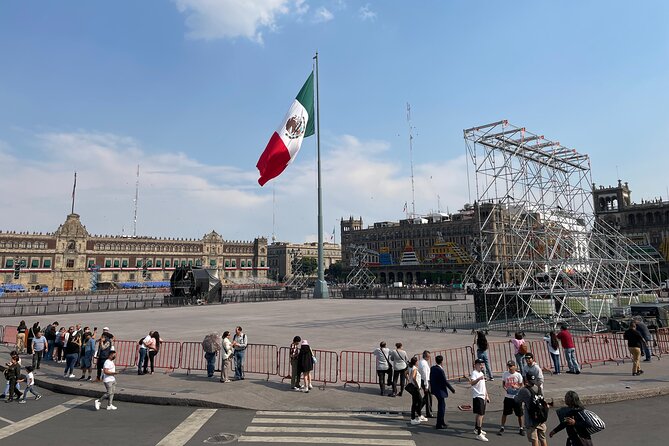
- Zócalo, Cathedral, and the National Palace: politics and faith in the same square
- Museo del Templo Mayor: Aztec foundations under your feet
- Plaza de Santo Domingo: Spanish roots and the start of mural storytelling
- Museo Nacional de Arte and the XX-century shift
- Palacio de los Azulejos: when tilework tells a story too
- Ending at Palacio de Bellas Artes: the big icon and the mural payoff
- Price and value: what $25 buys you (and what it doesn’t)
- Logistics that make or break a walking tour
- Who should book this tour
- Should you book this Walking Tour in Mexico City?
- FAQ
- How much does the Mexico City walking tour cost?
- How long is the tour?
- What language is the tour offered in?
- What stops are included on the route?
- Are admission tickets included?
- Where do I meet the guide, and where do we end?
- Is the tour good for people who aren’t very mobile?
- How big is the group?
- Are food and drinks included?
- What is the cancellation and refund rule?
Key highlights you will feel right away
- Zócalo first: you begin with the city’s origin and the place where politics and celebrations still happen
- Templo Mayor ruins: ancient Mexica foundations are right there in front of you
- Muralist connections: you’ll connect Spanish-era history to Mexico’s mural movement
- Multiple free entry stops: several key sites during the walk have free admission for this activity
- Small group vibe: up to 20 people, so the guide can answer questions without rushing
Why this Centro walk works as a first-day plan
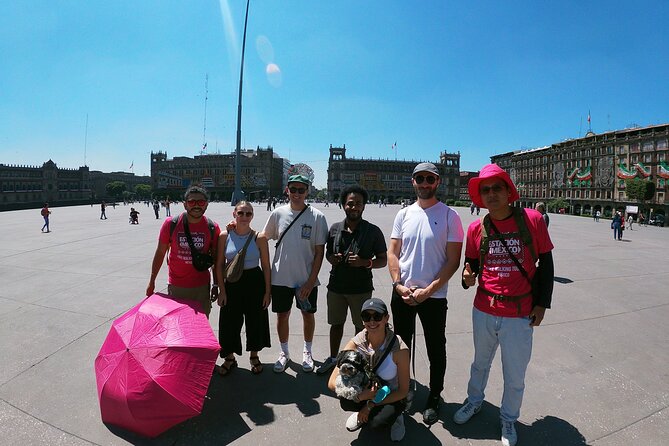
Mexico City can feel like a layered cake: pre-Hispanic, Spanish colonial, then modern Mexico—over and over again. This tour is built to help you read those layers in order, on foot, with an English-speaking guide talking you through what you’re seeing.
The practical win is focus. Instead of trying to cover everything in a chaotic day, you hit a tight cluster of landmarks around the Historic Center. You also get short time-boxed stops—enough to notice details—then move on before fatigue sets in.
I also like that the tour is designed around cultural storytelling. The route isn’t only about buildings. It’s about how power, religion, politics, and art show up in the streets and walls you’re standing next to.
You can also read our reviews of more walking tours in Mexico City

Zócalo, Cathedral, and the National Palace: politics and faith in the same square
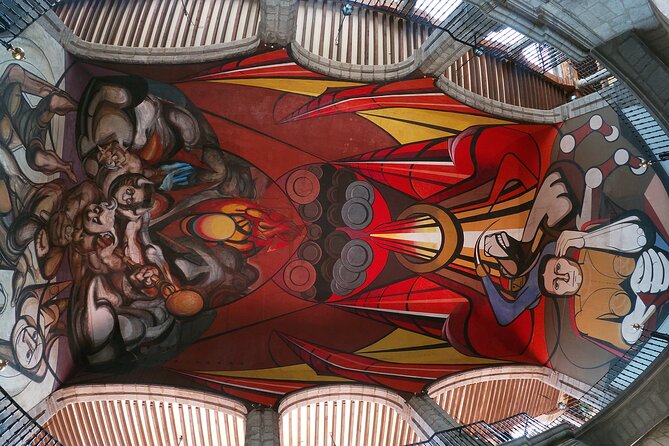
Your first stop is the Zócalo, Mexico City’s main public square. The guide frames it as the origin point of the city—also the stage where politics, social movements, traditions, and festivities keep happening. That matters, because it shifts your mindset from sightseeing to understanding why this space still runs the city.
From there, you’re in the orbit of two heavy hitters:
- the biggest cathedral in the continent
- the main seat of Mexico’s federal government
Even if you don’t care about architecture, it’s worth watching the contrast. One place represents religious authority; the other represents national governance. Together, they show how Mexico’s history is written in institutions as much as in people.
A good guide will also help you spot what to look for in the details—lines, symbols, and the way the buildings face the square. That’s where Q&A time pays off. In past tour experiences with guides like David, Marco, and Diana, the big win wasn’t just facts—it was how comfortably they handled questions.
Museo del Templo Mayor: Aztec foundations under your feet
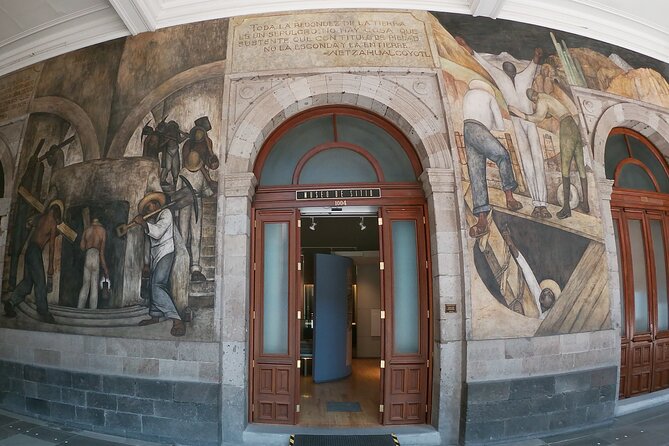
Next comes the Museo del Templo Mayor, built around ruins tied to ancient Tenochtitlan. This is where the story stops being abstract. You’re looking at remains connected to what the guide describes as the most important temple of the old city.
This stop is short—about 20 minutes—but it hits something people often miss when they rush through Mexico City. The Mexica and Aztec story is not just museum content. It’s in the geography and the timeline of the city you’re walking through.
Why I like this part: it gives you a baseline. Once you understand what Tenochtitlan was, later landmarks in the Spanish and modern eras make more sense. You’ll start seeing the “before and after” instead of a random collection of sights.
If you’re the type who likes history for the human scale—how people lived, worshiped, and organized society—this is a strong match.
Plaza de Santo Domingo: Spanish roots and the start of mural storytelling
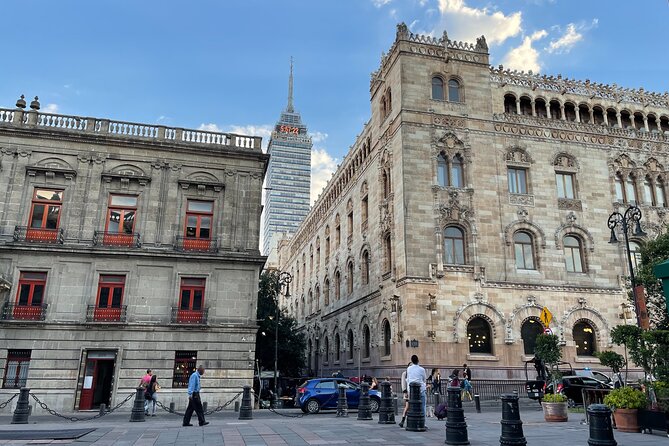
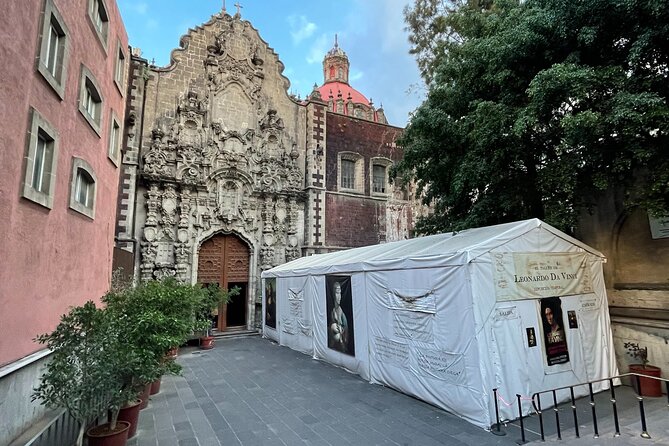
Then you head to Plaza de Santo Domingo. This is a clever pivot point, because it connects older Spanish-era presence with the origin of the Mexican muralist movement.
Think of it like stepping from politics-and-religion into art-as-public-memory. Murals in Mexico aren’t decoration. They’re messaging—history, identity, and social commentary painted large enough to be seen from the street.
This is also a good spot for photos, but don’t only grab pictures. Use the guide’s framing. The best mural explanations turn a wall into a lesson, and you can carry that lens to the later stop at Palacio de Bellas Artes.
Museo Nacional de Arte and the XX-century shift
The tour then swings toward modern architecture with the Museo Nacional de Arte. The guide uses it as a point of contrast: the 20th century becomes the dominant “voice” in the streets around you.
This stop isn’t just about a building. It helps you recognize that Mexico City keeps rewriting itself. You’re moving from ruins of an earlier empire to a Spanish-influenced world, and then into a Mexico where museums and public culture play a major role.
If your brain starts to feel overloaded with names and dates, this museum break is useful. It gives you a reset while still moving the story forward.
You can also read our reviews of more city tours in Mexico City

Palacio de los Azulejos: when tilework tells a story too
One of the most enjoyable parts of this walking route is the transition through streets that feel like they’re holding little surprises. Mid-tour, you’ll see a palace known for its tilework—famous enough that it tends to stop people mid-step.
This is one of those places where you don’t need a long lecture to get the point. The visual impact does some of the teaching. But a good guide can point out why this style of decoration matters historically and how it fits the colonial timeline you’ve already been hearing about.
If you like architecture even a little, you’ll probably linger here for an extra minute.
Ending at Palacio de Bellas Artes: the big icon and the mural payoff
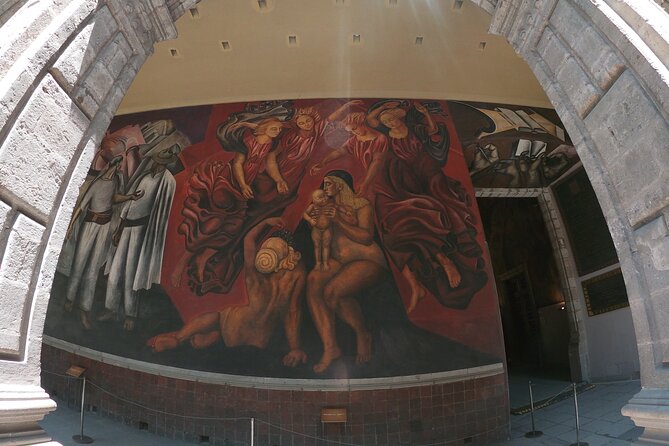
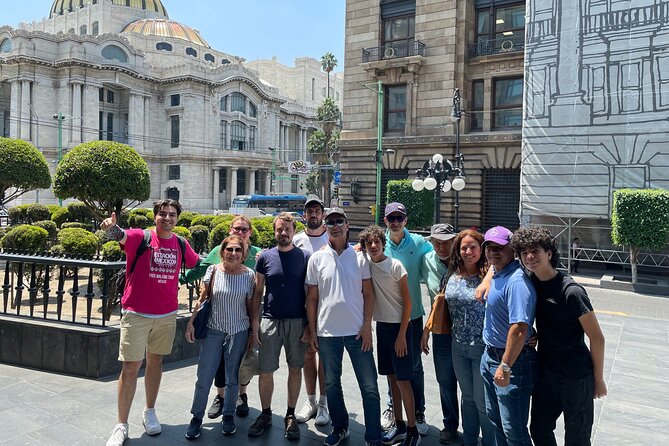
Your final destination is Palacio de Bellas Artes, a Mexico City icon. Ending here works well because it’s a cultural “closing chapter.” After seeing power, ancient foundations, and the shift into art culture, you land in a place devoted to art in a major public way.
This is also where the tour’s mural connection really clicks. The activity includes a place with murals, and the way the guide links those ideas makes the last leg feel more intentional than just walking to a landmark.
If you’ve ever toured a city and felt like you collected photos but didn’t collect meaning, this ending style helps fix that. You leave with a clearer mental map of how art and identity evolved where you’re standing.
Price and value: what $25 buys you (and what it doesn’t)
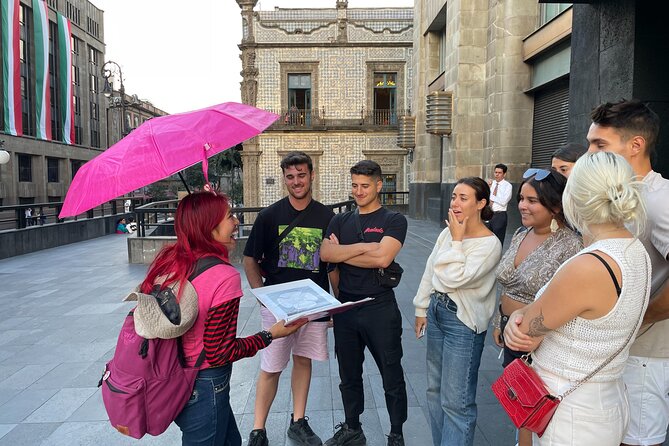
The price is $25 per person for about 2 to 3 hours, and it’s hard to beat when you consider what’s included:
- a guide for the full experience
- visits to key sights along the route
- free admission stops listed for multiple segments
- mural-focused context during the walk
You’re also not paying extra for entry tickets at the stops on the schedule. That matters in Mexico City, where choosing a tour that stacks free access sites can be a real cost saver.
What you should know: food and drinks are not included. That’s not a deal-breaker, but it does affect pacing. If you get hungry or thirsty early, plan a snack before you start—or bring something small with you.
Logistics that make or break a walking tour
This tour is near public transportation, and the route stays in the historic core, where getting around is usually easier on foot than by hopping between faraway neighborhoods.
The group size cap (20 people) is a practical plus. With fewer people, the guide can keep an eye on the pace and make time for questions without turning the whole experience into a traffic jam.
Start time is 9:00 am. That’s a smart slot for many people because you’re not starting too late in the day. It also means you can still do other things afterward without feeling like you gave up an entire day.
Shoes matter. Expect to walk steadily for about 3 hours. If you’re comfortable on city sidewalks and you can stand and move between stops, you’ll be fine.
Who should book this tour
I’d book this walk if you fit one of these:
- you’re in Mexico City for the first time and want an organized introduction
- you like history but also want the “why” behind monuments and museums
- you want a guide who can handle questions and keep the pace friendly (guides like Jesus, Ulysses, and Diana have been praised for enthusiasm and answering questions)
- you enjoy art history when it’s tied to real places, not just slides
If you hate walking, or you need long seating breaks, this may feel tight.
Should you book this Walking Tour in Mexico City?
Yes, if you want a clean, guided orientation of the Historic Center that links ancient Mexica foundations to Spanish colonial power to 20th-century art culture. The combination of free admission stops, an English guide, and a small group makes it one of those practical first-day choices.
I’d skip it only if you can’t manage a steady 3-hour walk or you’re looking for a purely architectural deep dive with long stays at each site. This tour is better described as a focused cultural route than a slow museum marathon.
If you’re deciding today, this is the kind of experience to book early—there’s an average booking lead time of about 8 days, so earlier planning helps.
FAQ
How much does the Mexico City walking tour cost?
It costs $25.00 per person.
How long is the tour?
The tour lasts about 2 to 3 hours.
What language is the tour offered in?
The tour is offered in English.
What stops are included on the route?
You’ll visit the Zócalo, the Museo del Templo Mayor, Plaza de Santo Domingo, the Museo Nacional de Arte, and you’ll end near Palacio de Bellas Artes. You’ll also see the Cathedral and the federal government office, plus a palace known by its tiles during the walk.
Are admission tickets included?
Yes. The listed stops on the schedule show admission ticket free for this activity.
Where do I meet the guide, and where do we end?
You start at P.za de la Constitución 463, Centro Histórico de la Cdad. de México, Centro, Cuauhtémoc, 06060 Ciudad de México, CDMX, Mexico. You end close to Palacio de Bellas Artes, near Av. Juarez 39, Colonia Centro, Centro, Cuauhtémoc, 06050 Ciudad de México, CDMX, Mexico.
Is the tour good for people who aren’t very mobile?
Most people can participate, but it is a walking tour. You should be able to walk for about 3 hours.
How big is the group?
The maximum group size is 20 travelers.
Are food and drinks included?
No. Food and drinks are not included.
What is the cancellation and refund rule?
You can cancel for a full refund if you cancel up to 24 hours in advance. If you cancel less than 24 hours before the experience starts, the amount paid will not be refunded.