REVIEW · BEIJING
Beijing Culture: Tea Ceremony, Heritage Instrument & Calligraphy
Book on Viator →Operated by Culture Heritage Tour China · Bookable on Viator
Skip the show; learn living traditions. This 2.5-hour workshop in Beijing brings together a tea ceremony with a national-level tea master, a Guqin music session, and calligraphy—all in a calm, off-the-radar venue closed to the public.
I like that you do the important parts yourself: you brew and taste tea, you try a Guqin melody with guidance, and you write real characters with an expert’s help. I also like the small-group setup (up to 8 people), which keeps the pace slow and personal instead of performative.
One drawback to consider: transportation isn’t included, so you’ll need to plan how you’ll reach 813 Creative Park (and get back afterward).
In This Review
- Key highlights before you go
- A quiet heritage venue near 813 Creative Park
- Tea ceremony with a national-level tea master: ritual you can feel
- Guqin music: hearing the legend, then learning the melody
- Calligraphy workshop: writing real characters, not just copying strokes
- Traditional outfit rental: making the ritual feel complete
- Group size, pacing, and why it feels personal
- How good value looks at $78.60 per person
- Who this experience is best for
- Before you book: the 3 checks that prevent disappointment
- Should you book this Beijing tea, Guqin, and calligraphy workshop?
- FAQ
- How long is the Beijing Tea Ceremony, Guqin, and Calligraphy experience?
- What’s included in the price?
- Is transportation included?
- Where do I meet, and where does it end?
- How large is the group?
- Do I need to know Chinese traditions beforehand?
- What if the weather is bad?
Key highlights before you go
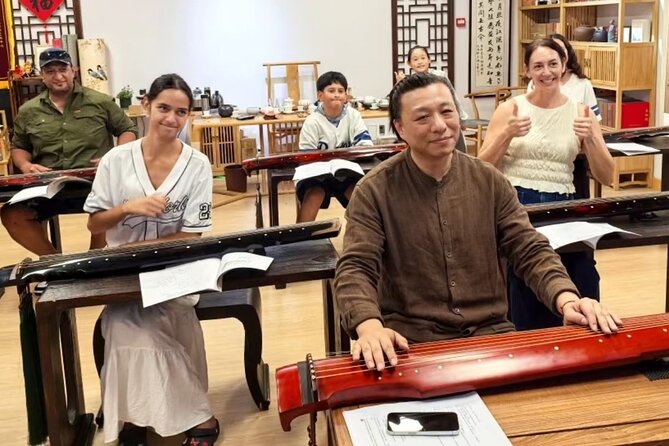
- National-level tea master leads the tea tasting, so you’re learning why the ritual works, not just sipping.
- Guqin performance + hands-on learning means you hear it live, then try your own notes with guidance.
- Chinese calligraphy practice with expert direction, including guidance on writing meaningful characters like your name.
- Private heritage venue that’s closed to the public, with a quieter atmosphere than typical Beijing stops.
- Traditional outfit rental for the ritual and photos, so the experience feels complete.
- English support from a bilingual guide (M.A. in History & Sociology) helps connect the skills to culture and meaning.
A quiet heritage venue near 813 Creative Park
This experience takes place in a private, heritage-focused space in Beijing that’s described as closed to the public. Translation: you don’t wander through a crowded room waiting for a staged performance—you move between stations in a calm setting.
The meeting point is 813 Creative Park in Chaoyang, and the tour ends right back there. It’s also noted as near public transportation, which matters in Beijing, where planning your route can make or break the day.
The venue is even described as air-conditioned, which I appreciate because tea, music, and calligraphy are better enjoyed when you’re not fighting the weather. The total time is about 2 hours 30 minutes, so it fits neatly between other sightseeing plans.
You can also read our reviews of more historical tours in Beijing


Tea ceremony with a national-level tea master: ritual you can feel
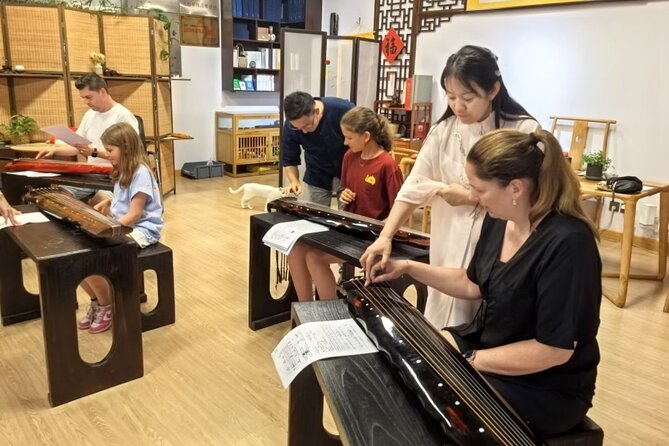
The tea portion is the first big emotional shift for many people—because tea isn’t treated like a prop. You get a traditional tea ceremony and tea tasting guided by a certified tea master, and you’ll brew and taste what you make.
What makes this valuable is the combination of hands-on action plus explanation. A tea ceremony can sound formal on paper, but when someone teaches you the logic of the steps, it becomes practical: you start noticing temperature, pacing, and the difference between simply drinking tea and tasting it with attention.
From the experience description and the feedback themes, I’d expect a gentle, reflective tone—like a short reset in the middle of a travel-heavy schedule. And because you’re in a quiet venue, it’s easier to actually focus on what you’re doing rather than rushing to catch the next photo spot.
Consideration: if you’re expecting a fast, entertainment-style show, the tea part will feel slower by design. That’s also the point.
Guqin music: hearing the legend, then learning the melody
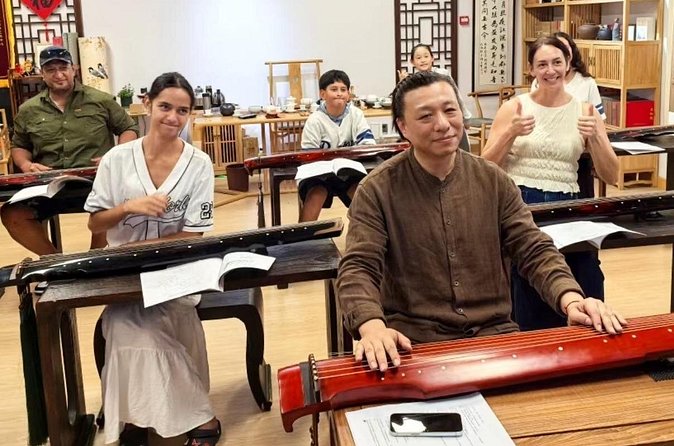
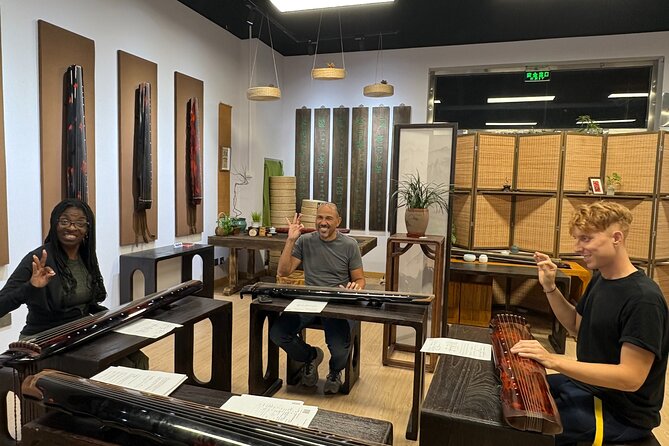
The Guqin is described as China’s most revered ancient instrument, and here you get more than a performance. You’ll first enjoy a live Guqin performance by a national-level heritage artist.
Then comes the part that makes this different: a hands-on Guqin learning session. You’re not just watching fingers glide over strings—you’re guided as you try to play a melody.
In practice, that matters. Many music workshops stop at listening or at a brief demonstration. Here, you’re given enough structure to translate what you hear into what you do, even if you’re a complete beginner.
I also like that the overall tone is described as quiet and personal. With Guqin, volume isn’t the goal—control and touch are. A small group setting helps because you’ll get time and attention instead of competing for a moment at the front.
Calligraphy workshop: writing real characters, not just copying strokes
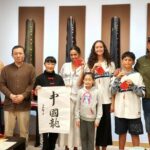
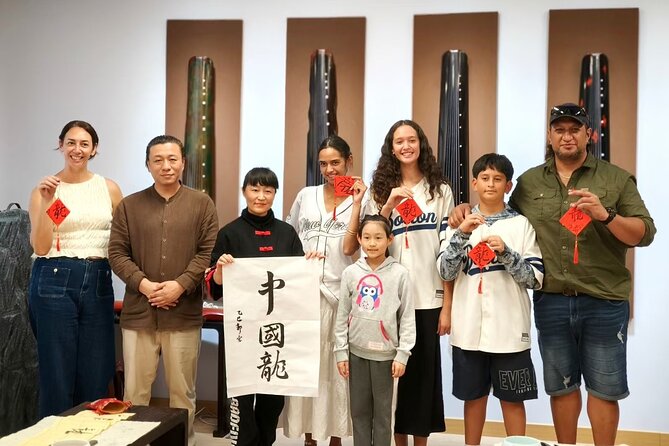
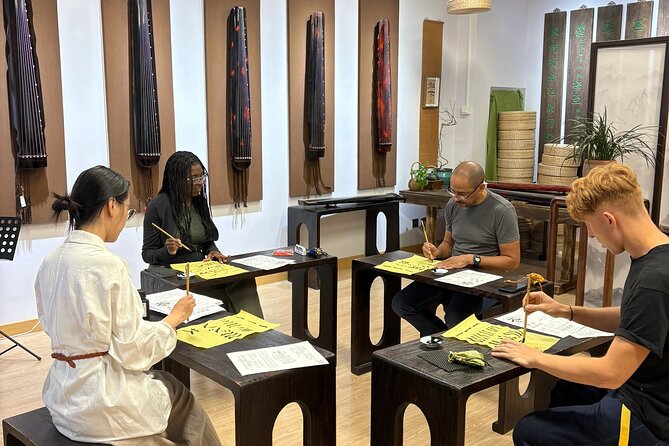
The calligraphy station is where you can leave with something tangible. You’ll learn through a Chinese calligraphy workshop with expert guidance and you’ll write meaningful Chinese characters.
One detail that stands out from the feedback: the instructor can help you write your Chinese name, and you can take the finished paper home. That’s not a throwaway souvenir. It’s a personalized result from your time there, and it gives you a reason to remember the experience after the bustle fades.
Calligraphy is also a good fit for a workshop because it doesn’t require prior knowledge—what you need is patient instruction and a steady pace. Even if your writing comes out imperfect, the lesson is still useful: you learn how strokes connect and why traditional forms matter.
Possible drawback: calligraphy can feel harder than it looks, especially if you’re used to digital writing. Give yourself permission to go slow. The experience is designed around learning, not perfection.
Traditional outfit rental: making the ritual feel complete
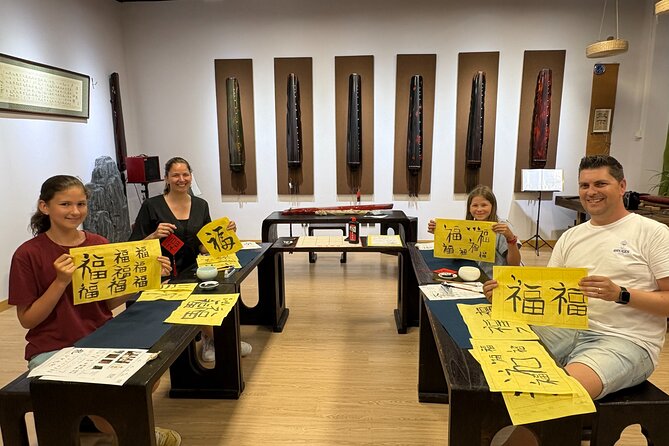
You’re provided traditional outfit attire rental for the ritual and photos. This is more than costume dressing for a picture. It signals that the workshop is meant to be experienced as a whole, not just sampled in pieces.
If you’re the type who likes context—how people dress, sit, hold objects, and move—this helps you get your bearings fast. And because the outfit is intended for the ritual, it also tends to make the calligraphy and tea moments feel more connected.
Practical note: you’ll still want to be comfortable. Calligraphy and seated instrument learning are part of the program, so choose simple, easy-to-manage clothing underneath.



Group size, pacing, and why it feels personal
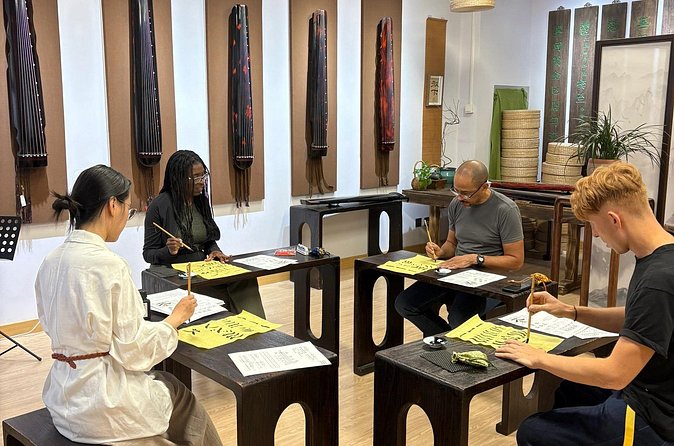
This experience caps at 8 travelers, and that small limit shows up in pacing. You can ask questions without feeling like you’re cutting into a script, and the instructors can correct or guide individual technique during the hands-on parts.
The guide is described as bilingual (M.A. in History & Sociology) and trained in Chinese philosophy and history. That blend matters. Tea ceremony, Guqin, and calligraphy all carry meaning beyond the physical action, and a guide who can explain that meaning helps you connect the dots instead of treating the day like three separate crafts.
The overall vibe is also described as a quiet sanctuary, far from the crowds and clichés of typical sightseeing. If your Beijing plan already includes major landmarks, this workshop offers a different kind of memory: the kind you make with your own hands.
How good value looks at $78.60 per person
At $78.60 per person for about 2 hours 30 minutes, this isn’t the cheapest thing you can book in Beijing. But it’s also not priced like a generic entry-level cultural performance.
Here’s why it can feel like strong value:
- Three major activities are included: tea ceremony (with tasting), Guqin learning (plus a live performance), and calligraphy (with expert guidance).
- You get a guide (bilingual, with an academic background noted in the description).
- You also receive traditional outfit rental and tea snacks as part of the experience.
When you compare that to doing any single item—tea tasting only, calligraphy only, or a Guqin show only—you’re paying for the combination and the hands-on time. The small group size (max 8) also matters for value. You’re not just paying to attend; you’re paying for instruction.
The main thing to budget separately is what’s not included: transportation and meals outside the provided tea snacks. So plan a meal before or after, and make sure you’re comfortable getting yourself to 813 Creative Park.
Who this experience is best for
This workshop is a great fit if you want culture that’s practical and slow. It’s also a strong option if you’ve been collecting landmarks but feel like something quieter is missing.
You don’t need advanced knowledge to enjoy it. One of the big themes in the feedback is that beginners feel welcome and guided through the basics.
It’s especially good for:
- People who like hands-on learning more than museum-style looking.
- Travelers who want a break from crowds and loud group tours.
- Anyone who enjoys photography that actually connects to the moment, thanks to the traditional outfit rental.
Before you book: the 3 checks that prevent disappointment
- Be honest about your pace. This is not built like a fast attraction circuit. If you want quick stops and constant movement, you might find it too calm.
- Plan your transport. The tour ends where it starts at 813 Creative Park, and transportation isn’t included.
- Expect learning, not perfection. Tea, Guqin, and calligraphy all involve technique. You’ll likely leave feeling you tried real skills, not just watched them.
Should you book this Beijing tea, Guqin, and calligraphy workshop?
I’d book it if your goal is to experience Chinese culture through actual practice—making tea, playing a melody, and writing characters with guidance. The quiet, private venue and the small group size make a real difference, and the fact that you do all three pillars of the workshop is what elevates it above typical cultural stops.
Skip it only if you’re chasing a high-energy show, or if you really don’t want to handle logistics to reach 813 Creative Park on your own.
If you’re building a Beijing trip that balances iconic sights with lived tradition, this is the kind of experience that gives you memories you can hold: a piece of calligraphy paper, a new sense of how tea steps fit together, and the feeling of touching a melody on the Guqin.
FAQ
How long is the Beijing Tea Ceremony, Guqin, and Calligraphy experience?
It runs for about 2 hours 30 minutes (approx.).
What’s included in the price?
You get the traditional tea ceremony and tea tasting with a certified tea master, a live Guqin performance plus a hands-on Guqin learning session, a Chinese calligraphy workshop, traditional outfit attire rental, and a bilingual guide (M.A. in History & Sociology).
Is transportation included?
No. Transportation to/from the venue is not included.
Where do I meet, and where does it end?
The meeting point is 813 Creative Park (VGP3+CCX, Chaoyang, China, 100124), and the activity ends back at the same meeting point.
How large is the group?
The group size is capped at a maximum of 8 travelers.
Do I need to know Chinese traditions beforehand?
No. The experience is designed so most travelers can participate, and you’ll be guided through the activities with expert instruction.
What if the weather is bad?
The experience requires good weather. If it’s canceled due to poor weather, you’ll be offered a different date or a full refund.