REVIEW · LONDON
2-Hour Private LGBTQ+ History Tour of London with a Licensed Guide
Book on Viator →Operated by Ric Morris · Bookable on Viator
London hides queer stories in plain sight. This 2-hour private LGBTQ+ history tour in Bloomsbury, led by licensed guide Ric Morris, turns a famous London neighborhood into a map of changing identities and ideas.
I like that the stories aren’t limited to a handful of well-known names. You get a timeline that stretches from the 18th century to today, plus details like Polari, London’s secret gay language, that make the past feel tangible rather than textbook-like.
One thing to consider: the tour is focused and mostly walk-through-the-area, so you’ll want to dress for the weather and be ready to keep moving in a small, concentrated route.
In This Review
- Key things that make this tour worth your time
- Why Bloomsbury makes an LGBTQ+ history tour make sense
- Price and what you actually get for up to 15 people
- Meeting on Bernard Street, finishing at Fitzroy Tavern
- The 2-hour structure: one neighborhood, one tight storyline
- Stop: Bloomsbury from the 18th century to now
- The artist circles and the idea of a freer social world
- Lesbian pioneers of women’s medicine
- A philosopher who defended same-sex love
- An 18th-century queer space
- Cross-dressing Victorians and visible performance
- Early gender-affirming medical steps
- A landmark lesbian novel and the power of print
- London’s best-loved LGBTQ bookshop
- Polari: London’s secret gay language
- The guide factor: why Ric Morris’ style matters on a walk
- Logistics you’ll care about on the day
- Who should book this private Bloomsbury LGBTQ+ history tour
- Should you book this tour?
- FAQ
- How long is the private LGBTQ+ history tour in London?
- Where does the tour start and end?
- What time does the tour begin?
- Is this a private tour, and how many people can be in the group?
- What language is the tour offered in, and do you get a ticket?
- What is the cancellation policy?
Key things that make this tour worth your time
- Private group up to 15: one licensed guide, your pace, less crowd pressure.
- Ric Morris on the job: a guide who keeps the tour entertaining and moving at a good rhythm.
- Bloomsbury as a living timeline: from the 18th century to modern LGBTQ+ life.
- Polari and other secret signals: language and codes that shaped how people found each other.
- Women’s medicine, cross-dressing, and early gender affirmation: big themes, grounded in specific local stories.
- A finish at Fitzroy Tavern: you end at a classic historic pub, with an easy hop to nearby Tube stations.
Why Bloomsbury makes an LGBTQ+ history tour make sense
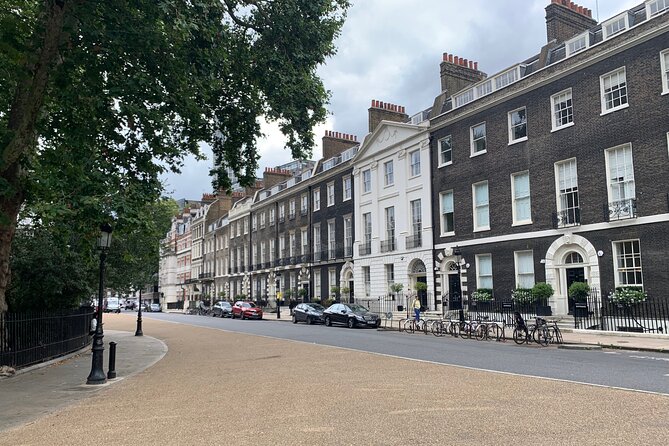
Bloomsbury is one of those London areas where history sits close to the street. It’s a neighborhood tied to writers, thinkers, artists, institutions, and social circles. That matters for an LGBTQ+ history walk because so much of queer life grew through networks—people meeting, printing, debating, publishing, treating patients, and building community.
This tour’s angle is practical: it uses Bloomsbury as the stage for a long arc of change. So you’re not just collecting dates. You’re seeing how ideas about sexuality, gender, and identity moved through culture and medicine, then into language, literature, and everyday spaces.
And because it’s private, you’re not stuck with a rigid “everyone listen at once” vibe. You can lean into what you care about most—language, literature, medicine, activism, or all of the above.
You can also read our reviews of more guided tours in London

Price and what you actually get for up to 15 people
The price is $452.52 per group, up to 15 people, for about 2 hours. That sounds like a group rate (because it is), so the value depends on how you split it.
A useful way to think about it: if you go with a full group of 15, the per-person cost comes out to roughly $30 for the tour. Even if you’re a smaller group, you’re paying for a licensed guide doing a tailored, private-style experience rather than sharing interpretation with dozens of strangers.
What makes that cost feel more justified is the focus. You’re getting concentrated storytelling about LGBTQ+ history in one area—plus guided explanation of details you’d likely miss if you just wandered. It’s the difference between seeing a street and understanding why people on that street mattered.
Meeting on Bernard Street, finishing at Fitzroy Tavern
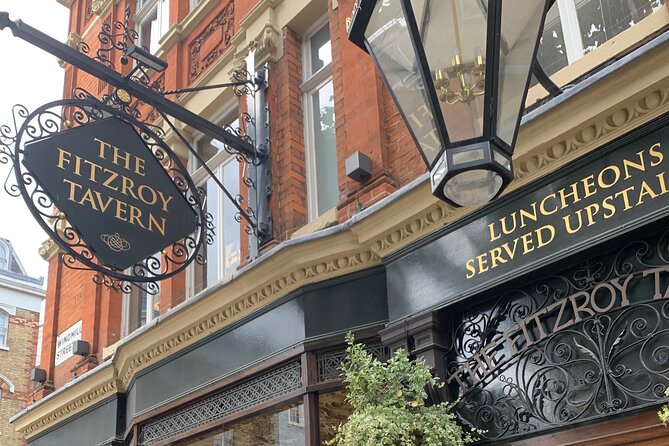
The tour starts at 10 Bernard St, London WC1N 1LT, with a start time of 2:00 pm. You finish at Fitzroy Tavern, 16 Charlotte St, London W1T 2LY—a historic pub—so the ending doesn’t feel like an abrupt drop-off in the middle of nowhere.
This matters for real travel days. You’re not scrambling to find somewhere to sit after a guided walk. You can grab refreshments right where the tour ends, then continue your evening with a short walk to Goodge Street or Tottenham Court Road Tube stations.
Also, you’ll have a mobile ticket, which is handy in London. And it’s in English, so the narration is straightforward for most visitors.
The 2-hour structure: one neighborhood, one tight storyline
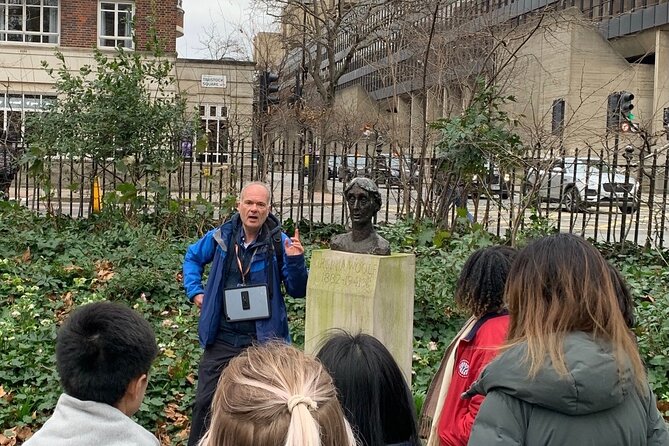
You’re in the field for about 2 hours, so this isn’t a “cover everything in London” format. Instead, it’s built around staying focused on Bloomsbury and using it to tell a coherent story—from earlier queer life to present-day LGBTQ+ culture.
That focus can be a positive if you want depth without information overload. It’s also a gentle warning if you’re the type who wants multiple far-apart neighborhoods and lots of big landmarks. You’re choosing a laser beam here, not a fireworks show.
Stop: Bloomsbury from the 18th century to now
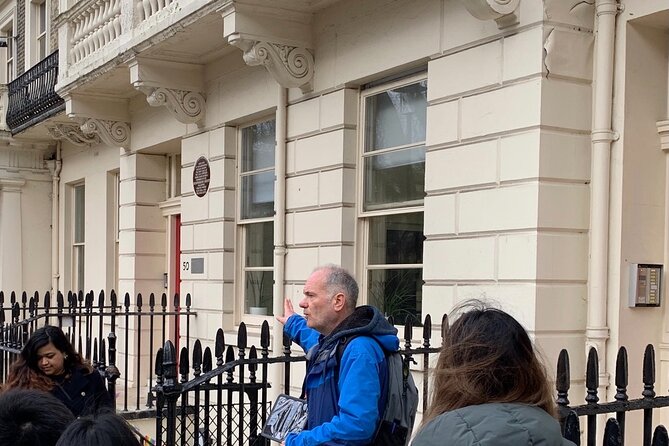
At the heart of the experience is Bloomsbury, and the route is designed around recurring themes: art and community, public debate, medicine and care, language and coded communication, and the way literature reflected real lives.
Here’s what you can expect to pick up along the way.
You can also read our reviews of more private tours in London

The artist circles and the idea of a freer social world
You’ll hear about a free-loving group of artists tied to the area. The value here isn’t just the colorful background. It’s the way creative communities helped people form networks—who knew whom, who talked, who published, and who made space for difference.
When a neighborhood is known for art and ideas, it often becomes a magnet. A story like this helps you understand why queer people and queer-friendly spaces clustered in certain parts of the city.
Lesbian pioneers of women’s medicine
One of the compelling themes is the connection between LGBTQ+ life and women’s medicine. Instead of treating healthcare as separate from queer history, the tour links the two. That gives the story weight, because it shows how identity, work, and caregiving intersected in real ways.
If you care about social history, this is one of the stops that turns general awareness into understanding.
A philosopher who defended same-sex love
You’ll also cover a philosopher who was an early defender of same-sex love. This is the kind of story that broadens the tour beyond cultural stereotypes and into argument, writing, and public ideas.
Why that matters: laws and stigma rarely change only because people are brave. They shift because someone reframes what’s acceptable, rational, or moral.
An 18th-century queer space
There’s time spent on an 18th-century “queer” space. Even if you don’t know the details now, you’ll leave with a clearer sense that queer life wasn’t only hidden or underground. There were locations where identity and community could take shape—though always within limits and pressures of the era.
This part is especially useful if you’ve felt like LGBTQ+ history is often presented as a straight line of repression and progress. Here, you get examples of how space, safety, and culture interacted.
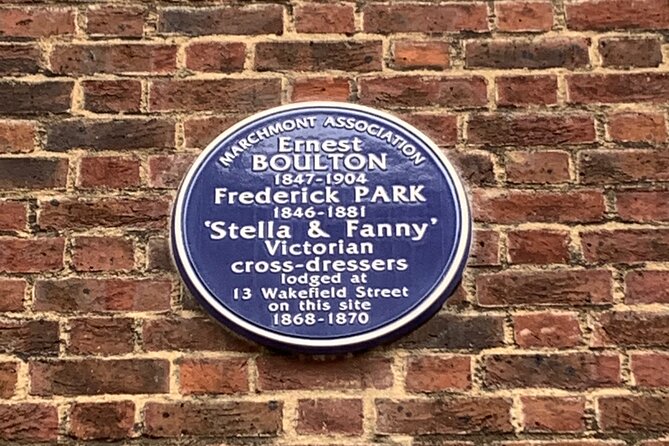
Cross-dressing Victorians and visible performance
The tour includes stories about cross-dressing Victorians. This is historically important because it challenges the idea that gender nonconformity is a modern-only phenomenon.
It also helps you see how performance and presentation could be both a personal expression and a social strategy. Even when society was harsh, people still found ways to be themselves—or at least to navigate their lives with intention.
Early gender-affirming medical steps
You’ll learn about the first gender affirmation surgeries. That theme is handled through history in the area, tying big medical developments to the people and context around them.
A practical note: since this is a 2-hour tour, you’ll get enough to understand why these developments were historic without drowning in medical detail. It’s the right balance for a walk-and-talk format.
A landmark lesbian novel and the power of print
Literature shows up for a reason. You’ll hear about a landmark lesbian novel connected to the story of LGBTQ+ life in London.
This matters because novels and writing often do two things at once: they reflect existing experiences and also expand what readers believe is possible. It’s hard to overstate how much print culture helped shape identity language and visibility.
London’s best-loved LGBTQ bookshop
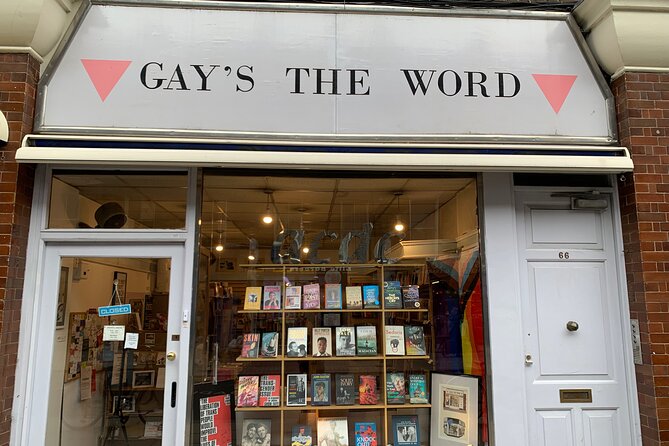
The tour also points you toward London’s best-loved LGBTQ bookshop. This isn’t just a recommendation; it’s a way to connect the story you’re hearing with where people gather now.
A strong part of these stops is that the tour makes the past feel current. When you finish at a pub with easy transit home, you can keep the momentum going with a bookshop stop if your plans allow.
Polari: London’s secret gay language
One of the most memorable parts is Polari—London’s secret gay language. This is the kind of detail that makes the city feel like a codebreaker puzzle, but with real social meaning.
Why Polari matters: language is a tool for safety and community. It can help people recognize each other without outing themselves to everyone nearby. Learning that connects history to the human need for belonging.
The guide factor: why Ric Morris’ style matters on a walk
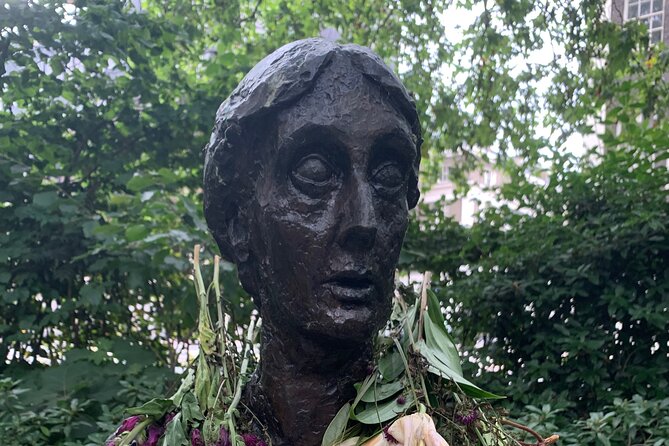
This tour is led by Ric Morris, and the impact of a good guide is obvious in a short format like this. When the pacing works, you don’t just hear facts—you catch the thread.
I like that the stories are presented in a way that keeps attention on the moving pieces: who, where, why it mattered, and how it connects to the broader LGBTQ+ story in London. That’s the difference between a list of trivia and an experience that sticks.
And it’s not only about content. In bad weather, a walking tour can go sideways fast. The tour’s approach is built around keeping things enjoyable even when conditions aren’t ideal—so the experience stays focused on the history rather than turning into a wet shuffle.
Logistics you’ll care about on the day
- Duration: about 2 hours.
- Start time: 2:00 pm.
- Meeting point: 10 Bernard St, London WC1N 1LT.
- End point: Fitzroy Tavern, 16 Charlotte St, London W1T 2LY.
- Group size: private, up to 15 people.
- Language: English.
- Ticket: mobile ticket.
- Animals: service animals allowed.
- Transit: near public transportation.
- Participation: most travelers can participate.
If you’re planning around public transport, the finish near Goodge Street and Tottenham Court Road is a smart safety net. It’s also helpful if you’re combining this with other central London plans.
Who should book this private Bloomsbury LGBTQ+ history tour
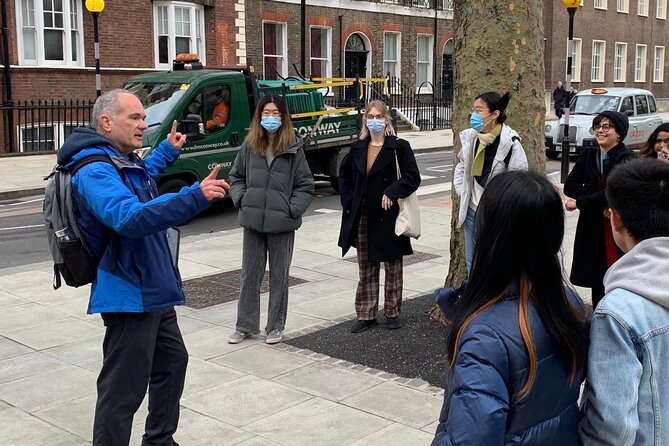
This is a great fit if you:
- want a private guided experience instead of a crowded group.
- care about LGBTQ+ history that includes language, literature, and medicine, not just landmark events.
- like a focused walk in one neighborhood rather than hopping across the entire city.
- travel with a small team, book club, Pride network, or friends where one shared guide story will land well.
It may be less ideal if you’re looking for a long, multi-neighborhood “London ABC” itinerary. This is concentrated and designed for meaning, so you’ll get depth in Bloomsbury rather than coverage of every major LGBTQ+ site across town.
Should you book this tour?
Yes, if Bloomsbury is the kind of London area you enjoy—walkable, story-rich, and closely tied to writers and thinkers. The private setup, the licensed guide, and the focus on themes like Polari, women’s medicine, cross-dressing Victorians, and early gender-affirming medical history make it feel like more than a basic sightseeing walk.
I’d also book it if you want an LGBTQ+ history experience that doesn’t talk down to you. It gives specific, memorable details and helps you connect the dots across centuries.
If you’re uncomfortable with walking in typical city weather or you need a broader multi-area route, then you might compare this with longer itineraries that cover more of London. But for a tight 2-hour window in central London, this one is built to deliver real understanding.
FAQ
How long is the private LGBTQ+ history tour in London?
The tour lasts about 2 hours.
Where does the tour start and end?
It starts at 10 Bernard St, London WC1N 1LT and ends at Fitzroy Tavern, 16 Charlotte St, London W1T 2LY.
What time does the tour begin?
The start time is 2:00 pm.
Is this a private tour, and how many people can be in the group?
Yes. It’s a private tour/activity, with one group of up to 15 people.
What language is the tour offered in, and do you get a ticket?
The tour is offered in English, and you receive a mobile ticket.
What is the cancellation policy?
You can cancel for a full refund if you cancel at least 24 hours before the experience’s start time. Free cancellation is available, and changes within 24 hours aren’t accepted.