REVIEW · KAMAKURA
Kamakura Heritage Bike or Walk Tour with ex-Rickshaw guide
Book on Viator →Operated by Ichi · Bookable on Viator
Kamakura moves fast with the right guide. This private tour lets you choose bike or walking pacing while still hitting the city’s biggest spiritual and scenic stops in about four hours. You also get a guide who has spent years maneuvering along these streets as a rickshaw driver, so the route feels practical, not random.
What I like most is the smart mix of famous and quieter moments: Kotoku-in’s Great Buddha, Hokokuji’s bamboo grove, and then a seaside stretch at Yuigahama. I also appreciate that the guide’s explanations are built for clarity, with plenty of photo time so you leave with more than just a few quick snapshots.
One thing to think about: this is weather-dependent, and the bike option may not work well for younger kids who can’t handle an adult-sized bike. If you’re visiting with kids under 13, the walking option might be the safer call.
In This Review
- Key highlights you’ll feel on the ground
- First stop: Kamakura Station meeting point and choosing bike vs walk
- Kotoku-in (Great Buddha): the “big moment” kickoff
- Tsurugaoka Hachimangu Shrine: samurai-era Shinto setting
- A quick stop that hits hard: the graves of Minamoto no Sanetomo and Hojo Masako
- Hokoku-ji bamboo grove: the calm pause you’ll remember
- Yuigahama Beach: bike or walk along the seaside road
- Hase Temple: coastline views plus the 9.18-meter Kannon
- Egara Tenjin Shrine: a quiet scholarly break
- Why I’d count on Ichi’s route and pacing
- Price and value for a 4-hour private Kamakura day
- Weather and comfort: the real deciding factor
- Who this tour suits best
- Should you book this Kamakura bike or walk tour?
- FAQ
- What’s the duration of the Kamakura heritage tour?
- Is this tour private?
- Can I choose between a bike tour and a walking tour?
- Where does the tour start and where does it end?
- Are entrance fees included?
- Is there an option to buy green tea during the tour?
- What’s included in the tour price?
- What isn’t included?
- When do I get confirmation after booking?
- Is it suitable for children?
Key highlights you’ll feel on the ground
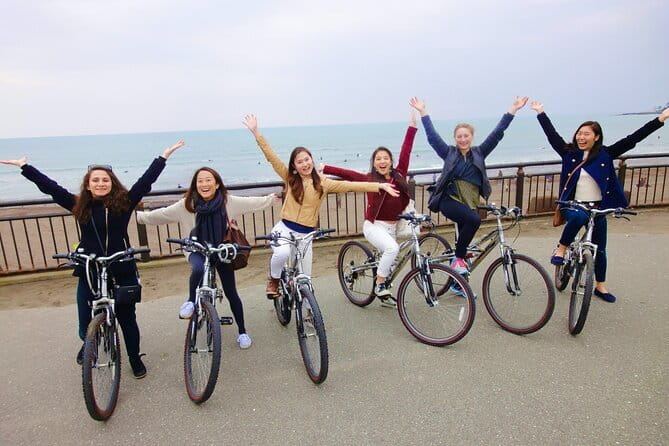
- Bike or walking, with flexible pacing inside the 4-hour window
- Ichi’s storytelling style, shaped by years as an ex-rickshaw guide
- Entrance fees included for Kotoku-in (Great Buddha) and Hokokuji
- Bamboo grove at Hokokuji paired with a low-key matcha break option
- Yuigahama Beach ride or stroll for a change of pace
- Hase Temple views plus the famous 9.18-meter wooden Kannon statue
First stop: Kamakura Station meeting point and choosing bike vs walk
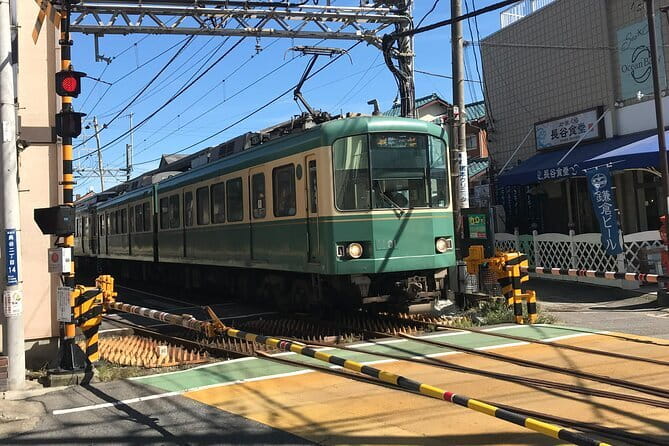
The tour starts at Kamakura Station (1-chōme-1-15 Onarimachi), and it ends back there. That matters because Kamakura can sprawl a bit, and having a tight start/end point keeps your day feeling controlled.
You’ll choose between a bike ride or a walking tour, and you can adjust how you move during the activity time. In practice, this gives you the freedom to slow down when a temple line or a street view begs for it, while still keeping the schedule tight enough to see multiple highlights.
Since it’s private, it’s also easier to sync with your group’s comfort level. If you want more photo stops, you can ask. If you want extra rest between stations, you’re not stuck with a big group pace.
You can also read our reviews of more tours and experiences in Kamakura.
Kotoku-in (Great Buddha): the “big moment” kickoff
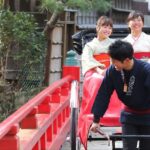
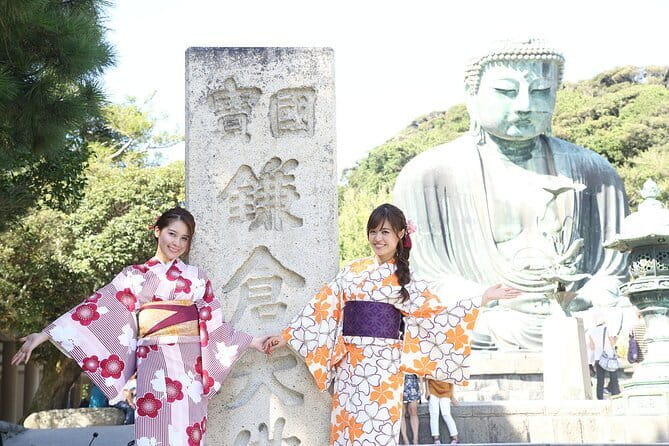
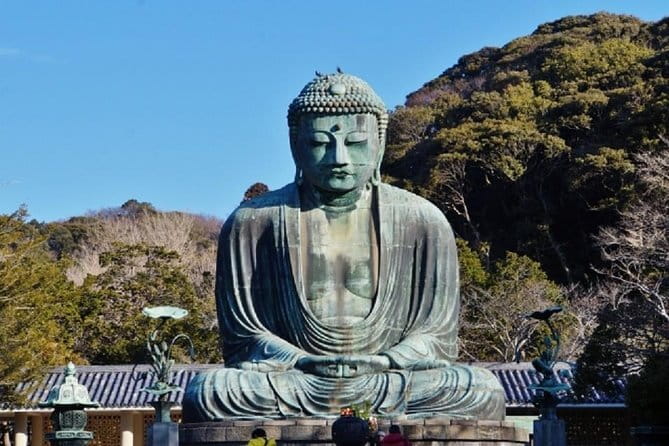
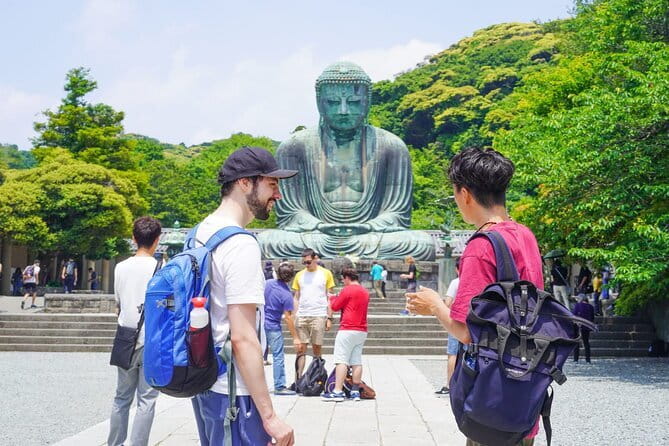
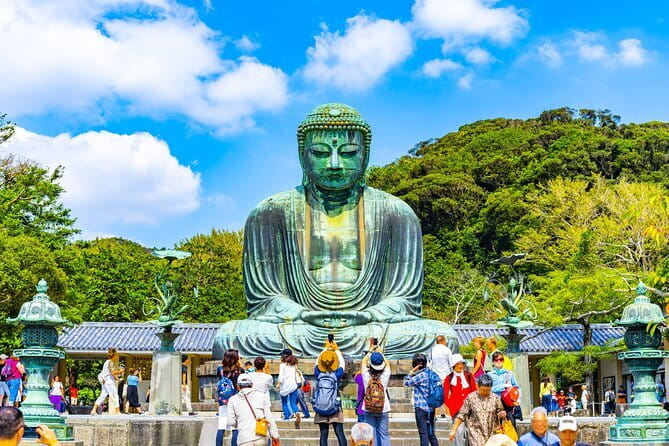
Kotoku-in is a strong way to start because it sets the tone right away. You’ll spend about 30 minutes here, and entrance is included, so you don’t waste time sorting out tickets.
The main draw is the Great Buddha statue at Kotoku-in, one of Kamakura’s most recognizable landmarks. Beyond the photo, what makes this stop work on a tour is the context: your guide frames what you’re seeing so the site doesn’t feel like just a single landmark.
Practical tip: give yourself enough time to look around the grounds, not only straight at the statue. Even at the beginning of the tour, this is the kind of place where a slow walk helps you notice details you’ll otherwise miss.
Tsurugaoka Hachimangu Shrine: samurai-era Shinto setting
From the Great Buddha, you head to Tsurugaoka Hachimangu Shrine for about 30 minutes. Entrance is listed as free, and the shrine’s role as a major spiritual site for Kamakura’s warrior past is part of why it’s on the route.
This shrine is dedicated to the god of war and samurai, so it naturally complements the earlier historical framing the guide uses. Walking the grounds here gives you a different texture than the temple stop: more shrine space, more ritual atmosphere, and a clear sense of what Kamakura has meant to Japanese history.
If you’re using a bike, plan on slowing down for this area. Shrine approaches often have visual pacing built in, and that’s when you’ll want to take the route rather than speed through it.
A quick stop that hits hard: the graves of Minamoto no Sanetomo and Hojo Masako
The tour includes the Grave of Minamoto no Sanetomo and Hojo Masako for about 10 minutes. This is a short segment, but that brevity is a feature, not a bug.
It’s the kind of stop that works when you already have some historical context from earlier explanations. Here, the time lets you register the names and significance without turning it into a long lecture.
Why this matters for your day: it keeps the tour moving toward the quieter, calmer sites later (bamboo, gardens, beach) instead of turning the whole route into one long history lesson.
Hokoku-ji bamboo grove: the calm pause you’ll remember
Next is Hokoku-ji for about 30 minutes, with entrance included. This is the stop many people hope to find in Kamakura: a serene bamboo grove that feels like a reset button mid-tour.
This is also where you get a natural break rhythm. You can walk slowly, take photos where the grove frames your shot, and then decide whether to add a small refresh. The tour info even flags an optional green tea at a cafe inside the Hokoku-ji area (listed as 500 yen, about $3).
Possible drawback: because Hokokuji is popular, your experience will depend on crowd level and weather. If it’s crowded, lean into the slower mindset; if it’s quiet, you’ll feel the grove even more.
Yuigahama Beach: bike or walk along the seaside road
Then comes a genuine change of pace. The tour includes the Yuigahama Beach area, with time to ride or walk along the seaside road. It’s described as a relaxing place where sands meet the Pacific, and the tour also notes that summer can be more bustling.
This stop is valuable because it breaks the temple-shrine pattern. You get open air, more space for photos, and a different kind of “Kamakura vibe” that doesn’t feel like a checklist.
If you’re on a bike, it can be a nice mental reset. If you’re walking, it’s a chance to slow down and look around without balancing on a bike. Either way, it’s one of the easiest segments to enjoy even if you’re tired.
Hase Temple: coastline views plus the 9.18-meter Kannon
After the beach interlude, you head to Hasedera (Hase Temple) for about 20 minutes. Here, the focus shifts to gardens, coastline views, and the big centerpiece: the 9.18-meter tall wooden Kannon statue, associated with the Goddess of Mercy.
Entrance is listed as free here, which is a nice bonus given how much the stop delivers visually and emotionally. This is one of those places where the guide’s explanations help you appreciate the statue beyond the obvious photo moment.
How to enjoy it best: treat this as a short visit with careful attention. Spend extra time looking outward at the coastline views before you rush back to the main statue area.
Egara Tenjin Shrine: a quiet scholarly break
The last shrine stop is Egara Tenjin Shrine, also known as Tenjin, for about 10 minutes. Entrance is listed as included, and it’s dedicated to Sugawara no Michizane, the deity of scholarship and learning.
This is a nice final stop because it’s shorter and calmer than the bigger headline sites. It also provides variety: the earlier stops lean toward Great Buddha and warrior-era symbolism, and this one shifts you toward learning, study, and personal reflection.
If your legs are getting tired, this segment is easy to enjoy without needing a long commitment. If you’re fresh, it’s a good chance to end the tour with stillness instead of another “must-see” sprint.
Why I’d count on Ichi’s route and pacing
A lot of Kamakura tours end up as a series of famous names. This one is built around how you move between them, and that’s where the guide background matters.
Ichi is described as having five years of experience as a rickshaw driver guide, meaning he’s lived the practical side of these streets. That tends to show in how the route feels: smooth transitions, sensible ordering of stops, and fewer awkward moments trying to figure out what’s next.
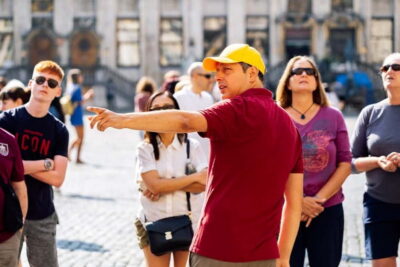
The guide also takes photos for you, which is a big deal on a bike tour. It’s one thing to stop for selfies; it’s another to have someone help you frame shots while you focus on enjoying the sites.
If you want a day where history is explained in clear chunks (not a long, dense lecture), this tour format fits that goal. You’ll get concise context for what you’re seeing, including references to the Kamakura bakufu connection and the role of key figures associated with the shogunate.
Price and value for a 4-hour private Kamakura day
At $150.24 per person for about 4 hours, the price is aimed at people who want a private experience without spending your whole day in transit.
What makes it feel more reasonable is what’s included:
- Professional guide and private tour
- Entrance fees for the Great Buddha (Kotoku-in) and Hokoku-ji
- Entrance included for Egara Tenjin Shrine
- Other major stops like Tsurugaoka Hachimangu are listed as free
So you’re paying for a tight, guided route where your time is the main currency. If you’d rather spend less time deciding and more time seeing, this format is usually worth it.
Where the value can vary is your group’s priorities. If you mainly want slow wandering with zero structure, a private guided route might feel too directed. If you want the key Kamakura moments plus calmer stops in one half-day, this is the right shape.
Weather and comfort: the real deciding factor
This experience is described as requiring good weather. That’s not a dealbreaker in Japan, but it does affect how comfortable you’ll be on either a bike or walking route.
You also have a practical bike reality check: it’s not recommended for children under 13 if they can’t ride an adult-sized bike. If you’re traveling with young teens, ask yourself honestly whether they can pedal confidently and brake safely.
No matter how you move, I’d plan for a day of temple/shrine walking and some photo time. Wear shoes that don’t mind uneven or crowded areas, and keep a light layer handy if the weather shifts.
Who this tour suits best
This tour fits best if you want:
- A private, guided half-day in Kamakura without map stress
- A balance of major landmarks and quiet atmosphere
- A guide who explains the “why” behind the sights, including the Kamakura political and spiritual threads
- The option to move by bike or on foot, depending on energy level
It’s also great for groups of friends who want to move together but still set their own pace. Because it’s private, you won’t feel like you’re constantly waiting for a large tour crowd.
If you’re visiting with mobility challenges, the information doesn’t spell out a step-free style route, so you’ll want to think carefully about the bike option. The walking alternative may be easier, but the route still includes multiple sites in a single afternoon.
Should you book this Kamakura bike or walk tour?
I’d book it if you’re aiming for a smart half-day in Kamakura that hits the big names and the calm moments, with a guide who can explain what you’re seeing without bogging you down. The combination of Kotoku-in, Hokokuji, Hasedera, Yuigahama, and the added shrine stops makes the tour feel like you actually understand Kamakura, not just pass through it.
I’d pause if you’re traveling with kids who may struggle with an adult-sized bike, or if your trip timing is likely to clash with rainy weather. In that case, the weather dependence could limit your flexibility.
If your ideal day includes temples, shrines, a bamboo calm pause, and a seaside breath of air, this private tour is a solid way to make it happen in one go.
FAQ
What’s the duration of the Kamakura heritage tour?
It’s listed as about 4 hours.
Is this tour private?
Yes. It’s a private tour/activity, so only your group participates.
Can I choose between a bike tour and a walking tour?
Yes. You can choose your preferred mode: bike or walking.
Where does the tour start and where does it end?
It starts at Kamakura Station (1-chōme-1-15 Onarimachi, Kamakura, Kanagawa) and ends back at the meeting point.
Are entrance fees included?
Yes for Kotoku-in (Great Buddha of Kamakura) and Hokoku-ji. Egara Tenjin Shrine is also listed as included, while Tsurugaoka Hachimangu is listed as free.
Is there an option to buy green tea during the tour?
Yes. Green tea at a cafe in the Hokokuji Temple area is listed as optional at about 500 yen.
What’s included in the tour price?
Included items are the professional guide, private tour, and fees to enter the Buddha & Hokokuji Temple (plus included shrine entrance as described).
What isn’t included?
Lunch isn’t included, and the optional green tea is not included. Personal damage caused by the customer isn’t included either.
When do I get confirmation after booking?
Confirmation is received within 48 hours of booking, subject to availability.
Is it suitable for children?
It’s not recommended for young travelers/children under 13 who cannot ride an adult-sized bike.