Streets here hide layers of London’s past. This walk strings together Roman wall remains, bomb-damaged surprises, and quiet memorials around the City—then hands you the story in plain English. I especially like how it keeps the pace easy while still hitting real history, from Roman traces to Watts’ remembrance.
I love two things most. First, you cover a lot of ground without juggling multiple tickets—most stops have free admission listed, and the itinerary is built for seeing quickly. Second, the finale at St Bartholomew the Great includes time to actually go inside (not just look from the sidewalk).
One thing to consider: the stops are brief (usually about 5 minutes each, with one longer church visit). If you want slow, deep sightseeing at every single location, you may feel a bit rushed.
In This Review
- Key things you’ll notice fast
- City of London’s Roman-to-WWII Story in One Easy 2-Hour Walk
- Meeting at Moorgate and Finishing by St Bartholomew the Great
- Stop 1: St. Alphage London Wall and the Roman Backbone
- Stop 2: St Alban Wood Street Church Tower vs the Modern City
- Stops 3–4: Noble Street WWII Ruins and Postman’s Park Watts Memorial
- Stops 5–6: Old Bailey Gardens Inside the Shell of Christchurch
- Stop 7: St Bartholomew the Great and the Inside Visit
- Why the Guide Matters: Vivienne’s Story Pace and Q&A Time
- Price and Value: What $27.46 Buys in the City of London
- Who Should Book This Walk (and Who Might Want More Time)
- Should You Book This Tour? My Take
- FAQ
- Is this tour wheelchair and stroller accessible?
- How long is the tour?
- What does the tour cost?
- What language is the tour offered in?
- Do I need a paper ticket?
- Where does the tour start and where does it end?
- How many people are in the group?
- Are the stops inside places or mostly outside?
- Is admission included for the sites?
- FAQ
- Is there free cancellation?
- Can I bring a service animal?
Key things you’ll notice fast
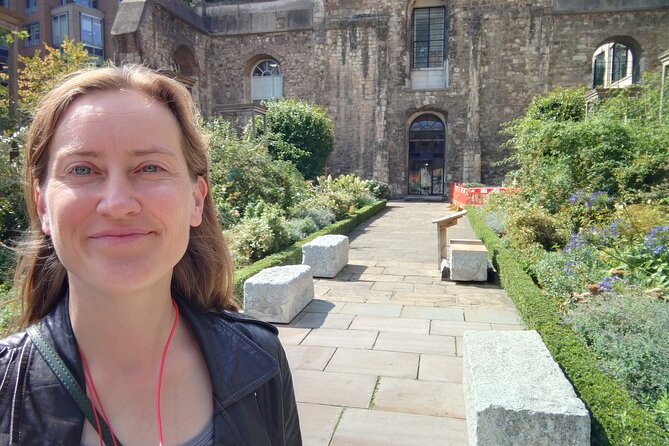
- Roman wall traces at St. Alphage London Wall in the middle of modern London
- A direct contrast at St Alban Wood Street Church Tower: Wren’s tower vs nearby modern architecture
- WWII-era discoveries tied to Roman ruins at Noble Street
- Postman’s Park and the Watts memorial that makes this area feel unexpectedly emotional
- The Old Bailey area through the shell of Christchurch, shaped by bombing damage
- A proper church stop: St Bartholomew the Great with an inside visit
City of London’s Roman-to-WWII Story in One Easy 2-Hour Walk
This is the kind of tour that teaches you how to read a city. You start in the City of London, where it’s possible to stand a few steps from medieval remains, then look across a modern skyline, then hear how 20th-century war changed what archaeologists found. The best part is that you get the thread of the story without needing to study maps for hours.
The tour runs about 2 hours and stays focused on specific places tied to London’s timeline. With a maximum group size of 25, you’re not stuck in a giant crowd that makes questions impossible. It’s offered in English, and you’ll receive a confirmation at booking with a mobile ticket to show on the day.
You’ll also like that it’s practical for different trip styles. If you’re visiting London and want something more than the usual highlights, this route gives you a calmer, more textured side of the City. If you already live here or have been before, it still has the power to surprise you—because many of these spots are easy to walk past without realizing what they are.
You can also read our reviews of more tours and experiences in London.



Meeting at Moorgate and Finishing by St Bartholomew the Great
The walk starts at 101 Moorgate, London EC2Y 9AA at 11:00 am. It finishes at St Bartholomew the Great, W Smithfield area near the Barbican, at EC1A 9DS. Since it ends near Smithfield, it’s a nice setup if you plan to continue exploring on foot afterward.
You don’t have to solve complicated logistics. The meeting and ending points are near public transportation, so you can arrive without turning your morning into a transit puzzle. The tour also allows service animals, and the route is described as wheelchair and stroller accessible, which matters if you’re traveling with a pram or you use mobility support.
Finally, note the overall rhythm. You’ll be outside for most of it, with short stops and a longer church visit at the end. Bring what you’d bring for a normal London walk—comfortable shoes and a layer—because the schedule assumes you can move.
Stop 1: St. Alphage London Wall and the Roman Backbone
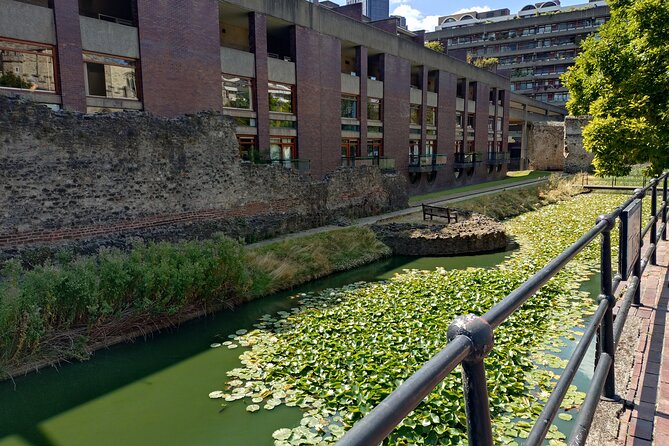
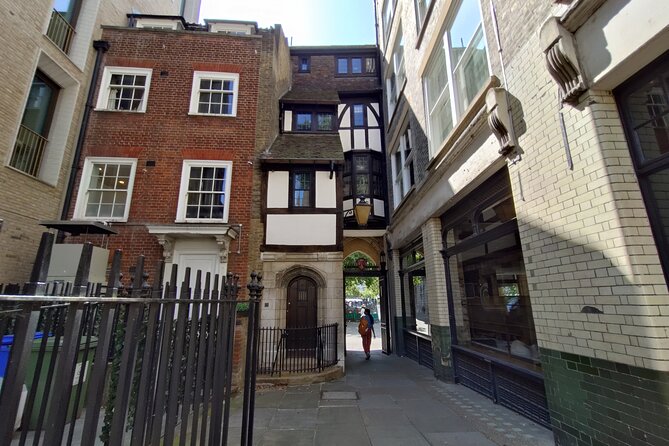
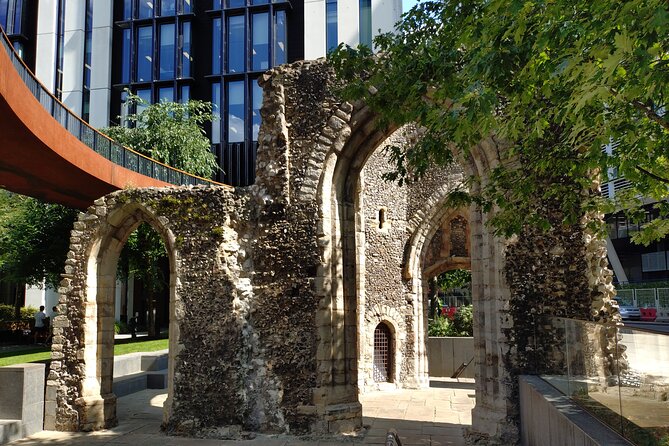
The first stop is St. Alphage London Wall. You’ll see medieval church remains alongside a section of the ancient London Wall that traces back to Roman construction. Even if you’ve heard of the London Wall before, it lands differently when you’re standing where those layers overlap.
This is also a “quick but meaningful” moment. The time at the stop is about 5 minutes, so don’t expect a long sit-down explanation. Instead, focus on looking for the way the guide frames the place: what survives, what’s been rebuilt, and how London’s earliest defenses shaped the city’s layout.
One practical tip: since the stop is brief, be ready to ask a question early if something grabs you. When you’re on a timed walk, it helps to get your curiosity answered before the group moves on. This is especially true on tours where the guide’s storytelling is a big part of the value.
Stop 2: St Alban Wood Street Church Tower vs the Modern City
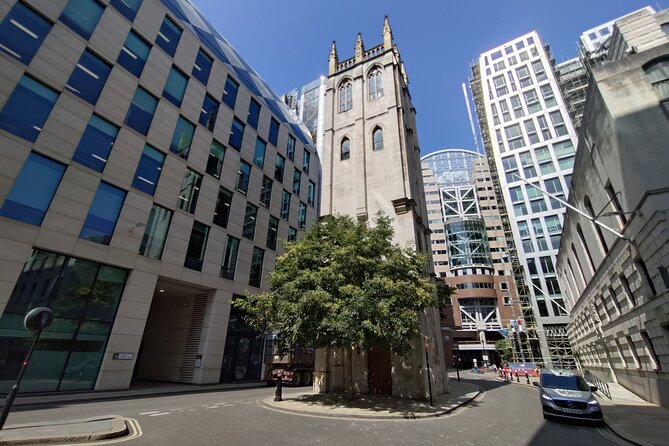
Next is St Alban Wood Street Church Tower, where you’ll see a surviving tower associated with St Alban’s. The key idea here is contrast. The tower is tied to Sir Christopher Wren, and it sits in a setting where you can also see modern architecture by figures like Norman Foster, Lord Rogers, and Terry Farrell.
That juxtaposition is the whole point. It helps you understand how London keeps building on itself while still preserving small, stubborn remnants from earlier periods. In just a few minutes, you start noticing how the City’s skyline tells a story too.
The stop is short—again about 5 minutes—but it’s one of the most visually rewarding. If you like architecture, you’ll enjoy how the guide points out what to compare: old stonework and modern lines, both right there in your field of view. If you don’t care much about architecture, it still works, because you’re learning the “why this matters” behind what you’re seeing.
Stops 3–4: Noble Street WWII Ruins and Postman’s Park Watts Memorial
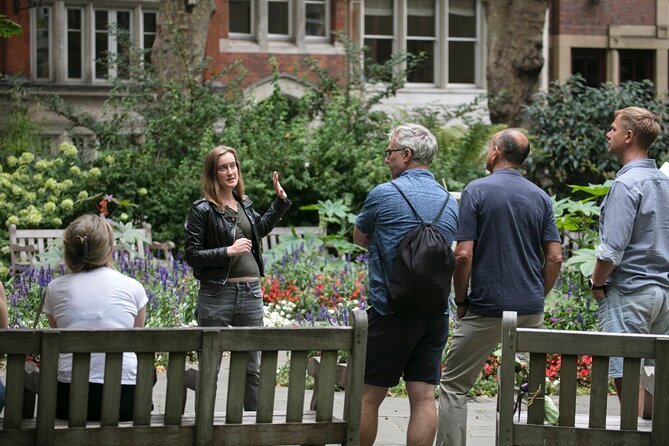
At Noble Street, you’ll hear about Roman ruins discovered after bombing in WWII devastated the surrounding area. This is one of those moments where London’s history isn’t just ancient—it’s also modern and traumatic. The city’s destruction changed what later investigation could uncover.
Then you shift gears to Postman’s Park. Here you’ll spend time looking at the unique Watts memorial and learning about the park’s history. This stop works because it slows down the walk just enough to let you absorb something quieter and more human.
If you’re the type of traveler who likes your history to have feelings attached, Postman’s Park is likely to hit. The memorial is designed for remembrance, not spectacle, so your guide’s explanation makes it easier to understand why this place exists and what it’s trying to honor.
Time-wise, each of these stops is about 5 minutes, but Postman’s Park includes time to linger and discuss. That difference matters. A few extra minutes in a memorial space can make the entire tour feel less like facts and more like a lived place.


Stops 5–6: Old Bailey Gardens Inside the Shell of Christchurch
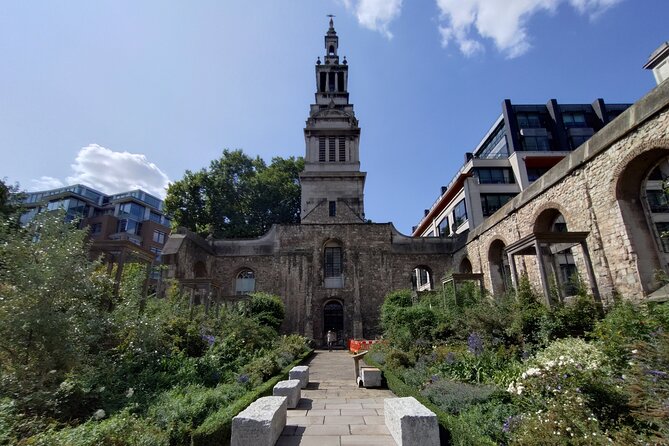
The walk then heads to the Old Bailey area. You’ll visit the garden within the shell of Christchurch, described as another WWII bombing victim. Seeing this kind of “remaining structure” gives you a different perspective on the Old Bailey. It’s not just a famous court site—it’s part of a landscape shaped by damage and rebuilding.
You’ll also discuss the Old Bailey, tying the area’s identity to the story of the City. This is useful for first-timers because the Old Bailey can feel like one more stop unless someone helps you connect it to the surrounding layers. The guided approach turns a landmark into a context.
After that comes Smithfield Market, where you’ll hear about the 1,000-year-old meat market and the historical events tied to this space that shaped British history. Smithfield matters because markets are where everyday life intersects with larger political and social change. In other words: it’s where big stories are often powered by routine.
These two stops run on the shorter side (about 5 minutes each), so keep your expectations aligned. Think of them as guided orientation points. You’ll get enough to understand what you’re looking at and why it matters, but you won’t be stuck for an hour in one corner.
Stop 7: St Bartholomew the Great and the Inside Visit
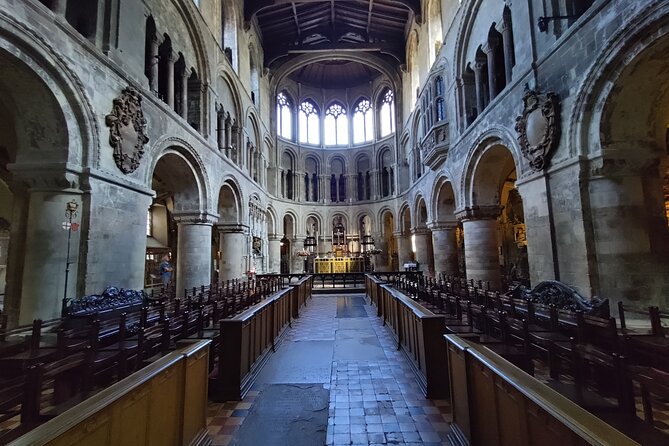
The finale is Church of St. Bartholomew the Great. You’ll first hear about the incredible 900-year-old church outside, and then you’ll go inside for a visit. This is the longer stop at about 20 minutes, so it’s where you can slow down a bit and let the building take over.
Inside time is where tours can either disappoint or satisfy. Here, the schedule gives you enough chance to look around with your guide’s direction, rather than rushing you through like a checklist. If your feet are tired from the earlier quick stops, this is the payoff moment.
Even if you’ve visited big-name churches before, I like this one for its setting and timing. By the time you reach it, you’ve already heard stories about the City’s Roman roots, WWII effects, and remembrance spaces. St Bartholomew the Great lands as the older “anchor” that ties everything together.
Why the Guide Matters: Vivienne’s Story Pace and Q&A Time
The quality of this tour rides heavily on the guide’s delivery. The guide name you may hear is Vivienne, and her style is described as strong storytelling that keeps attention. That matters on a walk like this, because the schedule moves fast enough that you don’t want to feel like you’re listening to a lecture.
A good sign is how she handles curiosity in real time. You’ll have chances to ask questions and get answers without feeling rushed or brushed off. On top of that, there’s mention of thoughtful attention to accessibility needs—like finding accessible routes when someone is traveling with a pram.
This is also where “extra” stops can make a difference, because it suggests flexibility. When a guide can add a bit of value without derailing the schedule, it usually means they’re paying attention to what the group finds interesting. For you, that can turn a good walking tour into an actually memorable one.
Price and Value: What $27.46 Buys in the City of London
At $27.46 per person for about 2 hours, you’re not buying a single-ticket attraction. You’re buying a guided bundle of several meaningful stops across the City, with the itinerary listing admission ticket free at each listed site. That’s a key part of the value equation.
You also get efficiency. Trying to string together all of these locations on your own would take time figuring out routes, timing, and what to notice. Here, the order does the heavy lifting. You walk from one historical layer to the next and get the explanations when you’re standing in place.
Is it a bargain? For many visitors, yes—because you’re getting multiple “where to look and what to learn” moments rather than just movement from A to B. If you’re not into history, the price could still feel fair because the tour is short and the stops are designed to be engaging even for casual interest. But if you want long museum-style time, you may decide to pair it with a longer independent visit afterward.
Who Should Book This Walk (and Who Might Want More Time)
This walk suits a few clear types of travelers. I think it’s especially good for history buffs who want a City-of-London route that doesn’t feel like the usual tourist script. It’s also great for people who like a guided narrative they can follow on foot, with quick orientation moments at each stop.
Because it’s described as wheelchair and stroller accessible, it fits families and travelers using mobility support better than many old-city walking plans. And with a group limit of 25, it’s not so large that you lose the chance to ask questions.
The one “match” issue is simple: the stops are brief. If you love lingering over architecture or want full-on deep research at each location, you might need extra time on your own after the walk. If that’s you, consider treating this as a guided roadmap—the tour helps you choose what’s worth your longer attention later.
Should You Book This Tour? My Take
I’d book it if you want a lot of different London layers in a short time, especially if you like WWII context and Roman-era traces. It’s also a smart move if you’ve already done a few big London attractions and you’re hungry for something that feels local and a bit quieter.
Skip it only if you know you prefer long, slow stops and lots of time sitting with one site. This one is built for motion, story, and quick stops that add up. For most travelers, that’s exactly what makes it satisfying.
FAQ
Is this tour wheelchair and stroller accessible?
Yes. The tour is listed as wheelchair and stroller accessible.
How long is the tour?
It lasts about 2 hours.
What does the tour cost?
It costs $27.46 per person.
What language is the tour offered in?
The tour is offered in English.
Do I need a paper ticket?
No. You’ll have a mobile ticket.
Where does the tour start and where does it end?
It starts at 101 Moorgate, London EC2Y 9AA and ends at St Bartholomew the Great, W Smithfield, Barbican, London EC1A 9DS.
How many people are in the group?
The tour has a maximum of 25 travelers.
Are the stops inside places or mostly outside?
It’s mainly an outside walking route, with an inside visit at St Bartholomew the Great.
Is admission included for the sites?
The itinerary lists admission ticket free for the stops shown.
FAQ
Is there free cancellation?
Yes. Free cancellation is available up to 24 hours in advance of the experience start time for a full refund.
Can I bring a service animal?
Yes, service animals are allowed.