REVIEW · ALICANTE
Alicante: UNESCO Heritage Palm grove + Artistic Garden Tour
Book on GetYourGuide →Operated by Alicante Getaway · Bookable on GetYourGuide
The right kind of quiet beats crowds every time. This 150-minute Alicante tour pairs the UNESCO-listed El Palmeral with the famous Huerto del Cura Garden, using a small-group pace plus a free phone audio guide instead of a long, talk-heavy march.
I like the private BMW ride for up to four people—it keeps things calm and efficient, especially if you’re juggling pickup options. I also really enjoy that both stops are designed for slow looking: one walk through the palm grove’s irrigation design, and another in a garden full of birds, fish, and plant variety.
One thing to consider: you won’t get a live guide inside the Huerto del Cura Garden. You’ll rely on audio plus your own questions, and the guidance quality can vary depending on who’s with your group.
In This Review
- Key points at a glance
- Price and Logistics: a 150-minute tour that’s mostly walking
- El Palmeral UNESCO Palm Grove: what makes it UNESCO-worthy
- The 10th-century irrigation system: how it changes your walk
- Huerto del Cura Garden: the artistic garden you explore at your own speed
- What you’ll see in Huerto del Cura: plants, birds, fish, and feeding
- The Imperial Palm Tree and the Sissi story
- Small group pace: why the BMW car matters more than it should
- How to get the most out of the audio-guided garden
- Timing and season: when the UNESCO walk may feel less dramatic
- Who should book this tour
- Who might want a different option
- Should you book the Alicante palm grove and artistic garden tour?
- FAQ
- How long is the Alicante UNESCO palm grove and artistic garden tour?
- What is the group size for this tour?
- How do you travel between the pickup points and the gardens?
- Is entry to both gardens included?
- Do I get a guided tour at the artistic garden (Huerto del Cura)?
- What languages are available for the audio guide?
- Can I feed the animals in Huerto del Cura?
- Is this tour suitable for wheelchair users?
Key points at a glance
- Private BMW transport (max 4 people) keeps your time efficient and stress low
- El Palmeral (UNESCO) irrigation heritage shows how this looks natural but isn’t
- Free multilingual audio guide for Huerto del Cura lets you control the pace
- Peacocks, ducks, and colorful fish make the garden feel alive, not just pretty
- Imperial Palm Tree and the Sissi connection add a story you’ll remember
Price and Logistics: a 150-minute tour that’s mostly walking
At about $75 per person for roughly 150 minutes, this tour aims at value through two things: round-trip car transport (not a bus) and entry to both sites. You’re paying for convenience and pacing—getting from Alicante to the garden areas without arranging everything yourself.
The tour is a small group capped at 4, and the transport is a BMW car. That matters more than it sounds. When you’re doing two garden walks back-to-back, you don’t want to fight for space, wait around, or feel rushed at the worst time—right when you want to stop and look.
You’ll also want to plan around the fact that the schedule splits into walking time plus a guided portion. One garden walk is self-guided, and the other has a guided section (about an hour). In plain terms: your experience will feel different depending on which parts you can spend time reading and listening, versus moving on quickly.
El Palmeral UNESCO Palm Grove: what makes it UNESCO-worthy
El Palmeral is the largest palm grove in Europe and is recognized as UNESCO World Heritage since 2000. Here’s the detail that makes the visit click: the grove looks like it’s grown that way naturally, but it was created by Arabs in the 10th century. It also used a complex irrigation system, with parts still in use today.
That irrigation story is not academic. When you walk, it changes how you interpret everything: the spacing, the way palms thrive, and why the grove stays productive without feeling like a formal plantation. You’re seeing a human system that shaped an ecosystem.
What I like about this part is the balance between structure and freedom. You get walk time plus free time, so you can pause for photos or just slow down and watch how the grove behaves in the light. And because it’s a palm environment (not a museum room), you can keep exploring without feeling like you’re stuck in one “must-see” spot.
A practical note: the grove tour is self-guided, so don’t expect your questions to be answered every second. If you’re the kind of person who loves details, download any info you can before you go and be ready to read what’s posted on-site or take cues from the audio where it’s provided.
The 10th-century irrigation system: how it changes your walk
This is where El Palmeral becomes more than scenery. The grove’s UNESCO status comes from the idea that it’s a living example of an irrigation-and-cultivation heritage. The Arab contribution dates to the 10th century, and the system’s parts are still working.
So when you see channels or signs of water management, you’re not looking at random infrastructure—you’re looking at the engine behind a cultivated landscape. Even if you’re not a plant nerd, it’s satisfying to understand the “how” behind the “wow.”
If you’re visiting in a season where plants look quieter, it can feel less dramatic than peak bloom gardens. Still, the irrigation logic keeps the visit worthwhile because you’re learning to read the grove.
Huerto del Cura Garden: the artistic garden you explore at your own speed

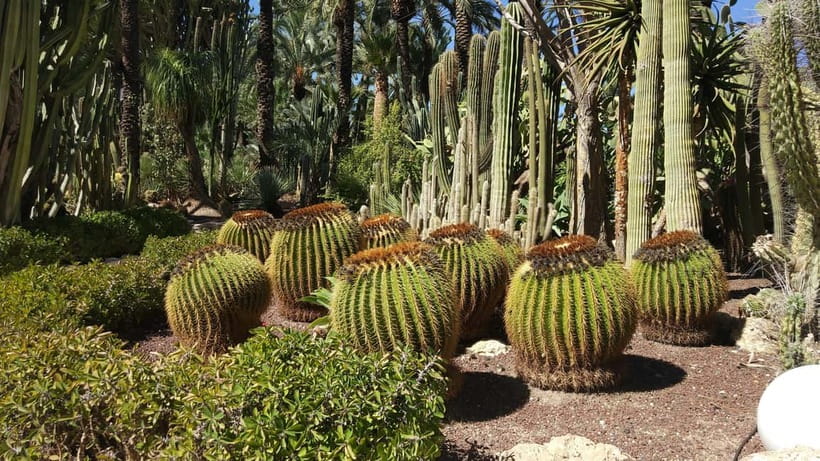
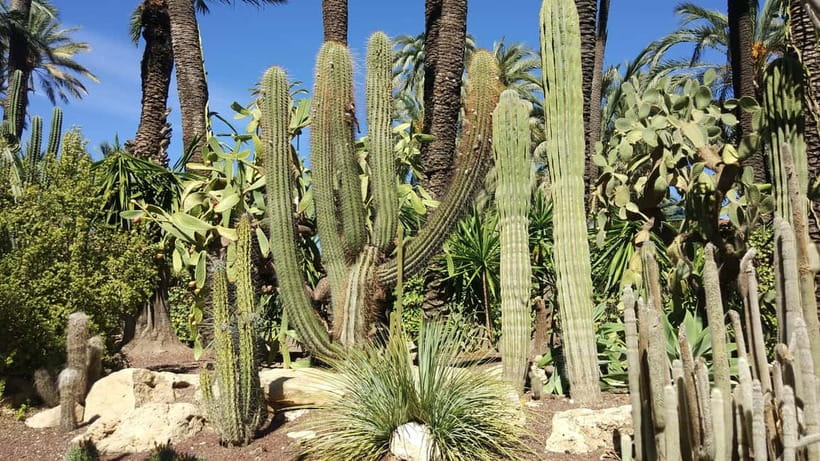
Huerto del Cura is a different vibe. This is a private historic garden that was designated a National Artistic Garden in 1943 and is a Cultural Heritage site of the Valencian Community. It’s also the part of the tour that leans hardest on atmosphere: walking among palms, cacti, and flowers in a garden that feels peaceful.
The biggest practical difference: this garden visit is not accompanied by a guide. Instead, you can use a free audio guide. You’ll download it at the entrance to your phone. Language options include English, Spanish, Valencian, French, and German (availability depends on what’s offered with your language set), and it’s designed to carry you through the key points.
If you prefer to control your pace, this is a plus. You can stop when a bird appears near the water, backtrack to photograph a plant, or linger near the pond without feeling like someone is keeping time.
One consideration: a self-guided audio visit works best if you’re comfortable with phones outdoors. If you hate hunting for Wi‑Fi or fiddling with audio menus, do a quick sanity check before you arrive—headphones, battery level, and the audio downloaded if possible.
What you’ll see in Huerto del Cura: plants, birds, fish, and feeding
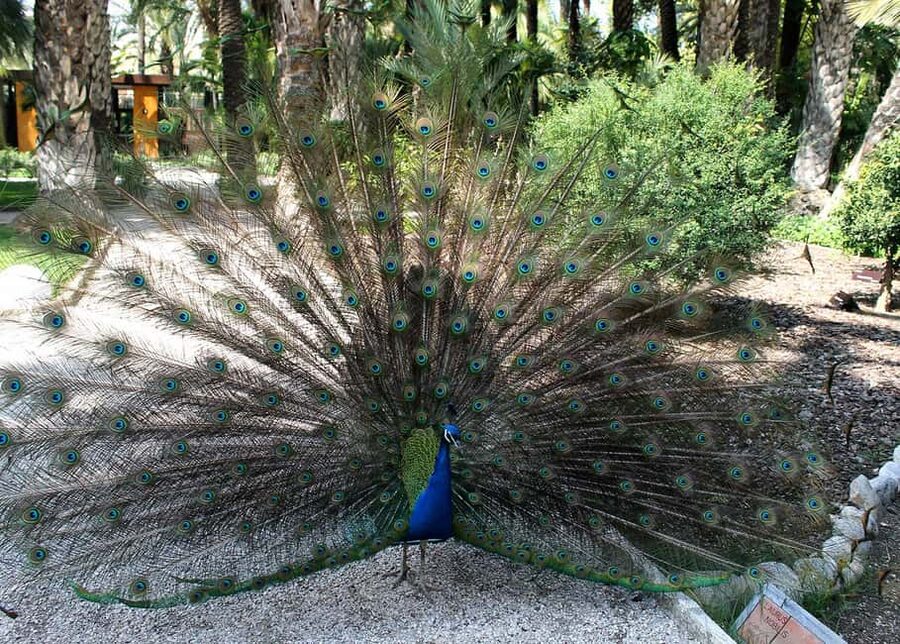
Huerto del Cura is known for variety. You’ll move through a garden with tree species, palms, cacti, and flowers. Then there’s the living element: a pond with colorful fish, plus peacocks and ducks.
You can also feed the animals. Food is sold in a store on the territory of the park, but it’s not included in the tour price. This is one of those “small detail, big joy” features—watching birds near the pond makes the garden feel like a scene rather than a static stop.
Also, note the tone of the visit. This isn’t a racing itinerary. The garden’s value is in the quiet pacing—standing still and letting the birds do their thing, or watching fish patterns around the pond edge.
If you’re traveling with kids or a bird lover, this part tends to win hearts fast, because it’s interactive in a simple way: you look, you wait, and animals show up when they want.
The Imperial Palm Tree and the Sissi story
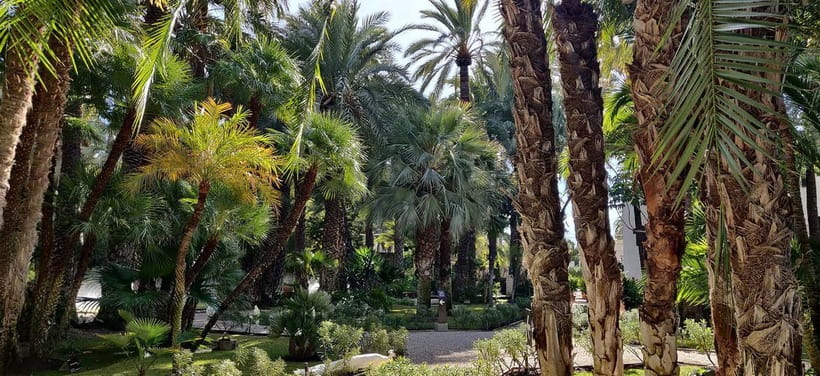
The highlight within Huerto del Cura is the Imperial Palm Tree. Its name links to Empress Elisabeth of Austria, often associated with the nickname Sissi. A chaplain, Castaño, dedicated the palm after a visit in 1894.
There’s also a memory of that visit: a bust of the Empress located at the north wing of the Imperial Palm Tree. This is the kind of detail that turns a plant into a landmark. Instead of seeing a palm and moving on, you get a reason to remember it.
Even better, the Imperial Palm has a detail that feels like garden trivia—its shoots are usually more common at the base when the palm is 10 to 15 years old, but in this case the shoots developed when the father palm was over 30 years old, and at an uncommon height of about 2 meters, far from the roots where sap is less available. That’s not something you’d guess by looking. With audio, you can slow down and notice what makes this specimen unusual.
Small group pace: why the BMW car matters more than it should

A tour for up to four people sounds like a convenience perk, but it affects your whole experience. You’re not stuck in a packed vehicle where everyone competes for attention. Instead, you can arrive with fewer stress points and start your walking portion in a calm frame of mind.
Round-trip car transport also helps you keep your energy for the two walks. Gardens are where timing matters: if you arrive late, you miss light and you move faster than you want. This tour’s structure is designed for a smooth, compact day.
One more thing: you may have host or greeter support in languages including English, Spanish, and Russian, plus a group leader and driver are listed as part of the included service. Still, remember that Huerto del Cura itself is self-guided with audio—so your on-site experience is still largely yours.
How to get the most out of the audio-guided garden
Because Huerto del Cura is audio-led rather than guide-led, you’ll get better value if you treat it like an audio walk, not background noise.
A few practical habits help:
- Start with enough battery for the whole garden section. You’ll want your phone charged and ready.
- Use headphones if you have them, but keep volume low enough that you can still hear birds and the pond area.
- If you hit confusion, stop, re-open the audio section, and re-listen before moving on.
If your language is one of the included options (English, Spanish, French, German, and also Valencian for the download), you’ll likely get the garden’s key points without needing a live guide.
Timing and season: when the UNESCO walk may feel less dramatic

Not every visit to a palm grove hits with the same wow factor. Some seasons can make vegetation look quieter, which can reduce the sense of surprise. El Palmeral is still worth it because it’s about irrigation heritage and cultivation design—not just seasonal flowers.
If you’re hoping for a garden bursting with blooms, Huerto del Cura usually delivers more of that “scene” energy. The pond, peacocks, ducks, and fish add life even when plant growth looks less intense.
So think of El Palmeral as the cultural-logic stop, and Huerto del Cura as the sensory stop.
Who should book this tour
I’d especially recommend this experience if you:
- Want a compact UNESCO + garden day without planning transport
- Like walking at a relaxed pace and taking in plant details
- Enjoy wildlife moments like peacocks, ducks, and fish
- Prefer a small group over crowded group tours
It also suits couples who want calm time, and photographers who like stopping often. The Imperial Palm Tree story is great for anyone who enjoys learning the “why” behind what they see.
Who might want a different option
This tour may frustrate you if you strongly prefer a live, knowledgeable guide inside both gardens. Huerto del Cura is self-guided via audio, and if you expect a constant explanation in the garden itself, you’ll need to adjust.
Another consideration is that language quality can matter. Some days you’ll get a guide who handles questions well, and other days may feel more like transport plus minimal answers. If Q&A is a priority for you, plan to use the audio and any printed information you find on-site.
Should you book the Alicante palm grove and artistic garden tour?
Book it if you want a private, no-bus day that balances culture and calm. You’re paying for efficient car transport, two major garden areas, and a Huerto del Cura visit supported by a free multilingual audio guide. The UNESCO El Palmeral story is built on something you can actually see—the cultivated irrigation system that made this grove possible. Then Huerto del Cura adds the atmosphere: palms, cacti, flowers, a pond with fish, plus peacocks and ducks.
If you dislike phone audio in outdoor settings or you need a live guide to tell you what to notice at every turn, you might consider doing one stop on your own instead. But for most people who want a straightforward, peaceful day in Alicante’s plant-focused heritage, this is an easy “yes.”
FAQ
How long is the Alicante UNESCO palm grove and artistic garden tour?
The duration is about 150 minutes.
What is the group size for this tour?
It’s a small group limited to 4 participants.
How do you travel between the pickup points and the gardens?
You travel by car, not a bus, in a BMW vehicle with a maximum of 4 people.
Is entry to both gardens included?
Yes. Entrance fees are included.
Do I get a guided tour at the artistic garden (Huerto del Cura)?
There is not a guide inside Huerto del Cura. You’ll have a free audio guide that you can download at the entrance.
What languages are available for the audio guide?
The audio guide for Huerto del Cura is available in English, Spanish, French, and German, and it’s offered for download at the garden entrance. Valencian is also mentioned as a download option.
Can I feed the animals in Huerto del Cura?
Yes, you can feed them, and food is sold in a store on the park territory. Pet food is not included in the tour.
Is this tour suitable for wheelchair users?
No. It’s not suitable for wheelchair users.