REVIEW · KATHMANDU
Kathmandu UNESCO World Heritage Tour
Book on Viator →Operated by Deepak Kushwaha · Bookable on Viator
Kathmandu’s UNESCO sights are a full-day story. What makes this tour interesting is the way it stacks seven major World Heritage stops into a single 9-hour loop, with multilingual male and female guides who translate the meaning of what you’re looking at. I especially like the guide focus on practical context at each site, and I love that the schedule includes both Hindu and Buddhist landmarks in one sweep. One consideration: admission tickets and meals are not included, so your final day cost can creep up if you’re not budgeting for it.
If you want one efficient day that still feels guided (not just rushed drop-offs), this itinerary is built for you. You’ll start at Kaiser Library and end back there, with pickup offered and a mobile ticket provided so you’re not scrambling for paperwork.
In This Review
- Key things to know before you go
- A One-Day Stack of Kathmandu UNESCO Sites
- Price and Logistics: What $99 Covers (and What It Doesn’t)
- Meeting Point and the 9-Hour Flow Around Kaiser Library
- Entering Kathmandu Durbar Square: Royal Courtyards and Power in Stone
- Patan Durbar Square: Craft Details You’ll Notice Faster With a Guide
- Bhaktapur Durbar Square: Medieval Charm With a Different Pace
- Changu Narayan Temple: A UNESCO Site That Feels Old in the Best Way
- Pashupatinath: Spiritual Nepal, Not Just a Photo Stop
- Boudhanath Stupa: A Buddhist Monument in a Living Neighborhood
- Swayambhunath: The Hilltop View and the Story Behind the Stupa
- Why the Guide Matters Here: Deepak, Rabina, and Multilingual Explanations
- Value Check: Is This Worth Your Day and Your Budget?
- Tips to Make the Day Feel Smooth (Not Exhausting)
- Should You Book This Kathmandu UNESCO World Heritage Tour?
- FAQ
- How long is the Kathmandu UNESCO World Heritage tour?
- Which UNESCO sites are included in the itinerary?
- Are admission tickets included?
- Is lunch or dinner included?
- Is pickup offered?
- What is the meeting point for the tour?
- Is the tour conducted with multilingual guides?
- Do I receive a mobile ticket?
- Is an air-conditioned vehicle included?
- What is the cancellation policy?
Key things to know before you go
- Seven UNESCO World Heritage stops in one day, with about 1 hour per site
- Multilingual male/female guiding (the operator’s name is Deepak Kushwaha; one praised guide is Rabina)
- Pickup offered and the day ends back at the starting meeting point near Kaiser Library
- Admission tickets not included, so plan extra spending for entry fees
- No lunch or dinner included, and the tour does not include an air-conditioned vehicle
A One-Day Stack of Kathmandu UNESCO Sites
This tour works best for people who want a big Kathmandu highlights day without piecing together guides, directions, and timed entry plans one by one. Instead of choosing between the Durbar Squares, the main temples, and the big stupa, you get them all in a single route.
What you’ll feel most is the contrast. You move from royal palace courtyards and carved temple corners to pilgrimage spaces that still play a living role in daily devotion. Even though each stop is timed at around an hour, the guidance is what helps you connect the dots: what the site was built to do, who used it, and why it matters now.
The other big reason this tour is attractive is value. At $99 per person, it’s not a budget “just transportation” service. You’re buying guided interpretation across multiple UNESCO locations, which can save real money versus paying for separate half-days.
You can also read our reviews of more historical tours in Kathmandu

Price and Logistics: What $99 Covers (and What It Doesn’t)
On paper, the price looks straightforward: $99.00 per person, for about 9 hours with a guide and pickup offered. In practice, there are a few line items that can affect your total spend.
Here’s what’s explicitly not included: lunch, dinner, tips or gratuities, personal expenses, and admission tickets. Also, the tour does not include an air-conditioned vehicle. If you’re traveling in warm months or you’re sensitive to heat, that matters.
My rule: treat the $99 as the guided, timed sightseeing day, then budget a bit more for entries and food. If you’re the type who likes to eat on the go between stops, it’s usually easy to handle with a small cash plan.
Meeting Point and the 9-Hour Flow Around Kaiser Library
Your day starts at Kaiser Library (Kanti Path, Kathmandu 44600), and the tour ends back at the meeting point. If you’ve ever wandered Kathmandu trying to match a tour group that’s running late, this “return to start” detail is genuinely helpful.
Pickup is offered, and confirmation comes at booking. You’ll also get a mobile ticket, which is convenient if you don’t want to track paper vouchers.
The timing format is simple: about 1 hour at each stop, covering seven World Heritage sites. That’s enough time to see the key areas, but it’s also clear the schedule isn’t built for long, slow wandering inside every nook.
If you know you love photography, looking up details on your phone, or lingering for extra questions, you’ll want to use the guide’s explanations efficiently. Ask for quick context first, then spend your remaining minutes where you personally care most.
Entering Kathmandu Durbar Square: Royal Courtyards and Power in Stone
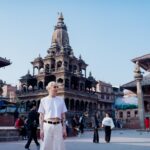
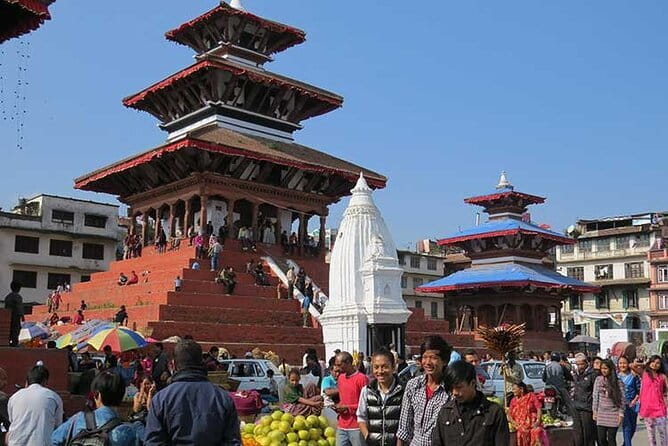
Your first major stop is Kathmandu Durbar Square, a UNESCO World Heritage Site. This is the kind of location where architecture tells you who mattered and how the city organized itself.
In one hour, you won’t see everything at an unhurried pace, but you can still get the big picture: this was a royal complex, and the surrounding structures connect into a larger system of space, ceremony, and authority. A guided approach helps here because the layout is dense, and it’s easy to walk past what would have felt meaningful if you had the right background.
Practical consideration: since admission tickets aren’t included, plan on paying entry separately. Also, wear shoes that handle uneven stone and expect some stairs or tight walking between areas.
Patan Durbar Square: Craft Details You’ll Notice Faster With a Guide
Next up is Patan Durbar Square, another UNESCO World Heritage Site. Patan is often praised for its craftsmanship, and this stop is where that shows up fast: temple forms, carved details, and palatial-style spaces that feel like they were made for close viewing.
With a guided hour, you can shift from seeing “old buildings” to noticing what makes them work together. The tour format matters because it gives you just enough time to focus on the standout elements—then moves you before fatigue sets in.
As with the first site, admission is not included. Plan that cost, and plan your attention span: if you go in expecting one-hour-per-stop deep study, you’ll feel rushed. If you go in expecting one-hour-per-stop orientation and highlights, you’ll be happy.

Bhaktapur Durbar Square: Medieval Charm With a Different Pace
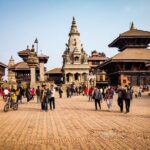
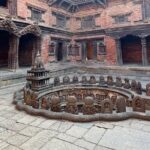
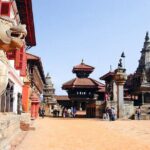
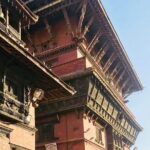
Then you head to Bhaktapur Durbar Square, a UNESCO World Heritage Site known for its medieval feel. This stop tends to slow the mind down a bit because the whole square reads like a preserved story.
Again, you’re looking at roughly an hour. That’s short, but it’s enough time to understand what’s around you: temple structures, palace-like remnants, and the way the square functions as a public space. With guidance, you can spot why the area is celebrated and how different it feels compared to Kathmandu and Patan.
Tip for how to enjoy this kind of stop: pick one or two structures you want to return to mentally as you scan the rest. When the guide points out what to look for, it becomes easier to remember later.
Changu Narayan Temple: A UNESCO Site That Feels Old in the Best Way
The day moves to Changu Narayan Temple (Changunarayan Temple), described as Nepal’s oldest Hindu temple and a UNESCO World Heritage Site. That phrase signals what you should expect: age, continuity, and the feeling of standing in a place that has mattered for a very long time.
Because this is one of the more singular, focused stops on the route, it’s often a relief after the bigger squares. An hour here is easier to manage because the site is more concentrated, and the guide can connect the architectural features to why the temple is significant.
Same cost reminder: admission tickets are not included. If you don’t plan for that, you might end up deciding on the fly when you’re already inside, which can break your rhythm.
Pashupatinath: Spiritual Nepal, Not Just a Photo Stop
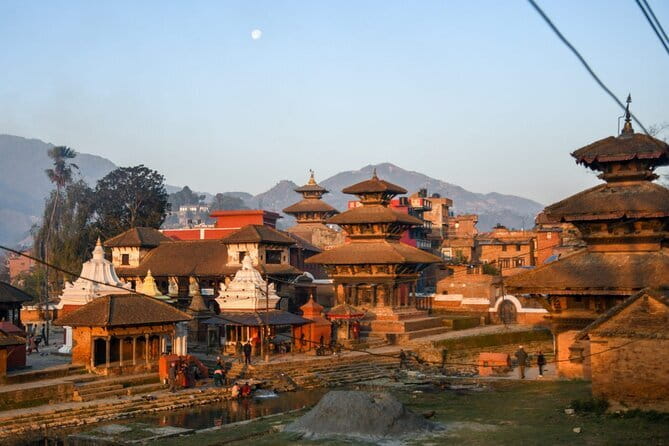
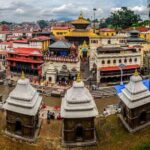
Then come the big spiritual landmark moments: Pashupatinath Temple, one of Nepal’s most revered Hindu temples and a UNESCO World Heritage Site. This is the kind of place where a guided explanation helps you interpret what you’re seeing, especially if you don’t already know the traditions.
A one-hour visit is enough to understand the site’s importance and what kinds of devotion bring people here. You get the chance to experience the spiritual ambiance while still staying on schedule for the rest of the day.
What to consider: this is a sacred setting. Even if you’re just watching rather than participating, you’ll want to be respectful with your movement and attention. And again, keep your budget in mind since admission is separate and meals are not included.
Boudhanath Stupa: A Buddhist Monument in a Living Neighborhood
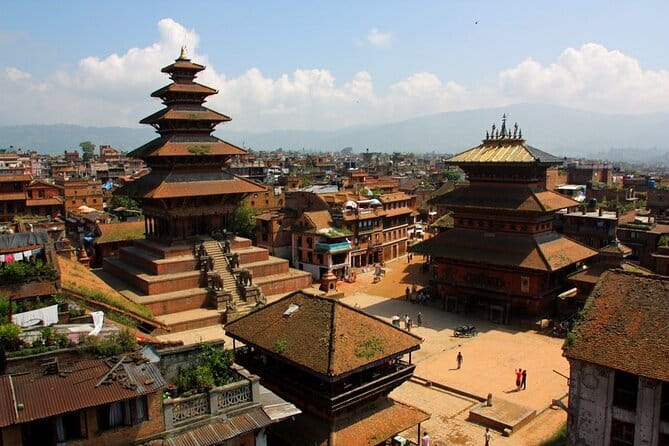
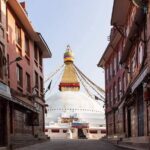
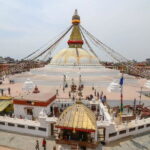
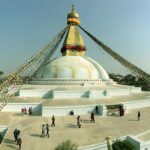
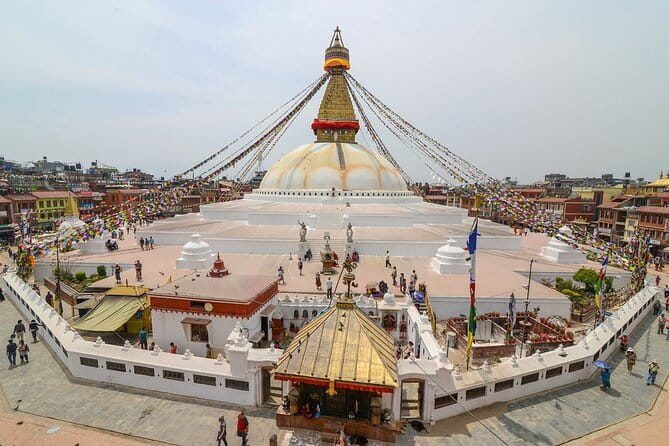
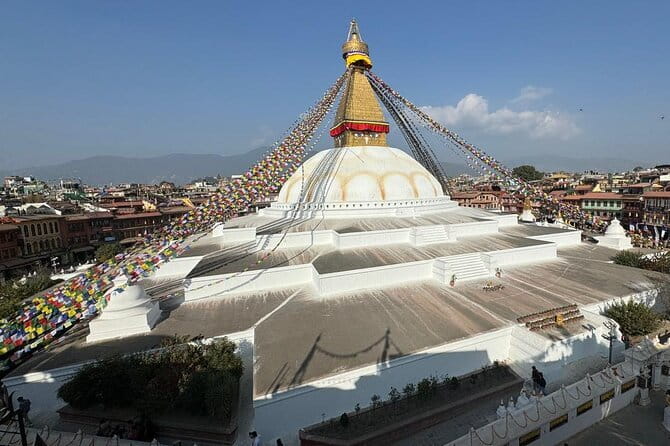
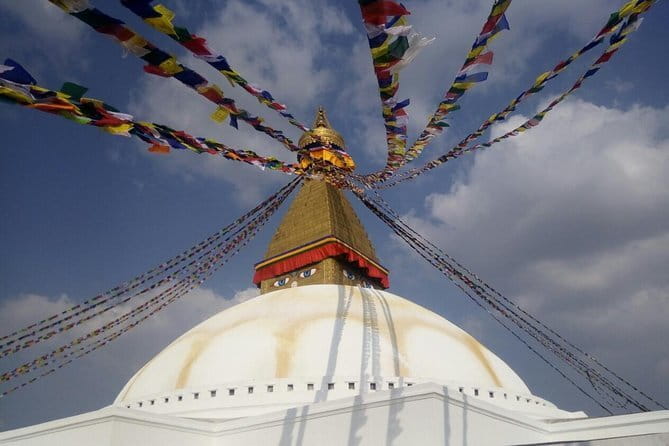
Next is Boudhanath Stupa, a UNESCO World Heritage Site and one of Nepal’s most important Buddhist monuments. If Pashupatinath represents Hindu devotion, Boudhanath gives you the Buddhist axis of Kathmandu.
The stupa’s size tends to make it hard to grasp with only a glance. A guided walk around the area helps you see how the monument sits in relation to the surrounding activity, so it doesn’t become just another big landmark.
The tour gives you an hour at this stop, which is a good length for orientation plus some time to take in the details at your own speed. Since admission tickets aren’t included, you’ll want to handle entry costs early rather than waiting.
Swayambhunath: The Hilltop View and the Story Behind the Stupa
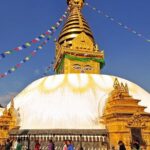
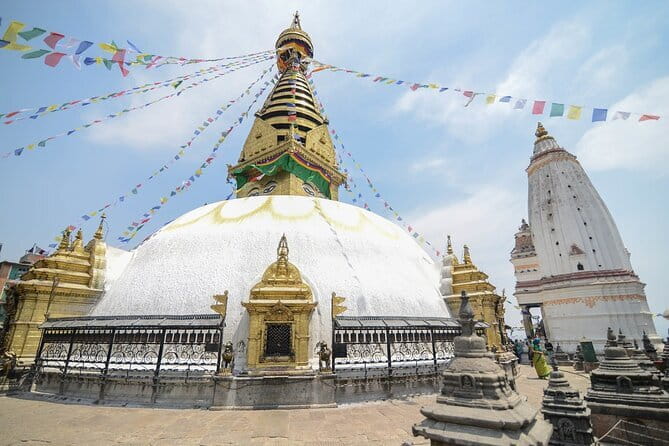
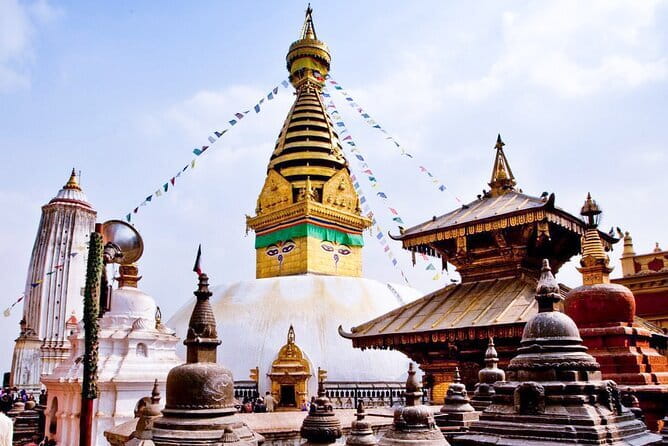
Finally, you reach Swayambhunath (Swayambhunath Mahachaitya), perched on a hill overlooking Kathmandu and a UNESCO World Heritage Site. This is the classic viewpoint stop, and it’s also a place where symbolism matters, not just scenery.
Because the stupa is visible from many angles, the guide can help you connect the architectural cues to the site’s history and meaning. That guidance is what turns a hilltop view into a coherent experience rather than a quick look and go.
Keep in mind you’re ending a long day. If your energy runs down by the time you reach Swayambhunath, ask the guide for the three most important things to notice first. Then you can let the rest come naturally while you look out over the city.
Why the Guide Matters Here: Deepak, Rabina, and Multilingual Explanations
This tour’s strongest element is the guide approach. The operator is Deepak Kushwaha, and multiple guide mentions come up around his personality and teaching style—friendly, patient, and focused on turning each stop into something you can actually understand.
One detail worth noting: there’s a repeated emphasis on the way the guide brings the sites to life, including the poetic note that Deepak means light in Nepali. Whether you treat that as a nice touch or a real sign of passion, the effect matters: you’re not just collecting stamps, you’re getting context you can carry home.
A female guide named Rabina also gets specific praise for being strong on Nepal history and for allowing free time during each location. That last part is key. A good guide can keep you moving without forcing you into a constant hurry.
If language is important to you, the tour promises multilingual male/female guides, which is a big plus for international travelers who want clarity rather than “tour talk” in one language only.
Value Check: Is This Worth Your Day and Your Budget?
For $99, you’re getting a rare combination: multiple UNESCO sites in a single guided day, pickup offered, and mobile ticketing. The big value question is always the same: do you want a structured, efficient day more than you want extra time at one site?
If your plan in Kathmandu is short—one day, maybe two—this tour can be a practical backbone. It helps you see the major UNESCO highlights without waiting around for tickets, figuring routes, or trying to hire a guide separately for each square and temple.
If you love slow travel, you might find the pace a little tight since it’s about 1 hour per stop. Also, because lunch/dinner and admissions are not included, your final cost depends on what you pay for entry and how you handle meals. Budgeting ahead keeps the day from feeling like surprise add-ons.
Tips to Make the Day Feel Smooth (Not Exhausting)
I’d plan this day with a simple mindset: treat it like a guided route with built-in orientation, not free time to wander for hours.
A few practical moves:
- Bring a plan for admission tickets since they are not included.
- Expect a full, long day and choose a clothing plan that works with a vehicle that is not air-conditioned.
- Use the guide’s first explanations to decide what you want to spend your remaining time on at each stop.
Also, because your tour ends back at the meeting point near Kaiser Library, you can keep your evening plans nearby rather than scheduling something far away.
Should You Book This Kathmandu UNESCO World Heritage Tour?
Book it if you want a guided, efficient overview of Kathmandu’s most important UNESCO sites in one day, and you like the idea of Hindu and Buddhist landmarks side by side. At $99 with multilingual guidance and pickup offered, it’s a solid value for first-timers or anyone tight on time.
I’d think twice if you hate structured schedules, want long stays inside fewer locations, or you don’t want to pay extra for admissions and meals. In that case, a slower, single-area tour might fit better.
If you’re somewhere in the middle, this is a strong way to make your Kathmandu day count, especially with a guide who focuses on real meaning rather than just pointing at buildings.
FAQ
How long is the Kathmandu UNESCO World Heritage tour?
The tour is about 9 hours long.
Which UNESCO sites are included in the itinerary?
The stops are Kathmandu Durbar Square, Patan Durbar Square, Bhaktapur Durbar Square, Changu Narayan Temple, Pashupatinath Temple, Boudhanath Stupa, and Swayambhunath.
Are admission tickets included?
No. Admission tickets are not included.
Is lunch or dinner included?
No. Lunch and dinner are not included.
Is pickup offered?
Yes, pickup is offered.
What is the meeting point for the tour?
The start meeting point is Kaiser Library on Kanti Path, Kathmandu 44600, Nepal.
Is the tour conducted with multilingual guides?
Yes. The tour includes a multilingual male and female guide.
Do I receive a mobile ticket?
Yes. A mobile ticket is included.
Is an air-conditioned vehicle included?
No. An air-conditioned vehicle is not included.
What is the cancellation policy?
Free cancellation is available up to 24 hours in advance for a full refund. If you cancel within 24 hours of the start time, the amount paid is not refunded.