REVIEW · JAIPUR
Jaipur Walking Tour- Explore Old Heritage City With Private Guide
Book on Viator →Operated by Abby & Scout Tours · Bookable on Viator
Jaipur’s backstreets have a way of grabbing your attention fast. This private walking tour threads together temples, craft streets, and old bazaar lanes so you get a practical look at daily life in the Pink City without sprinting from one landmark to the next. I particularly like how the route mixes architecture with hands-on local trades, and how the guide keeps it easy to follow with stops that make sense in sequence. One thing to consider: you’ll be on your feet for a few hours, and some Sunday shops may be limited, so plan around opening hours.
Two inclusions make it feel like good value in the moment: water plus tea or coffee, and a private English-speaking local guide you can ask questions to. And if you want a bit of variety, the ending at Golcha Cinema gives the day a slightly different flavor than just more temple stops.
The big trade-off is that not everything is fully ticketed-in. Most places are free to visit, but Hawa Mahal and Swargasuli Tower are the ones where going inside depends on paying entry tickets (the tour can help with that).
In This Review
- Key Highlights You’ll Actually Notice
- Old City Footsteps: How the 3–4 Hours Works in Real Life
- Where You Start and Where You Finish: Kalki Temple to Golcha Cinema
- Hawa Mahal and Swargasuli Tower: Views Without Forcing Ticket Decisions
- Jai Mata Di Paridhan and the Wedding-Fabric Market Maze
- Trade Streets: Ma Wa Market, Silver Shops, and the Utensil Makers’ Gali
- Bhagat Mishthan Bhandar: A Planned Sweets Break
- Lassi and Tea During the Walk: Simple Comfort Included
- Streets Named for What They Sell: Maniharo Ka Rasta and the Old-Pink-City Mood
- Kalki Temple, Sai Baba Mandir, and the Quiet Moments Between Shops
- Guide Factor: What Makes Private Work Better (Especially in Markets)
- Price and Value: Why $20.17 Can Still Feel Like a Deal
- Sundays and Timing: When the Old City Might Feel Slower
- Should You Book This Jaipur Walking Tour?
- FAQ
- How long is the Jaipur walking tour?
- Is this tour private?
- What’s included in the tour price?
- Is pickup and drop-off included?
- Are entry tickets included for the sights?
- What about street food and lunch?
- What time should I start?
- Is the tour affected by weather?
Key Highlights You’ll Actually Notice
- Private, English-speaking local guide (ask questions as you walk, not after the fact)
- Craft-street walking through silver items, utensils, and trade-specific markets
- Sweets stop planned in with Bhagat Mishthan Bhandar as a dedicated tasting moment
- Bottled water plus tea or coffee included so you’re not guessing mid-walk
- Old-city sight views built in with roadside viewing at Hawa Mahal and Swargasuli Tower
- A fun end-point at Golcha Cinema, where you can add an inside visit if tickets are available
Old City Footsteps: How the 3–4 Hours Works in Real Life
This is a 3 to 4 hour private walking experience built for people who want more than a checklist. You move through Jaipur’s Old City at an easy-to-manage walking pace, hitting a series of small stops that each add a different layer to the day.
I like that the timing is practical. The tour runs 11:00 AM to 4:00 PM, and there’s a clear heads-up that many old-city shops open around 10:30/11:00 AM. Translation: if you start too early, you may find gates still closed. If you start within the recommended window, you’ll have a better shot at seeing markets operating at full speed.
The physical side is also worth noting. The experience is suited to moderate physical fitness, so if you’re dealing with knee issues or you hate long stretches on uneven sidewalks, plan accordingly. You’ll likely want comfortable shoes and a bit of patience for crowds in market areas.
You can also read our reviews of more walking tours in Jaipur



Where You Start and Where You Finish: Kalki Temple to Golcha Cinema

The tour starts at Kalki Temple, described as an ancient temple. It’s a good first stop because it sets a spiritual tone early without feeling like you’re immediately locked into a formal sightseeing pace. It’s also free of charge for admission in the included plan, so you get value right away.
From there, you shift toward the city’s major landmark energy with Hawa Mahal. The key detail here is that you’re scheduled for a roadside view without the pressure to buy tickets right away. If you do want to go inside, the tour can help with tickets (with an important time limit: entry closes about one hour before sunset).
The route closes at Golcha Cinema, one of the oldest cinema halls in Jaipur. Even if you skip the inside visit, it’s a memorable way to end the day because it’s not another bazaar or temple. If you do go inside, there’s an entry ticket option, and the guide can help you purchase it.
Hawa Mahal and Swargasuli Tower: Views Without Forcing Ticket Decisions

Two stops are the architectural anchors of the walk.
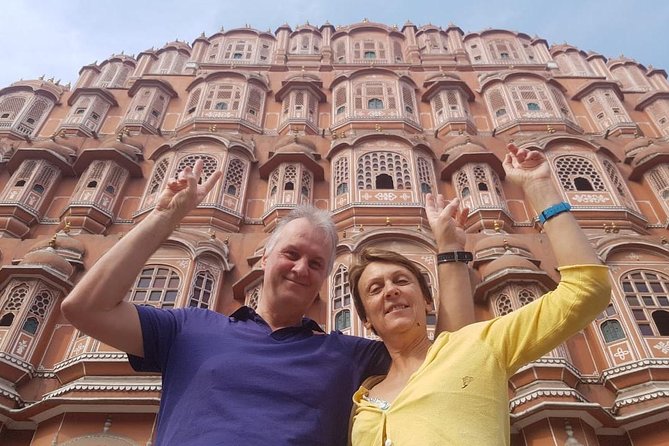
First, Hawa Mahal (Palace of Wind). The description emphasizes its pull on artists and writers across the years, and that theme matters because you’re not just seeing a pretty facade. You’re looking at a structure that became a cultural symbol. The included plan gives you a look from outside, which is a smart way to control costs.
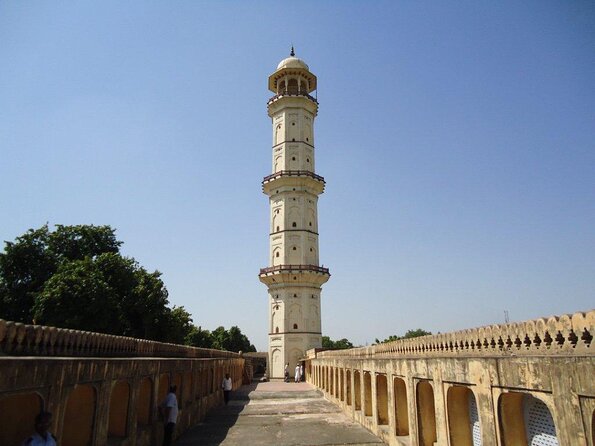
Second, Swargasuli Tower, an 18th-century minaret often linked with the nickname Victory Tower. The plan is another scenic roadside vantage point. That means you still get the landmark effect even if you decide not to pay for entry.
Here’s the practical consideration: if you want inside access at either spot, you must manage timing carefully since entries close around an hour before sunset. If you’re traveling in hot months, it’s also reasonable to pace yourself so you don’t arrive at the ticketed areas already tired and rushed.
Jai Mata Di Paridhan and the Wedding-Fabric Market Maze
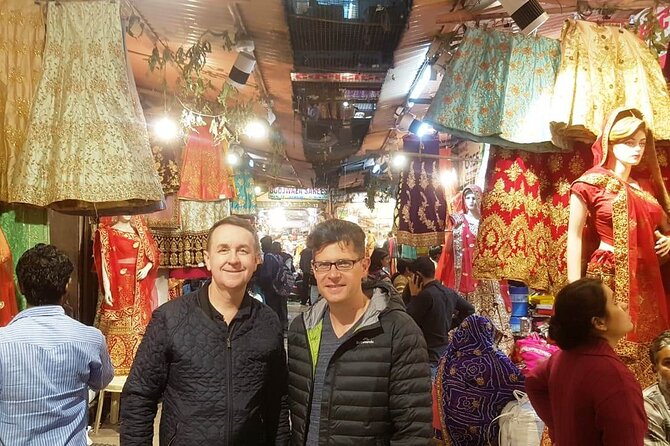
One of the most interesting parts of this experience is how it treats clothing not as a generic shopping stop, but as a cultural category. Jai Mata Di Paridhan is tied to Purohit Ji Ka Katla, described as a hidden market area with wedding fabrics, dresses, and sherwanis.
This stop can feel slightly intimidating at first because the entry points aren’t straightforward. That’s exactly why having a local guide matters here. You’re walking with someone who can point out where the goods are and how the stalls connect, instead of you wandering lost and guessing.
If you’re the kind of person who likes seeing how ceremonies get made in everyday work, this is the kind of stop you’ll remember. Even if you don’t plan to buy, watching fabric styles and how items are presented gives you a useful look at Jaipur’s wedding economy.
Trade Streets: Ma Wa Market, Silver Shops, and the Utensil Makers’ Gali
Where this tour really earns its keep is in the trade streets. These aren’t random bazaars; the streets are known for specific products and skills.
- Gopal Ji Ka Rasta focuses on mawa production. Mawa is explained as khoya/khoa, a dairy product made from dried evaporated milk solids and used in Northern Indian sweets. I like this detail because it connects a market you can see with ingredients you may already taste later.
- Choti Chopad is a cluster where you can find an ancient temple area along with shops selling silver-made items, plus flower and spice market sections. It’s a useful mix because you’re not choosing between “temples” and “shopping.” You get both, close together.
- Thatheron ki Gali (the Thatheron ka rasta stop) is tied to skilled utensil makers. You’ll hear that metal-work rhythm as you move through, and it turns a normal walking stop into something more alive.
One simple truth: market streets can be loud, crowded, and a bit chaotic. That’s not a flaw in the tour. It’s the point. The guide helps you keep it understandable, so you’re not just standing there thinking, so what is everyone doing.
You can also read our reviews of more guided tours in Jaipur






Bhagat Mishthan Bhandar: A Planned Sweets Break
Food on walking tours can be hit-or-miss. Here, the structure helps. You get a dedicated stop at Bhagat Mishthan Bhandar, described as a famed sweets shop where you can taste some of the best locally made sweets.
Important detail: street food charges and lunch are not included. But the tour still gives you a place and a time to try sweets in a way that feels intentional rather than accidental.
I like that this stop also keeps the pacing sane. After walking through craft streets and ingredient markets, your body is ready for a sugar break. It’s the kind of mid-tour reset that helps you finish strong instead of fading at the end.
Lassi and Tea During the Walk: Simple Comfort Included
You don’t just walk through markets and temples with dry hands. The tour includes bottled water and tea or coffee during the experience.
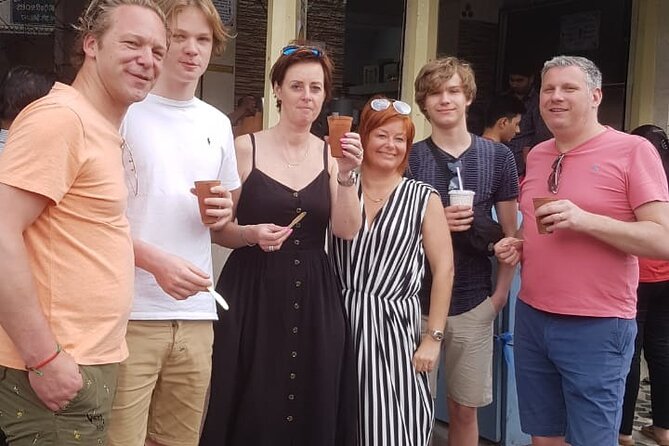
The tour description also points to sampling lassi, the popular local drink, plus street food from stalls. The key distinction is cost: street food charges aren’t included, so you’ll pay for what you choose to eat. Still, having drinks included makes it easier to enjoy without constantly checking what’s included and what isn’t.
If you’re sensitive to heat or you tend to get tired on walking tours, this included refreshment can make the difference between a fun day and a draining one.
Streets Named for What They Sell: Maniharo Ka Rasta and the Old-Pink-City Mood
At the end of Tripolia Bazaar, you’ll walk to Maniharo Ka Rasta, a street associated with the regal charm of the past. The description also ties its existence to the modesty of its citizens, which is an interesting angle: it’s not only about commerce; it’s about community identity.
Then you hit Thatheron ki Gali for the utensil-making vibe. Together, these stops give you a sense that Jaipur’s markets are organized around work and craft, not just random stalls lined up for tourists.
If you want a tour that helps you see the city as a set of working neighborhoods, this section is where that idea clicks.
Kalki Temple, Sai Baba Mandir, and the Quiet Moments Between Shops
Not every stop is about trade. You also get religious and cultural anchoring in smaller doses.
One example is Sai Baba Mandir, described as the oldest Sai Baba temple in Jaipur City. Another is Kalki Temple at the start. These are often the moments where you can slow down, take in the setting, and reset your brain before stepping back into the noise of markets.
If you like walking tours where you don’t feel stuck in one theme all afternoon, this mix is a win.
Guide Factor: What Makes Private Work Better (Especially in Markets)
A private guide matters most in places where the “what” isn’t obvious. In Jaipur’s market streets, you often need someone who can connect the products to the people making them, and the tour is set up for that.
In one past experience with this operator, the guide named Gaurav was described as enthusiastic and fun, with lots of information and good energy throughout the walk. That kind of tone is practical. It helps you keep asking questions instead of just watching.
Also, this is a private tour/activity, meaning only your group participates. That’s useful when you want extra time at a stall, need a bathroom break, or just prefer not to share your guide with strangers.
Price and Value: Why $20.17 Can Still Feel Like a Deal
At $20.17 per person for about 3 to 4 hours, the value comes from the combination, not one single feature. You’re getting:
- a private English-speaking local guide
- bottled water and tea or coffee
- GST included
- and free admission for infants/children up to 17
That’s a strong package for a walk that covers multiple major lanes and a few key architectural stops. The main cost you should plan for is optional extras: Hawa Mahal and Swargasuli Tower entries (if you want inside access), plus street food and lunch, plus tips if you choose to give them.
So the best way to think about the price is this: the tour covers the guidance and the core stops. You pay for what you choose to add.
Sundays and Timing: When the Old City Might Feel Slower
There’s a heads-up built into the experience details: Sundays in the old city are less eventful, with some shops having limited hours or closing. If your schedule allows, choosing a different day usually gives you more market energy.
Also, the suggested starting window aligns with shop hours: start anytime later than 11:00 AM up to 5:00 PM for the best chance at stores open. The tour itself lists operating hours 11:00 AM to 4:00 PM, so in practice you’ll plan around that window.
Should You Book This Jaipur Walking Tour?
Yes, if you want a walk that mixes temples, trade streets, and sweets in a way that helps you understand what you’re seeing, not just where to stand for a photo. It’s a good fit for people who like street markets, product-focused shopping areas, and learning from someone on the ground.
Skip (or rethink) if you:
- prefer only major monuments and don’t care about market streets
- have trouble with a few hours of walking
- or you’re traveling on a Sunday and your schedule leaves no alternative day
One smart way to decide: consider whether you’ll actually use the guide’s market knowledge. If you love asking questions and watching how crafts work, you’ll get your money’s worth. If you want a hands-off landmark-only day, this may feel too street-heavy.
FAQ
How long is the Jaipur walking tour?
It runs about 3 to 4 hours.
Is this tour private?
Yes. It’s a private tour, and only your group participates.
What’s included in the tour price?
You get an English-speaking local guide, bottled water, and tea or coffee. GST is included too, and children/infants up to 17 years are free.
Is pickup and drop-off included?
No. Pickup and drop-off from your hotel aren’t included, but they’re available for an additional charge.
Are entry tickets included for the sights?
Most included stops are free of admission, but Hawa Mahal and Swargasuli Tower may require entry tickets if you want to go inside. The tour provides roadside views for those stops and can help with tickets if you choose to enter.
What about street food and lunch?
Street food charges and lunch aren’t included. You can sample street foods, but you’ll pay for what you eat.
What time should I start?
Shops in the old city generally open around 10:30 or 11:00 AM, and the tour’s recommended start is later than 11:00 AM up to 5:00 PM. The listed tour hours are 11:00 AM to 4:00 PM.
Is the tour affected by weather?
Yes. The experience requires good weather. If it’s canceled due to poor weather, you’ll be offered a different date or a full refund.