Myth starts at a seaside rock. This Paphos trip from Nicosia is built around Greek mythology and layered archaeology, with a guide doing the heavy lifting so you don’t just drift from one monument to the next. I also like the pacing: enough stops to feel you’re getting value, without trying to cram every possible site into a miracle schedule. One possible drawback: the day runs about 6 to 7 hours, and there’s no lunch included, so you’ll want a snack plan.
What makes it work in real life is the way it’s organized. You ride in a comfortable vehicle, you get bottled water, and the history comes with context from a professional guide (in English). Guides like Sirin, for example, are known for being communicative and helpful, including explaining how Cyprus’ modern history connects to what you see today.
In This Review
- Quick hits before you go
- From Ledra Palace to Paphos: how this day is structured
- The value angle: paying $576.76 per group (and making it count)
- Stop 1: Aphrodite’s Rock—myth, foam, and a spot with real beach energy
- Stop 2: Paphos Harbour & Port—where restored stone meets dining and shopping
- Stop 3: Paphos Harbour Castle—Lusignan to Ottoman, with a dark middle chapter
- Stop 4: Agia Kyriaki church ruins and St. Paul’s pillar—mosaics from 4AD
- Stop 5: Tombs of the Kings—columns carved from rock, and a “not royal” twist
- What makes this tour feel better than DIY
- Timing, pacing, and what to pack for a 6–7 hour day
- Price in perspective: when private makes sense
- Who should book this tour
- Should you book this tour?
- FAQ
- FAQ
- How long is the Ancient City of Paphos tour?
- What time does the tour start and where do I meet?
- Is pickup offered for this experience?
- Is this a private tour?
- What language is the tour guide?
- Do I receive a mobile ticket?
- Are entrance tickets included?
- Is lunch included?
- Can children join the tour?
- What happens if the weather is poor or I cancel?
Quick hits before you go
- A private group up to 4: easier questions, less waiting, more time on the best details
- Aphrodite’s Rock + a real beach scene: mythology meets a place people actually swim
- Paphos Harbour restored area: pedestrian-focused waterfront, restaurants, and souvenir shops
- Harbour Castle layers: Lusignans, Venetians, then Ottoman repair and storage uses
- Agia Kyriaki mosaics and St. Paul’s pillar: floor mosaics from 4AD plus a specific martyr story
- Tombs of the Kings: no proof of royal burials, but dramatic Doric-style columns carved from rock
From Ledra Palace to Paphos: how this day is structured
This is a private, guided day trip with pickup offered and transport included. You meet at Ledra Palace Checkpoint in Nicosia (İkinci Selim Cd 37h, Lefkoşa 99010) at 9:00 am, then you head to Paphos and return to the same meeting point.
Because it’s a small private group (up to four people), you’re not stuck listening to a lecture meant for a busload. You can ask practical questions as you go—what you’re looking at, why it was built, and what changed over time. The vehicle + guide combo also helps if you don’t want to handle driving in Cyprus.
The tour lasts about 6 to 7 hours, and the stops are time-boxed. That’s a good thing for first-timers, but it also means you’ll want to decide what you care about most (mosaics, myth, harbour architecture, or tomb symbolism) so you don’t feel rushed.
The value angle: paying $576.76 per group (and making it count)
The price is $576.76 per group for up to four people. That means the value depends on how you split it.
- If you’re two people, it’s expensive per person.
- If you’re four people, it becomes much more reasonable, because you’re paying for a guide and driver for the whole group, not per head.
I like that your core costs are handled upfront: transfer + fuel + parking, guidance, bottled water, and entrance tickets are listed as included. Still, check carefully for the two sites marked with Admission Ticket Not Included in the stop notes (the harbour castle and the tombs). In plain terms: you want to confirm what your final ticket envelope covers before the day starts.
What you’re really buying here is not just access. You’re buying context—and context is what turns a stop into a story you’ll remember on your way home.
Stop 1: Aphrodite’s Rock—myth, foam, and a spot with real beach energy
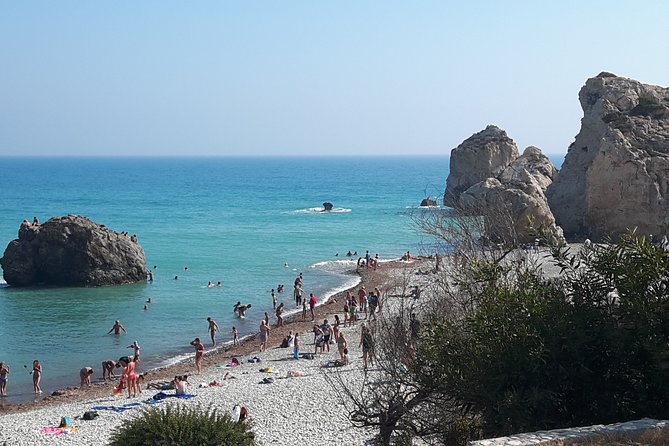
You start with Aphrodite’s Rock, where local mythology says the goddess Aphrodite emerged from the foams of the sea. The tour keeps it light and visual: you get about 45 minutes at the site, and you’ll see people going in for a swim—half because it’s refreshing, half because the story is irresistible.
This stop is short on purpose. You’re not going to read your way through the myth in 45 minutes. Instead, you’re meant to see it, feel the setting, and let the guide tie the myth to what you’re about to explore in the city.
A practical tip: treat this as a beach-style stop. Bring sun protection, and if you even think you might swim, pack something quick (swimsuit or at least a towel). The tour note about people swimming is your hint that the beach vibe is part of the experience.
Possible drawback: if you’re not a beach person, 45 minutes might feel like a lot of shoreline and not enough archaeology. On the other hand, the myth theme matters because it gives your brain a storyline for the day.
Stop 2: Paphos Harbour & Port—where restored stone meets dining and shopping
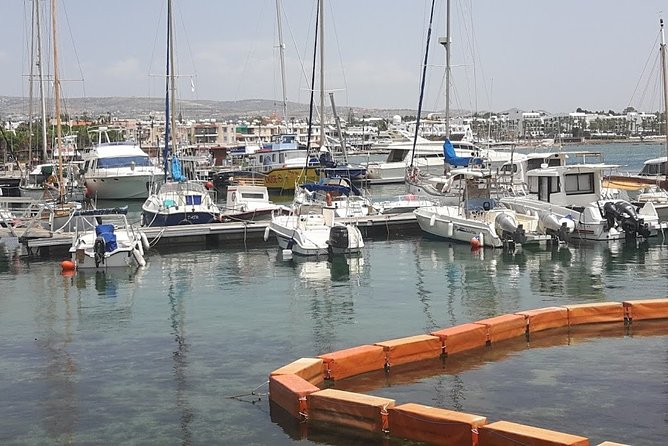
Next up is Paphos Harbour and Port. This area is described as having been restored in 1992 to 1995 and is pedestrian-focused. The old custom house is also restored, and depending on the season, it may host exhibitions.
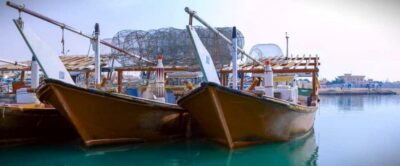
In a tour day, harbour stops can go one of two ways: either you just walk past modern tourist stuff, or you get a sense of how maritime life shaped the place. Here, you get both: restored historic surroundings plus a working-feeling waterfront where restaurants and local shops are right there.
You’ll have about 1 hour 30 minutes at this stop, which is a solid chunk of time. That makes it a good moment to slow down—grab a drink, browse souvenirs, or just soak up the atmosphere without rushing.
Small caution: because it’s pedestrian-only and waterfront-based, it can be windy and sun-exposed. That’s not a problem, but plan your clothing and water habits accordingly. Bottled water is included, but you’ll still want to pace yourself.
Stop 3: Paphos Harbour Castle—Lusignan to Ottoman, with a dark middle chapter
Then you move to Paphos Harbour Castle for about 30 minutes. The castle’s story is a chain of rulers and repurposing:
- built by the Lusignans in 1391
- later demolished by the Venetians
- repaired by the Ottomans in 1592
- used for storage for corps at one point (yes, it’s grim)
- the ground floor later served as dungeons, then a salt warehouse until 1935
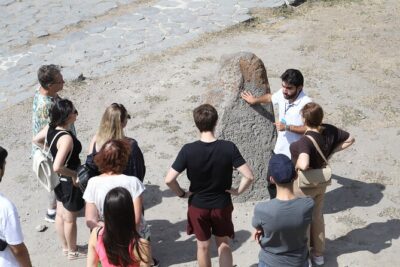
This is exactly the kind of stop that benefits from a guide. The structure itself is only half the point. The other half is understanding how the same stone kept getting reused as politics and economies shifted.
Admission note: the stop details list Admission Ticket Not Included for this castle. At the same time, the tour’s included section says entrance tickets are provided for historical sites. So you should confirm whether this castle entry is included for your booking or paid on-site.
Stop 4: Agia Kyriaki church ruins and St. Paul’s pillar—mosaics from 4AD
Stop four is Church of Agia Kyriaki and the post St. Paul area. This is one of the most meaningful stops of the day because it mixes architecture, faith history, and visible remnants you can actually recognize.
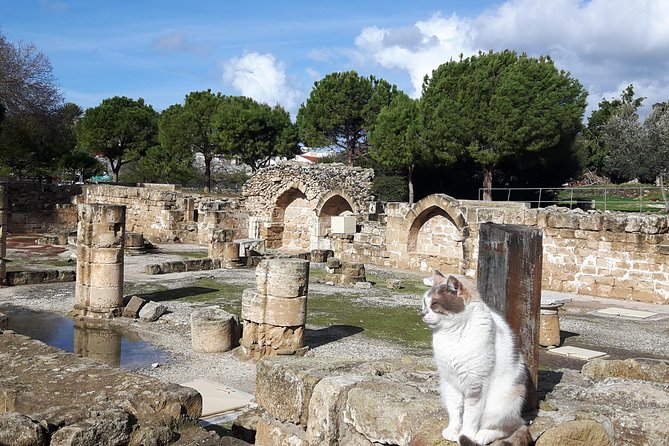
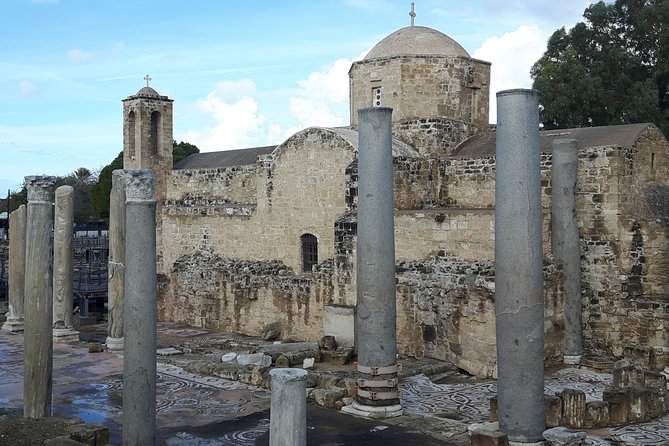
The site is described as one of the biggest and oldest basilica and an episcopal palace. It was destroyed during Arab raids, but you can still see the floor mosaics that remain from 4AD. That’s the sort of detail that makes the past feel close. Mosaics survive when other things don’t, so you get a rare snapshot rather than just foundations.
The guide also points out the pillar of St. Paul, linked to a specific story: St. Paul was flogged 39 times by the Roman governor Sergious before converting to Christianity.
Time here is 35 minutes, and that’s about right. This isn’t the type of site where you want to sprint. You want enough time to stand where you can see the mosaic remnants and hear the story in context.
Admission note: this stop is listed as Admission Ticket Free, which is a nice break in the day. Still, wear shoes that work on uneven areas, because ruins and older floors can be tricky.
Stop 5: Tombs of the Kings—columns carved from rock, and a “not royal” twist
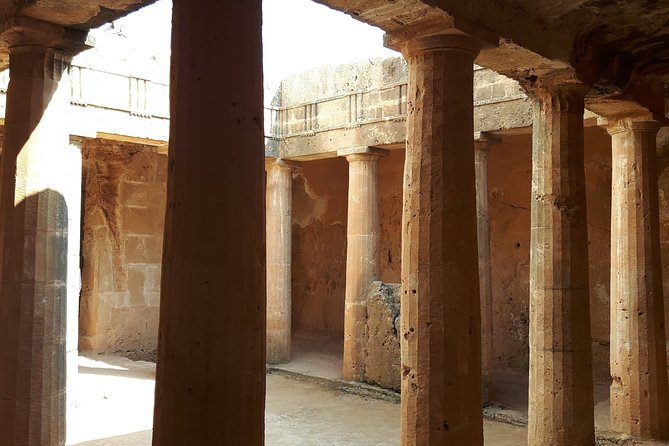
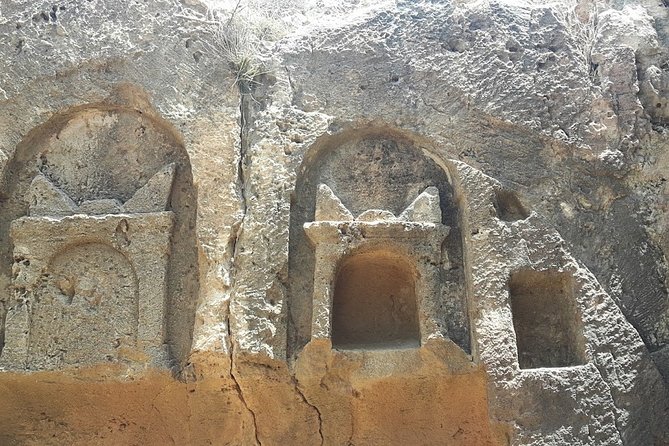
You finish at Tombs of the Kings for about 1 hour. The name sounds certain—royal burials, grand dynasties, finished stories. But the tour notes give the more honest version: there’s no proof of royal use.
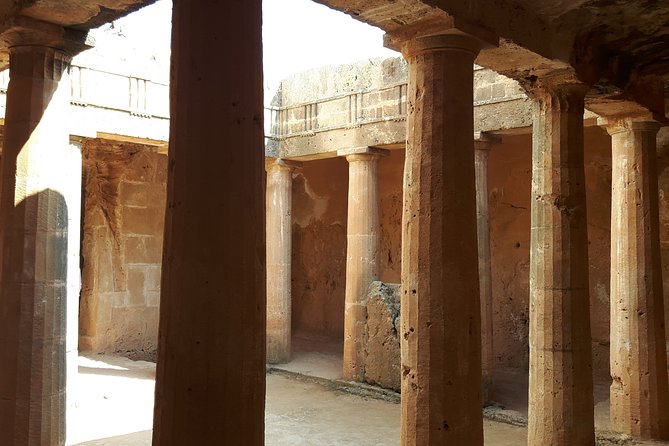
Instead, it’s believed that a local privileged class was buried here around 3BC, and the tomb complex spreads to a massive area. You’ll notice Doric-style columns carved from rock, which is a big visual reward even if you only have an hour.
Why this matters for you: the best ruins tours don’t just tell you what’s glamorous. They explain what’s known, what’s uncertain, and what the evidence suggests. That mix keeps the site from turning into a costume drama and makes your visit feel grounded.
Admission note: the stop details list Admission Ticket Not Included for the tombs. Again, because the tour’s included list mentions entrance tickets, double-check what applies to your exact booking.
What makes this tour feel better than DIY
Driving yourself from Nicosia to Paphos is doable in theory, but a guided format removes the stress. You don’t spend your mental energy on navigation, parking, or figuring out where each stop starts and ends.
Also, you get a guide who can connect the dots. One of the most useful parts of a good Cyprus guide is knowing how to place local sites in the wider story of the island—especially when modern history comes up. In one booking, the guide answered questions about Cyprus splitting in 1974 and why Famagusta is often described as a ghost town, even though it’s outside the main stops of this specific itinerary. That kind of conversation is a quality sign: the guide isn’t only reading a script.
If you love asking questions, you’ll likely enjoy this tour more than a fast audio-guide loop.
Timing, pacing, and what to pack for a 6–7 hour day
This is a long day by local standards, so plan like you’ll be out in the sun for most of it. Here’s what the structure tells you to prepare for:
- Start at 9:00 am, so you’ll want to eat breakfast before pickup.
- You have breaks at sites rather than a traditional meal stop.
- Stop 1 has a beach-like feel at Aphrodite’s Rock, so pack for sun and heat.
The tour doesn’t include lunch. That means you should either eat before you go or plan to buy a snack during the harbour stop (where you’ll be near restaurants). Bottled water is included, but you’ll still want your own comfort plan for long walking stretches.
Shoes matter. You’ll be moving through ruins and historic areas, which often means uneven stone and steps. Comfortable walking shoes beat sandals for a day like this.
And since the experience requires good weather (it’s not a dry-run guaranteed come rain or shine situation), keep your schedule flexible if you can.
Price in perspective: when private makes sense
Let’s talk plain numbers. At $576.76 per group for up to four people, you’re not paying a budget per-person rate—you’re paying for privacy plus guide + transport.
This tour makes the most sense if you:
- are traveling as a small group of friends or family (so the cost splits well)
- prefer a guided day over renting a car
- want context for Greek mythology and early Christian sites, not just photos
If you’re traveling solo and the price doesn’t split, it may feel pricey. In that case, weigh what you’re getting: less hassle, guided interpretation, and a structured route that hits the core highlights around Paphos.
Who should book this tour
Book it if you want a guided overview that still feels specific. This itinerary hits the big anchors:
- myth at Aphrodite’s Rock
- maritime atmosphere at the harbour
- castle history told through political layers
- early Christian remains with mosaics and St. Paul’s pillar
- the tomb complex with its Doric-style columns and honest uncertainty
If you’re the type who likes history but also likes breathing room to look up close at details, the stop durations support that.
Should you book this tour?
I’d book this tour if you want a guided day that ties together myth, ruins, and real place atmosphere without dealing with driving. The private format helps a lot, and the guide-led context is where the value usually shows up.
Skip or compare another option if:
- you want a full, slow archaeological day with zero time limits
- you’re extremely price-sensitive as a solo traveler
- you need a guaranteed lunch stop (because lunch isn’t included)
FAQ
FAQ
How long is the Ancient City of Paphos tour?
It’s about 6 to 7 hours, depending on timing.
What time does the tour start and where do I meet?
The start time is 9:00 am, and the meeting point is Ledra Palace Checkpoint, İkinci Selim Cd 37h, Lefkoşa 99010.
Is pickup offered for this experience?
Yes, transfer pickup is offered, and you’ll travel to Paphos and back.
Is this a private tour?
Yes. It’s private, and only your group participates. The group size is up to 4.
What language is the tour guide?
The tour is offered in English.
Do I receive a mobile ticket?
Yes, mobile tickets are included.
Are entrance tickets included?
Entrance tickets for historical sites are listed as included, but some stops show Admission Ticket Not Included. You should confirm which entrances are covered for your specific booking.
Is lunch included?
No. Lunch is not included.
Can children join the tour?
Children can participate, but they must be accompanied by an adult. Adult pricing applies to all adult travelers.
What happens if the weather is poor or I cancel?
The experience requires good weather. If it’s canceled due to poor weather, you’ll be offered a different date or a full refund. Cancellation is free up to 24 hours in advance for a full refund.