REVIEW · ATHENS
Ancient Corinth, Sanctuary of Hera, Blue Lake & Canal from Athens
Book on Viator →Operated by Ancient Greece Tours & Transfers · Bookable on Viator
A day trip that turns up the volume on ancient Greece. You get Ancient Corinth plus Acrocorinth in one smooth run from Athens. I especially like the pacing and the mix of big monuments with small, specific details like Paul’s Bema and Peirene Spring. One thing to consider: the driver shares history, but entry inside sites and museums may require an extra licensed guide if you want someone to escort you at every step.
The day is set up for travelers who want to see more than just Athens, without the stress of buses and transfers. You ride in an air-conditioned vehicle with WiFi, bottled water, and wipes, which matters when you’re out for about 9 hours. I also like that you end with Perachora’s Blue Lake, plus time for a swim and a meal stop by fish tavernas.
If you’re the type who wants a certified guide inside every museum hall, plan for extra cost. Otherwise, expect a great driver talk plus plenty of time to explore on your own once you arrive at each site.
In This Review
- Key things that make this tour worth your time
- Why this Corinth-and-Perachora route works as a day trip
- Pickup, comfort, and what “private” really means here
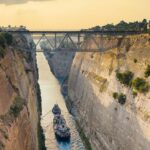
- Corinth Canal: the 19th-century surprise before the ancient stuff
- Acrocorinth: fortress views plus Aphrodite and Frankish-era remains
- Ancient Corinth: Apollo, the Agora, and the Paul connections you’ll remember
- Temple of Apollo and Doric columns
- The Agora and the Bema: where daily life meets politics and faith
- Roman buildings, the theatre, and the Odeon/Asklepieion area
- Lechaion road and the port-direction sense
- St. Paul’s church and the mosaic mural
- The smaller stops that make the day feel human: springs, pedestals, and market time
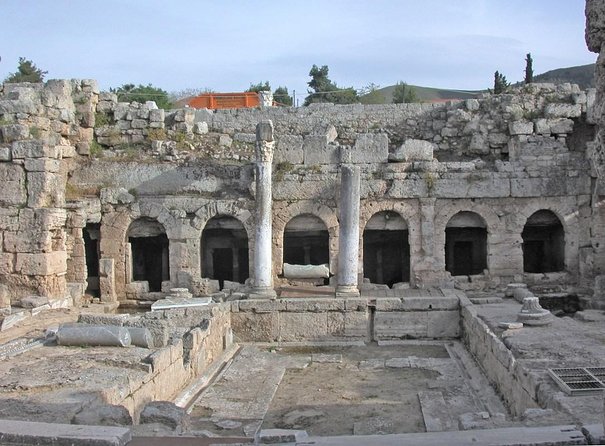
- Upper Peirene Fountain (Peirene Spring)
- Temple of Apollo Bema/Pedestal stop
- Village shops time near Ancient Corinth
- The Corinth Archaeological Museum: what you get in 45 minutes
- Perachora’s Heraion and Blue Lake: the swim break that changes the vibe
- Price and entrance fees: the value math you should do first
- Who this tour suits best (and who might want a different style)
- Should you book this private Corinth and Hera day trip?
- FAQ
- How long is the tour?
- Is this tour private?
- What’s included in the price?
- Do I need to pay entrance fees at Ancient Corinth and the museum?
- Is food included?
- Will there be a guide inside the sites and museum?
- Is there time to swim?
Key things that make this tour worth your time
- Private, door-to-door pickup in Athens so you don’t waste the morning figuring out transport
- Acrocorinth + Ancient Corinth together for sweeping views and then the real “street level” ruins
- Paul-linked stops including the Bema (trial platform) and a mosaic at St. Paul’s church
- Corinth Canal and 19th-century engineering as a quick change of pace from temples and forums
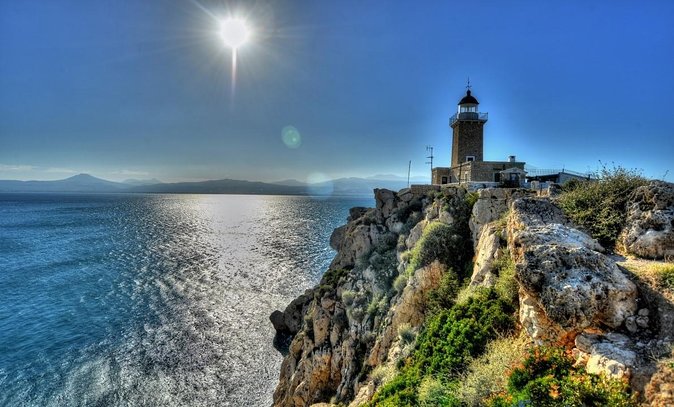
- Perachora’s Heraion + Blue Lake swim time with Malagavi Lighthouse in the mix
- Entrance fees aren’t included for the Corinth site and museum, so you’ll want to budget ahead
Why this Corinth-and-Perachora route works as a day trip
This itinerary is built around a simple idea: you’ll see Corinth from two angles in one day. First you get the height and dominance of Acrocorinth, the big rocky fortress above the ancient city. Then you drop down to the level where you can actually walk through temples, the Agora, and the Roman-era spaces that shaped how Corinth felt.
That split matters. From Acrocorinth, Corinth is all about scale—how one hill could control so much movement through the region. Down in Ancient Corinth, it becomes personal: you can connect the dots between the Agora, the trial area tied to St. Paul, and the way people moved toward the port road at Lechaion.
Then you finish far from the crowds of central Athens with the Sanctuary of Hera at Perachora and a swim break at Blue Lake. It’s a full day, but the variety keeps it from turning into a temple-only slog.
You can also read our reviews of more tours and experiences in Athens.

Pickup, comfort, and what “private” really means here
You’re picked up from your Athens hotel, Airbnb, or apartment lobby, and the vehicle is air-conditioned. You also get WiFi on board plus bottled water and refreshing wipes. After a day of sun, that little comfort package matters more than you’d think.
Since this is private, it’s only your group in the vehicle. You won’t be stuck waiting for other people to drag themselves out the door. It’s also easier to keep the day on schedule when you’re not negotiating with strangers.
Here’s the key “private” detail to understand: a professional English-speaking driver gives you the history and the context, but drivers aren’t automatically licensed to guide inside archaeological sites and museums. If you want someone with a license to accompany you through the interiors, you can request it for an extra cost. If you skip that add-on, you’ll still get good explanations from the driver and time to explore, just without constant in-room interpretation.
Corinth Canal: the 19th-century surprise before the ancient stuff
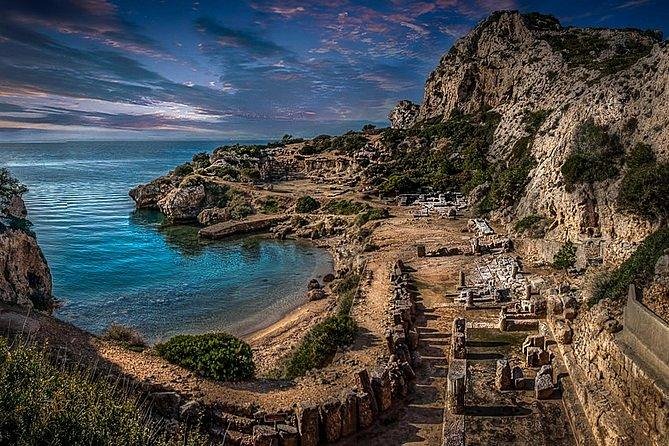
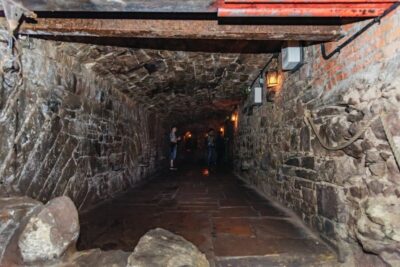
Most days that start in Athens end with temples. This one starts with Corinth Canal, which is a nice curveball. You get about 45 minutes here—long enough for a proper look from the canal area, quick photos, and a breath before climbing toward Acrocorinth.
The canal is one of those places where engineering history feels as important as ancient history. It became a major shipping shortcut across the Isthmus, changing how boats moved through the Mediterranean. Even if you’re not an engineering person, you’ll likely find it memorable because it’s so visually dramatic: cut through rock, built to redirect trade routes.
Practical tip: wear sunscreen and keep water handy. Even early in the day, you’ll spend time outside.
Acrocorinth: fortress views plus Aphrodite and Frankish-era remains
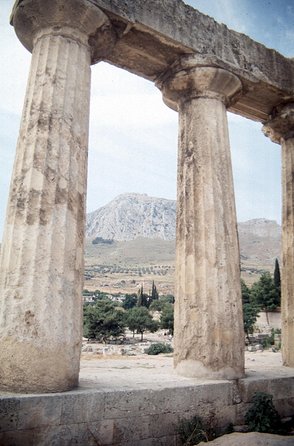
Acrocorinth is the kind of stop that makes the rest of your day click. You’ll spend about an hour here, and it’s one of the Peloponnese’s most dominant acropoleis—a monolithic rock overlooking the ancient city of Corinth.
What I like about Acrocorinth is that it doesn’t feel like a single-layer site. You can see:
- The general fortress system—walls reinforced with towers
- Traces of the Temple of Aphrodite (on the highest of the two peaks)
- The Frankish Tower, with remains that recall later eras, including church, mosque, house, fountain, and cistern traces
This stop is also where you’ll understand why people kept returning to Corinth. You’re literally looking at power—who could defend it, who could watch for trouble, and why the location mattered.
Consideration: it’s a climb-and-walk stop. You don’t need super-athlete stamina, but comfortable shoes help a lot, especially under hot sun.
Ancient Corinth: Apollo, the Agora, and the Paul connections you’ll remember
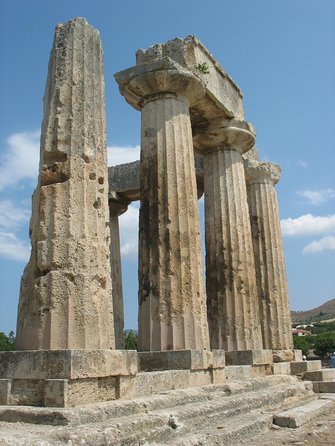
After Acrocorinth, Ancient Corinth feels like the payoff. You’ll have about two hours here, and you can shape how you experience it—walk the main routes for the big hits, then slow down for the details that catch your eye.

Temple of Apollo and Doric columns
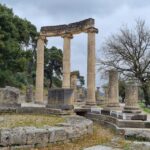
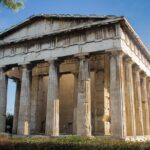
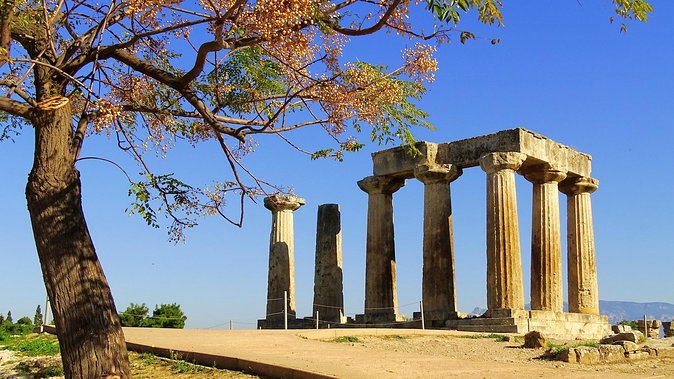
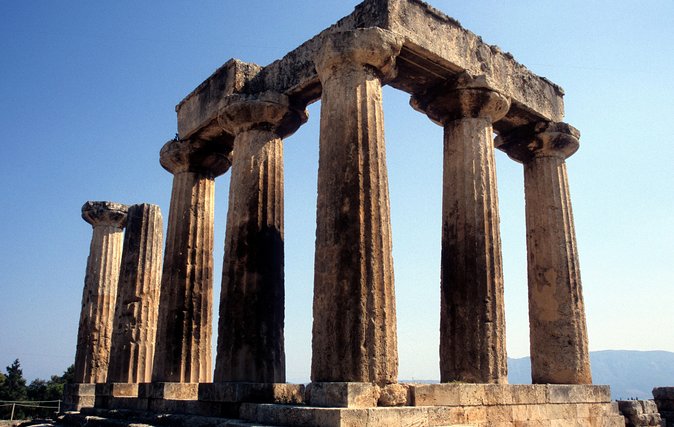
One of the standout monuments is the Temple of Apollo. You’ll notice it because it’s early and very Doric, with monolithic columns that are rare in the ancient world. It’s the kind of structure you can’t fully appreciate from one angle—take your time and circle it when you can.
The Agora and the Bema: where daily life meets politics and faith
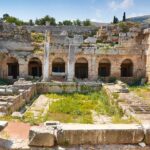
The Agora stretches out as a long rectangular space with shops, small temples, and altars. When you stand in the right parts, it’s easier to picture how public life worked—trade, worship, and civic talk all mixed together.
Then you get the famous Paul connection. The Bema is the elevated rostrum tied to St. Paul’s address to the Corinthians in the early 50s AD. In practice, the site helps you understand why sermons and civic life were never totally separate in ancient cities.
Roman buildings, the theatre, and the Odeon/Asklepieion area
You’ll also encounter Roman-era structures plus the theatre and the Odeon/Asklepieion area. This is where Corinth feels like a city that kept changing. You aren’t just looking at one era—you’re seeing a timeline in stone.
Lechaion road and the port-direction sense
The Lechaion road is a useful anchor point. It faces the Corinthian Gulf and leads toward the port of Lechaion, which helps you visualize Corinth as a place tied to movement—of goods, people, and ideas.
St. Paul’s church and the mosaic mural
One of the more emotional stops is St. Paul’s church, where you can admire a mosaic mural depicting Paul’s vision as he was traveling to Damascus. It’s a reminder that Corinth isn’t only ancient archaeology—it’s also a living religious landscape.
Practical tip: don’t try to sprint. If you move too fast, you’ll miss the way the Agora, Bema area, and surrounding Roman structures tell one story.
The smaller stops that make the day feel human: springs, pedestals, and market time
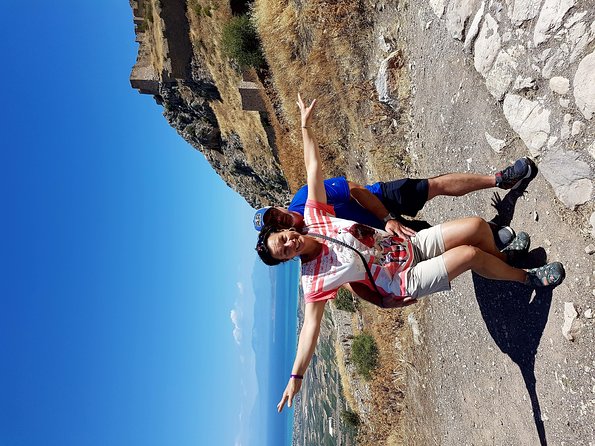
Not every meaningful moment here is a towering temple. You also get short stops that add texture.
Upper Peirene Fountain (Peirene Spring)
You’ll spend about 20 minutes at Upper Peirene Fountain, tied to Peirene Spring and the myth connection to Sisyphus. Springs matter in archaeology because water shaped where people gathered, worshiped, and lived. Even in short time, it gives your brain a “daily life” reference point.
Temple of Apollo Bema/Pedestal stop
Another short stop focuses again on the Bema or Pedestal, described as the site of St. Paul’s trial in the context of Roman Corinth. It’s quick—about 20 minutes—but it reinforces the Paul theme so it doesn’t feel like a random mention.
Village shops time near Ancient Corinth
You’ll also get about 30 minutes strolling village shops, with time to buy handmade souvenirs. This is one of those windows where you can grab something local without turning the whole day into a shopping mission.
The Corinth Archaeological Museum: what you get in 45 minutes
The Ancient Corinth Archaeological Museum visit is about 45 minutes, and it’s a solid use of time if you want the finds to make sense. The museum houses artifacts from the site and from nearby locations, so you’re not just reading ruins—you’re seeing objects connected to them.
You’ll also see items like the Hadgimoustafa spring (Ottoman-era fountain). That detail is helpful because it reinforces that the area kept being used long after the classical period.
Trade-off: 45 minutes is not an all-day museum experience. If you’re the type who loves reading every label, you might wish for more time. But as part of a full-day route that includes multiple outdoor sites, this museum stop is a good “interpretation boost” rather than a deep research session.
Perachora’s Heraion and Blue Lake: the swim break that changes the vibe
By the time you reach the Sanctuary of Hera in Perachora, you’ve already climbed, walked, and stared at ancient stone for hours. This is where the day gets lighter.
You’ll spend about 1.5 hours in the area, with stops that include:
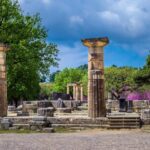
- the Heraion (Sanctuary of Hera)
- Malagavi Lighthouse
- Heraion / Blue Lake
The itinerary explicitly includes time to enjoy a refreshing swim and bathe under the sun. That’s not just a fun add-on—it’s a real reset. After archaeological heat, water time makes the whole day feel more balanced.
Food note: the plan includes time for delicious authentic delicacies from local fish tavernas, but food and drinks are not listed as included in the price. So build in extra spending if you want lunch or a snack here.
Consideration: bringing swim essentials helps. The tour time is set up for the experience, but you’ll still want your own towel and sunscreen plan.
Price and entrance fees: the value math you should do first
The tour price is $337.34 per person and it’s described as a private full-day experience with a first-class vehicle, WiFi, and door-to-door pickup/drop-off in Athens.
Then there’s the big financial detail: entrance fees to the Ancient Corinth site and museum are €15.00 per person, and those fees are not included. You should treat that as a standard add-on, not a surprise.
So the value question becomes: are you paying for private logistics and interpretive support—or for in-site guided service? With the default setup, the driver provides history and context, but a licensed guide inside the sites is an extra add-on. If you’ll be happy exploring with the driver’s setup, private value is strong because you’re saving time versus buses and you’re not splitting attention among lots of strangers.
If you want a licensed guide escort inside the sites and museum from start to finish, factor in the added cost before you book.
Who this tour suits best (and who might want a different style)
This tour fits you best if you:
- want to see Ancient Corinth and Acrocorinth as a single day plan without renting a car
- like structured context (driver explanations) but still want freedom to wander at your own pace
- want a mix: canal photos, fortress views, archaeological stops, museum time, then a Blue Lake swim
It may be less ideal if you:
- require constant inside-the-building commentary from a licensed guide for every stop
- dislike outdoor walking/climbing even at a moderate pace
If you fall into that second group, you can still book, but I’d strongly recommend arranging the licensed-guide add-on in advance so your day matches your expectations.
Should you book this private Corinth and Hera day trip?
I’d book it if you want a smooth Athens-to-Corinth-and-Perachora day that balances major landmarks with meaningful details—especially the Bema/Paul connections, the museum context, and the payoff ending at Blue Lake. The private door-to-door format plus air-conditioned comfort is the kind of practical benefit that makes a long day feel manageable.
I would pause only if your top priority is a fully guided, in-site licensed experience at every stop. In that case, check the licensed-guide option before you commit, then you’ll avoid the classic mismatch: a great driver talk versus the kind of guidance you personally prefer while inside the ruins and museum.
FAQ
How long is the tour?
It runs about 9 hours (approx.), from Athens pickup to return to your hotel area.
Is this tour private?
Yes. It’s a private full-day experience, and only your group participates.
What’s included in the price?
You get a private first-class vehicle, professional tour drivers with Greek history knowledge, hotel/Airbnb or port/airport pickup and drop-off service (with port/airport as an add-on), WiFi on board, bottled water, and refreshing wipes.
Do I need to pay entrance fees at Ancient Corinth and the museum?
Yes. Entrance fees to the Ancient Corinth site and museum are not included and are listed as €15.00 per person.
Is food included?
Food and drinks are not included. You’ll have time around the Heraion/Blue Lake area to eat at local fish tavernas, but you’d pay for meals yourself.
Will there be a guide inside the sites and museum?
The driver shares history, but the information provided indicates that a licensed tour guide to accompany guests into the site and museum is an additional cost and is available on request.
Is there time to swim?
Yes. At the Heraion/Blue Lake stop in Perachora, the plan includes time to enjoy a refreshing swim and bathe under the sun.