REVIEW · SAVANNAH
Savannah 101, a History Tour (by Walk With Me Savannah Tours)
Book on Viator →Operated by Walk with Me Savannah Tours · Bookable on Viator
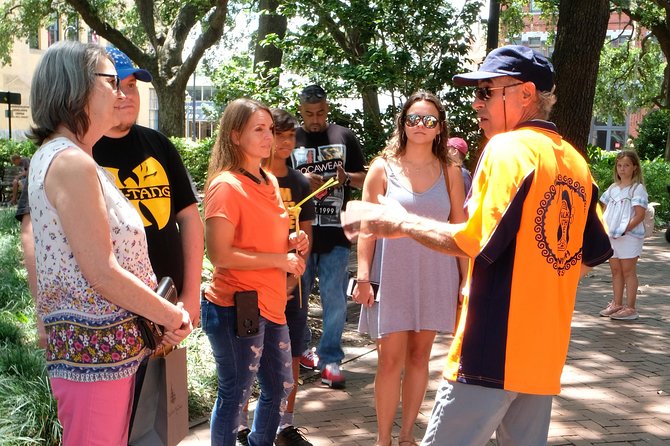
Savannah’s squares tell stories. This 2-hour history and architecture walking tour with Walk With Me Savannah Tours links Savannah’s layout and influential figures to the big forces that shaped the city, from cotton to war. You’ll move through classic public spaces—starting at Johnson Square and ending at Wright Square—so you can see how the past still drives what you notice today.
I love two things right away: the way the guide turns sights into context, and the way the storytelling stays fun. At Johnson Square, for example, you’ll connect the founding layout to people like Nathaniel Greene, and then keep building that thread as you walk. I also like the pace and energy guides bring—Sandron and Sargon are both mentioned for being engaging and entertaining, which makes the stops feel less like a lecture and more like a guided walk with perspective.
One drawback to consider: it’s a walking tour, and it’s not recommended if you can’t walk or roll about 0.25 miles without resting. If your mobility is limited or weather is poor, you may prefer a shorter option or a sit-down experience.
In This Review
- Key highlights
- Why this Savannah 101 tour makes sense on day one
- Price and what you actually get for $40
- The walking route: Johnson Square to Wright Square (and what each stop means)
- Johnson Square: founding ideas and Nathaniel Greene
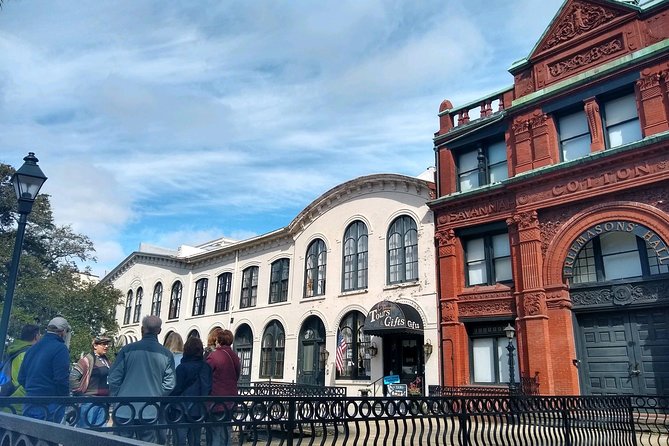
- The cotton-and-war story near River Street and Factors Walk
- Reynolds Square: John Wesley, the Olde Pink House, and early experiments
- Owens-Thomas House & Slave Quarters: architecture you’ll want to see inside
- Colonial Park Cemetery: burial customs and Union occupation
- Cathedral of St. John the Baptist: Catholic congregations and construction
- Lafayette Square: electricity, Flannery O’Connor, and Juliette Gordon Lowe
- Madison Square: armory, a temple, and Revolutionary War valor
- Green-Meldrim House: innovative architecture and Field Order 15
- Chippewa Square: Oglethorpe’s governance and early colony framing
- Wright Square: Juliette Gordon Lowe’s early home, plus Tomochichi and Mary Musgrove
- The guide style: short stops, big context, and real conversation
- Architecture fans: what you’ll learn by looking longer
- House tours that aren’t included (but are worth planning around)
- Who this Savannah 101 tour fits best
- Quick decision: should you book Savannah 101?
- FAQ
- How long is the Savannah 101 history tour?
- How much does the tour cost?
- Where does the tour start and end?
- Is the tour a walking experience?
- Is there a maximum group size?
- Do I need to buy tickets for attractions along the way?
- Is a mobile ticket used?
- What should the weather be like?
- Can I cancel for a refund?
- Are pets or service animals allowed?
Key highlights
- Johnson Square to Wright Square: a full loop that ends near where you start
- 2 hours, up to 20 people: small enough for a real guide conversation
- Architecture with names and motives: you’ll hear about figures tied to specific buildings and squares
- Cotton, the slave trade, and the Civil War: the economy and war are treated as part of the same story
- Unmissable local landmarks: Cathedral of St. John the Baptist and Savannah’s famous squares
- Optional house tours: the Owens-Thomas House interior is strongly recommended but not included
Why this Savannah 101 tour makes sense on day one
If you only do one guided history walk when you arrive in Savannah, this is the kind of tour that helps the rest of your trip click. The city is built around squares, and Savannah 101 uses those squares as a map. Instead of handing you a list of facts, the guide helps you read the city: why the streets curve the way they do, how different neighborhoods gained importance, and how major events (including war and occupation) left traces you can still spot.
The route is also efficient. In about 2 hours, you cover a set of stops that feel like the “spine” of central Savannah—Johnson Square, Reynolds Square, Colonial Park Cemetery, Chippewa Square, Wright Square, and the in-between landmarks. That’s ideal when you’re trying to get your bearings fast without burning half a day.
You can also read our reviews of more walking tours in Savannah


Price and what you actually get for $40
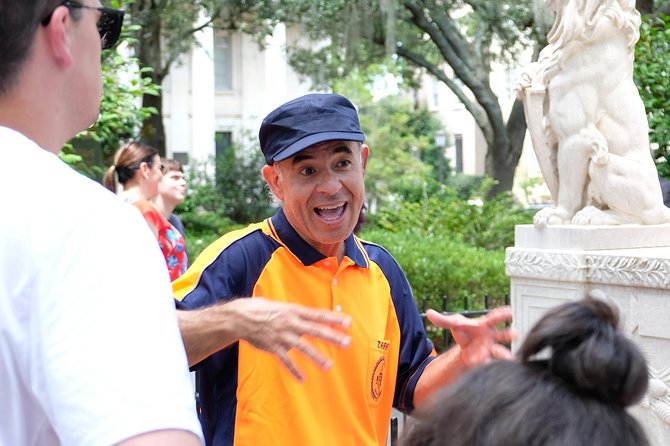
At $40 per person for an approximately 2-hour guided walk, you’re paying for two things: a knowledgeable local guide and a pre-planned route that avoids the guesswork. The tour includes multiple stops at major landmarks, and many of the stops are marked as free (so your money isn’t going mainly to entrances).
Two admissions details matter for value:
- Some of the “best” added experiences—especially interior home tours—are not included.
- Other areas along the way are free to view, with the guide explaining what you’re looking at.
So the math is simple: if you’re the type of traveler who wants context while walking, $40 is fair. If you’re only interested in standing in front of buildings for a quick photo, you might feel you’re paying mainly for narration. I’d book this if you like learning while you move.
The walking route: Johnson Square to Wright Square (and what each stop means)
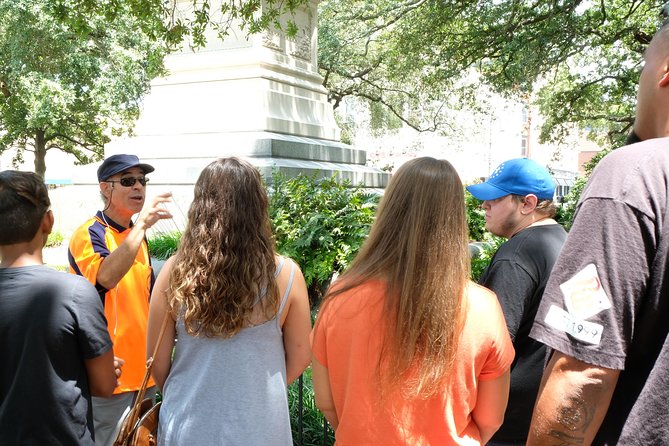
This tour is structured around a sequence of squares and landmark sites. Here’s what you can expect—and why each stop matters.
Johnson Square: founding ideas and Nathaniel Greene
Your walk starts at Johnson Square, where the guide covers Savannah’s founding and the basic city layout. This matters because Savannah’s squares aren’t random ornaments; they’re part of how the city was planned, and that planning influences what you see later.
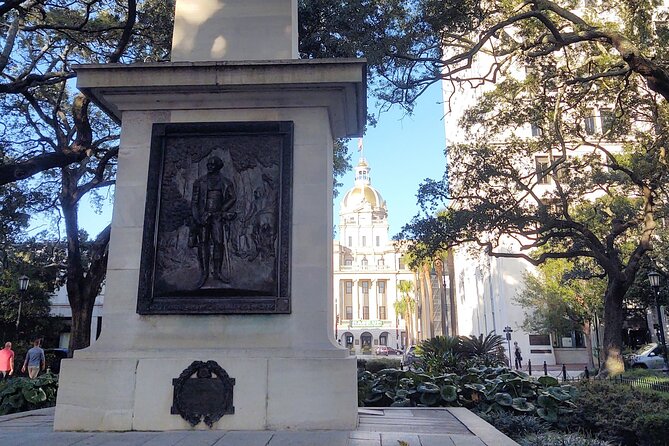
You’ll also hear about Nathaniel Greene and his monument. It’s a good first “anchor” because it connects the physical square to real people tied to the Revolutionary era.
Practical note: it’s a strong start point, but Johnson Square is still in the middle of active downtown activity. If you’re sensitive to crowds, arrive a few minutes early so you can settle in before the explanation starts.
The cotton-and-war story near River Street and Factors Walk
As you continue, the guide brings up Factors Walk and River Street as the center of Georgia’s cotton trade. This is one of the more serious segments of the tour, because the economy isn’t presented as an abstract concept. You’ll connect cotton’s role to its influence on the slave trade and the Civil War.
This is the kind of storytelling I appreciate on a history tour: the guide ties economic forces to human consequences, and then you carry that understanding forward as you see other parts of the city.
You can also read our reviews of more historical tours in Savannah





Reynolds Square: John Wesley, the Olde Pink House, and early experiments
At Reynolds Square, you’ll hear about John Wesley, the Olde Pink House, and early agricultural experiments in Georgia. This is a nice change of pace because it shifts from big political eras to social influences, local enterprise, and what people were trying to grow and build.
Even if you’ve seen an iconic building photo before (like the Olde Pink House), the guide’s context helps you understand why it’s there in the first place and what it represents in the city’s development.
Owens-Thomas House & Slave Quarters: architecture you’ll want to see inside
Next comes Owens-Thomas House & Slave Quarters. The guide highlights the architecture of the Owens-Thomas House and explains the role of architect William Jay. The stop is also a preview of something bigger: the guide notes that touring inside the home is highly recommended, but it’s not included on the walking tour.
If you have even a mild interest in historic houses, plan time (or budget) for the interior visit on the same day. This stop is short during the walk, but it’s the one that can turn into a bigger commitment if you choose to continue.
Colonial Park Cemetery: burial customs and Union occupation
At Colonial Park Cemetery, the guide explains how Savannah treated cemeteries and shares common burial practices. Then the tour moves into disasters and the Civil War, including the Union occupation of Savannah.
Cemeteries can feel like “just a stop” unless someone gives you a lens to look through. Here, the lens is context: what people practiced, how the city coped with hard times, and how war changed what the city was.
Cathedral of St. John the Baptist: Catholic congregations and construction
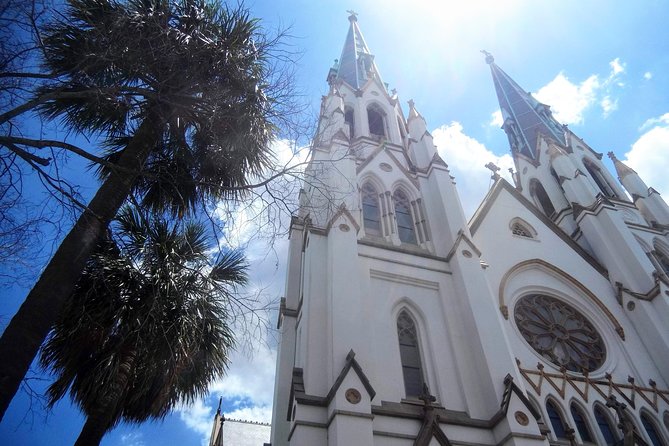
The Cathedral of St. John the Baptist stop focuses on Savannah’s Catholic congregations and the construction history of the cathedral. The guide also highlights features you can spot once you know what to look for.
If you prefer history that includes religion and community growth—not just politics and war—this is a worthwhile stop. It also keeps the tour from becoming one-note.
Lafayette Square: electricity, Flannery O’Connor, and Juliette Gordon Lowe
At Lafayette Square, the guide points out the Hamilton-Turner Inn, described as the first Savannah home to have electricity, along with additional architectural details. This is a fun contrast: you get a literal “when technology arrived” moment, not just dates and battles.
Then the tour connects the square to literary and social history:
- Flannery O’Connor’s childhood home
- Juliette Gordon Lowe, including her role as the founder of the Girl Scouts
This is one of the stops that makes Savannah feel personal. It’s not only about colonial leaders; it’s also about how the city shaped people who changed the wider world.
Madison Square: armory, a temple, and Revolutionary War valor
At Madison Square, the guide discusses Savannah architecture, including the Savannah Volunteer Guards’ Armory and the Scottish Rite Temple. You’ll also hear about the monument to Sergeant Jasper and his moments of valor in the Revolutionary War.
This stop works well if you enjoy the “civic institutions” side of history—who organized, who built, and how communities displayed pride and memory in stone.
Green-Meldrim House: innovative architecture and Field Order 15
The Green-Meldrim House is another short stop with big ideas behind it. The guide covers its innovative architecture and Sherman’s residency during the Union occupation of Savannah.
More importantly, you’ll hear about Field Order 15 and how it impacted black communities both before and after its repeal. That’s a heavy subject, but it’s handled as part of the city’s real story—not a footnote.
If you’re looking for a history tour that doesn’t skip difficult chapters, this segment is one of the reasons to choose Savannah 101.
Chippewa Square: Oglethorpe’s governance and early colony framing
At Chippewa Square, the guide talks about Savannah’s founder, Oglethorpe, and his approach to governance. You’ll also hear about what that meant for Georgia starting as a non-royal colony.
Then the tour mentions fires in Savannah and points you toward other landmark references you can explore further, including the Savannah Theater and the Independent Presbyterian Church.
This is a great stop for people who like political structure and community planning, because it explains how governance shaped everyday life.
Wright Square: Juliette Gordon Lowe’s early home, plus Tomochichi and Mary Musgrove
The last major stop is Wright Square. The guide discusses Juliette Gordon Low’s childhood home and the accomplishments of her extended family. You’ll also hear about historical uses of the lots around the square and the roles of Tomochichi and Mary Musgrove.
The ending location is convenient: you finish at Wright Square, which is one square away from where you started. That makes it easier to keep exploring without constantly recalculating directions.
The guide style: short stops, big context, and real conversation
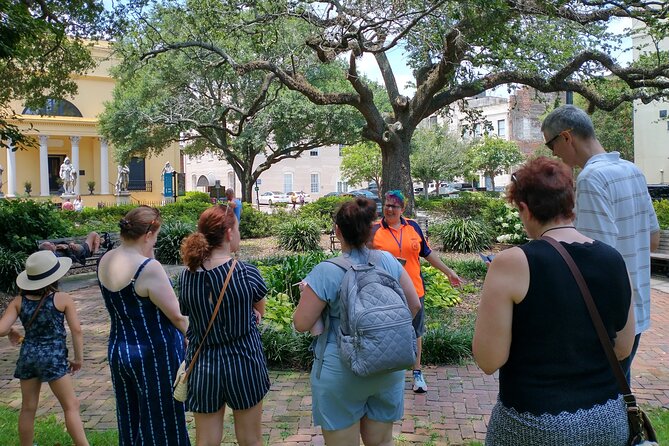
What makes this kind of tour work is how the guide manages depth within a walking format. Instead of spending 30 minutes at one location, you get frequent “see it, understand it” moments. That’s especially helpful in a city like Savannah, where a square is often the difference between a random photo and a meaningful story.
The reviews also point to guides like Sandron and Sargon as being enthusiastic and entertaining, and that matters. When history sounds dry, it stays dry. When it’s delivered with energy, you remember details later because your brain tags them to a place.
One additional consideration: history can be debated, and interpretations can differ between guides. If you care about exact wording or competing theories, ask questions as you go. You’ll get more out of the tour.
Architecture fans: what you’ll learn by looking longer
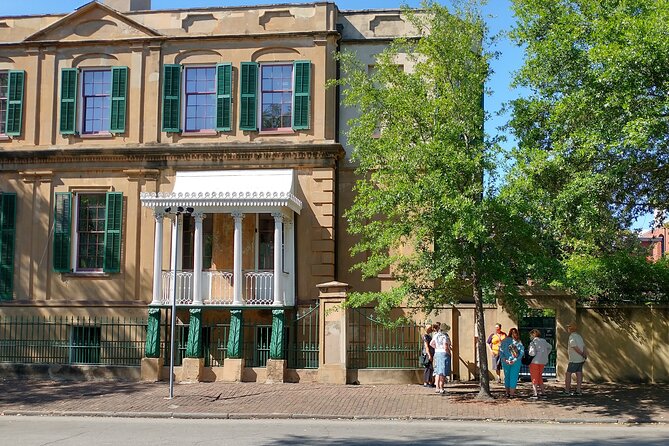
Even if you don’t consider yourself an architecture person, you’ll probably enjoy how the guide uses buildings to explain trends. Owens-Thomas House brings in William Jay, and Green-Meldrim House ties architecture to major historical events. Hamilton-Turner Inn introduces early electrical progress.
The big takeaway is that architecture here isn’t only aesthetic. It’s a record of wealth, institutions, technology, and who had power at different moments.
House tours that aren’t included (but are worth planning around)
Two spots deserve special attention because the walk sets them up, then tells you what’s next:
- Owens-Thomas House & Slave Quarters: the guide says touring the inside is highly recommended, but it’s not included.
- Green-Meldrim House: the stop information notes admission is not included.
If you’re serious about history homes, I’d treat this walking tour as the pregame. You’ll leave with clear reasons to spend extra time inside, and you’ll know which parts you should look for.
Who this Savannah 101 tour fits best
This tour is a strong match if:
- you want a first or early Savannah history experience
- you like your history tied to specific places (squares, monuments, landmarks)
- you’re interested in the overlap of architecture, economy, and war
- you want a local guide who can connect famous names to the city’s layout
It’s less ideal if:
- you struggle with walking and rest breaks (the tour isn’t recommended if you can’t walk about 0.25 miles without resting)
- you prefer long museum-style time with minimal walking
- you’re only looking for entertainment and not much context
Quick decision: should you book Savannah 101?
Yes, if you want a focused Savannah history and architecture walking tour that gives you a map made of stories. The price is reasonable for a guided route that packs in important themes—founding plans, cotton and the slave trade, Civil War impacts, and the way real people left marks on the city through buildings and monuments.
Book it especially if you plan to explore downtown after. Finishing at Wright Square makes it easy to continue on your own, and you’ll likely know where to look once you’re back on the streets.
FAQ
How long is the Savannah 101 history tour?
The tour lasts about 2 hours.
How much does the tour cost?
It’s $40.00 per person.
Where does the tour start and end?
It starts at Johnson Square and ends at Wright Square.
Is the tour a walking experience?
Yes. It is a walking tour, and it is not recommended if you cannot walk or roll about 0.25 miles without resting.
Is there a maximum group size?
Yes. The tour has a maximum of 20 travelers.
Do I need to buy tickets for attractions along the way?
Some stops are free, but not all admissions are included. The Owens-Thomas House interior tour is not included (and is highly recommended), and the Green-Meldrim House admission is not included.
Is a mobile ticket used?
Yes. The tour uses a mobile ticket.
What should the weather be like?
The experience requires good weather, and if it’s canceled due to poor weather, you’ll be offered a different date or a full refund.
Can I cancel for a refund?
Yes. You can cancel for a full refund up to 24 hours in advance of the start time.
Are pets or service animals allowed?
Service animals are allowed, and well-behaved pets are allowed.