REVIEW · LAGOS
The Black Heritage – Badagry Tour
Book on Viator →Operated by Motley Travels · Bookable on Viator
You’ll spend a full day tracing the slave-era story in Badagry. This tour links museum artifacts, specific names from history, and the emotional stop called the Point of No Return.
I particularly like how the day moves beyond dates and lectures. You get hands-on context in the Slave Museum through the barracoon experience, then you shift to the Black History/Heritage Museum with materials tied to missionaries and the wider era. The second standout for me is the human focus—your guide brings forward the story around Williams Seriki Abass, not just the general history.
One real consideration: it’s a long day with Lagos traffic and a chaotic ride to and from Badagry, so you’ll want to stay patient and keep expectations on the itinerary itself, not the commute.
In This Review
- Key Highlights You’ll Actually Remember
- Badagry Slave Museum: where the story gets specific
- Missionaries and relics at the Heritage Museum (Black History Museum)
- The long ride to Gberefu: building patience for an emotional place
- Gberefu Island: boat trip, Atlantic shore time, and the Point of No Return
- Attenuation Wells and the monument: understanding belief and place
- Who will enjoy this tour most (and who might find it heavy)
- Price and value: is $269.10 per person fair?
- Practical tips for a smoother day
- Should you book the Black Heritage – Badagry Tour?
- FAQ
- How long is the Black Heritage – Badagry Tour?
- Does the tour include hotel pickup and drop-off?
- What are the main stops on the itinerary?
- Are admission tickets included?
- Is this a private tour?
- What’s the starting time window?
- Can I get a refund if I cancel?
- Are service animals allowed?
Key Highlights You’ll Actually Remember
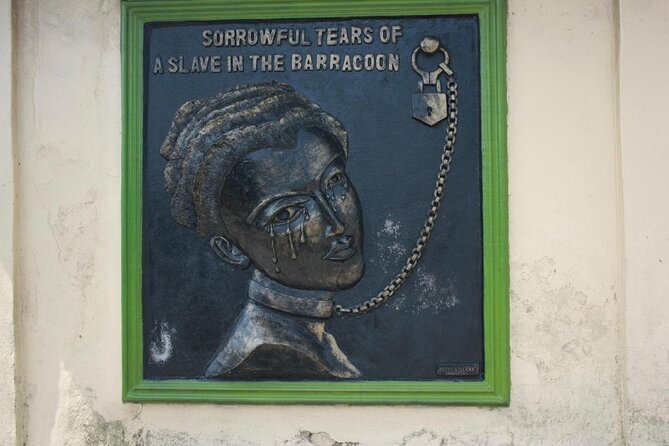
- Barracoon walkthrough with relics that make the history feel tangible, not abstract
- Williams Seriki Abass resting place as a clear anchor point for the story
- Missionaries’ role explained in the Heritage Museum, alongside relics and wreckage
- Gberefu Island boat trip plus time at the Atlantic shoreline
- Attenuation Wells stop tied to the belief about memory being erased
- Point of No Return monument visit to connect landscape and narrative
Badagry Slave Museum: where the story gets specific
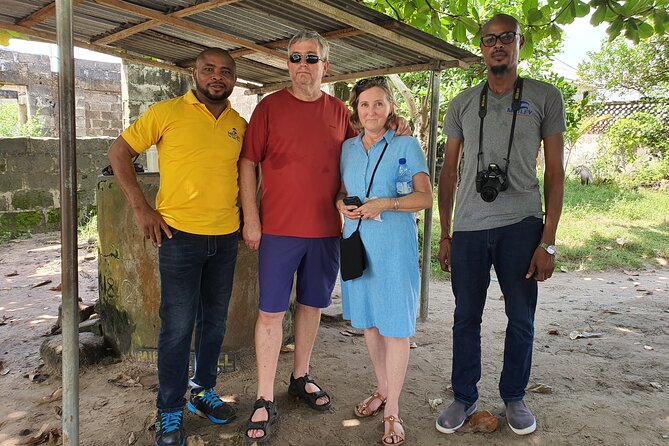
Badagry is where history stops being a page in a book and becomes a place you can walk through. Your day starts with hotel transfers from Lagos, then you’re taken into the Badagry Slave Museum and Black History Museum complex for about 2 hours, with admission included.
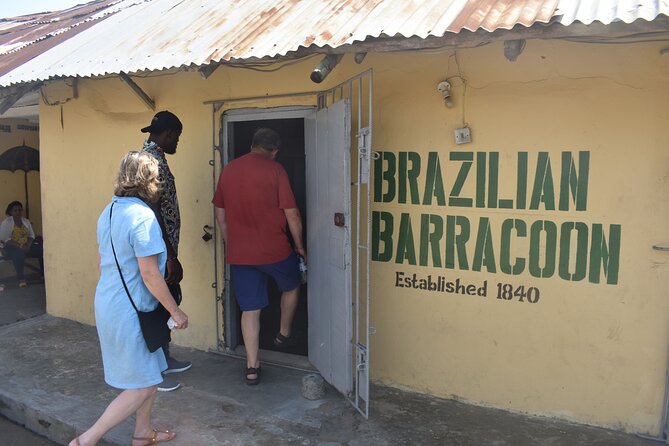
The first part that hits hardest is the barracoon tour. You’ll move through the space tied to the slave-era holding areas, with relics from the period helping you understand what confinement looked and felt like. Even if you’re not a museum person, this format works because it’s built around physical context—rooms, objects, and the idea that these weren’t abstract events.
Then the guide brings in a specific figure: the resting place of Williams Seriki Abass. What I like about this kind of named stop is that it gives you something solid to hold onto as you process the broader story. Instead of hearing only sweeping explanations, you also hear about particular people and the roles they played.
You can also read our reviews of more historical tours in Lagos
Missionaries and relics at the Heritage Museum (Black History Museum)
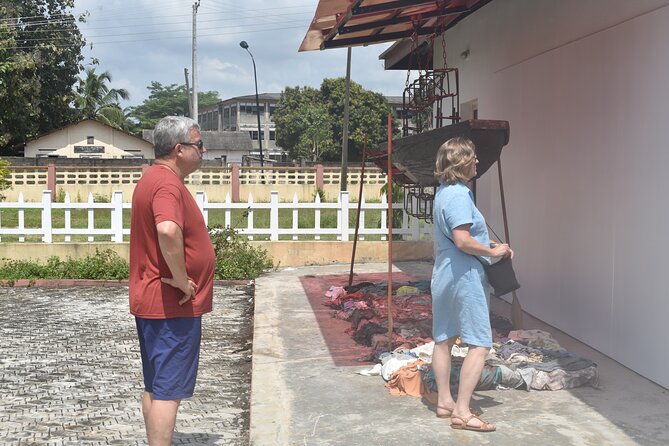
After the slave museum portion, the tour shifts tone and scope. You move to the Heritage/Black History Museum, where your guide explains the lives of missionaries and the roles they played during the time.
This segment matters because it prevents the story from becoming one-note. You’ll see relics and wreckage of items used at the time, which helps you connect the missionary narrative to the material reality of the era. It’s not just moral talk or spiritual themes. It’s also about what people built, carried, and used—so you can see how culture and religion moved alongside commerce and coercion.
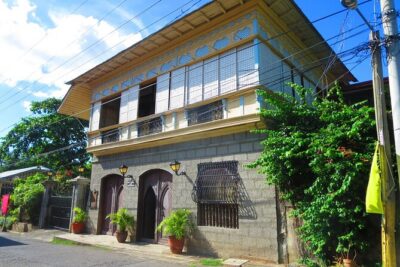
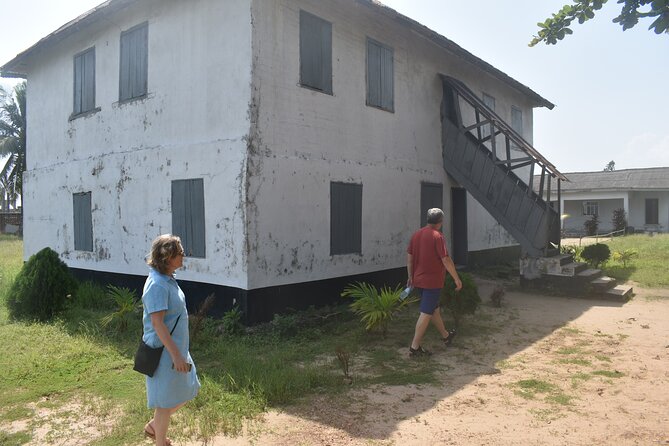
One more stop fits into this same block: you’ll also see the first storey building in Nigeria built in the context of what the tour covers. The key value here is not the trivia. It’s the way the guide uses architecture and objects to show you how early sites took shape during the period you’re studying.
The long ride to Gberefu: building patience for an emotional place
After your museum time, you head onward to Gberefu Island, with the day likely feeling like it has only one pace: steady and long. The tour is listed as 8 to 10 hours total, so you’re going to spend most of the day in motion one way or another.
Here’s the practical truth: Badagry is not around the corner from Lagos. The drive can be long and chaotic, so I recommend you treat transportation as part of the experience rather than something to fight. If you go in calm, you’ll be more present when you arrive.
It also helps to know the island stop is designed for emotional impact. The guide’s narration ties directly to why people call this place the Point of No Return. You’re not just sightseeing; you’re walking through the geography linked to the moment when the future stopped being negotiable.
Gberefu Island: boat trip, Atlantic shore time, and the Point of No Return
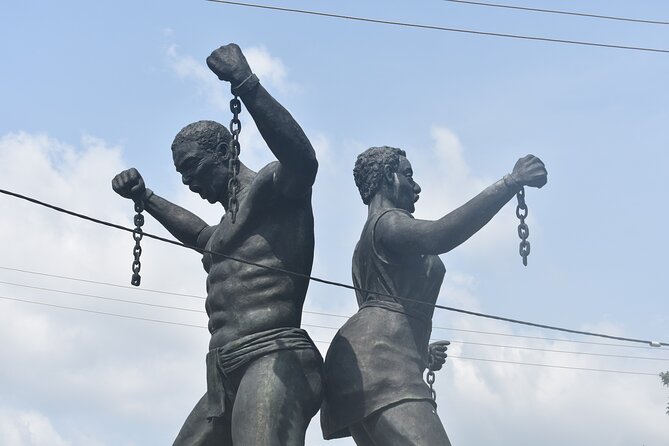
At Gberefu, the experience becomes both physical and symbolic. You’ll start with the boat trip, then continue with time on the shores of the Atlantic Ocean, the coastline connected to the slave-era transport routes.
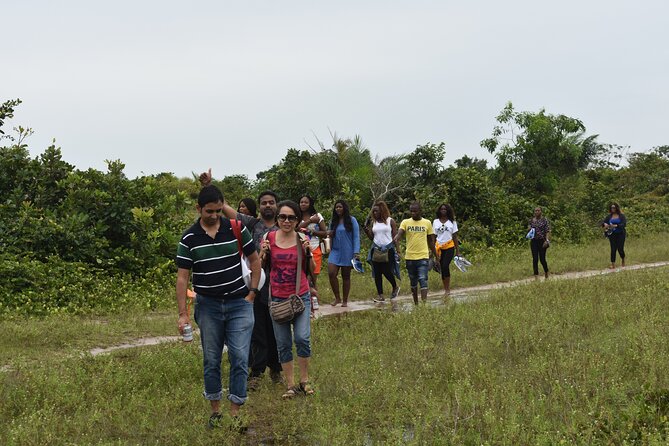
This is the part I think you’ll notice even if you’re not big on history tours: the shoreline changes how you understand the words you heard earlier. When you stand where people departed toward the unknown, the story stops sounding theoretical. The tour gives you time for the shore experience—not just a quick photo stop—so you can absorb the scale of what was happening.
The stop is built around a clear theme: why Gberefu was called the Point of No Return. Your guide explains this as part of the larger narrative you began in the museums, so the day feels like one story with two major chapters, not separate attractions stitched together.
Attenuation Wells and the monument: understanding belief and place
One of the most talked-about stops on this itinerary is the attenuation wells. You’ll see them after leaving the museums, and your guide shares the belief tied to them—that drinking from the wells was thought to wipe out the memory of the slaves.
Whether you see the story as spiritual, cultural, or historical explanation, the point is what the tour teaches you to do: connect belief systems to lived experiences. The well becomes a symbol of what was being done psychologically and socially, not only physically.
Next comes the historical monument on the island area, which is described as a place built to house other relics from the slave era. This helps close the loop: you’ve seen relics in the museum, now you see relics in a landscape setting that the guide frames as part of the departure story.
Who will enjoy this tour most (and who might find it heavy)
This tour is for you if you want a meaningful, guided day where the story is explained clearly and linked to specific locations. It’s also ideal if you have family ties to West Africa or a personal interest in the slave era—because the tour is designed to be moving and emotional, not casual.
It’s also great if you like strong guiding. One of the best parts from the experience feedback is that guides and drivers take the day seriously. For example, the driver Bright and guide Adedemi (spelling may vary) were praised for being kind and doing a great job. Another team member named Godstime was also mentioned in connection with making the day memorable. That’s a good sign: this isn’t a rushed script read at you.
A quick caution: the subject matter is heavy. If you know you get overwhelmed easily in museum settings, plan breaks for yourself during the ride time. You can’t avoid the emotion here, but you can manage your personal pace.
Price and value: is $269.10 per person fair?
At $269.10 per person, this is not a bargain-basement day trip. But it can still be good value depending on what you want.
Here’s why the price can make sense:
- Hotel pickup and drop-off from Lagos are included in the tour format.
- The tour is structured around major stops with admission tickets included (both the museums and the island stop segments are listed with included admissions).
- The group format is private for your group only, which usually means less waiting and a more flexible conversation with your guide.
- You get a full, guided arc—museums first, then the island and shoreline—so you’re paying for interpretation, not just transport.
The tradeoff is time and energy. You’re paying more partly because it’s a full day with significant travel. If you’re short on time in Lagos, it may feel like a big commitment. If you have the time and want the depth, it’s likely a fair spend.
Practical tips for a smoother day
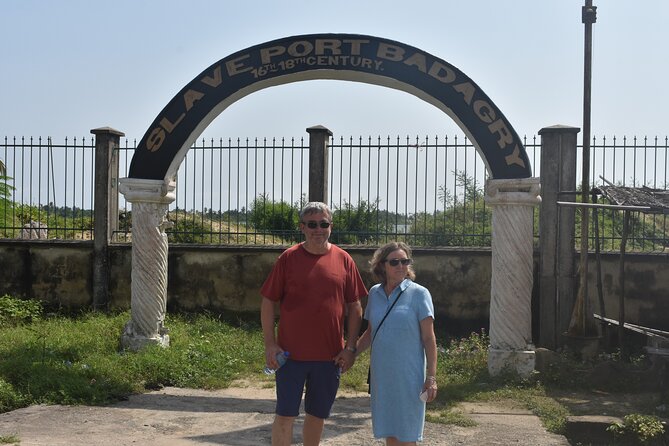
A good day here depends on logistics and mindset.
- Wear comfortable shoes for museum floors and island walking. You’ll be moving at multiple stops.
- Bring a water bottle and something light to snack on during long transit, since the overall day runs 8 to 10 hours.
- Expect Lagos traffic to eat into your comfort level. The payoff comes when the guide starts tying everything together in Badagry.
- Listen for the names and the place terms. The tour’s impact comes from linking Williams Seriki Abass, the barracoon setting, the attenuation wells, and the Point of No Return theme.
If your goal is to leave with more understanding than you arrived with, this itinerary gives you that structure.
Should you book the Black Heritage – Badagry Tour?
I’d recommend booking if you want a guided, full-day experience that treats Badagry as more than a stop on a checklist. The pairing of museums with Gberefu Island gives you the rare combo of artifacts, named history, and landscape connected to the departure story.
Skip it only if you strongly dislike long days or you know museum-and-memorial style tours are too emotionally intense for you right now. Also, if you’re expecting a short, easy Lagos outing, this isn’t that kind of tour—the commute can be rough.
Overall, if you’re going to spend a day in Lagos-area history, this one has a clear, coherent narrative and the kind of guidance that makes the learning feel personal rather than mechanical.
FAQ
How long is the Black Heritage – Badagry Tour?
It lasts about 8 to 10 hours.
Does the tour include hotel pickup and drop-off?
Yes. The tour starts and ends with transfers from your hotel.
What are the main stops on the itinerary?
You visit Badagry Slave Museum and Black History Museum, then go to Gberefu Island (Point of No Return).
Are admission tickets included?
Yes. Admission tickets are included for both the museum segment and the Gberefu Island segment.
Is this a private tour?
Yes. It’s listed as private, with only your group participating.
What’s the starting time window?
The service runs daily from 8:00 AM to 6:00 PM.
Can I get a refund if I cancel?
Yes. Free cancellation is available up to 24 hours in advance for a full refund. If you cancel less than 24 hours before the start time, the amount paid is not refunded.
Are service animals allowed?
Yes, service animals are allowed.