REVIEW · CHARLESTON
Charleston History Tour – Small Groups Only – History & Alleyways
Book on Viator →Operated by Tour Charleston With Adam · Bookable on Viator
Charleston history feels close-up on this walk. With Adam, you cover downtown landmarks plus alleyways at a small-group size (10 max), so the tour stays chatty and you can ask questions as you go. It’s an on-foot tour that ties pirates, the Revolution, and the city’s toughest stories into one easy route.
I love the way this tour mixes famous stops with less-obvious context, so you don’t just collect postcard views. Each stop includes free admission tickets, which keeps the $28 price from feeling like a sales pitch. The main trade-off: you’ll see many historic homes from the street, so don’t expect a full interior house tour.
In This Review
- Quick take: what you’ll notice right away
- A two-hour Charleston walk that turns streets into real stories
- Price and value: what $28 gets you (and what it avoids)
- Where you start, where you finish, and why the route makes sense
- The stop-by-stop route: Powder Magazine to Waterfront Park
- Stop 1: The Powder Magazine (and pirates)
- Stop 2: French Huguenot Church
- Stop 3: Dock Street Theater (1736 and firsts)
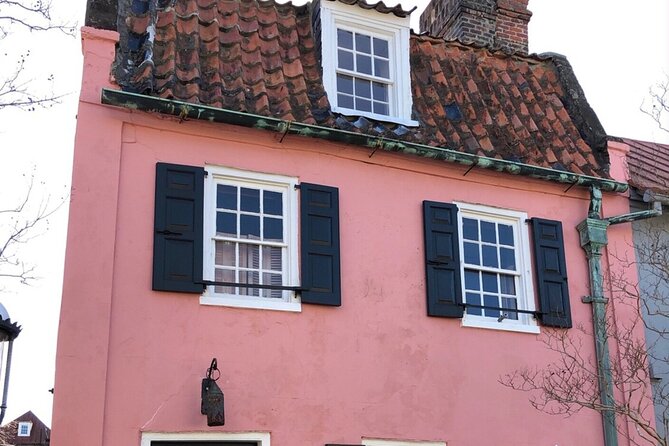
- Stop 4: Chalmers Street, the Pink House, and the cobblestones
- Stop 5: Old Slave Mart Museum (outside, but not hand-waved)
- Stop 6: Broad Street, commerce, and 1680 layouts
- Stop 7: Rainbow Row
- Stop 8: Exchange Building and the Revolution
- Stop 9: Waterfront Park and the Pineapple fountain
- Why the small group format changes everything
- Timing, walking comfort, and what to bring
- Who should book this tour?
- What to do right after the tour ends
- Should you book this Charleston History Tour – Small Groups Only – History & Alleyways?
- FAQ
- How long is the Charleston History Tour?
- How many people are in a group?
- Where does the tour start and end?
- Is the tour mostly walking?
- What language is the tour offered in?
- Are admission tickets included?
- What should I bring or wear?
- Are service animals allowed?
- What if the weather is bad or I need to cancel?
- What’s the best time to book?
Quick take: what you’ll notice right away
- 10-person maximum keeps the pace friendly and questions actually get answered
- Free admission tickets at each stop means you’re not paying extra as you walk
- Stories that range widely from pirates at the Powder Magazine to Revolution-era Charleston at the Exchange Building
- Hard history addressed at the Old Slave Mart Museum (discussion happens outside the building)
- Iconic views included like Rainbow Row and the harbor views at Waterfront Park
- Adam’s style is story-first with humor and photos used to support the talk
A two-hour Charleston walk that turns streets into real stories
This is a history tour you can do without feeling locked into a lecture. You’re moving on foot through downtown Charleston, guided by Adam, and the route is built around the kind of places you’d pass anyway—except here, someone explains why they matter.
The big win for me is the size. With a maximum of 10 travelers, you don’t get lost in the crowd, and the tour doesn’t feel like a script you’re trying to survive. The vibe is more like a guided walk with a gifted storyteller who knows how to keep the group engaged.
And yes, the pace is quick. Stops are brief, so you’ll cover a lot of ground in roughly two hours. If you like slow wandering, you might want to pair this with extra free time afterward for museums, photos, and coffee.
You can also read our reviews of more historical tours in Charleston



Price and value: what $28 gets you (and what it avoids)
At $28 per person for about two hours, this tour hits a sweet spot for budget travelers and first-timers. You’re paying for guidance, timing, and story context—not for add-ons.
A key detail: the tour includes free admission tickets for the stops listed on the route. That matters because downtown Charleston can nickle-and-dime you with separate tickets. Here, the plan already accounts for getting you to the landmark, then giving you the background so it clicks right away.
Also, since Adam runs a small operation, the experience tends to feel more personal than big-group events. One review highlighted how the group can end up smaller on some days—so your tour may feel even more conversational.
Where you start, where you finish, and why the route makes sense
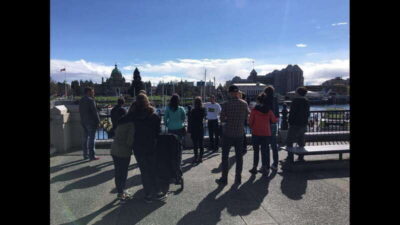
You meet at 151 Meeting St, Charleston, SC 29401. From there, you work your way through the historic core and end at the Charleston Waterfront Park area near the Pineapple fountain, with harbor views.
That ending location is more than just scenery. It’s a smart close because it helps you reset your brain after the history portion. After the walk, you’ve got a good chance to take photos, cool down, and decide what you want to do next—whether that’s a meal, a second museum stop, or just a slow look at the water.
You’ll also be around public transit for much of the day, so if you’re juggling timing, this route is easier to fit into your visit than a tour that runs far outside downtown.
The stop-by-stop route: Powder Magazine to Waterfront Park
Below is what you can expect at each point, and what to look for when you’re there.
Stop 1: The Powder Magazine (and pirates)
You’ll walk by The Powder Magazine, described as the oldest public building in South Carolina, built in 1713. It’s the kind of location that instantly makes you think of danger, logistics, and survival—perfect for the pirate-themed stories you’ll hear here.
What makes this stop good: It’s not just a date and a fact. The guide ties the setting to storytelling, so the building feels alive instead of academic.
Potential drawback: If you’re expecting a full museum visit, this is set up as a walk-by moment with interpretation rather than a long inside tour.


Stop 2: French Huguenot Church
Next you take a short walk into the area that connects with the French Quarter of Charleston, stopping at the French Huguenot Church.
Why it matters: This is where you start seeing Charleston as a city shaped by migration and faith communities, not only by ships and plantation stories. The framing helps you connect neighborhoods to people.
Time check: The stop is brief, so you’ll want your questions ready.
Stop 3: Dock Street Theater (1736 and firsts)
You’ll spend time at Dock Street Theater, built in 1736 and noted here as the first theatre in the Colonies.
This stop works well even if you’re not a theatre person. The building itself gives you a sense of what Charleston valued—culture and public life—even in early periods. Some groups have mentioned the chance to go inside as a bonus, so if that matters to you, ask on the day.
Stop 4: Chalmers Street, the Pink House, and the cobblestones
This is one of the “slow down for a second” stretches. You’ll talk about the Pink House as one of the oldest buildings in Charleston, then walk Chalmers Street, known for its cobblestones and lined with palmetto and crepe myrtle trees.
What to notice: Look down at the street texture and up at the tree cover. It’s one of those Charleston streets where the setting does part of the storytelling for you.
Practical note: Cobblestones can be a little unforgiving. Good footwear pays off here.
Stop 5: Old Slave Mart Museum (outside, but not hand-waved)
At the Old Slave Mart Museum, you stand outside and discuss the massive impacts slavery had on Charleston and its people.
This is an important stop for a reason: it gives you historical grounding that doesn’t try to prettify the past. You also get a clear sense of how the city functioned, not just how it looked.
What to expect: You’re not buying tickets for a museum walkthrough during this stop; it’s guided discussion centered on the location.
If you want more: You may want to return to the museum later on your own for deeper reading and artifacts.
Stop 6: Broad Street, commerce, and 1680 layouts
Then you move to Broad Street, laid out in 1680 and positioned as the center of commerce in Charleston—and still a major artery today.
Why it works on foot: You can feel the city’s “old structure” while still seeing how it functions now. The guide helps you connect past economic power to modern street life.
Stop 7: Rainbow Row
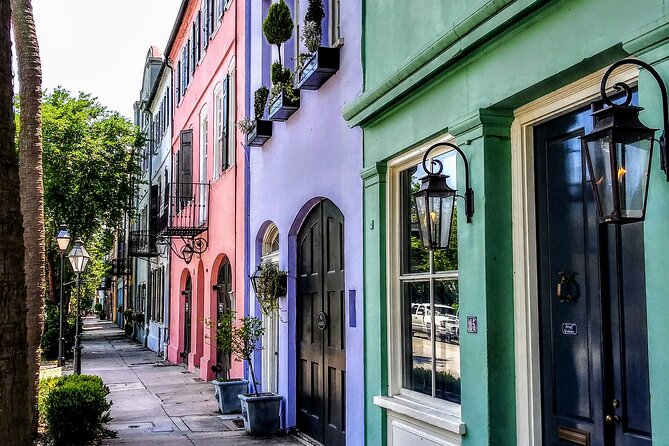
Next comes Rainbow Row, the famous row of colorful homes.
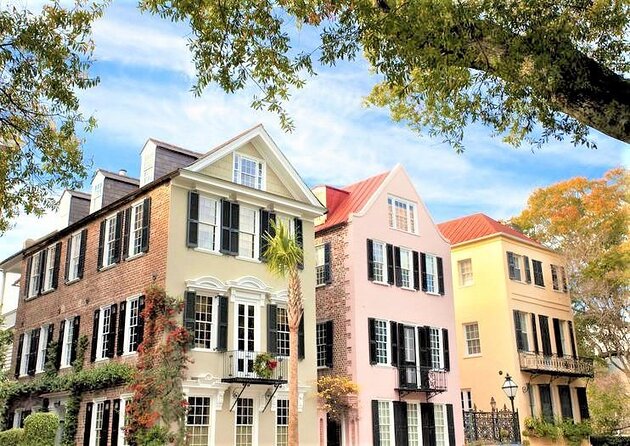
This stop is quick, but it’s useful. You’re not just taking a photo—you’re also being reminded how Charleston’s architecture, money, and social history all tie together. Even if you’ve seen Rainbow Row online, the guide’s framing can change how you read it in person.
Stop 8: Exchange Building and the Revolution
At the Exchange Building (dating to 1771), you’ll stand outside and talk about Charleston’s role in the American Revolution.
This is a great moment for understanding the city’s strategic importance. The history here isn’t abstract; it’s connected to location, shipping, and power.
Stop 9: Waterfront Park and the Pineapple fountain
The final stretch ends at Charleston Waterfront Park, with a harbor overlook and the Pineapple fountain in the area.
This ending is practical and photogenic. You’ve walked the historic core, and now you get an easy mental reset with views of the water.
Why the small group format changes everything
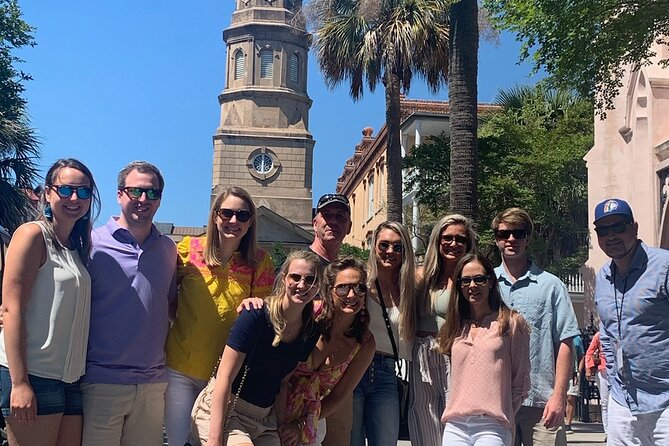
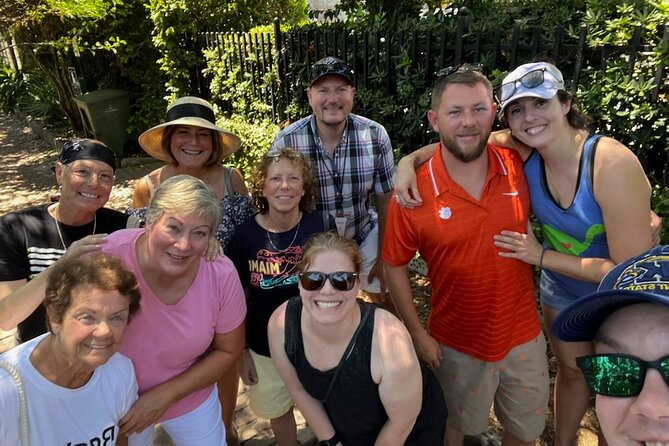
With up to 10 travelers, you tend to get a tour that feels like a conversation instead of a moving classroom. Adam’s style leans into storytelling with humor, and the group dynamic helps that land.
Here’s what this means for you:
- You’re more likely to hear answers to your questions on the spot.
- You’re less likely to feel rushed or drowned out.
- The guide can adjust the emphasis depending on what you care about—architecture, political history, or the human side of the past.
It also helps that some stops use supporting materials like photos, which makes long-ago details easier to picture as you’re standing there.
Timing, walking comfort, and what to bring
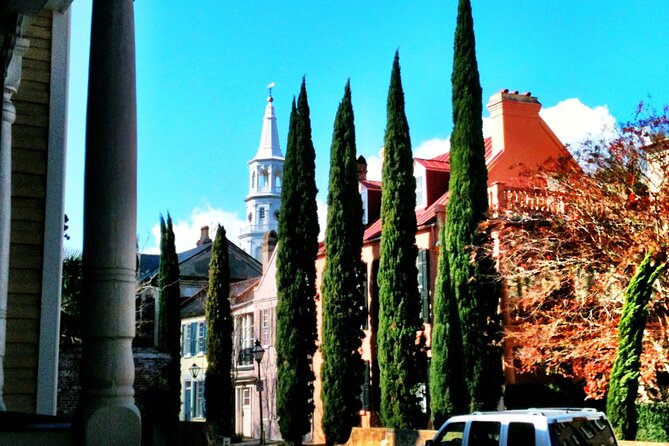
This is a walking tour with a moderate physical fitness level requirement. You’ll be on your feet, and downtown Charleston includes uneven ground and cobblestones.
I’d plan for:
- Comfortable walking shoes you actually like
- Water (bring more than you think)
- Bug spray
- An umbrella or rain coat, since it rains often in Charleston
Because the stops are short, you don’t want to be stuck fiddling with blisters or fighting an unexpected drizzle. Show up ready and you’ll enjoy the stories more.
Who should book this tour?
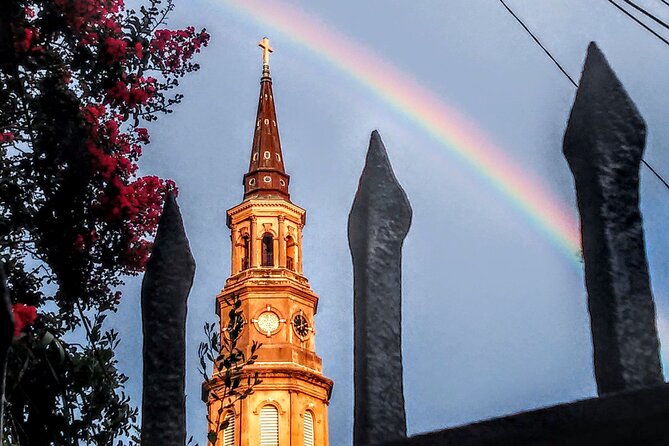
This tour is a strong match if:
- It’s your first visit and you want a fast, solid orientation to downtown Charleston
- You want history plus storytelling, not just dates
- You like your guide mixing humor with serious context
- You prefer small groups and easy-to-hear explanations
It’s also a good option for families and mixed-age groups, as long as everyone can handle steady walking and short stops. A couple of recent groups have mentioned it working well even with kids and teens, largely because the pace is structured and the guide keeps it engaging.
If you’re the type who wants long museum interiors or deep hands-on time, you’ll likely want to add separate museum visits after. This tour is designed to give you the map and the meaning, then let you go explore.
What to do right after the tour ends
When you finish at Waterfront Park near the Pineapple fountain, you’re set up for an easy transition into food and downtime.
One review noted that Adam shared a lunch recommendation like Blind Tiger, which landed well for that group. Since you’ll finish nearby and still have energy, it’s smart to ask Adam for a quick next-step suggestion while you’re wrapping up. You’ll get guidance tailored to your interests and what’s nearby.
Should you book this Charleston History Tour – Small Groups Only – History & Alleyways?
Book it if you want a high-value introduction to Charleston that focuses on context, not just checkpoints. The $28 price works well because you’re guided through key historic sites with free admission tickets, while the small-group size keeps the experience personal.
I’d skip it (or plan to supplement it) if you’re mainly chasing interior house tours or long museum time. This route is built around landmarks, streets, and guided discussion, not private-home access.
If your ideal day is: walk, learn, ask questions, take photos, and end with harbor views—you’ll like this one. And if the weather cooperates, it’s a smart first-day or mid-trip anchor tour to help everything else in Charleston make more sense.
FAQ
How long is the Charleston History Tour?
It’s listed as about 2 hours.
How many people are in a group?
The tour has a maximum of 10 travelers.
Where does the tour start and end?
It starts at 151 Meeting St, Charleston, SC 29401 and ends at Waterfront Park near the Pineapple fountain.
Is the tour mostly walking?
Yes. It’s a walking tour through downtown Charleston with a moderate physical fitness level.
What language is the tour offered in?
The tour is offered in English.
Are admission tickets included?
The tour description notes free admission tickets for the stops on the route.
What should I bring or wear?
Wear comfortable shoes for walking. Bring water, bug spray, and an umbrella or rain coat.
Are service animals allowed?
Yes, service animals are allowed.
What if the weather is bad or I need to cancel?
The tour requires good weather. If it’s canceled due to poor weather, you’ll be offered a different date or a full refund. You can cancel up to 24 hours in advance for a full refund; within 24 hours, the amount paid isn’t refunded.
What’s the best time to book?
You’ll likely want to book ahead since it’s often booked about 29 days in advance on average.