REVIEW · ATLANTA
Atlanta Then and Now Private History Tour
Book on Viator →Operated by Terminus Tours · Bookable on Viator
Atlanta changes fast, but its story doesn’t. This private 3-hour tour stitches together early Atlanta landmarks and modern reinventions, so you get meaning with your walking. I especially like the tight pacing and the way the route connects big eras in one morning or afternoon. I also like that the guide can tailor the talk to your interests, which is great when you want more than the usual facts. One thing to consider: with a 3-hour window, you’ll get smart highlights, not a slow wander of every side street.
You’ll start with Oakland Cemetery, a free stop that sets the tone immediately. Then you’ll move through the parts of Atlanta that became famous through major events, neighborhood growth, and public art. You’ll end with the Martin Luther King Jr. National Historic Site, another free stop that packs major sites into a focused visit.
The only drawback I’d flag is the time you’ll spend in transit between eras. The tour is built for comfort and efficiency in an air-conditioned vehicle, but you still won’t have hours at any single location—so go in with a few questions you care about.
In This Review
- Key highlights at a glance
- A 3-hour private loop that makes Atlanta’s changes make sense
- Oakland Cemetery: a free 30-minute start in Atlanta’s earliest chapter
- From Olympic-era Atlanta to first-suburb roots and a street-art tunnel
- Martin Luther King Jr. National Historic Site: free, focused, and deeply meaningful
- The 22-mile rails-to-trails project and what it means for how you move
- Chris and the art of tailoring a tour to your questions
- Price and value: what $140 per person is really buying
- Who this tour suits best (and who might want something else)
- Should you book the Atlanta Then and Now Private History Tour?
- FAQ
- How long is the Atlanta Then and Now private history tour?
- Is this tour private?
- Are there any ticket costs for Oakland Cemetery and the Martin Luther King Jr. National Historic Site?
- What stops are included on the tour?
- What will I see at the Martin Luther King Jr. National Historic Site?
- Does the tour include pickup?
- What’s included in the price besides the guide?
- What language is the tour offered in?
- Do I need to worry about cancellation?
- How do I access the tickets?
Key highlights at a glance

- Private, just-your-group format with a dedicated guide for real back-and-forth
- Free admission at both Oakland Cemetery and the Martin Luther King Jr. National Historic Site
- Comfort-first logistics, including air-conditioned transport, bottled water, and pickup
- Then and now in one loop, from 1850s roots to Olympic-era Atlanta and modern development
- A story guide you can steer, with topics adjustable on the fly (plus restaurant suggestions)
A 3-hour private loop that makes Atlanta’s changes make sense

Atlanta can feel like a patchwork at first glance: older buildings here, modern development there, and roads that grew faster than people can process. This tour helps you see the logic. You’re not just checking off famous sites—you’re getting a guided thread from early Atlanta through major civic moments and into today’s redevelopment.
The private format matters more than you’d think. A group tour often forces everyone to listen to the same script, at the same speed. Here, you’re with your guide and your group only, so you can ask follow-ups and steer the conversation. That’s especially helpful in Atlanta, where different neighborhoods can share a timeline but tell totally different stories.
I also like the practical setup. You get pickup, a mobile ticket, and an air-conditioned vehicle. Bottled water is included, so you don’t have to hunt for it when the schedule is moving. And since the tour runs about 3 hours, it fits cleanly into a day with minimal stress.
If you like history but hate slow, museum-only days, this is a strong match. You’ll get context while you’re moving, which is how cities make the most sense.
You can also read our reviews of more private tours in Atlanta

Oakland Cemetery: a free 30-minute start in Atlanta’s earliest chapter
Oakland Cemetery dates to 1850, and starting here is smart. It’s not just a scenic stop—it’s a quick way to understand that Atlanta’s growth has always come with community, change, and complicated legacies. In a short visit, you’ll focus on the cemetery’s role in the city’s early identity, not treat it like a checklist of graves.
The biggest value of a 30-minute cemetery stop is pacing. You’re given enough time to orient yourself and understand why people would consider this place foundational to Atlanta’s story. You also avoid the fatigue of spending too long on one location when the tour’s whole point is comparison—then and now, side by side.
A practical note: cemeteries invite walking and standing still for brief periods. If you’re sensitive to uneven ground or you’re traveling with mobility limits, it’s worth planning for slower movement and comfortable shoes. The tour is designed for most travelers, but this is still a cemetery—take it at an easy pace.
And because admission is listed as free, you’re not budgeting extra for tickets here. That makes it easier to keep the trip focused on the guide’s route and explanations.
From Olympic-era Atlanta to first-suburb roots and a street-art tunnel

After Oakland Cemetery, the tour shifts into the city’s more modern self—still grounded in the past. The next stretch connects major landmarks and neighborhood development that you’d otherwise struggle to piece together on your own.
Here’s what you can expect in this between-stops section:
- Areas built for the 1996 Olympics, the kind of place where a major event changes a city’s image and infrastructure
- A historic neighborhood dating to the late 1800s, which helps you see how community patterns formed long before today’s skyline
- Atlanta’s first suburb founded in 1890, a key detail because “suburb” didn’t mean the same thing then as it does now
- An iconic tunnel filled with colorful street art that connects historic neighborhoods
- A stop area built next to where Atlanta first started, giving you a sense of how the city’s geography shaped everything that followed
What I like about doing this part as a guided drive-and-walk mix is that it teaches cause and effect. The Olympics weren’t just a spectacle; they helped shape how public space, access, and tourism developed. The late-1800s neighborhood context helps you understand why Atlanta grew the way it did. And the first suburb detail is the kind of thing that makes you reconsider what you thought you knew about Atlanta’s expansion.
The street-art tunnel is one of those “you either know this exists or you don’t” stops. Even if you’ve walked Atlanta before, you may not have noticed this kind of link between neighborhoods. It’s a good reminder that public art isn’t separate from history—it often lives in the spaces where communities overlap.
If you’re the kind of traveler who likes photos, you’ll find plenty of strong visual moments here. Just keep in mind this isn’t a slow photo shoot; it’s timed so you can move on to the major national site next.
Martin Luther King Jr. National Historic Site: free, focused, and deeply meaningful
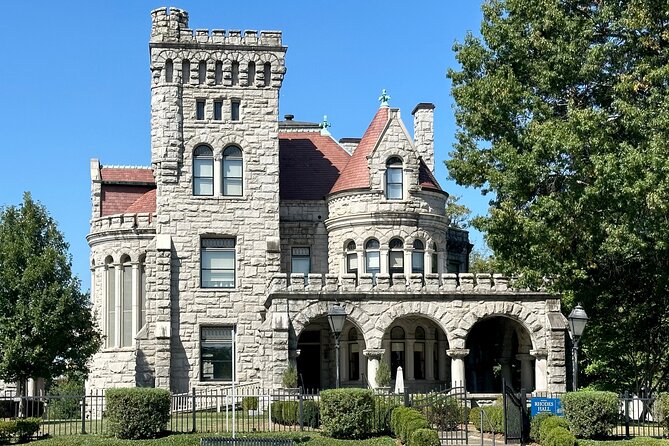
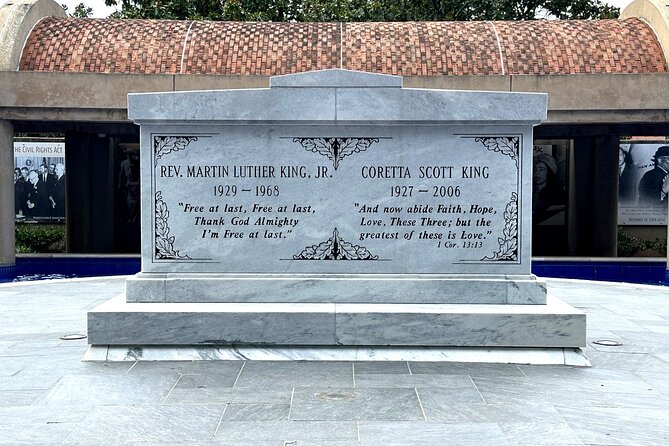
Your second anchor stop is the Martin Luther King Jr. National Historic Site, also with free admission, and your time there is about 30 minutes. This is where the tour’s “then and now” theme becomes most personal and purposeful.
Within that single stop, you’ll see the major components tied to Dr. King’s life:
- Ebenezer Baptist Church
- His birth home
- His gravesite
- Museums connected to the site’s interpretation
Doing all that in 30 minutes sounds tight, and it is. But the real value is that the guide helps you decide what to notice first—so you leave feeling oriented instead of rushed. In many self-paced visits, people wander into the museums and then lose the bigger framework. With a guide, you get the storyline that ties the church, home, gravesite, and museum content together.
Even if you think you already know the basics, I’d still treat this as a “re-orientation” stop. A good guide can point out what visitors usually miss: where the emotional weight shifts, what details are most relevant, and why these sites were preserved in the first place.
One practical consideration: this is a site you’ll want to move respectfully and at a controlled pace. Dress for walking, and be ready for moments where you’ll want a quiet pause rather than constant sightseeing.
The 22-mile rails-to-trails project and what it means for how you move
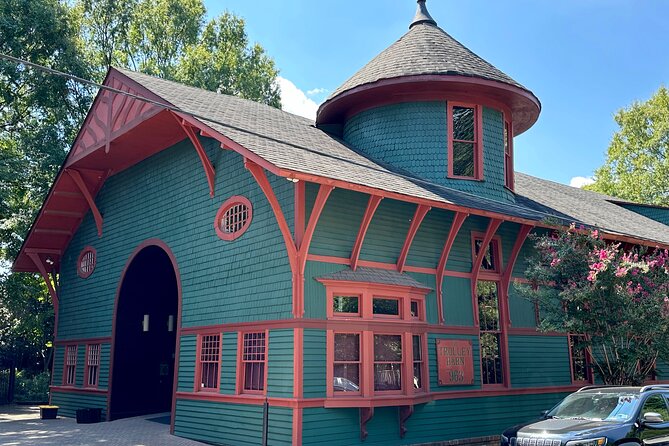
The tour doesn’t stop at memorial sites and older streets. It also includes Atlanta’s ambitious 22-mile rails-to-trails project—the kind of ongoing change that shows you how cities keep rewriting themselves.
The way the tour frames it is useful: it’s not only “a cool bike or walking path.” It’s driving development and changing how people move through the city. In other words, it’s transportation and neighborhood impact working together.
Why this matters for you: it gives context for what you’ll see later in your own exploration. If you visit Atlanta after the tour, you’ll start noticing how new connections between areas affect foot traffic, business growth, and daily routines.
Even if you’re not planning to bike or walk the whole thing, learning how it works helps you read the city better. You’ll understand why certain areas feel more linked today than they did in earlier decades.
And because your tour time is limited, getting this overview as part of a guided route is a smart way to avoid missing it entirely.
You can also read our reviews of more historical tours in Atlanta

Chris and the art of tailoring a tour to your questions

The strongest praise for this tour centers on the guide—Chris. The common theme is that he’s friendly, and he talks like he loves Atlanta, not like he’s reciting a script. The other big win: he can fine-tune topics while staying on schedule, so your group doesn’t feel like you’re losing time just because you asked questions.
Chris also earns points for practical help beyond history. Several guests highlight that he offers excellent restaurant recommendations. That’s the kind of detail that makes a tour feel like it pays off immediately, not just academically.
There’s also real flexibility noted—Chris structured the tour around the group’s interests and could accommodate an earlier time schedule when needed. That matters in a city where plans change, weather happens, and travel days get complicated.
If you’re visiting with a parent, that personal tailoring becomes even more valuable. A good guide can slow down where questions need time and speed up where your group is already confident. That keeps everyone engaged instead of letting one person get bored while another gets overwhelmed.
Price and value: what $140 per person is really buying
At $140 per person for about 3 hours, this tour isn’t the cheapest way to learn Atlanta. But private history tours cost money for a reason: transportation, guide time, and the fact that you’re not competing with other groups for attention.
Here’s what you’re getting for the cost, based on what’s included:
- Private transportation in an air-conditioned vehicle
- Bottled water
- Pickup offered (with the guide contacting you 24 hours before to confirm pickup details)
- A private experience for just your group
- Mobile ticketing
- English language service
When private tours are priced well, it’s because they save you hassle and make your time count. This tour helps you do both. Instead of figuring out where to go first, how to connect neighborhoods, and which sites deserve your limited sightseeing hours, you follow a plan built around major story points.
And because key stops list free admission (Oakland Cemetery and the MLK National Historic Site), you’re not paying extra on the spot just to participate.
If your group includes two or three people, the private format can feel even better value because you’re paying for the guide and vehicle, not for additional tickets or museum entries.
One more planning tip: it’s often booked about 56 days in advance. If your dates are firm, don’t wait until the last couple of weeks.
Who this tour suits best (and who might want something else)
This tour is a great fit if you:
- Want a guided narrative rather than random sightseeing
- Like history but prefer it explained in city context, not only in indoor spaces
- Enjoy neighborhoods as stories, not just photos
- Want a private experience with room for questions
- Appreciate practical add-ons like restaurant ideas
You might think about a different option if you:
- Want a very long, self-paced visit with lots of time in museums
- Are comfortable building your own itinerary and don’t need help connecting areas
- Need extensive time at a single landmark, since this is built as a highlight loop
For most people, though, the mix works: cemetery foundations, neighborhood development, major civic landmarks, then a focused stop at the MLK National Historic Site, topped off with a look at how modern Atlanta is changing movement across the city.
Should you book the Atlanta Then and Now Private History Tour?
Book it if you want Atlanta explained in a way that feels practical and personal. The two biggest reasons: you get a clean then-and-now storyline across multiple eras, and you’ll likely love the guide approach—especially Chris, with his friendliness, flexibility, and ability to answer questions without losing momentum.
If you only have a limited time window and you want to stop guessing and start understanding the city, this is a smart use of your day. The route also includes free major stops, which keeps the trip focused and lowers surprise costs.
If you’re already comfortable with Atlanta’s layout and prefer to wander slowly on your own, you might find this tour less essential. But for a first-time trip—or for a return visit where you want to see what you missed—this kind of private structure tends to pay off fast.
FAQ
How long is the Atlanta Then and Now private history tour?
It lasts about 3 hours (approx.).
Is this tour private?
Yes. It’s a private tour/activity, and only your group participates.
Are there any ticket costs for Oakland Cemetery and the Martin Luther King Jr. National Historic Site?
Oakland Cemetery is listed as free admission, and the Martin Luther King Jr. National Historic Site is also listed as free admission.
What stops are included on the tour?
The tour includes Oakland Cemetery and the Martin Luther King Jr. National Historic Site, plus guided stops around other major Atlanta sights and neighborhood areas between them.
What will I see at the Martin Luther King Jr. National Historic Site?
You’ll visit key areas including Ebenezer Baptist Church, the birth home, the gravesite, and museums.
Does the tour include pickup?
Pickup is offered, and the guide will contact you 24 hours before the tour to confirm your pickup details.
What’s included in the price besides the guide?
Included items are bottled water, an air-conditioned vehicle, and private transportation.
What language is the tour offered in?
It’s offered in English.
Do I need to worry about cancellation?
You can cancel for a full refund if you cancel at least 24 hours in advance.
How do I access the tickets?
You receive a mobile ticket.
If you tell me your travel dates and who’s in your group, I can suggest the best time of day to do this so it pairs well with the rest of your Atlanta plans.