REVIEW · PORTO
Braga Heritage Walking Tour
Book on Viator →Operated by Trek Portugal · Bookable on Viator
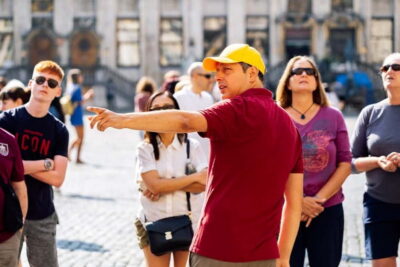
Braga is where old Portugal feels close and real. This full day from Porto packs in the UNESCO Bom Jesus do Monte sanctuary, plus a guided walk through key Braga landmarks, with the bonus that you get tour photos so you can actually enjoy the views. I also like the small group size (max 6), which means you’re not lost in a crowd and you can ask questions in plain English.
My main caution is time on your feet. You’re looking at about 9 hours for the whole day, including a hill-top visit where you can either ride the funicular or climb the famous stairs, so comfortable shoes and a steady pace matter.
In This Review
- Key highlights that make this day tour work
- Porto to Braga: a full day that stays organized
- Braga on foot: how the city’s layers come into focus
- Igreja da Lapa: a quick stop with a surprisingly human story
- The old castle keep and the Santa Barbara pause
- Arco da Porta Nova: the joke locals repeat, and why it matters
- Se de Braga cathedral: chapels, high choir, and the treasury-museum
- Bom Jesus do Monte: UNESCO, the funicular, and the choice to climb
- Price and value: is $150.20 a fair deal?
- Timing and logistics: what to plan for during the day
- Who should book this Braga heritage day tour
- Should you book? My take
- FAQ
- How long is the Braga Heritage Walking Tour?
- Is pickup and drop-off included, and where do we meet?
- What’s included in the tour price?
- Is lunch included?
- What group size is this tour?
- What is the cancellation policy if weather is bad or plans change?
Key highlights that make this day tour work
- UNESCO Bom Jesus do Monte with the funicular ride (or the option to climb)
- Small group up to 6 for more guide attention and smoother timing
- Photos provided after the tour so you can focus on sights instead of constant screen time
- Se de Braga (Braga Cathedral) visit with chapels, high choir, and treasury-museum
- Braga’s “Portuguese Rome” context tied to Roman Bracara Augusta and later centuries
- Pickup and drop-off from Porto in an air-conditioned vehicle, plus entrance fees included
Porto to Braga: a full day that stays organized
This is a guided full day tour from Porto with a start time of 8:30 am. You meet at Av. dos Aliados 266, 4000-125 Porto, and the day ends back at the same place. The ride is by air-conditioned vehicle, and you’re covered with insurance, fees, and taxes included in the price.
That matters because Braga isn’t next door, and spending your morning on transit without stress makes a big difference. Also, the tour uses a mobile ticket, and it’s offered in English, so you won’t be juggling translations while you’re trying to read monuments.
You can also read our reviews of more walking tours in Porto
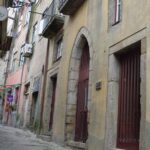
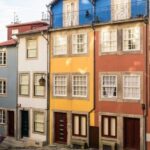
Braga on foot: how the city’s layers come into focus
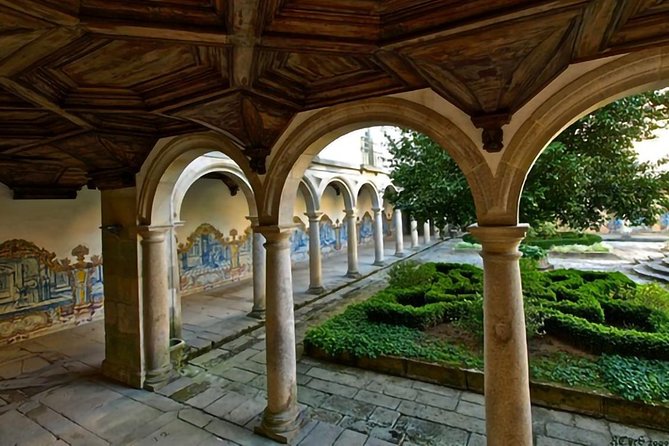
Your first stop is Braga itself, and the guide’s job is to help you connect the dots. Braga has a long timeline—Roman-era roots through modern life—and it shows in how churches, neighborhoods, and public spaces sit side by side.
Two things I love about this part of the day:
1) you get the feeling of Braga as both ancient and current, not stuck in a museum box, and
2) you hear why the area is tied to the Minho region and its connection to Bom Jesus and the tradition of the Sacro-Monte.
This is the segment where you’ll learn why Braga is sometimes called Portuguese Rome. The city’s Roman legacy connects to Bracara Augusta, and once you hear that framing, the monuments don’t feel random. You start noticing the same way different centuries leave their handwriting all over the city: churches, older houses, gardens, and the rhythm of streets shaped by generations.
If you like walking with purpose, this first “Braga city” hour sets you up well. You’ll know what you’re seeing before you arrive at the heavy-hitters later in the day.
Igreja da Lapa: a quick stop with a surprisingly human story
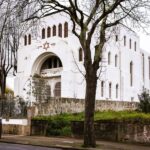
Next is Igreja da Lapa, a short visit designed to stop you from missing the small, meaningful details. It’s only about 15 minutes, but there’s an interesting backstory behind how it looks the way it does.
The church’s appearance is tied to a religious event connected to a priest and canon who preached in Portugal. During that time in 1757, Braga held a religious event in a specific arcade space, and that devotion grew strong enough that the archbishop authorized construction of a chapel. In other words, you’re not just ticking a church off a list—you’re hearing how belief and community helped shape the built environment.
Practical tip: because this is quick, have your camera ready, but don’t forget to look up. These smaller churches often reward slow glances at façades and details.
The old castle keep and the Santa Barbara pause
Braga gives you a medieval moment with what’s left of the city’s old castle: the keep. It’s described as the city’s last major remnant at the highest point of the medieval town, with a coat of arms above the door. The keep appears in documents from the early 14th century, and construction came after invasions in 1369. Later, the castle was demolished in 1906, though traces of its towers survive.
Then comes a calmer break: Jardim de Santa Barbara. This is a small public garden next to the 14th-century Archbishop’s Palace, designed in the Romantic style (laid out in the 1950s). You’ll see how the garden uses the old medieval arches from a palace arcade, plus features like geometric paths and historic elements such as statues and coats of arms.
At the center is a fountain with a statue of Saint Barbara. For me, this is the kind of stop that keeps the day from becoming nonstop “look, look, look.” It’s about 20 minutes, and it gives your legs a reset while you still stay in the story of Braga’s past.
Arco da Porta Nova: the joke locals repeat, and why it matters
Then you hit one of Braga’s most recognizable structures: Arco da Porta Nova. This isn’t a stop just for photos. It connects architecture to everyday language.
It’s linked to an expression people use when someone is from Braga: the idea that the arch is tied to a phrase about leaving a door open. Even if you don’t catch every word, the guide’s explanation helps you understand why this arch is so “Braga” in the first place—urban planning, local identity, and a bit of humor baked into stone.
It’s also a short stop, about 10 minutes, so it works well between longer visits. If you like street-level landmarks, make sure you pause long enough to see the arch from more than one angle.
You can also read our reviews of more historical tours in Porto

Se de Braga cathedral: chapels, high choir, and the treasury-museum
This is one of the biggest time blocks of the day: about 2 hours at Se de Braga (Braga Cathedral). You’re visiting not just the main church, but also the chapels, the high choir, and the Treasury-Museum.
This is where a guided visit really pays off. Cathedral spaces can feel endless if you don’t know what you’re looking at, and the guide helps you focus your attention on the most meaningful sections. Even better, the entrance to these parts is included as part of the tour price.
What you should expect:
- multiple spaces with different functions and artistic focuses
- time spent inside rather than only outside viewing
- a chance to see why this cathedral matters beyond its walls, since it’s the seat of the archdiocese and is associated with major roles in Portugal and Spain
The time here isn’t rushed on paper, but it still feels like a concentrated visit. If you want to take photos, be mindful of where photography rules may be stricter in older chapels or museum areas.
Bom Jesus do Monte: UNESCO, the funicular, and the choice to climb
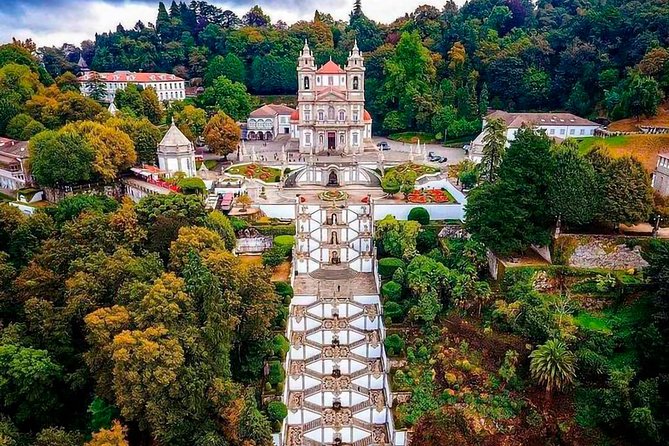
The day culminates at Bom Jesus do Monte, the UNESCO World Heritage Site. You’ll spend about 1 hour here, and this stop is the classic payoff for doing the day tour.
You have two ways to reach the sanctuary:
- ride the lift/funicular, described as one of the oldest in the world and still operating, moved by counterbalance of water
- or climb the majestic stairs if you prefer walking the whole way
Once you’re up there, the payoff is big: you get views over Braga, and you’re walking a pilgrimage-style setting rather than a typical viewpoint platform. The sanctuary itself is the core of the experience, but the stairs and the ride make it memorable because the journey is part of the ritual.
If you’re deciding between funicular and stairs: pick the option that matches your energy. You don’t get extra time for being slower or stopping too long, so plan for your pace and enjoy it without rushing.
Price and value: is $150.20 a fair deal?
At $150.20 per person for about 9 hours, the main question is what you’re actually paying for. This isn’t just transport. The tour price includes a lot of the overhead that can add up on a self-planned day trip.
What’s included:
- pickup and drop-off in an air-conditioned vehicle
- entrances to monuments
- lift to Bom Jesus do Monte
- insurance, fees, and taxes
- a guided day in English
- photo support after the tour
What’s not included: lunch and anything else you choose to buy on your own.
Here’s the practical value argument: if you try to DIY a day across Braga’s main heritage sites, you’ll spend time figuring out tickets, transit, and how long everything takes. This tour bundles the key entries and transport into one plan, then uses the guide to connect the dots so you don’t just see buildings—you understand why they’re there.
The icing on the cake is the max group size of 6. Paying more for a crowded tour gets tiring fast. Paying this price for fewer people usually feels more personal and less stressful.
Timing and logistics: what to plan for during the day
Start is 8:30 am from Porto, and you’re back by the end of the full day. Because weather matters, the tour notes that it requires good weather. If conditions are poor, you’re offered a different date or a refund.
Also plan for a day that mixes:
- short focused stops (like Igreja da Lapa and Arco da Porta Nova)
- longer indoor time (Se de Braga)
- hill-top time at Bom Jesus, with walking choices
Bring a light snack plan since lunch isn’t included. Even if you stop for food on your own, don’t count on it being quick at every moment. Pack water and plan for some uneven walking surfaces typical of older city centers.
Who should book this Braga heritage day tour
This works especially well if you want:
- a guided heritage day without charting every ticket yourself
- a small-group pace where you can ask questions
- a strong end highlight at Bom Jesus do Monte with a real view payoff
It may not be your best fit if you hate long days on foot or you struggle with hills. The tour says most travelers can participate, but you’ll still be dealing with the reality of the Bom Jesus area and the choice between funicular ride and stairs.
One more note worth your attention: the guide name Ricardo shows up in the strongest recommendations, with praise for being friendly and for having plenty of detail so the day feels organized instead of chaotic.
Should you book? My take
If you’re doing Porto and want one memorable heritage day beyond the waterfront, this is a solid way to go. The UNESCO stop at Bom Jesus do Monte is the headline, but the value is how the guide ties together Braga’s layers—from Portuguese Rome and Roman connections, to cathedral interiors, to medieval remnants—without turning the day into a blur.
Book it if you want a plan with less guesswork and more explanation. Skip it (or consider a lighter option) if you only want easy, flat walking or you’re the type who prefers to wander without a schedule.
FAQ
How long is the Braga Heritage Walking Tour?
The tour runs about 9 hours.
Is pickup and drop-off included, and where do we meet?
Yes. Pickup and drop-off are included, and the meeting point is Av. dos Aliados 266, 4000-125 Porto, Portugal. The tour ends back at the same meeting point.
What’s included in the tour price?
The price includes the full-day tour, air-conditioned transportation with pickup/drop-off, entrance to monuments, the lift to Bom Jesus do Monte, and insurance, fees, and taxes.
Is lunch included?
No. Lunch is not included.
What group size is this tour?
This experience has a maximum of 6 travelers.
What is the cancellation policy if weather is bad or plans change?
You can cancel for a full refund if you cancel at least 24 hours before the start time. The tour requires good weather; if it’s canceled due to poor weather, you’ll be offered a different date or a full refund.