REVIEW · BERLIN
East Berlin Food & History Tour with Eating Europe
Book on Viator →Operated by Eating Europe Food Tours Berlin · Bookable on Viator
Food and the Berlin Wall on one walk. I love that the price covers the tastings, so you can focus on eating instead of paying for every stop. I also love how guides connect each bite to East Berlin’s changing mix of communities, from Turkish and Middle-Eastern street food to Vietnamese flavors, not just German classics. One thing to plan for: if you have severe or life-threatening food allergies, this tour can’t guarantee safe handling.
This is a 3.5-hour walking tour in English with a maximum of 12 people, which keeps the pace friendly and questions flowing. You’ll start at Haroun in Friedrichshain and finish near a cluster of East Berlin landmarks, with craft beer included along the way. Come hungry and leave room for variety, because some dishes may not be what you’d call traditional German.
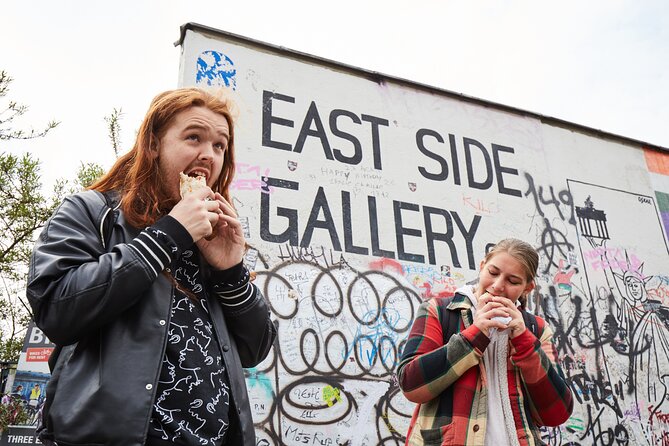
The stops aren’t just food counters either. You’ll walk through spaces tied to the rail, Soviet-era industry, and today’s street art and nightlife. And yes, you’ll end at the longest surviving stretch of the Berlin Wall at East Side Gallery, where the murals have been there for over twenty years.
In This Review
- Key highlights worth planning for
- East Berlin’s food scene, explained through real streets
- Price and value: what $107.68 buys you
- Beer, tastings, and the pace of 3.5 hours
- Your stop-by-stop route through East Berlin
- Stop 1: Boxi Spätshop and the Berliner Kindl beer story
- Stop 2: Haroun döner, and why Berlin street food is a two-way story
- Stop 3: NYOM Restaurant and TyTy Tacos with Vietnamese street-food energy
- Stop 4: RAW-Gelände, from repair yard to alternative culture hub
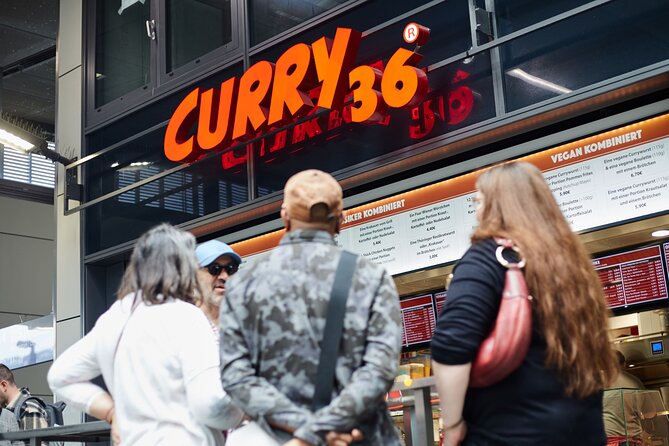
- Stop 5: Warschauer Straße currywurst, and how the icon got made
- Stop 6: Schnitzel Burger, Berliner Pilsner, and East Berlin endgame history
- Stop 7: East Side Gallery, the longest surviving Wall stretch
- Stop 8: Aleppo Supper Club for Syrian and Levante mezze
- Stop 9: A squat house space with political, educational, and concert roots
- Guides make or break it, and here that’s the main strength
- Dietary needs and who should book
- Where you start and where you end
- Should you book this East Berlin Food & History Tour?
- FAQ
- What is the duration of the East Berlin Food & History Tour?
- How much does it cost, and what language is it in?
- Are tastings and beer included?
- What are the start and end locations?
- Can the tour accommodate dietary requirements?
- What if I’m traveling with young children?
Key highlights worth planning for
- No-pay-for-each-tasting setup: most tastings are included, so your budget stays simple
- Craft beer shows up more than once (including Berliner Kindl and Berliner Pilsner)
- Immigrant food as Berlin history: Turkish, Middle-Eastern, and Vietnamese dishes appear for a reason
- Wall art at the end, not just a photo stop: you’ll see why East Side Gallery matters
- Small group size (max 12): easier to hear the guide and take your time between bites
- A mix of classic and unexpected: currywurst, döner, TyTy Tacos, schnitzel burger, Syrian mezze
East Berlin’s food scene, explained through real streets
East Berlin is one of those places where food tells the story of migration, politics, and everyday survival. This tour leans into that idea hard. You don’t just sample flavors; you get the backstory of how street food and restaurant culture took shape as communities settled into the city.
I like tours that treat food as a lens, not a prop. Here, each stop connects to a chapter: the German beer tradition, the Turkish and Middle-Eastern street-food lineage, the Vietnamese street-food influence, and the Syrian Levant mezze table. The result is a walk that feels like Berlin, not a theme park of dishes.
And because the group is capped at 12, you don’t get stuck behind someone’s shoulder at every photo moment. That matters with street art spots and tight storefront tastings. You can actually listen.
You can also read our reviews of more food & drink experiences in Berlin
Price and value: what $107.68 buys you
At $107.68 for about 3 hours 30 minutes, this isn’t a bargain for quantity if you’re thinking in terms of calories alone. But it’s strong value for what’s included. The big deal is that you don’t have to pay separately for tastings at the stops, and craft beer is part of the plan rather than an optional add-on.
Some locations are free to enter as part of the experience, while others include admissions tickets. That keeps the tour from turning into a series of surprise costs. In practical terms, it also means you can plan meals around the tour without constantly negotiating your wallet.
Also, the tour includes local English-speaking guidance plus Food & the City insider tips. Those tips are the kind that help you spend your remaining time in Berlin better—where to go next, what to look for, and how neighborhoods connect.
Beer, tastings, and the pace of 3.5 hours
This tour is designed around multiple tasting moments, not one big meal. That’s why pacing matters. You’ll likely move from shop to shop in Friedrichshain and nearby streets at a steady walking rhythm, with short time windows for each stop.
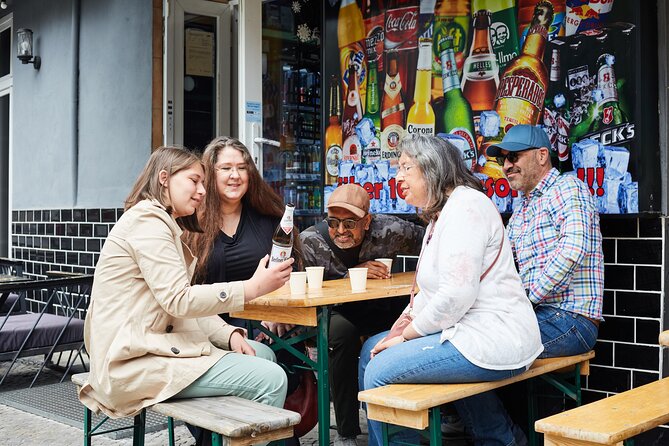
Craft beer is included, including Berliner Kindl (Light) beer at the early stop and Berliner Pilsner beer at the final food-and-talk stop. If beer is your thing, that’s a nice bonus. If you’re not a beer person, you’ll still get a lot of food variety and the history pieces.
Bring water. You may want it between stops, especially if you’re doing currywurst and schnitzel burger back to back. And I’d follow the best advice from past groups: show up with an appetite. Skipping breakfast is a common move when tastings are the main event.
Your stop-by-stop route through East Berlin
Below is the shape of the walk, with what each stop adds to the story. Exact offerings can shift by day or season, but the core idea stays the same: food plus East Berlin context.
Stop 1: Boxi Spätshop and the Berliner Kindl beer story
You start at Boxi Spätshop on Boxhagener Straße. It’s a small liquor store, the kind of place where locals grab a drink and keep their evening plans moving. Here, you’ll have a popular German beer and learn about its origins.
This is a smart opener. Before you hit the immigrant food story, you get grounded in a German brewing tradition. It also sets you up for the idea that Berlin’s identity isn’t one note; it’s layered and has roots you can trace.




Stop 2: Haroun döner, and why Berlin street food is a two-way story
Next up is Haroun, a Shawarma Döner eatery. This stop is about dual history: how street food in Berlin developed alongside Turkish and Middle-Eastern immigration.
You get the food, and you also get the cultural logic. Street food travels. Berlin adapted it. That’s why döner in Berlin isn’t just a dish; it’s part of the city’s social map.
Stop 3: NYOM Restaurant and TyTy Tacos with Vietnamese street-food energy
Then you’ll head to NYOM Restaurant, a neon-lit Vietnamese spot. The tasting highlight here is TyTy Tacos, with an emphasis on street food flavors that feel playful but serious.
This stop matters because it shows how Berlin didn’t only keep traditional German routes alive. It built new ones. Vietnamese street food fits into Berlin’s ongoing love of quick, flavorful meals that work on the move.
Stop 4: RAW-Gelände, from repair yard to alternative culture hub
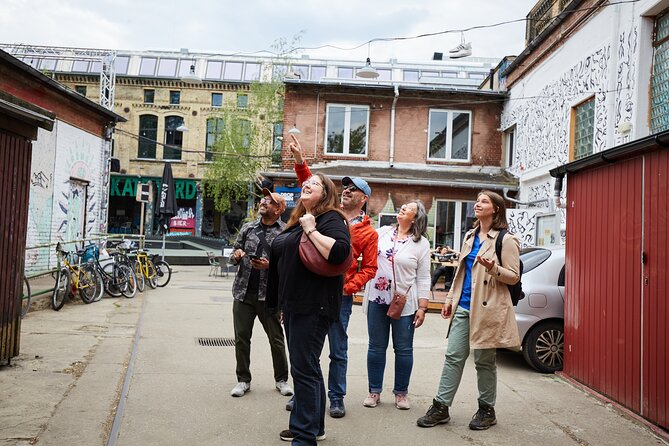
After eating, you’ll walk through RAW-Gelände, a site with a long industrial past. It’s been an imperial rail repair yard, a Soviet factory, and later a Deutsche Bahn warehouse. Today it’s home to art galleries, indie record companies, night clubs, beer gardens, a bouldering hall, and the largest indoor skate park in Berlin.
This is where the tour shifts from food identity to place identity. Even if you don’t skate or climb, you can see why East Berlin became a magnet for alternative culture. Old infrastructure gets reused, not erased.
One caution: the tour only gives a short window here, so don’t count on wandering forever. Use it to read the vibe, grab photos, then keep the pace.
Stop 5: Warschauer Straße currywurst, and how the icon got made
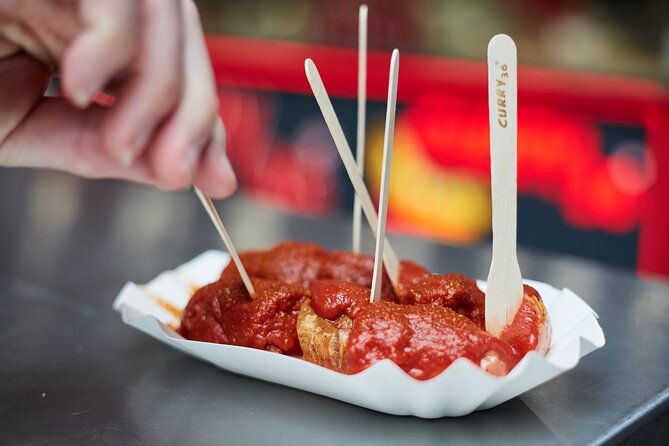
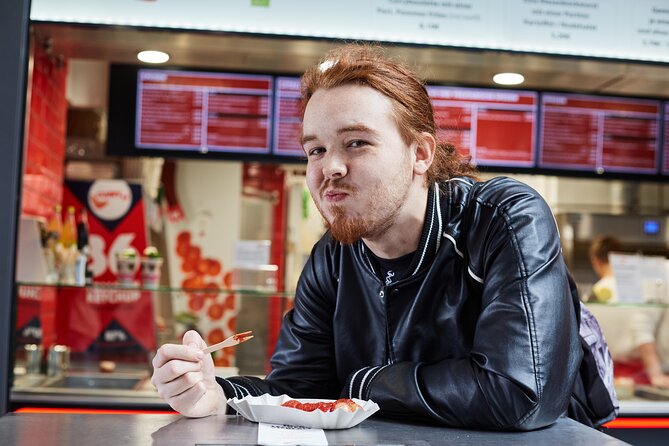
Warschauer Straße is currywurst country. Here you’ll try what’s described as the best and most famous currywurst in Berlin. You’ll also learn how this iconic street food was created.
I like this stop because currywurst is simple on paper but complicated in practice. The sauce, the preparation, and the serving culture all matter. You’ll leave understanding why people argue about currywurst like it’s a sport.
If you’re picky about spice or sauce, tell your guide at the start. The tour can accommodate some dietary needs, but you’ll be happier if you align expectations early.
Stop 6: Schnitzel Burger, Berliner Pilsner, and East Berlin endgame history
Your next stop combines food, beer, and a heavier historical chapter. You’ll try a Schnitzel Burger plus Berliner Pilsner at the final restaurant/club-style stop. The guide also talks about life toward the end in East Berlin and events leading to the fall of the Berlin Wall.
This is the kind of stop where it helps to pause and listen. The change from casual eating to political context is part of the point. It also makes the Wall section at the end feel earned instead of tacked on.
Stop 7: East Side Gallery, the longest surviving Wall stretch
Then you’ll reach the East Side Gallery. This open-air gallery centers on the longest surviving stretch of the Berlin Wall, about 1.3 miles from end to end. The individual mural segments have been coated in colorful, often politically themed art for over twenty years.
This is your big visual payoff. You’ll see history in layers: the Wall as a former barrier, and the art as a way of remembering while moving forward. It’s hard to rush it—so don’t.
Stop 8: Aleppo Supper Club for Syrian and Levante mezze
Next is Aleppo Supper Club, a Syrian restaurant serving Levante cuisine. You’ll try a traditional mezze dish. This stop continues the immigrant-food theme with a table-style tradition: small plates, shared flavors, and a sense of hospitality.
It’s a nice reset after the Wall art. Instead of only seeing history as images and politics, you end up tasting culture in a way that’s about daily life.
Stop 9: A squat house space with political, educational, and concert roots
The tour also includes time at one of the last remaining Berlin squat houses. These spaces have hosted political and educational events and activities, alongside live concerts, for nearly a decade.
This final cultural stop keeps the tour grounded in living Berlin. It’s not only about what happened; it’s about how communities build spaces and momentum now.
Guides make or break it, and here that’s the main strength
The best part of this experience is the way the guide ties it all together. Names you might see leading the tour include Clara, Eden, Lily, Jed, and Laura, and the consistent thread is the same: humor plus history plus food logic.
What you’re really getting is a storyteller who can answer the basic questions, like why a dish shows up in Berlin, and also the deeper ones, like how East Berlin life shaped what people ate and where they gathered. That combination shows up in the way the tour flows from storefront to street art to Wall context.
Because the group is small, you get more of that back-and-forth than you would on a bigger tour. You’re less likely to feel like a passenger and more like an active participant.
Dietary needs and who should book
If you eat vegetarian or have gluten-free needs, the tour can make an effort to accommodate you. But the tour can’t take responsibility for severe or life-threatening food allergies. If that’s your situation, it’s safer to avoid this specific experience unless you can confirm your risk level with the operator ahead of time.
This tour is also described as suitable for most travelers and allows service animals. It’s an easy pick if you want a walking food-history combo without getting stuck on a long museum day.
Who it suits best:
- Food lovers who want a story behind the dish
- People who like street-level Berlin over big-ticket sights
- First-timers who want a focused slice of East Berlin in one afternoon
- Anyone who enjoys beer with their history lectures
Who might reconsider:
- Anyone with severe food allergy concerns
- People who hate walking through multiple neighborhoods and don’t like tasting-format meals
Where you start and where you end
You meet at Haroun at Neue Bahnhofstraße 28, 10245 Berlin. The tour ends at Mühlenstraße 78, 10243 Berlin.
That end point matters because you’ll be positioned near East Berlin landmarks you can keep exploring after the tour. If you want to squeeze in more time for photos or a late dinner, plan accordingly.
Should you book this East Berlin Food & History Tour?
I’d book this tour if you want East Berlin in a way that feels personal and practical: eat multiple cuisines, learn why they show up, and finish with Wall art that you can actually see and understand.
It’s also a strong choice if you’re watching your spending during your trip. The tastings and craft beer are built in, and the small-group size makes it easier to enjoy the stops rather than just pass through them.
Skip it only if you’re dealing with severe allergies you can’t safely manage, or if you prefer a purely traditional German meal-focused route. This one is about Berlin as a mixing bowl.
If you do book it, do one thing: come with space in your stomach and questions in your pocket. That’s when this tour really pays off.
FAQ
What is the duration of the East Berlin Food & History Tour?
The tour runs for about 3 hours 30 minutes.
How much does it cost, and what language is it in?
It costs $107.68 per person and is offered in English.
Are tastings and beer included?
Tastings are included as part of the tour, and craft beer is included as well (including Berliner Kindl at the start and Berliner Pilsner at the later stop).
What are the start and end locations?
The tour starts at Haroun, Neue Bahnhofstraße 28, 10245 Berlin, and ends at Mühlenstraße 78, 10243 Berlin.
Can the tour accommodate dietary requirements?
The operator says they’ll do their best to accommodate vegetarians, gluten-free guests, or other dietary needs. The experience isn’t suitable for guests with severe or life-threatening food allergies.
What if I’m traveling with young children?
Children under 4 can join for free, but food is not included. Paid tickets with food included are available for ages 4 and up.