REVIEW · BANGKOK
Bangkok’s Three Iconic Temples: Wat Traimit, Wat Pho & Wat Arun
Book on Viator →Operated by Sightseeingbangkok.com · Bookable on Viator
Bangkok’s temples feel endless until you have a plan. This tour strings together Wat Traimit, Wat Pho, and Wat Arun with a guide to help you make sense of what you’re looking at, then finishes with a river cruise. I love that the pace is built for real sightseeing time, not long, boring gaps. I also like that you get temple admission included while still having a human guide leading the way. One thing to consider: you only get about 30 minutes at each temple, so if you want slow, deep wandering, you may want extra time on your own afterward.
You’ll ride in an air-conditioned vehicle and keep things comfortable with a small group cap of 15. If you’re doing this as a first-time Bangkok hit, it’s a smart way to get your bearings fast—and you won’t feel like you’re pushing through a crowd without context. Guides are typically professional and English speaking, and I’ve heard examples like Cindy—friendly, informative, and easy to follow—so you’re not left guessing.
Dress matters here. You’ll be walking in temple areas where modest clothing is strongly recommended: shoulders and knees covered, loose lightweight layers if you’re visiting in the heat.
In This Review
- Key things to know before you go
- Bangkok’s Golden Buddha, Reclining Buddha, and Dawn Temple Route
- Price and what $132.94 really buys
- Getting around: pickup, meeting point, and avoiding Bangkok hassle
- Wat Traimit: the Golden Buddha and Chinatown energy in 30 minutes
- Wat Pho: the Reclining Buddha stop that teaches you how to look
- Wat Arun: the riverside Temple of Dawn and why it looks different
- The sightseeing cruise after temples: a breather with better views
- Why the small group feel (max 15) matters
- Temple etiquette and what to wear in Bangkok
- How the itinerary hangs together (and why that order works)
- Who this tour fits best
- Should you book this Bangkok temples and cruise tour?
- FAQ
- How long is the tour?
- Is hotel pickup included?
- Where do I meet the guide if I’m joining from Saphan Taksin?
- What temples are included?
- Are admission tickets included?
- Is the tour private or small group?
- Does the price include the cruise?
- Is the guide available in English?
- What should I wear for temple visits?
- Is there a mobile ticket?
Key things to know before you go
- Three famous temples, one efficient route: Wat Traimit, Wat Pho, and Wat Arun, each with ticket time included.
- About 30 minutes per temple stop: enough to see the big icons without turning it into a half-day shuffle.
- A real local guide, English speaking: the route works because someone explains what matters and what to ignore.
- Small group size (max 15): you should feel less packed in than most mass tours.
- Air-conditioned transport: a lifesaver in Bangkok weather between stops.
- Ends with a sightseeing cruise: you switch from temple visuals to river views before you burn out.
Bangkok’s Golden Buddha, Reclining Buddha, and Dawn Temple Route
This is the kind of tour that helps you connect the dots. Bangkok’s temple scene can feel like one big blur at first: gold details, ornate carvings, and buildings that look similar until someone points out what each place is known for.
Here, the logic is clear. You start with the temple of the Golden Buddha, then go to the Reclining Buddha area, and finish at the riverside Temple of Dawn. Each stop has a specific identity, so your brain actually files things instead of just absorbing pictures.
The pace is also realistic. The tour runs around 3 to 5 hours, and each main temple stop is set for about 30 minutes. That time won’t satisfy the most hardcore temple researchers, but it’s enough for first-time visitors to see the signature sights and understand the vibe. You also get admission tickets included for these temples, so you’re not hunting around for ticket lines while hungry and warm.
You can also read our reviews of more tours and experiences in Bangkok.
Price and what $132.94 really buys
At $132.94 per person, this doesn’t feel like a bargain deal in the way a super cheap shared bus tour might. But you’re paying for a few things that add up quickly in Bangkok:
- A professional English speaking guide who keeps you oriented
- Air-conditioned transport
- Temple admission included for Wat Traimit, Wat Pho, and Wat Arun
- A small-group experience (max 15)
- A sightseeing cruise added after temple time
In other words, you’re not just buying rides and photos. You’re buying the order of operations—plus the chance to understand why these places matter in Thai culture and history. If you already know exactly what you want to photograph and you’re comfortable reading your own map, you could do it independently. But if you want to avoid that first-day chaos, this price starts to look fair.
Also, the tour is often booked about 40 days in advance on average. That’s a hint you should choose your timing thoughtfully, especially if you’re visiting during a busy season or want a particular departure style (join vs private).
Getting around: pickup, meeting point, and avoiding Bangkok hassle
Logistics in Bangkok can either be smooth or annoying. This tour tries to land on the smoother side.
You have options. Hotel pickup is offered, but the details note it excludes tours departing from Saphan Taksin. If you’re joining from Saphan Taksin, the meeting point is BTS Saphan Taksin station, Exit 2 (downstairs), where the guide will meet you holding a sign. The tour instructions also say to wait in the hotel lobby 15 minutes before the pickup time if you’re being collected from your hotel.
You’ll be in an air-conditioned vehicle, which matters on temple days. Even if you love walking, Bangkok heat and humidity can turn a sightseeing plan into a sweat contest. Having transport between stops keeps the day enjoyable.
The tour also uses a mobile ticket, which can make entry smoother once you’re at the sites. If you’re the type who likes to arrive ready instead of scrambling, that’s a plus.
Wat Traimit: the Golden Buddha and Chinatown energy in 30 minutes
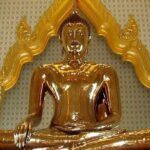
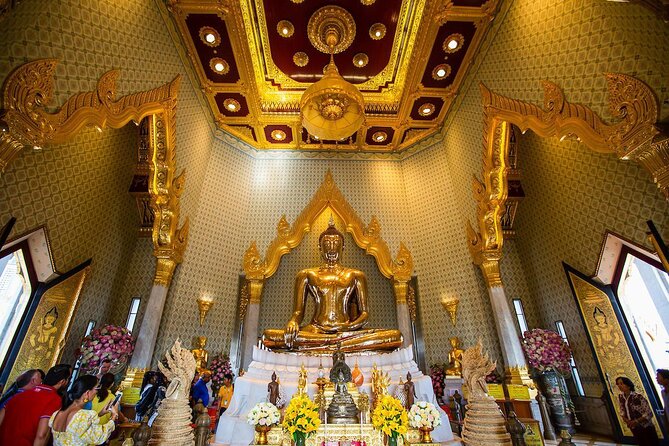
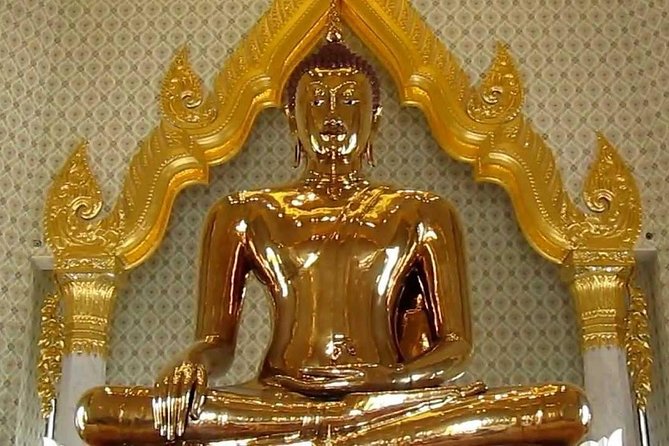
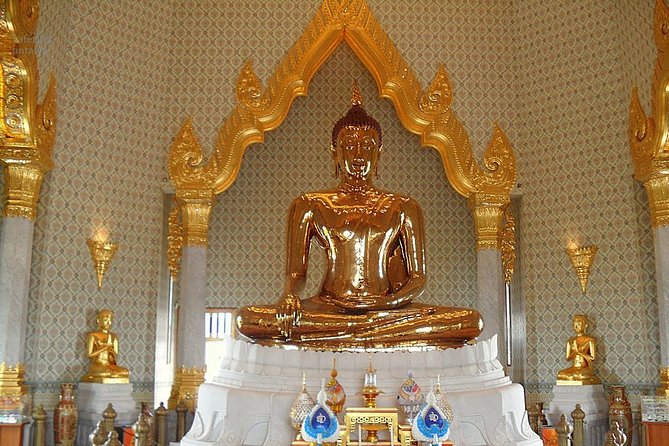
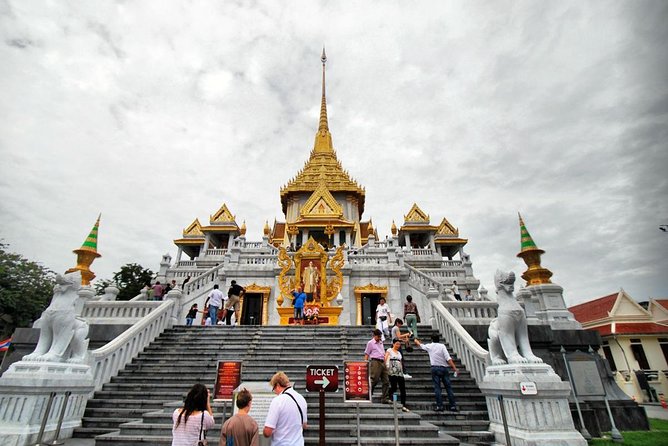
Temple of the Golden Buddha (Wat Traimit) is famous for a simple reason: it houses the world’s largest solid gold Buddha statue, weighing over 5.5 tons. That’s the hook. But what makes this stop work on a tour is context.
You’re in Bangkok’s Chinatown area, so you’re not just walking into a quiet temple bubble. You’ll feel that city energy around you—vendors, streets, and the busy rhythms that make Chinatown feel like Chinatown. The temple itself is the contrast: an intensely specific spiritual focus, anchored by a statue people come to see because it’s so physically impressive.
The time allocation is about 30 minutes, and that’s the right amount for this kind of icon-based stop. You’ll have enough time to take in the statue area and soak up the atmosphere without rushing so hard you can’t appreciate the details. The temple admission is included, so you’re not adding extra tasks to your schedule.
Practical tip: wear something light and breathable under your temple-covering layers. You’ll likely be outside more than you think, and you’ll want to stay comfortable for the full route.
Wat Pho: the Reclining Buddha stop that teaches you how to look
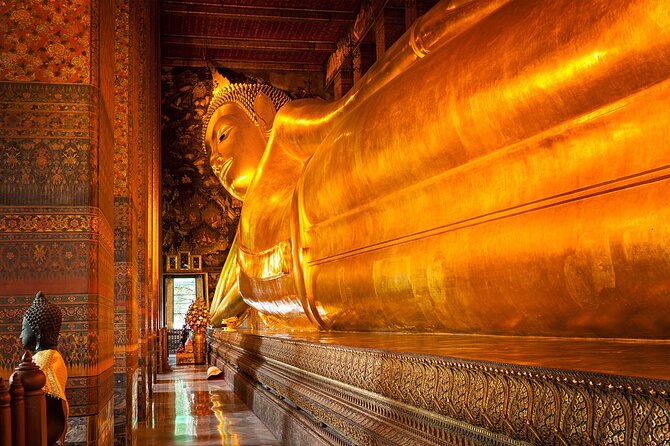
Next up is Wat Pho (also known as Wat Phra Chetuphon). The big headline is the Reclining Buddha, and it sits in a temple complex that’s easy to recognize once you know what to look for.
Wat Pho is right behind the Temple of the Emerald Buddha area, which means you’re in a zone packed with major sights. Without a guide, it’s easy to get stuck in photo mode or wander in circles because the complex is large and detailed. With a local guide, you’re not just seeing buildings—you’re learning what the complex is known for and what details matter.
This stop is also set for around 30 minutes, with admission included. For a first-time visit, that’s a good balance: you’ll get to experience the signature reclining figure and see enough of the surrounding temple atmosphere to understand why Wat Pho is considered a must.
Possible drawback: if you’re the type who loves museum-like slow looking, 30 minutes can feel tight. You’ll likely want to do a second visit on your own later—especially if you want to explore more corners of the Wat Pho complex beyond the main icons.
Wat Arun: the riverside Temple of Dawn and why it looks different
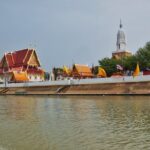
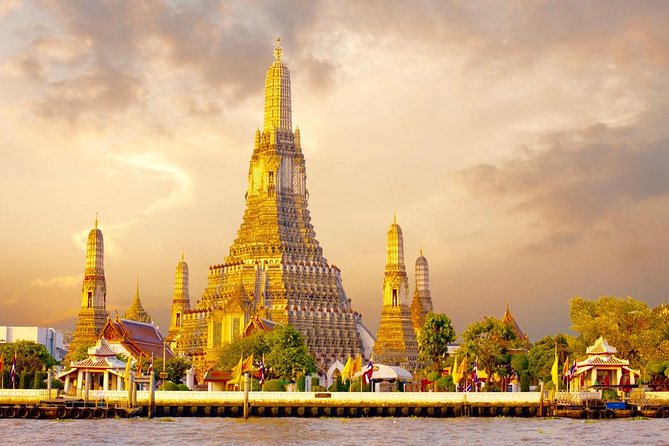
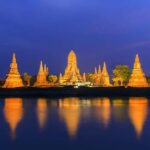
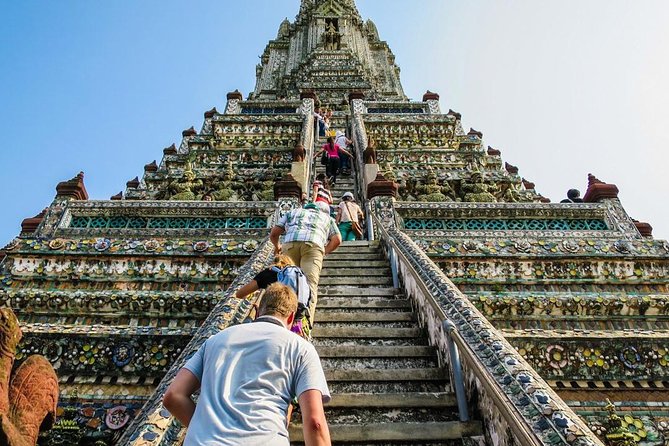
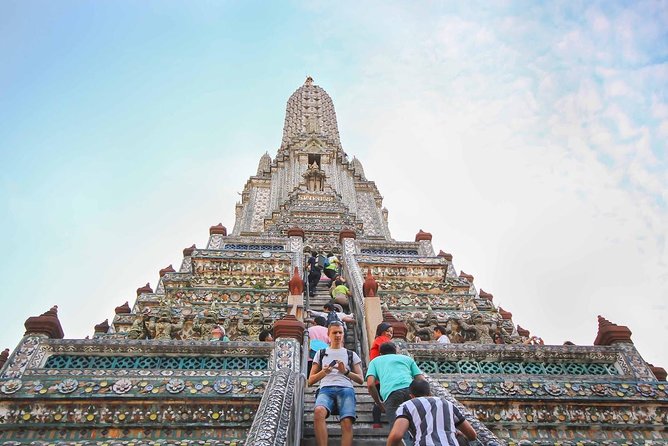
Temple Of Dawn (Wat Arun) is the final temple stop, and it’s on the west bank of the Chao Phraya river in Thonburi. That riverside location is part of the appeal. You’re not just visiting a temple; you’re also seeing Bangkok through a different angle.
Wat Arun (called Wat Chaeng locally) is famous for its visual impact, and the structure and riverside setting make it feel like a landmark rather than just another temple building. Even if you’ve seen photos, being there in person changes things. Light hits the surfaces differently, and the river adds movement and scale.
This stop is again about 30 minutes, and admission is included. That amount of time is designed to keep you from losing the day to transport delays and temple wandering. It also sets you up well for the part most people don’t plan for: the cruise afterward.
Practical consideration: you’ll be walking in temple areas and likely seeing viewpoints that require decent footing. Wear shoes you can trust. You’ll thank yourself later, especially if you’re combining this with other Bangkok sightseeing.
The sightseeing cruise after temples: a breather with better views
A big selling point here is that you don’t end the day with temples alone. After Wat Arun, the tour includes a sightseeing cruise. That’s not just a bonus. It’s a strategic reset.
Temples are visually dense. After three temple stops, your eyes need a different kind of stimulus—open water, city lines, and a chance to rest while still feeling like you’re doing something special. A river cruise also gives you a new perspective on Bangkok’s geography, including how the river connects neighborhoods and major landmarks.
The timing details of the cruise aren’t spelled out in the information provided, but it’s clearly part of the sequence after your temple visits. So you can treat the cruise as your reward after walking and temple time.
If you’re someone who gets tired of constant walking, this cruise component can be the difference between a good day and a great one.
Why the small group feel (max 15) matters
Small group size sounds like a marketing phrase until you experience what it changes. With a maximum of 15 travelers, you’re much less likely to feel swallowed by the crowd.
That matters at temples, where people naturally slow down for photos, stairs, and specific viewpoint angles. A larger group can turn into stop-and-go chaos. A small group usually means your guide can keep everyone oriented and help you move at a pace that doesn’t feel like herding.
You also won’t be straining to hear. The tour description emphasizes that you can explore without pushing for space or struggling to catch your guide’s explanations. When you only have about 30 minutes per site, that kind of flow makes your time feel more productive.
And yes, guide personality is a real factor. One review specifically highlighted Cindy as informative and personable, and that kind of approach is exactly what makes a temple tour enjoyable instead of just a checklist.
Temple etiquette and what to wear in Bangkok
You’ll want to take the dress guidance seriously here. The tour notes that conservative standards apply throughout Asia, especially outside major cities. To respect the temples—and for your own comfort—you’re strongly recommended to wear clothing that covers shoulders and knees.
The smart move is loose, lightweight layers that are easy to adjust. Bangkok heat can be intense, and tightly fitted clothing can make temple time unpleasant fast. If you plan to cover up, do it in a breathable way.
Also, think ahead about practical temple behavior: keep your shoulders covered while moving through temple spaces, be mindful of how you step around sacred areas, and take your cues from signage and your guide.
It’s not about being overly strict. It’s about being comfortable and respectful.
How the itinerary hangs together (and why that order works)
Even though each stop is short, the sequencing is smart.
- Wat Traimit gives you the wow-factor first (gold statue, Chinatown context).
- Wat Pho then moves you into the classic iconic Buddha experience right in the main temple area zone.
- Wat Arun finishes with the riverside landmark feeling—so the day ends with the best shift in scenery possible.
- The cruise turns that landmark feeling into something you can relax into.
That order is useful for first-time visitors. Your first temple stops establish the visual language—ornate temple structures, sacred icon focus, and Bangkok’s cultural framing. By the time you’re at Wat Arun, you’re better at reading what you’re seeing instead of just trying to survive the heat.
If you’re squeezing Bangkok into a short trip, this kind of routed plan can be the difference between seeing the big sights and feeling confident you actually understood them.
Who this tour fits best
This experience is ideal if you’re a first-time visitor who wants the highlights without turning the day into a marathon. It’s also a good match if you:
- Want a guide to explain culture and history in plain language
- Prefer small-group comfort over big-bus crowds
- Like a structured plan because you’re limited on time
- Want a mix of temples plus a cruise instead of only one type of attraction
If you’re already a temple superfan and want hours of wandering, you might still enjoy it—but you’ll probably want extra unstructured time afterward at the site that grabbed you most, because the scheduled stops are purposely around 30 minutes each.
Should you book this Bangkok temples and cruise tour?
I’d book it if your top priority is seeing Bangkok’s three headline temples in a way that feels organized, comfortable, and understandable. The biggest wins for me are the included temple tickets, the air-conditioned transport, and the fact that the cruise gives you a break after temple concentration.
Skip it or adjust your plan if you know you want long stays inside big complexes. This tour is designed for smart pacing, not slow wandering. Also, think about your schedule: because temple time is limited, it pairs best with you planning a fuller day elsewhere rather than expecting this tour to satisfy every curiosity you’ll have on first sight.
If you book, I’d also do one small prep move: check your clothing plan for temple coverage before you leave your hotel. It keeps the experience smooth and lets you enjoy the sights instead of dealing with last-minute adjustments.
FAQ
How long is the tour?
It runs about 3 to 5 hours (approx.).
Is hotel pickup included?
Hotel pickup and drop-off are included, but it excludes tours departing from Saphan Taksin.
Where do I meet the guide if I’m joining from Saphan Taksin?
Meet at BTS Saphan Taksin station, Exit 2 (downstairs). The guide will be holding a sign.
What temples are included?
Wat Traimit, Wat Phra Chetuphon (Wat Pho), and Wat Arun.
Are admission tickets included?
Yes. Admission to Wat Arun, Wat Traimit, and Wat Phra Chetupon is included.
Is the tour private or small group?
You can choose a standard small-group experience (maximum of 15 travelers) or upgrade to a private tour.
Does the price include the cruise?
Yes. The tour is described as temples plus a sightseeing cruise.
Is the guide available in English?
Yes. The tour includes a professional English speaking tour guide.
What should I wear for temple visits?
Dress standards are conservative. You’re strongly recommended to cover shoulders and knees and wear modest, loose, lightweight clothing.
Is there a mobile ticket?
Yes, a mobile ticket is included.