REVIEW · HANOI
Bat Trang Pottery ancient village by Motorbike
Book on GetYourGuide →Operated by Crossing Vietnam Tour · Bookable on GetYourGuide
If you like crafts with real hands-on effort, Bat Trang is for you. This motorbike day trip pairs a scenic ride through Red River countryside with time at a working workshop where you make and paint your own ceramic piece. Two things I really like: the small-group feel and the chance to see how everyday ceramics get made. One consideration: it’s not suitable for pregnant women or people with mobility impairments, and the motorbike ride can be a factor if you’re not comfortable on scooters.
You’ll also get an English-speaking guide and a smooth day flow—pick up from your Hanoi hotel, workshop time, lunch near the market, then an easy walk through the village and market before heading back. The guides are often praised for fluent English and a warm, humorous style, and that matters here because you’ll be using your hands and learning as you go. If you want the cheapest option, this isn’t it—but the price is closer to what you’d pay for a guided, fully supported workshop day rather than a quick stop and shop.
In This Review
- Key highlights worth your time
- Motorbike to Bat Trang: the ride and what you’ll see
- Workshop time: making ceramics the Bat Trang family way
- Drying, painting, and decorating: where your piece becomes personal
- Lunch near Bat Trang market: a practical break that doesn’t derail the day
- Village walking: seeing Bat Trang beyond the workshop walls
- Bat Trang market shopping: how to choose ceramics you’ll actually use
- Price and inclusions: what $68 gets you (and why it can be good value)
- Who this tour suits best (and who should consider other options)
- Should you book Bat Trang by motorbike?
- FAQ
- What is the duration of the Bat Trang pottery motorbike tour?
- Is pickup included, and where does the tour start?
- How many people are in the group?
- What’s included in the price besides the tour?
- Can I make ceramic items myself during the tour?
- Are pets allowed on this tour?
- Is the tour available in English?
- Is this your kind of day trip?
Key highlights worth your time
- Rural Red River scenery on the motorbike on the way to Bat Trang, not just a straight drive
- Hands-on ceramic making at a family workshop, not a passive demonstration
- Paint-and-decorate step where you turn plain pieces into something personal and different
- Skip-the-line entry using a separate entrance so you waste less time wandering
- Market shopping with expert help, including choosing specific shapes for real uses
- Small group (max 8) which usually means more attention and easier conversation
Motorbike to Bat Trang: the ride and what you’ll see
This tour starts in Hanoi downtown, where you meet your guide and head out by motorbike with a quality helmet and full insurance cover. The point of the transport choice is simple: you get out of the city fast, and you get to enjoy the in-between landscapes rather than just the finished destination.
On the ride toward Dong Bac, you’ll see the more rural face of northern Vietnam—fields, open space, and that wide, calm feel you don’t get inside Hanoi’s lanes. It’s also one of the quickest ways to make the day feel like an actual excursion. With a small group and limited riders, the pacing stays manageable.
Now, the practical trade-off: you are on a motorbike for part of the day. If you’re sensitive to travel time or motion, or if you’re traveling with anyone who needs extra support, plan carefully. The tour explicitly isn’t suitable for mobility impairments, and it’s not for pregnant women, so this is one you’ll want to respect if you’re deciding for your group.
You can also read our reviews of more tours and experiences in Hanoi.

Workshop time: making ceramics the Bat Trang family way
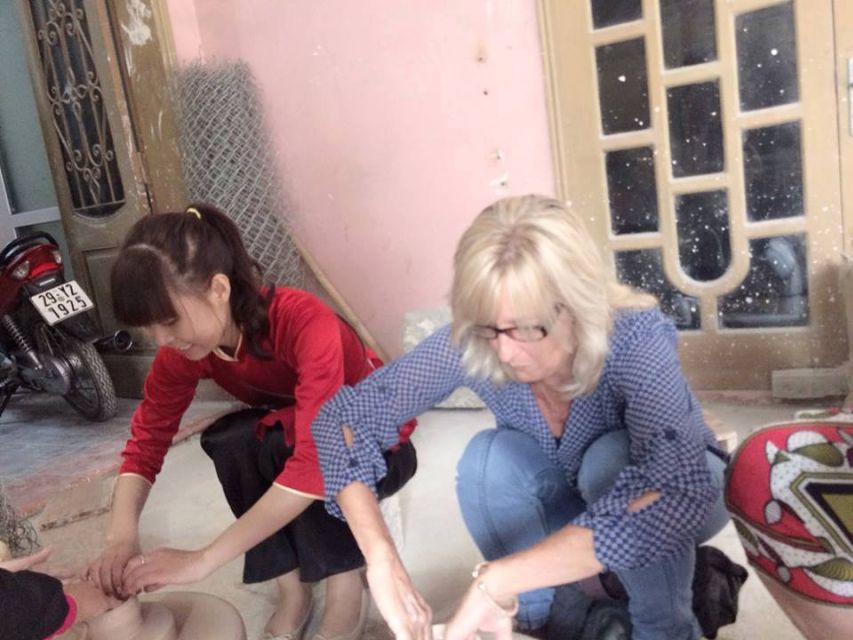
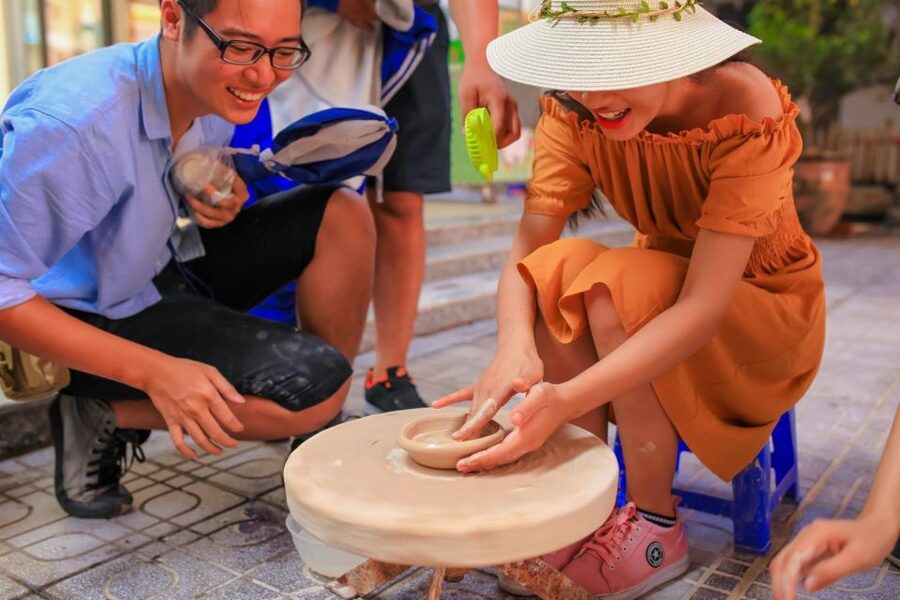
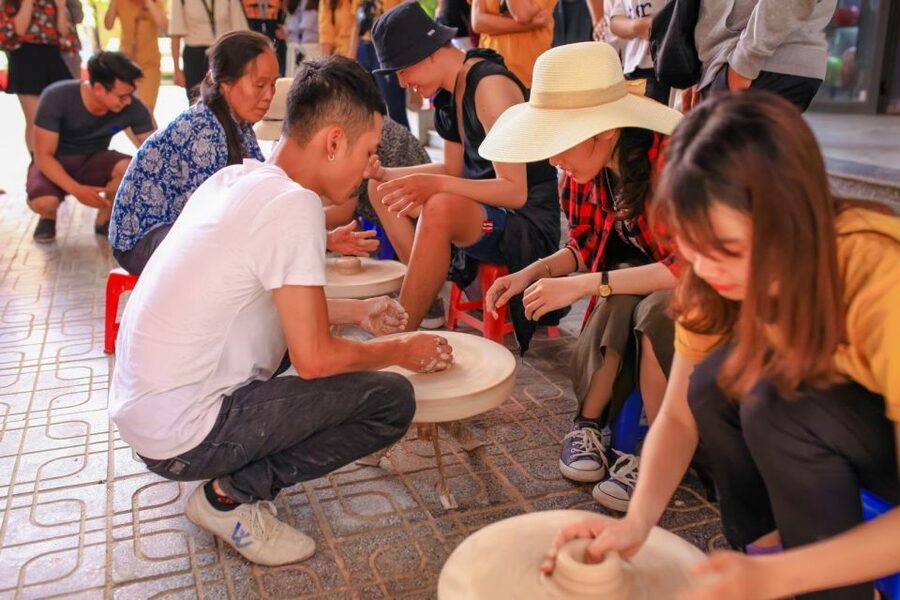
Once you arrive, you go to a workshop where ceramic making is part of daily work, not an “activity” staged for tourists. You’ll join in making ceramic things with the traditional family, guided step-by-step with your group. This is the heart of the experience.
What makes it satisfying is that you’re not just watching. You’ll work through the stages that matter for finished-looking pieces: shaping your item, then moving into the next steps that turn it from clay to a decorated object. Even if you’ve never held a pottery tool before, the workflow is straightforward enough to feel achievable in a single session.
A key value here is instruction quality. Guides are praised for clear, fluent English, which matters because pottery isn’t just about doing—it’s also about understanding what you’re doing and why. In practical terms, that means you’ll get better results and less frustration while you’re working at the table.
Also, there’s something reassuring about the small group format. With only a limited number of participants, you’re less likely to feel rushed or lost. You can ask questions and get help when you need it—especially during the painting and finishing steps, where tiny choices change the look.
Drying, painting, and decorating: where your piece becomes personal

After the hands-on making portion, the process continues with drying your products. Then comes the part most people remember: painting and covering with different colors for decoration. This is where your piece stops looking like a generic souvenir and starts looking like yours.
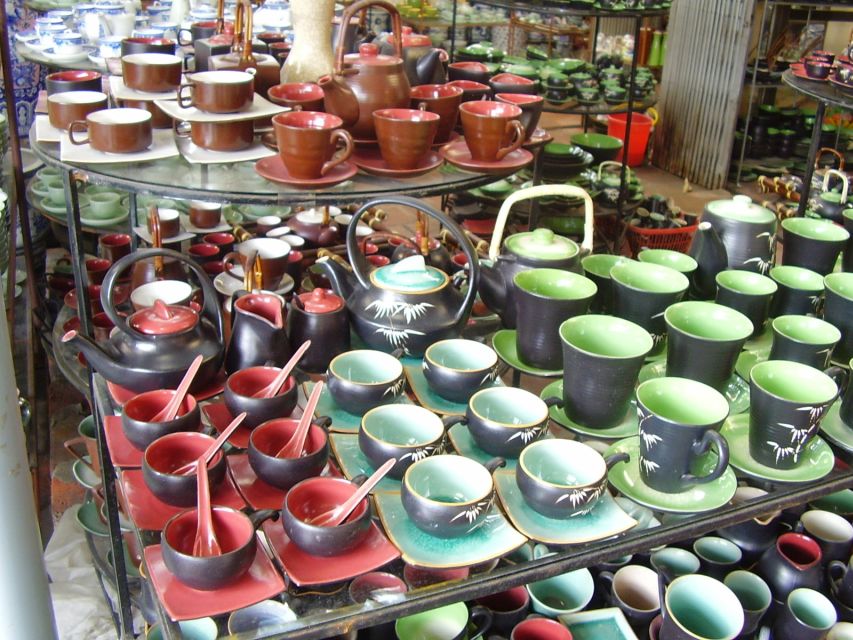
Bat Trang ceramics cover a wide range of styles and forms, and you’ll notice the village isn’t limited to cups and plates. You can encounter items like wine pots, large flower vases, leg lamps, lime pots, big-bellied jars, and even ceramic pictures. That variety is useful context while you’re working—because it helps you imagine what color palettes and shapes are common in this craft tradition.
In your own session, the painting step is the fun payoff. You’re not stuck with one pre-made design. Instead, you can choose how you decorate, so you leave with something more personal than a mass-produced item. And because the workshop’s process moves forward in stages, you get structure: make, dry, then paint and cover.
One consideration: pottery finishing can be slightly messy. If you’re the type who worries about clothing, bring something you don’t mind getting splashed or stained. The tour includes the workshop fee for making ceramics, so you’re not hunting for extra payments at the moment—but you’ll still want to dress for a hands-on day.
Lunch near Bat Trang market: a practical break that doesn’t derail the day
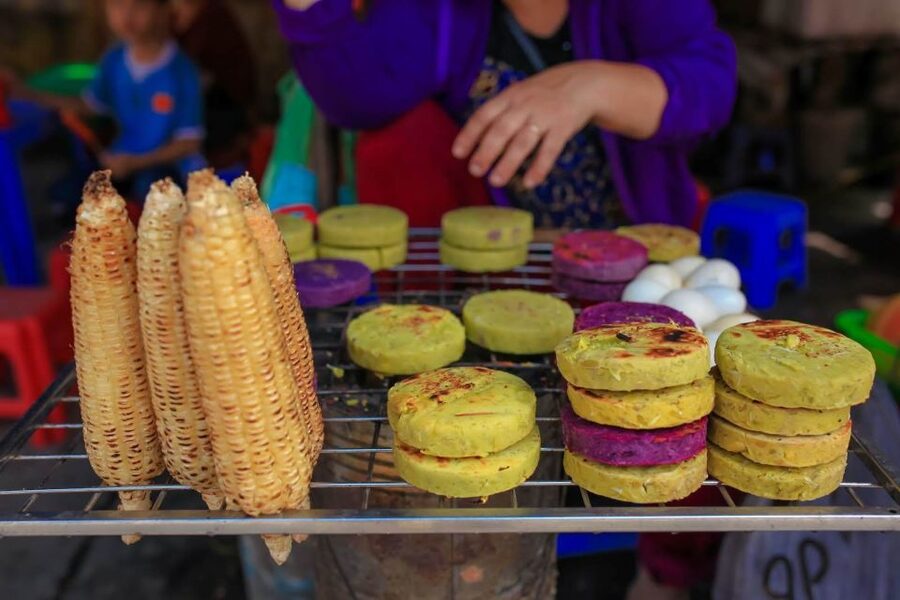
After workshop time, you’ll have lunch at a restaurant near the Bat Trang market. This timing works because you’re already in the craft zone. You don’t waste time backtracking to feed the group, and the meal is positioned so you can stay in the flow of the day.
The lunch stop is also part of what makes the tour feel “guided” rather than just transported. Guides often help with what to order or how to approach local dishes, and the day stays smooth rather than turning into a scramble.
From the experience perspective, the best lunch moments are the ones that help you slow down and reset. If you’ve been moving from city pickup to workshop tables to decoration tools, food becomes more than a break—it’s a chance to refuel before you start shopping and walking.
Village walking: seeing Bat Trang beyond the workshop walls

After lunch, you walk around the area of making ceramic products. You’ll also enter the ancient area in Bat Trang village. This is where you start connecting the dots between a single workshop experience and a whole craft ecosystem.
Bat Trang is known for producing a wide range of high-quality ceramic goods, from functional daily ware like bowls and dishes to more decorative forms that become home accents. When you walk through the village area, the craft feels more grounded—less like an attraction, more like a place where people earn a living through design and production.
This section is also a good time to notice details you might miss otherwise. Look at how shapes relate to purpose: a certain style is suited to serving food, while others are clearly made for display. Even the color choices can hint at local taste—what’s popular here vs. what feels more like a tourist trend.
If you like photos, this is your moment. The village walk tends to be calmer than a crowded city street, and you’ll be close to real production areas and everyday storefronts. Still, keep in mind that this is a working craft community—so move respectfully and follow your guide’s cues.






Bat Trang market shopping: how to choose ceramics you’ll actually use
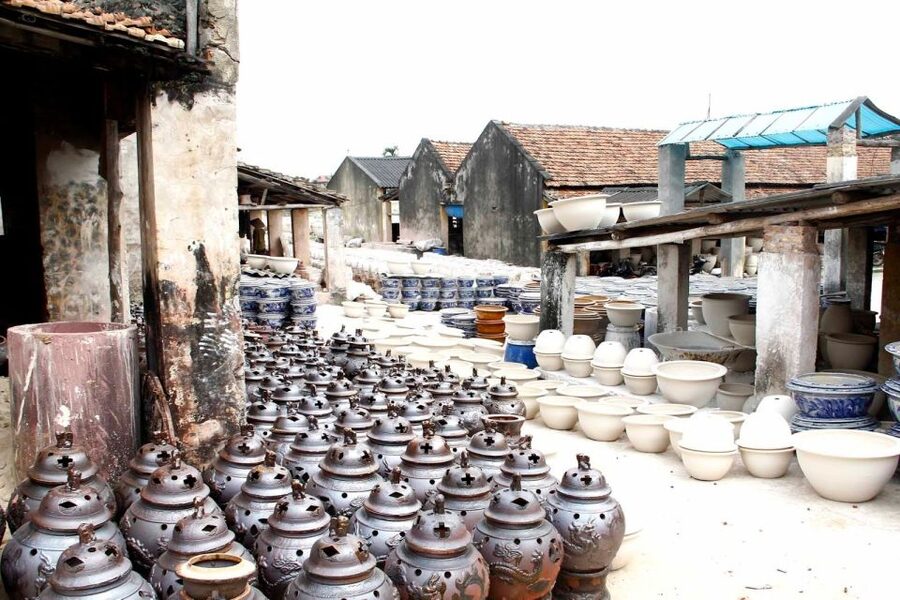
Then it’s market time. You’ll get into the Bat Trang market and see a wide variety of ceramic products. This is where the tour earns its “guided” value again—because buying ceramics is harder than it sounds.
A lot of the fun is browsing shapes: bowls, dishes, cups, jars, and those larger statement pieces like a big flower vase. You’ll also see decorative items with personality—there are whimsical forms, practical storage types, and display pieces. If you’re shopping for gifts, Bat Trang is built for options.
Where guidance can help is in selecting something that matches your life. In particular, you can get help picking the right kind of pot for a specific purpose—like choosing a ceramic vessel to hold a plant—rather than buying something pretty but awkward.
Practical tips as you shop:
- Think about how you’ll transport it. Smaller items usually travel more easily than large vases.
- Decide early if you want functional ware (bowls and cups) or decorative display.
- Ask your guide what items are common here and what stands out, especially if you’re comparing similar designs.
Also, remember that quality can vary across stalls. Your guide can help you steer toward reasonable choices so you don’t waste time comparing endless lookalikes.
Price and inclusions: what $68 gets you (and why it can be good value)

The price is $68 per person for about 5 hours. On paper, it can look like “just a workshop and some shopping.” In reality, you’re paying for several things working together:
- Motorbike transport with a quality helmet
- Full insurance cover
- A live English-speaking tour guide
- Lunch near the market
- Fuel and fees
- Fees for making ceramic items by yourself
- Small group size (limited to 8)
For many people, the value isn’t the raw cost—it’s the support. The motorbike logistics plus workshop entry plus guide translation and guidance means you can focus on the experience instead of figuring out routes and timing. And the workshop fee matters because you’re not just watching; you’re actively making and decorating your own piece.
Also, the “skip the line” separate entrance helps you keep the day moving. In a craft village, time can disappear quickly once you start walking and shopping. This structure protects your workshop time and keeps the market stop from becoming rushed.
Yes, it’s not a budget DIY day. But it’s also not a “tourist-only photo stop.” When a craft tour includes the making process, a prepared lunch, transport, and a guide who can explain the steps clearly, the price starts to feel more reasonable.
Who this tour suits best (and who should consider other options)
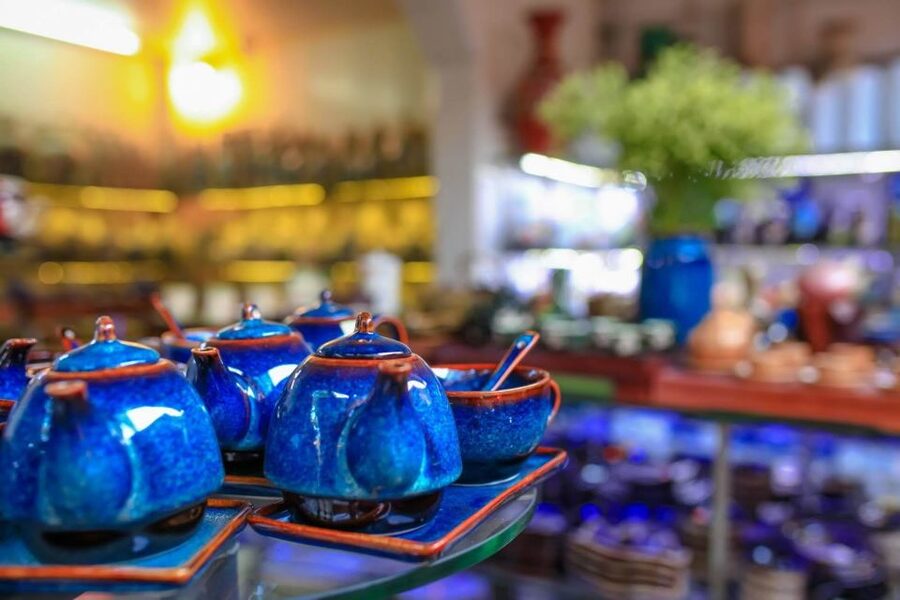
This tour is best for people who want a real craft experience without needing pottery skills. It works especially well if you like:
- Hands-on activities where you leave with something you made
- A guided day trip with clear timing and easy logistics
- Learning in simple English from a guide who can explain what you’re doing
- Shopping with practical advice for what to buy and how to choose
It’s also a solid option for families, as long as everyone can handle the motorbike ride and workshop environment. One family of four with kids had a great time, and the tour’s structure keeps things from feeling chaotic.
But you should skip it if:
- You’re pregnant or need mobility support (the tour isn’t suitable for those needs)
- You’re uncomfortable on a motorbike for part of the day
- You want a fully flexible, self-paced itinerary (this is a structured 5-hour experience)
And one more rule to note: pets aren’t allowed.
Should you book Bat Trang by motorbike?
If you’re choosing between a quick ceramics shop stop and a real “maker” experience, this is the one to book. I think it’s a strong pick because you get three different layers in one morning-afternoon block: the hands-on workshop, the village walk, and the market shopping with a guide who can help you make smarter choices.
Book it if you care about craftsmanship and want to bring home something personal. Consider another option if you need a gentle, low-transport day, or if your group includes someone who can’t do the motorbike ride and workshop setting.
FAQ
What is the duration of the Bat Trang pottery motorbike tour?
The tour lasts about 5 hours. Starting times vary, so you’ll need to check availability.
Is pickup included, and where does the tour start?
Yes. You’re picked up from your hotel in Hanoi downtown, then you return to your hotel in the Old Quarter.
How many people are in the group?
It’s a small group limited to 8 participants.
What’s included in the price besides the tour?
The price includes motorbike transport with a high-quality helmet, full insurance cover, a tour guide, lunch, fuel, fees for making ceramic items, and the workshop experience.
Can I make ceramic items myself during the tour?
Yes. You’ll go to a workshop to make ceramic things by yourself, and then you’ll paint and cover them with colors for decoration.
Are pets allowed on this tour?
No, pets are not allowed.
Is the tour available in English?
Yes. The live tour guide speaks English.
Is this your kind of day trip?
If you want a short, guided craft day that ends with a real souvenir you decorated yourself, this tour hits the mark. The combination of workshop time, a guided village walk, and market shopping (all within a compact schedule) makes it a practical way to experience Bat Trang without turning your day into logistics.