REVIEW · HANOI
Duong Lam Ancient Village Private Tour: Ancient Vestage, Fortress
Book on Viator →Operated by Paradise Indochina Travel · Bookable on Viator
Ancient villages in Vietnam feel oddly personal. Duong Lam Ancient Village is known for its laterite houses—red clay from weathered basalt—some reportedly up to 400 years old, and it feels like a walk through the roots of Vietnam’s rural culture. You’ll also pair it with Thành Cổ Sơn Tây, a fortress citadel that brings the story back to defense and power.
I love how the tour balances old architecture with real people. With an English-speaking guide (notably praised guides like Tu and Hana), the day doesn’t just read like a timetable; it gets explained in a way that helps you notice details in the communal houses, temples, and village life you pass each turn.
One thing to think about: you’re signing up for a full 7 to 8 hour day with a 1.5-hour drive each way plus stops that can involve walking through narrow alleys. If you don’t want any biking time, you’ll want to mention that early, since biking in Duong Lam is included.
In This Review
- Key points at a glance
- First stop: Hanoi to Thành Cổ Sơn Tây without losing the morning
- Thành Cổ Sơn Tây: a Vauban-style fortress built in 1822
- Mong Phu village hall and temple: where the past feels local
- Duong Lam Ancient Village: laterite houses, narrow alleys, and real atmosphere
- The “milking-well” stop on the way in
- Communal houses and ancient temples
- Biking in Duong Lam: a faster way to notice more
- Lunch with a local family: the break that makes the day feel complete
- Guides matter on a private tour like this
- Value and price: is $95 per person a good deal?
- Timing and pacing: how to make a full day feel comfortable
- Who this tour is best for (and who should think twice)
- Should you book this private Duong Lam and Son Tay day trip?
- FAQ
- FAQ
- What’s included in the private tour?
- Is pickup offered, and where does the tour start?
- How long is the tour?
- How much is the tour per person?
- What time does the tour start and finish?
- What are the main stops on the itinerary?
- Are entrance fees included?
- Do I get lunch, and are drinks included?
- Do I need a ticket or anything digital?
- Is this tour private or shared with other groups?
- What’s the cancellation policy?
Key points at a glance

- Laterite house culture: see why red-clay construction became a signature of northern Vietnamese villages
- Thành Cổ Sơn Tây (1822): a major Vauban-style fortification with a big footprint at 16 hectares
- Mong Phu Temple (1533): visit a temple and village hall site tied to King Mac Dang Doanh
- Duong Lam village alleys + “living museum” feel: narrow streets and age-worn houses up to about 400 years old
- Local lunch with drinks extra: good chance to eat simply and stop the day from feeling too rushed
- Private comfort: a private car and English guide mean you can move at your group’s pace
First stop: Hanoi to Thành Cổ Sơn Tây without losing the morning
Your day starts at 8:30 am with pickup from the Hanoi Opera House area (1 Tràng Tiền, Hoàn Kiếm). Then it’s roughly a 1.5-hour drive out toward Sơn Tây, a journey that matters more than you’d think. Time on the road is where your guide can set the context—why fortresses like this mattered, and how the north of Vietnam developed its own blend of village life and military planning.
You reach Thành Cổ Sơn Tây around 10:00 am. This is the part of the trip that gives you scale. Duong Lam is intimate—walls, courtyards, narrow lanes—while the citadel is broad and planned. Seeing them back-to-back helps your brain connect the dots between daily life and protection.
You can also read our reviews of more private tours in Hanoi

Thành Cổ Sơn Tây: a Vauban-style fortress built in 1822
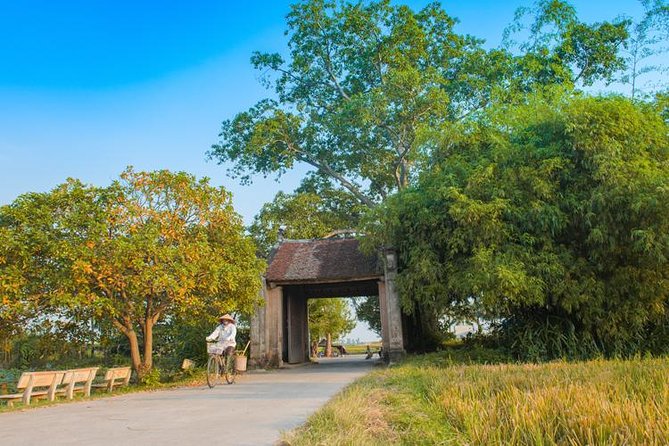
At Thành Cổ Sơn Tây, you’ll visit a citadel built in 1822 and linked to Vauban fortification design. That’s a fancy-sounding phrase, but you’ll feel what it means when you look at the layout. Fortresses like this were built to control movement—lines of defense, strong edges, and a structure designed to keep attackers out and allow defenders to respond.
The site covers 16 hectares, so you get more than a quick photo stop. Your ticket is included, and your guide helps you look beyond the walls and start understanding why certain parts would matter for defense. Reviews also emphasize the architecture and the landmark status of this citadel, which makes it a solid anchor for your day.
Practical tip: since the morning slot is about 1 hour, pace yourself. If you love details, you can spend more time at the edges and viewpoints where you can see the geometry more clearly. If you prefer photos and quick context, you’ll still get the key story without feeling trapped.
Mong Phu village hall and temple: where the past feels local
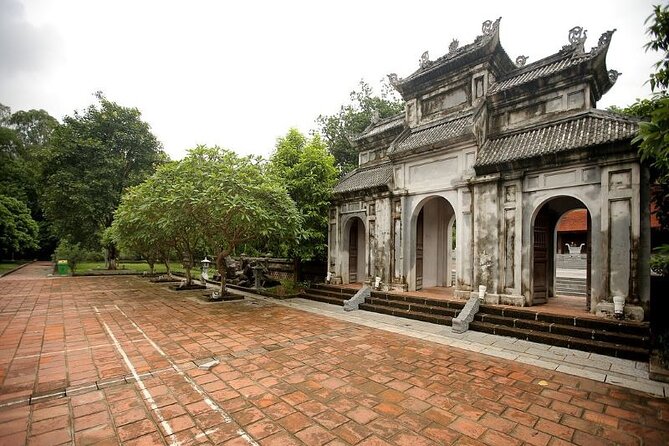
Next up is Mong Phu village hall, with the Mong Phu Temple located on a central, tall point in the village area. The temple site is described as about 1,800 square meters, which is big enough that it doesn’t feel like a token stop. It’s also dated: the temple was built in 1533 during the reign of King Mac Dang Doanh, then renovated in the early 19th century.
This stop is shorter—about 30 minutes—but it fills a different role than the citadel and Duong Lam. Fortresses tell you about external threats. Temple sites tell you about local beliefs and how communities organized respect and ceremony.
What I like about this timing is that it breaks up the day. After the more structured citadel layout, you shift to something more rooted in everyday village identity. If you enjoy learning how people keep traditions alive through places they use and visit, this is a good moment to slow down.
Duong Lam Ancient Village: laterite houses, narrow alleys, and real atmosphere
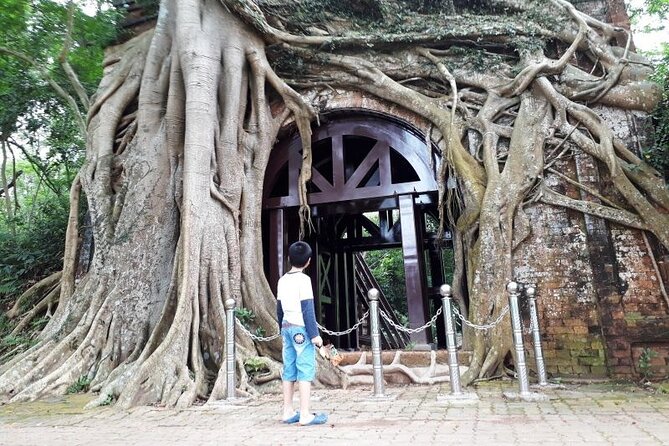
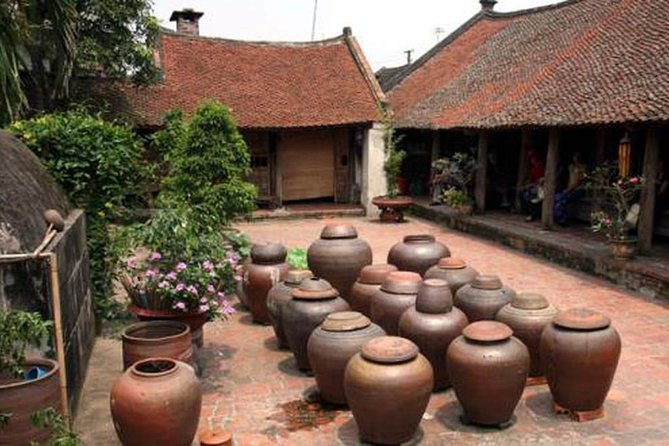
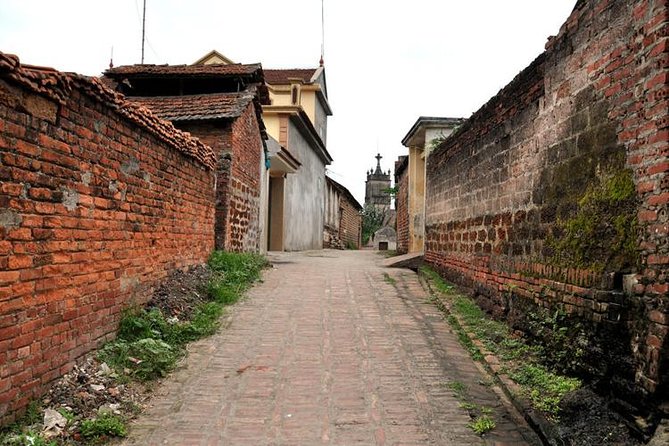
Then you reach the heart of the trip: Duong Lam Ancient Village, where you’ll spend about 3 hours. The village is known as a kind of museum of surviving laterite houses. These houses are associated with red clay formed from weathered basalt found in northern Vietnam. That detail isn’t academic trivia—it explains why the village looks the way it does, with warm reddish tones and strong, earth-grounded construction.
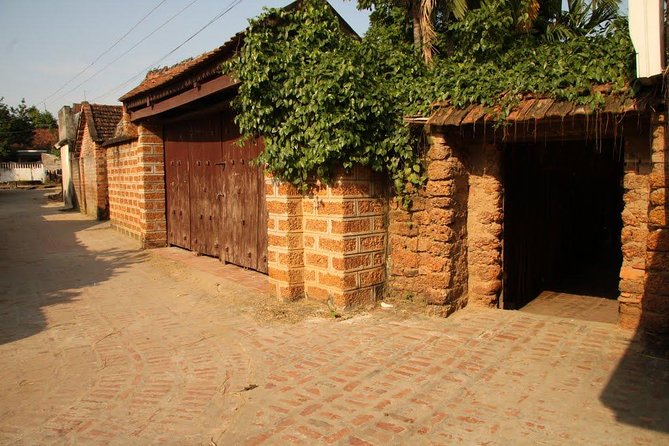
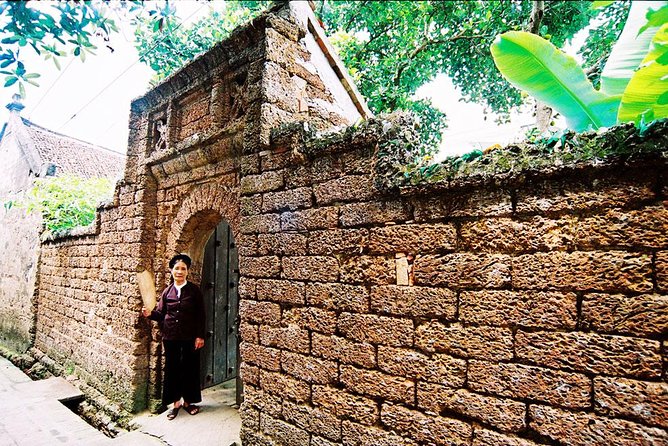
When you walk the narrow lanes, you’ll notice why people call it a living museum. Houses can be reportedly up to 400 years old, and many buildings show the wear-and-tear of lived-in time, not just restored surfaces. Reviews mention the feel of stepping back in time through narrow red brick streets, and that matches how this place hits you: you’re moving slowly, watching doorways, courtyards, and the spacing between structures.
The “milking-well” stop on the way in
On the way into Duong Lam, your route includes a natural holy well called a “milking-well,” said to store clear water all year. It’s tied to a local belief: childless couples are thought to be able to have a child by drinking the water.
Whether you treat that as legend or cultural tradition, it’s a useful stop because it shows how daily geography blends with meaning. You also get a quick stretch before your longer village walking segment.






Communal houses and ancient temples
Inside Duong Lam, you won’t just look at house walls. You should also see communal-house and temple sites that reflect how villages organized social life. Reviews highlight communal houses and ancient temples as key moments. This is the value of going with a guide: you learn what to look for instead of just photographing random corners.
Biking in Duong Lam: a faster way to notice more
Biking is included, and this is one of the best ways to cover village lanes without turning the day into a marathon. It helps you reach areas that would take too long on foot. It also keeps things fun—Duong Lam isn’t only about stillness. Rolling through alleys gives you a different angle on the architecture, especially when you pass doorways and small courtyards at a gentle pace.
Still, keep it realistic: narrow lanes and older village layouts can mean slower movement. If you have balance issues or mobility limits, ask your guide how biking time will be handled for your group. “Included” doesn’t always mean “every minute is forced.”
Lunch with a local family: the break that makes the day feel complete
At some point during the day, you’ll have lunch at a local family, and bottled water is provided. Drinks during lunch are not included, so I’d plan for that small extra cost if you want something beyond water.
I like this style of lunch because it shifts you from sightseeing mode to normal life for an hour. You’re not eating in a polished tourist hall. You’re eating somewhere connected to village rhythms. And after walking red laterite lanes and fortress walls, you’ll feel the reset.
What to do: if you’re sensitive to spice or unfamiliar flavors, mention it when you sit down. You may not have a menu in front of you, so flexibility helps you enjoy the meal rather than worry about it.
Guides matter on a private tour like this
This experience is private, meaning only your group participates. That’s not just comfort—it’s control. When your English-speaking guide can adjust stops based on your interests, you’ll spend more time where you actually care and less time where you’re just waiting.
Reviews praise guides like Tu for friendly context and for customizing stops, and Hana is also mentioned as professional and able to connect you to village secrets. In practice, that can mean the difference between seeing a house and understanding why it’s built the way it is, or between walking past a temple and knowing what it represents in local life.
If you like photography, bring that up. If you prefer architecture, say so. If you’re more interested in legends and beliefs, you’ll likely get more time on the meaningful details like the well.
Value and price: is $95 per person a good deal?
At $95.00 per person, this is a solid price point for a private day trip from Hanoi with car transfer, an English-speaking guide, entrance fees, lunch, and bottled water. The math gets better because you’re not paying separately for tickets at multiple sites.
Here’s what you’re really buying:
- Time saved: a 7 to 8 hour structured day with pickup and drop-off in the Hanoi area
- Access with context: guides help you read what you see at Son Tay and inside Duong Lam
- Transport included: private round-trip car transfer for the whole group
- Meal included: lunch at a local family reduces planning stress
If you’re traveling in a small group, private pricing can be very fair compared with piecing it together yourself—especially when you factor in entrance fees and the guide’s role. If you’re traveling solo and hoping to keep costs ultra-low, a public-group tour might be cheaper. But if you care about learning and pacing, this private setup is often worth it.
Timing and pacing: how to make a full day feel comfortable
The day runs from 8:30 am pickup to about 4:30 pm drop-off, with arrival around 10:00 am at Son Tay and roughly 3 hours inside Duong Lam. That schedule works because it alternates between different kinds of attention:
- citadel structure (good for “big picture”)
- temple/community stop (good for “local life”)
- village lanes and houses (good for “details and mood”)
Still, plan your body. Walking in narrow alleys can be uneven, and biking time adds movement. Wear comfortable shoes and light layers. Bring a hat and keep water awareness in mind—even though bottled water is included, you’ll likely still want to sip during the day.
Who this tour is best for (and who should think twice)
This fits best if you:
- want a roots-focused day in northern Vietnam, not just quick landmark photos
- enjoy history that includes village culture—houses, communal spaces, temples
- like having a guide who can explain details and adjust the flow for your group
- want private comfort with car pickup and drop-off around Hanoi’s central area
You might think twice if you:
- strongly dislike walking or biking on uneven lanes
- want a very relaxed schedule with minimal transit
- prefer a shorter half-day option (this is built as a full outing)
Should you book this private Duong Lam and Son Tay day trip?
I’d book it if you want one day that covers both the defensive story of the region (Thành Cổ Sơn Tây) and the everyday village story (Duong Lam’s laterite houses and communal sites). The combination is the selling point. You don’t just visit a village—you connect village life to the wider historical context around it.
I’d also book it if you value a guide who can talk through what you’re seeing. Reviews highlight that guides like Tu and Hana bring strong context, and on a private tour that kind of explanation really changes the experience.
If you’re budget-focused, consider your tolerance for a full day. But for the mix of transport, tickets, lunch, and private guiding, $95 can feel like good value—especially if you’re not in the mood to plan multiple stops on your own.
FAQ
FAQ
What’s included in the private tour?
You get private round-trip car transfer, an English-speaking tour guide, entrance fees and sightseeing fees, lunch at a local family, bottled water, and biking in Duong Lam.
Is pickup offered, and where does the tour start?
Pickup is offered. The meeting point is the Hanoi Opera House area (1 Tràng Tiền, Phan Chu Trinh, Hoàn Kiếm, Hà Nội).
How long is the tour?
The tour runs about 7 to 8 hours.
How much is the tour per person?
The price is $95.00 per person.
What time does the tour start and finish?
Pickup begins at 8:30 am, and you’re dropped off around 4:30 pm.
What are the main stops on the itinerary?
You visit Thành Cổ Sơn Tây, Mong Phu village hall (Mong Phu Temple), and Duong Lam Ancient Village.
Are entrance fees included?
Yes. Entrance fees and sightseeing fees are included in the tour price.
Do I get lunch, and are drinks included?
Lunch is included at a local family. Drinks during lunch are not included.
Do I need a ticket or anything digital?
A mobile ticket is provided.
Is this tour private or shared with other groups?
This is a private tour/activity, so only your group participates.
What’s the cancellation policy?
Cancellation is free if you cancel up to 24 hours in advance for a full refund.