REVIEW · ATHENS
Biblical Corinth: St. Paul and His Letters to the Corinthians
Book on Viator →Operated by My Athens Transfers · Bookable on Viator
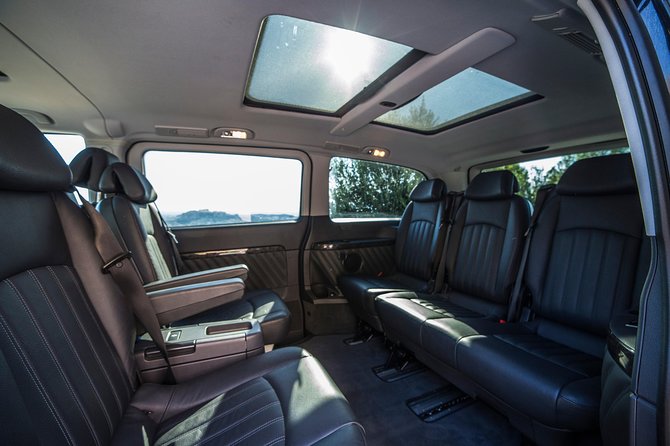
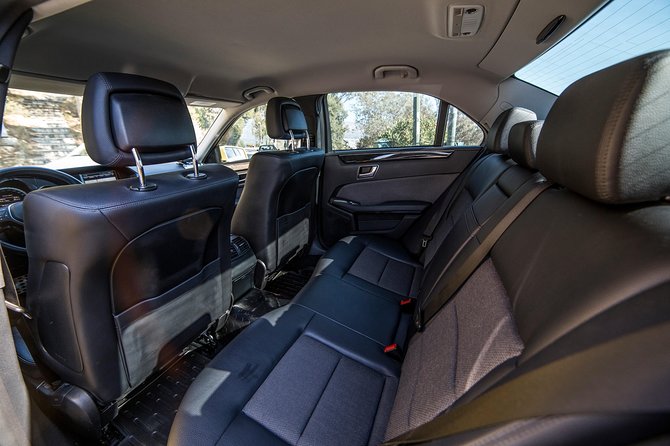
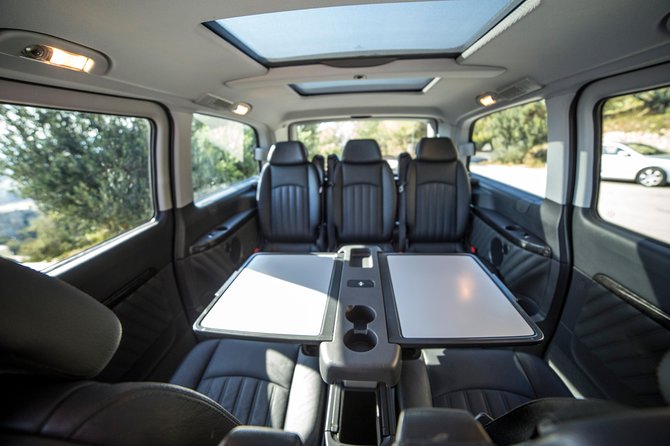
Mars Hill to Corinth in one day. This private route turns St. Paul’s world into something you can walk through, from the sermon at Areopagus to the port towns and forums tied to his letters. You ride in an air-conditioned car with Wi-Fi on board, and your driver sets the context as you travel.
I especially like the flexible pacing. You’re not stuck waiting on a group schedule while you stand in the places that matter. I also love how the day builds links between faith and daily life—engineering at the canal, festival crowds at Isthmia, and the arguments at the Bema—so the Bible stories feel grounded.
One thing to plan around: this is a private driver-led tour, not a licensed guide inside the archaeological sites by default. You can add a licensed tour guide on request (and there’s an extra entrance fee for Ancient Corinth and the Isthmia museum), so check that upfront if you want someone to walk you through every ruin with a formal narrative.
In This Review
- Key things to love about this St. Paul-focused Corinth day trip
- A Corinth day that follows Paul’s footsteps, not just a ruins checklist
- Areopagus Hill and Mars Hill: where the message met Greek philosophy
- Corinth Canal viewpoints and the Diolkos: understanding the region’s movement of goods
- Isthmia: Poseidon’s games, the sanctuary area, and Paul’s tentmaker backdrop
- The Archaeological Museum of Isthmia: small finds that make the port culture real
- Ancient Corinth (Archaia Korinthos): the Bema and the forum-world Paul argued in
- Kenchreai (Cenchreae): the port where Paul’s journey turns toward Syria
- A living reminder: Apostolou Pavlou Church and the church that honors Paul
- Lunch in Corinth plus Akrokorinthos: views you’ll remember more than you expect
- Price and logistics: getting value from a private 8 to 9 hour day
- Should you book this Biblical Corinth day trip?
- FAQ
- What kind of tour is this?
- How long is the tour?
- Is pickup included?
- Is Wi-Fi included?
- Does the tour include lunch?
- Are entrance fees included?
- Does the driver enter the archaeological sites with you?
- Can I request a licensed tour guide?
- What language is the tour in?
- What if I need to cancel?
Key things to love about this St. Paul-focused Corinth day trip
- Mars Hill stop is specifically built in, with time set aside for the sermon site at Areopagus Hill
- Corinth Canal + Diolkos give you a real feel for how people moved goods before modern shipping
- Isthmia ties athletics to Paul’s language, with Poseidon, the games, and the sanctuary area
- Ancient Corinth centers on the Bema—a strong anchor point for Paul’s trial story
- Kenchreai (Cenchreae) connects to Acts 18 and the port where Paul prepared to sail
- Lunch + Akrokorinthos round out the day so you’re not just racing from one ruin to the next
A Corinth day that follows Paul’s footsteps, not just a ruins checklist
Corinth isn’t one site. It’s a crossroads. And that’s why this tour works so well: it treats the region like a living network, where ships, festivals, and debate rooms all fed into the story we read in Acts and the letters to the Corinthians.
You start from Athens with pickup handled by your driver, then settle into a long, comfortable ride. The onboard Wi-Fi and bottled water are practical for a full-day outing, especially if you’re juggling maps, tickets, or a message to your group. Duration runs about 8 to 9 hours, so plan to keep the rest of your day light and unbooked.
The real value here is the pacing. Because it’s private, you can linger when something catches your eye—like the view from a hilltop or the exact spot where a trial would have been discussed—then move on without feeling rushed. People also mention that their driver stayed patient and adjusted timing to their needs, which matters on a hot Greek day.
You can also read our reviews of more tours and experiences in Athens.

Areopagus Hill and Mars Hill: where the message met Greek philosophy
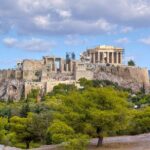
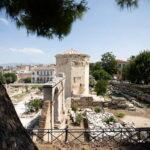
Your first stop is Areopagus Hill, the famous Mars Hill area tied to Paul’s sermon in Athens. Even if you’ve read the story before, standing in the general setting helps you understand why Paul’s approach landed. The message isn’t just religious; it’s framed against the philosophical heart of the city.
What makes this stop worth your time is the specific focus on the Unknown God theme. The day doesn’t treat it like a random photo spot. You get a moment of reflection plus historical context, with the time set aside to actually take it in—about 20 minutes, and with admission listed as free.
Practical tip: wear shoes you trust. Areopagus Hill is not a museum floor. Give yourself a little extra care for footing and sun.
Corinth Canal viewpoints and the Diolkos: understanding the region’s movement of goods
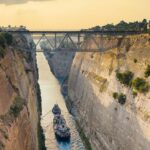
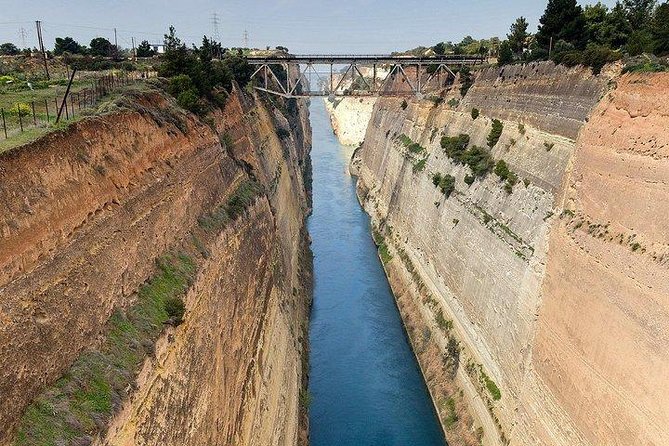
After Athens, the tour makes a smart detour: the Corinth Canal. This is where the region’s geography becomes more than a map fact. The canal cuts through the Isthmus of Corinth and links the Ionian Sea and the Aegean—exactly the kind of location that would have mattered to merchants, sailors, and travelers in Paul’s era.
You stop high enough for a strong view down toward the limestone walls and the passage below. The canal is narrow (about 21 meters at the base) and only about 6.4 kilometers long, and it has no locks. That gives you a quick sense of scale—and why many modern ships can’t just pass through like a shortcut.
Then you hit the Diolkos, an ancient overland route used to drag ships across the isthmus. This is one of those “wait, that’s real?” stops. You’re looking at remnants of a transport system that existed long before the canal did, and it helps you visualize how the Mediterranean economy actually worked.
This pairing—modern canal engineering plus ancient ship transport—does something valuable: it gives Paul’s era a physical sense of place. People in and out of Corinth weren’t just walking. They were arriving via networks of movement.
Isthmia: Poseidon’s games, the sanctuary area, and Paul’s tentmaker backdrop
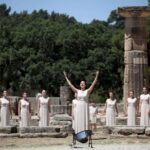
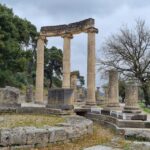
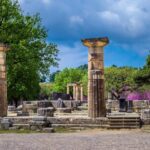
The day’s religious-and-cultural bridge is Isthmia. The stop area connects athletics, worship, and public life. Isthmia was known for the Isthmian Games, held in honor of Poseidon and attracting visitors from across the Greek world.
Why it belongs in a Paul itinerary: the Bible notes Paul spent time in this region, and he’s often connected to tentmaking—work that would naturally fit the crowds and travel patterns around big public events. Even if your personal faith journey is different from mine, this is still a powerful way to picture Paul in the rhythm of everyday life: earning a living, meeting people, and talking through ideas that would later echo through letters.
The tour gives you time in multiple Isthmia areas:
- the sanctuary and games context (about 1 hour)
- the archaeological site area with the Temple of Poseidon and nearby features (about 40 minutes)
The Temple of Poseidon remains a key anchor here, rebuilt over centuries, and it’s easy to understand why Paul would have encountered a strongly polytheistic environment. Nearby, the stadium setting helps you grasp the athletic side of the games—especially since Paul sometimes used sports and competition language in his writing.
A bonus contrast point: there’s also time in the area of an ancient theater used for contests tied to the games. The Roman mosaics with sea creatures and myth scenes make the culture feel concrete. It’s a reminder that Paul wasn’t preaching into a vacuum—he was speaking into a world of performance, festival religion, and public celebrations.
The Archaeological Museum of Isthmia: small finds that make the port culture real
Between the outdoor sites, you visit the Archaeological Museum of Isthmia. Admission is not included, so you’ll want to budget for it. (This tour lists Ancient Corinth and the museum as paid entries, about €15 per person on site.)
Even with a short museum stop (about 30 minutes), the payoff is in the details. The museum includes artifacts tied to the sanctuary and games period. One highlight mentioned for this collection is glass panels from Kenchreai—the port near Corinth tied to Paul’s journeys.
That matters because it connects the inland city’s famous stories to the sea routes where people actually sailed. It turns the ports from a Bible reference into a lived place.
If you’re the type who wants your ruins to have receipts, this museum gives you that. If you only care about the big standing stones, the outside sites will still satisfy you more, but it’s a good stop that makes the day feel rounded.
Ancient Corinth (Archaia Korinthos): the Bema and the forum-world Paul argued in
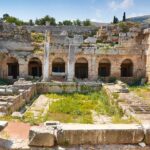
Now you get to the centerpiece: Ancient Corinth. This is where the day stops being “Paul’s story” and becomes “Paul’s environment.”
Corinth sat on the strategic isthmus linking the mainland and the Peloponnese, and it thrived as a trade hub. That’s not a trivia point—it explains why Paul would have had a mix of cultures, opinions, and tensions to deal with. In other words, his letters weren’t written to a tiny isolated group. They were written to a real community inside a busy city.
The stop includes time around the Bema, the judgment seat connected to Paul’s appearance before Proconsul Gallio. Standing at the Bema’s location gives you a concrete way to feel how Roman authority interacted with local religious disputes. Acts frames it as Gallio refusing to judge Paul’s case as a matter of unlawful teachings, treating it more like an internal issue among Jews. Seeing the forum-style space helps you understand why that refusal mattered: it allowed Paul’s mission to continue without Roman clampdown at that moment.
Time here is about 1 hour, and admission isn’t included. You can buy tickets on site for Ancient Corinth.
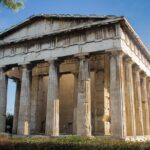
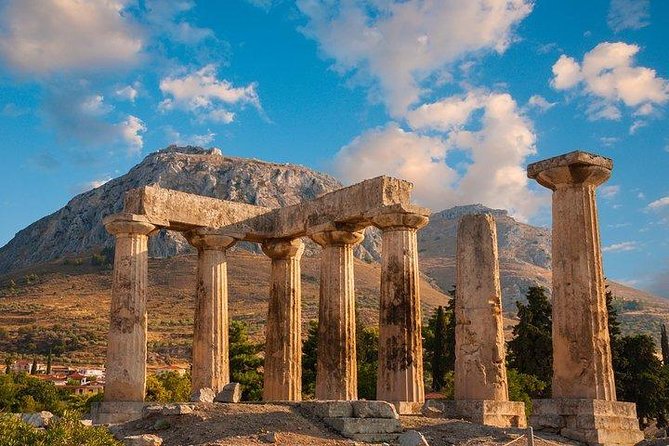
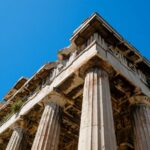
One more strong stop inside this part of the route is the Temple of Apollo. It’s one of the oldest major temples in Greece, built around 560 BC, and the massive monolithic Doric columns are still a striking skyline feature. When Paul arrived in Corinth, this kind of monumental worship would have been hard to ignore, so it also functions as a visual contrast: polytheistic grandeur right next to Paul’s message of one true God and Christ crucified.
Kenchreai (Cenchreae): the port where Paul’s journey turns toward Syria
Next comes Kechries, the location of ancient Cenchreae, Corinth’s eastern port. This stop is short (about 30 minutes), but it has a clear story purpose.
In Acts 18:18, Paul leaves Corinth with Priscilla and Aquila and heads toward Syria. The Bible also notes Paul cut his hair to fulfill a vow, often understood as a Nazirite vow. Whether you interpret that vow in the same way or not, the physical setting helps you see this as a real departure point: a place where movement across the sea was normal.
Kenchreai also connects to early Christianity. The port area is tied to one of the earliest Christian communities there, and Paul’s letter to the Romans mentions Phoebe, described as a trusted servant in the church in Cenchreae.
Today, the port area feels calm, which is exactly why it works after the forum intensity. The day shifts from argument to travel—then sets you up for the next spiritual stop.
A living reminder: Apostolou Pavlou Church and the church that honors Paul
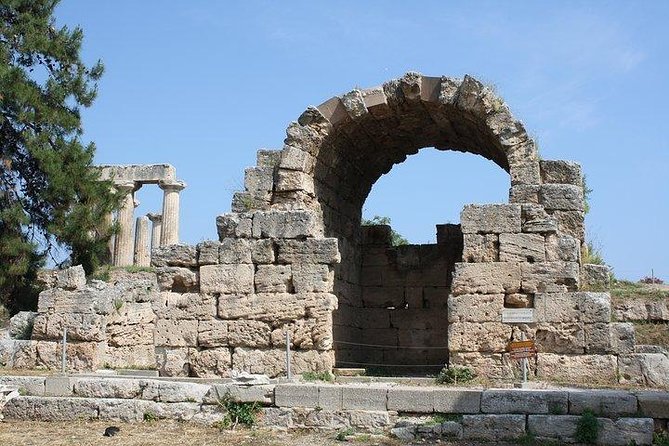
The route includes Apostolou Pavlou, a church dedicated to Apostle Paul. This is one of those places that doesn’t ask you to imagine ruins. It asks you to acknowledge that Paul’s story didn’t end in antiquity.
The church’s connection is straightforward: Paul spent about 18 months in Corinth around 51–52 AD, building early Christian community. Standing in a modern space that commemorates that work is a nice emotional reset after hours of ancient stones.
Time here is short (about 20 minutes), but it’s long enough to do the respectful walk-through and take a breath before lunch.
Lunch in Corinth plus Akrokorinthos: views you’ll remember more than you expect
Now comes a practical part you’ll appreciate: lunch. There’s a traditional seaside Greek taverna stop (about 1 hour). If you choose the option that includes Greek traditional food, lunch is already covered in the tour price.
This is also a smart strategy from a tour-planning angle. After museums and archaeological sites, food isn’t just a break—it’s where you recharge so you can still handle the hill walking later.
Then you head to Akrokorinthos, the fortress overlooking Ancient Corinth. Expect a climb and uneven terrain. The payoff is the wide, commanding view over the city and plain below. The tour focuses on how the fortress area sits above where Paul’s mission took place, so you get that feeling of looking out over the same world he would have understood through geography and movement.
Even if the Bible story is what brought you here, this is where the trip becomes memorable in a different way: you’ll start to see Corinth as a whole system, not just a list of names.
Price and logistics: getting value from a private 8 to 9 hour day
Let’s talk value, because at $218.43 per person, you should feel it’s worth the long day.
What you’re paying for:
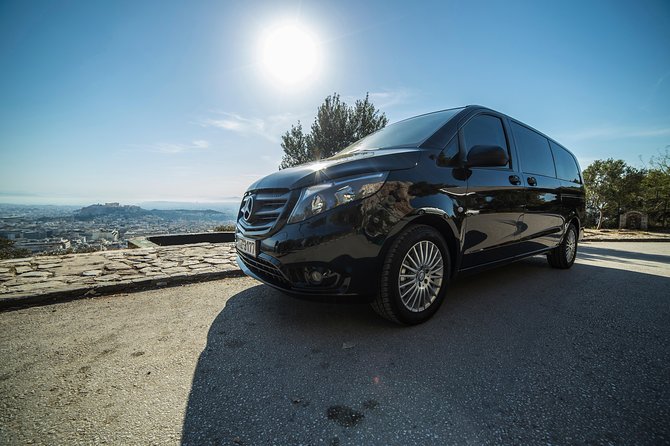
- A private hotel/port pickup and drop-off and a private air-conditioned vehicle
- Onboard Wi-Fi plus bottled water
- A driver who offers fluent English commentary and puts the sites into context while you’re traveling
- Lunch included if you select the Greek traditional meal option
What costs extra:
- The driver does not automatically act as a licensed site guide inside archaeological areas. You can request a licensed tour guide depending on availability.
- Entrance fees apply for Ancient Corinth and the Archaeological Museum of Isthmia. The tour lists these as about €15 per person, purchased on site.
This price can feel especially fair if:
- you want a day built exactly around Paul’s locations, not random highlights
- you’re traveling with a small group and prefer not to join a larger tour
- you’ll actually use the time in the car for storytelling (many guides bring their history to the road)
One more logistics note that helps: if you’re on a cruise or switching lodging, confirm your pickup point clearly. One helpful tip from real-world experience is that you’ll get the most stress-free start if you message early to lock in the exact meet-up location, especially if you’re not in a standard hotel lobby.
Should you book this Biblical Corinth day trip?
Book it if you want a Paul-centered itinerary where the stops connect logically—Athens sermon setting, Corinth’s ports and trial setting, Isthmia’s festival world, and the fortress views above it all. It’s a great fit for travelers who like meaning, but also like breathing room and not feeling rushed.
Skip it or add a licensed guide if you specifically want someone walking you inside every ruin with official guide narration. This tour’s driver commentary is strong, but the model here is “driver explains, you explore,” with optional licensed guidance.
If your goal is to walk through St. Paul’s world with a plan you can follow at your pace, this is a very solid choice for an 8 to 9 hour day out of Athens.
FAQ
What kind of tour is this?
It’s a private tour, meaning only your group participates. Your driver provides transportation and commentary, and you explore the sites during the scheduled stops.
How long is the tour?
The duration is listed as about 8 to 9 hours.
Is pickup included?
Yes. The tour includes hotel or port pickup and drop-off, and the pick-up time can be adjusted upon request.
Is Wi-Fi included?
Yes, Wi-Fi is provided on board the vehicle.
Does the tour include lunch?
Lunch is included if you select the With Greek traditional food option. The lunch stop is about 1 hour in Corinth.
Are entrance fees included?
Entrance fees are not included for Ancient Corinth and the Archaeological Museum of Isthmia (listed as about €15.00 per person). The other stops are listed as free admission.
Does the driver enter the archaeological sites with you?
No. The drivers are not licensed tour guides for site entrances. They are knowledgeable and can answer questions, but they don’t enter the sites with you.
Can I request a licensed tour guide?
Yes, a licensed tour guide is available upon request and depends on availability, but it’s not included in the base tour price.
What language is the tour in?
The tour is offered in English.
What if I need to cancel?
Free cancellation is offered up to 24 hours in advance for a full refund.