REVIEW · VALENCIA
Essentials of Valencia and its World Heritage Sites
Book on Viator →Operated by Turiart · Bookable on Viator
Valencia rewards slow wandering, but this tour is a smart shortcut. You’ll follow a guide through the historic center and hit three UNESCO connections in one go, including the Silk Exchange. I love that it’s built for real orientation: you’ll learn what you’re looking at and where to go next.
Two things I particularly like: you get entry to La Lonja de la Seda for a proper inside look, and the pacing is friendly enough to actually read façades and ask questions. A small heads-up: the walking is nonstop-city-center style, so if you want lots of sit-down time, plan to rest afterward.
In This Review
- Quick Takeaways: What Makes This UNESCO Walk Worth Your Time
- The Big Idea: A Guided Shortcut Through Valencia’s UNESCO Pulse
- Before You Go: Logistics That Matter (Meeting Point, Time, Group Size)
- Stop 1: Estació del Nord Visit (Get Oriented Fast)
- Stop 2: Plaça de l’Ajuntament and the Story of the Fallas
- Stop 3: Ajuntament de Valencia (A Political-Architectural Anchor)
- Stop 4: Mercat Central de Valencia and the Mediterranean Diet Angle
- Stop 5: Enter La Lonja de la Seda (The Interior That Makes It a UNESCO Win)
- Stop 6 (and a Final Landmark Feel): Plaza de la Virgen and the Water Tribunal
- The One Missing Piece: The Brief External Visit
- Why the Route Works for First-Timers (Even If You Like Going Off-Script)
- Pace and Comfort: What You’re Signing Up For
- Guides: The Human Part That Makes This Tour Feel Personal
- Price and Value: Why This Costs What It Costs
- Practical Tips to Get More Out of Each Stop
- Should You Book This Valencia UNESCO Walk?
- FAQ
- How long is the tour?
- Where does the tour start and end?
- What is the price per person?
- What UNESCO sites does the tour focus on?
- Is a mobile ticket included?
- Is entrance included for La Lonja de la Seda?
- Is entrance included for the Central Market?
- What about the City Hall stop?
- When does the Water Tribunal take place?
- Can children join?
- What is the cancellation policy?
Quick Takeaways: What Makes This UNESCO Walk Worth Your Time
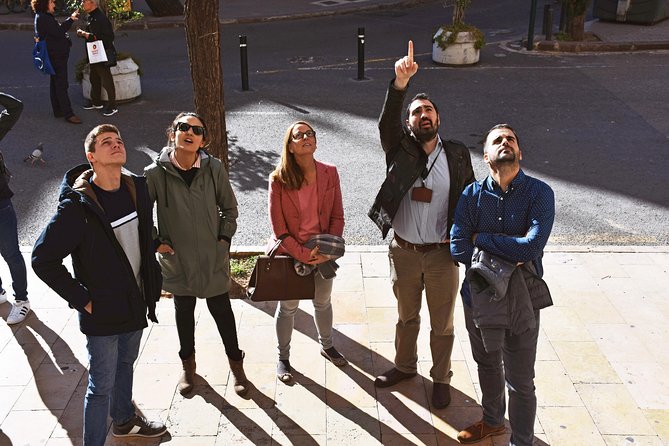
- Three UNESCO-linked stops in one morning/afternoon: Fallas, La Lonja de la Seda, and the Water Tribunal.
- You don’t have to navigate—the route is guided, so you can keep your focus on sights instead of maps.
- La Lonja interior time is real (not just a quick peek), including the Sala de Contratación.
- City Hall and market context make the architecture meaningful, not random photo stops.
- Small group size (up to 25) keeps the tour from feeling like a human slideshow.
The Big Idea: A Guided Shortcut Through Valencia’s UNESCO Pulse
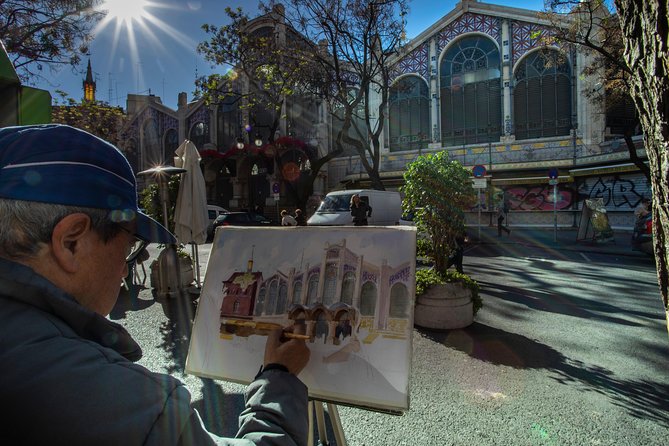
Valencia can feel big in person, even when the sites are close together. This experience solves the first-day problem: you get a guided route through the center so you don’t lose time figuring out direction, entrances, and what’s actually important.
The second benefit is interpretive. You’re not just standing where Instagram tells you to stand—you learn what each place meant to Valencia and why it earned UNESCO status.
And the third benefit is practical value. For one low price, you’re paying mainly for a professional guide plus one paid entrance (La Lonja), while much of the rest of the walk happens at free stops.
You can also read our reviews of more historical tours in Valencia

Before You Go: Logistics That Matter (Meeting Point, Time, Group Size)
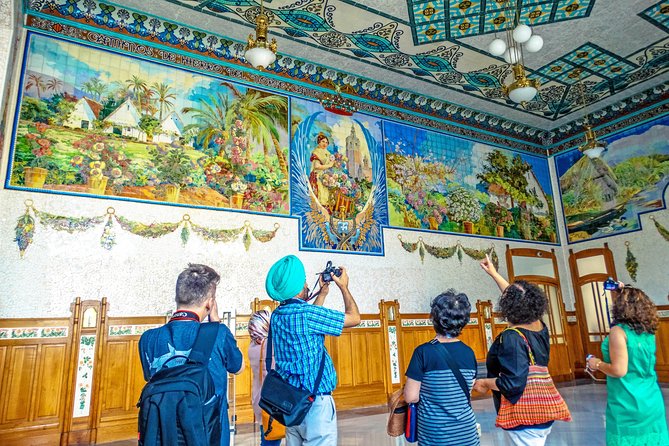
This is a 2-hour guided tour with a mobile ticket, and it runs with a maximum of 25 travelers. That group size is a sweet spot: large enough to run efficiently, small enough that you can still hear explanations clearly and ask questions.
You’ll start at Bailén – Estació del Nord (Extramurs, 46007 Valencia) and end near Carrer del Micalet, 7 (Ciutat Vella, 46001 Valencia). Transportation to and from those points isn’t included, so I’d plan to arrive on foot, by metro, or taxi and let the tour do the sightseeing legwork.
Also note that this is a historic-center walk. You’ll be standing and walking between stops, so wear comfortable shoes and keep water handy.
Stop 1: Estació del Nord Visit (Get Oriented Fast)
The tour starts at Estació del Nord, and the plan includes a visit of the station. It’s only about 20 minutes, but it sets a tone: you’re seeing Valencia as a city of movement and trade, not just a cluster of monuments.
The practical upside here is orientation. Once you leave the station area with a guide, you’ll understand how the city’s medieval core connects with modern streets and squares.
If you’re someone who hates waiting around early in a tour, you’ll still appreciate this start. It’s short, and it quickly gets you into “here’s what to notice” mode.
Stop 2: Plaça de l’Ajuntament and the Story of the Fallas
Next you’re at Plaça de l’Ajuntament, where your guide focuses on the Fallas—Valencia’s last major UNESCO addition in 2016. This isn’t a vague holiday mention; you’ll hear how the festivities turn the city into an open-air museum of temporary monuments, with music, traditional costumes, and the smell of gunpowder.
Timing matters with Fallas. The dates given are March 15 to 19, so you’re visiting outside that window if you’re doing the tour any other time of year—but the cultural context is still the point. You’ll understand what you’re seeing when you spot Fallas connections around the city.
A possible drawback: this stop is about 15 minutes, so if you want a deeper dive into Fallas, treat it as a strong intro and plan a separate evening or museum visit later.
Stop 3: Ajuntament de Valencia (A Political-Architectural Anchor)
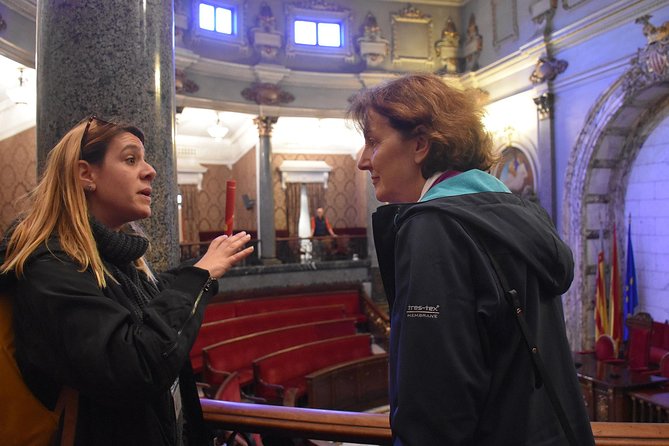
Then comes Ajuntament de Valencia with around 20 minutes. The tour notes that working days are the default, but access can change on days with official events, holidays, or specific evening departures (with a stated exception for August & September at 06:30pm).
Even when you aren’t fully inside, this stop works because it gives you a landmark “anchor” for the rest of the route. City Hall isn’t just a building; it’s part of Valencia’s civic story, and your guide ties that to the bigger theme of what Valencia valued over time.
I like this kind of stop because it helps you stop seeing squares as backgrounds. Instead, you start noticing the power and the design choices behind them.

Stop 4: Mercat Central de Valencia and the Mediterranean Diet Angle
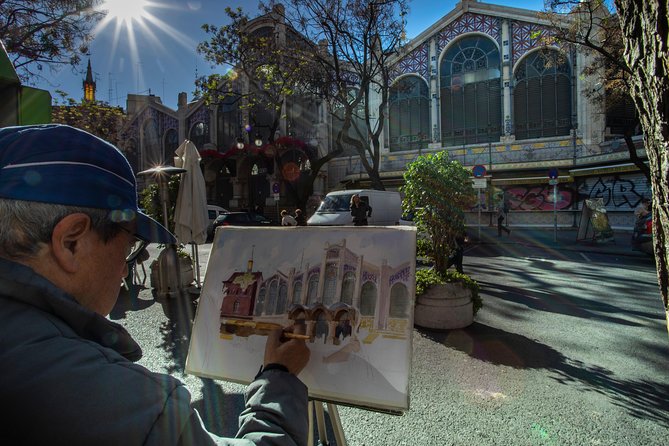
At the Mercat Central de Valencia, the tour shifts from political and artistic history to daily life. You’ll get an explanation of the market and the Mediterranean diet connection, and the time here is roughly 10 minutes.
Important detail for timing: for evening tours in August and September at 06:30pm, entrance to the market is not included. For daytime departures, the tour’s structure suggests you’ll get more than just a curbside look, so if going inside the market is a must for you, prioritize a non-evening slot.
This is one of the stops I’d recommend even if you’re not a foodie. Market architecture and trading culture are central to how Valencia became Valencia—and the Mediterranean-diet framing helps you connect the building to what people actually did here.
Stop 5: Enter La Lonja de la Seda (The Interior That Makes It a UNESCO Win)
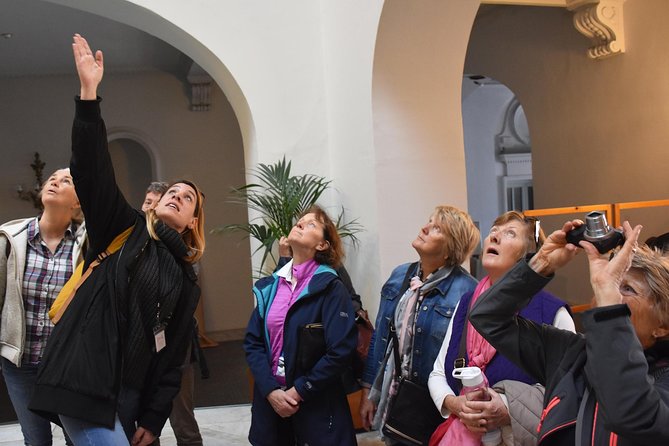
Now for the main event: La Lonja de la Seda. The tour includes entry and spends about 30 minutes inside, with admission included on standard departures.
You’re walking into a civil Gothic masterpiece that became a UNESCO World Heritage Site in 1996. The highlight is the Sala de Contratación, described through its columns, vaults, and ribs. Even if you aren’t an architecture nerd, the room’s structure is easy to feel: it was built for serious business, and it still looks like a place where deals happened.
This stop is where the “value” shows most clearly. You’re paying for a guided entrance to a UNESCO site, and the guide’s job is to point out details you’d likely miss on your own.
Evening note: on August & September at 06:30pm, entry to La Lonja is stated as not included. If you’re choosing between a daytime and an evening departure, and the interior is a priority, go daytime.
Stop 6 (and a Final Landmark Feel): Plaza de la Virgen and the Water Tribunal
The tour closes with Plaza de la Virgen and a focus on the Tribunal of the Waters. This is described as Intangible Heritage of Humanity since 2008, and you’re given a very specific “how to catch it” detail: it takes place every Thursday at 12:00 noon at the Apostles’ Gate of the Cathedral.
Even if you won’t be there on a Thursday at noon, this stop helps you understand something special about Valencia: rules and community aren’t only modern. The city keeps a working tradition that ties law, fairness, and local water management into a ritual people recognize.
You also get that classic “last square” moment—good for photos, good for orientation, and good for deciding where to go next in the old quarter.
The One Missing Piece: The Brief External Visit
The itinerary includes an “external visit” stop without a named landmark in the information you provided. I’d plan for a short photo-and-context moment somewhere along the route, rather than expecting another major indoor stop.
That’s not a deal-breaker. The tour’s main indoor time is clearly reserved for La Lonja, and the rest is structured around quick orientation and storytelling.
Why the Route Works for First-Timers (Even If You Like Going Off-Script)
This kind of tour shines when you’re trying to avoid two extremes: doing nothing planned, or sprinting between sites with no context. Here, the guide builds a mental map for you, then hands you enough knowledge to wander afterward with confidence.
I also like that the tour covers different kinds of “Valencia value”:
- civic identity (city hall and squares),
- trade and architecture (La Lonja and the station start),
- daily culture (the central market and diet link),
- living tradition (Water Tribunal timing and location),
- seasonal cultural memory (Fallas context).
That mix means you don’t leave with a single-theme souvenir. You leave with a city you can read.
Pace and Comfort: What You’re Signing Up For
The walk is organized into short blocks: about 10 to 30 minutes at each focus point. That structure helps keep attention from lagging, and it matches the praise you’ll see around guide energy and how quickly people feel they’re learning.
Still, there’s a practical consideration: you’re on your feet through a city-center route. If you have mobility issues or you prefer slower tours with frequent seated breaks, this might not fit your style. A quick rest and snack afterward will matter.
Guides: The Human Part That Makes This Tour Feel Personal
The strongest pattern in the feedback is the guide factor. Names that come up are María, Sara, Sarah, and Gabor, and the theme is consistent: friendly delivery, clear explanations, and answers to questions.
One detail I especially appreciate in a city tour is when a guide goes beyond facts and gives local guidance. In the information provided, guides are described as sending restaurant ideas across different parts of the city, so you’re not just learning history—you’re also learning what to do next.
If you book, I’d come prepared with one question you really want answered, like where to eat near the sites you’re most interested in or what neighborhood fits your taste. You’ll get more out of the time.
Price and Value: Why This Costs What It Costs
At $20.85 per person, you’re paying for three things:
1) a professional guide,
2) a guided route that prevents wasted time,
3) included entrance to La Lonja de la Seda (the only explicitly included admission).
Everything else is listed as free admission, and the UNESCO-linked stops are spread across different parts of the old center. For many visitors, the ability to avoid navigation stress is worth a lot. You’re effectively buying time, structure, and interpretation.
One more value point: the tour is often booked about 21 days in advance on average, which is a hint that it fits into many travelers’ first-week schedules. If you’re traveling during a busy period, booking ahead tends to reduce stress.
Practical Tips to Get More Out of Each Stop
A guided walking tour works best when you treat it like a tour guide to your own curiosity.
Here are a few ways to sharpen your experience without turning it into homework:
- At La Lonja, look up at the vaults and ribs the moment your guide points them out. That’s where the building’s purpose becomes obvious.
- At Plaza de la Virgen, ask what you’d watch for if you were there on Thursday at 12:00. The “when and where” detail is the key.
- Near the market, keep your eyes open for how a food system becomes a cultural system. Even a quick 10 minutes can change how you read what you’re walking past.
Should You Book This Valencia UNESCO Walk?
Book it if you want a clean, efficient first look at Valencia with real UNESCO moments and a guide who helps you connect the dots. The tour is especially worth it when La Lonja interior access is part of your plan and you want to avoid the map-and-missed-entrance frustration.
Skip it or consider a different style if you need lots of downtime, or if you’re only interested in one site and don’t care about civic squares, market culture, and living traditions. The tour is built to cover ground and teach you what you’re seeing, not to linger for hours in one place.
If your goal is: get your bearings fast and learn what matters—this is an easy yes.
FAQ
How long is the tour?
The tour lasts about 2 hours.
Where does the tour start and end?
It starts at Bailén – Estació del Nord (Extramurs, 46007 Valencia) and ends at Carrer del Micalet, 7 (Ciutat Vella, 46001 Valencia).
What is the price per person?
The price is $20.85 per person.
What UNESCO sites does the tour focus on?
The tour highlights three UNESCO-listed Valencia connections: La Lonja de la Seda, the Tribunal of the Waters, and Fallas.
Is a mobile ticket included?
Yes, the tour uses a mobile ticket.
Is entrance included for La Lonja de la Seda?
Yes. Admission to La Lonja de la Seda is included, with a note that evening tours in August and September do not include entrance.
Is entrance included for the Central Market?
Admission to the Central Market is listed as free in general, but evening tours in August and September at 06:30pm do not include entrance.
What about the City Hall stop?
Ajuntament de Valencia is noted as working days except those with official events or holidays, and it has an exception for evening tours in August and September at 06:30pm.
When does the Water Tribunal take place?
The Tribunal of the Waters takes place every Thursday at 12:00 noon at the Apostles’ Gate of the Cathedral.
Can children join?
Children must be accompanied by an adult.
What is the cancellation policy?
You can cancel up to 24 hours in advance for a full refund. If you cancel less than 24 hours before the start time, the amount paid is not refunded.