REVIEW · VANCOUVER
The Really Gay History Tour in Vancouver, Canada
Book on Viator →Operated by Forbidden Vancouver · Bookable on Viator
Queer Vancouver walks past you. This Really Gay History Tour turns street corners into stories, using a guided walk to connect LGBTQ2+ milestones to the places you can actually see in downtown, the West End, and the Davie Street gay neighbourhood.
I especially love the storytelling from Glenn, with a mix of humor, heart, and clear connections between people and events. I also like that the tour is only about 2 hours, so you get real context fast and still have the rest of the day to explore on your own.
One thing to consider: the tour includes explicit language, and it’s not recommended for kids under 14. Also, it’s a walking tour, so you’ll want sensible shoes and a moderate ability to keep moving for the full route.
In This Review
- Quick Key Points Before You Go
- Why This 2-Hour Walk Works So Well in Vancouver
- Meeting Point: Where to Find Glenn and Start the Route
- The Big Idea: How the Tour Turns Place Names into Meaning
- Stop by Stop: What You’ll Experience on the Walk
- 1) Vancouver Downtown: From Courts and Ministers to Citywide Turning Points
- 2) Quadra and Church-Adjacent Stories: Drag Kings and Community Power
- 3) Nelson Park: An Urban Oasis With a Narrative Footprint
- 4) The West End: Early Pride, Bookstore Bombings, and a Secret Gay Village
- 5) Two-Spirited Warrior Story: Gone to the Spirits
- 6) Finishing on Davie Street: The Present-Day Scene in Your Hands
- What the Guide Style Brings: Humor, Respect, and Real People
- Price and Value: Is $29.29 Worth It?
- Timing and Physical Comfort: The Part People Should Not Ignore
- Who Should Book This Tour (and Who Might Skip It)
- Should You Book the Really Gay History Tour?
- FAQ
- How long is the Really Gay History Tour?
- How much does the tour cost?
- Where do I meet the guide, and where does the tour end?
- What time does the tour start?
- Is the ticket mobile?
- Does the tour run rain or shine?
- Is the tour suitable for children?
Quick Key Points Before You Go
- Glenn’s on-foot storytelling links LGBTQ2+ events to real Vancouver landmarks you’ll pass right in front of you
- Imperial Court, drag kings, and church history show how wide community life has always been
- AIDS-era context (Patient Zero and GRID crisis) gives timeline clarity to heavy chapters
- You finish on Davie Street in the heart of the nightlife and dining zone
- Rain or shine with many stops under cover
Why This 2-Hour Walk Works So Well in Vancouver
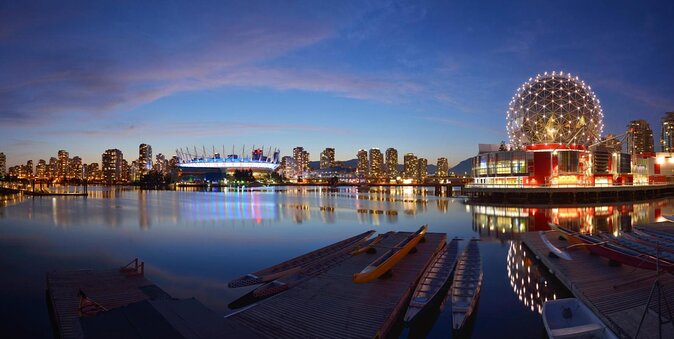
Vancouver can feel calm from the water, but the city’s LGBTQ2+ story has always been intense, political, and deeply human. This tour keeps it grounded by staying on foot and moving you through the exact neighbourhoods where moments happened.
You’re not stuck with a museum-style format. Instead, you get a guide-led narrative built for walking pace, so history stays attached to street-level details like parks, storefronts, and intersections.
And at about $29.29 per person, you’re paying for live interpretation by a professional guide—then spending the rest of your day where the story lands, on Davie Street.
You can also read our reviews of more historical tours in Vancouver
Meeting Point: Where to Find Glenn and Start the Route
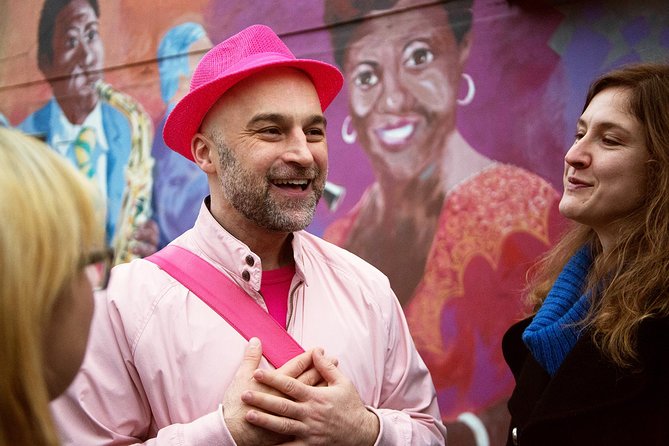
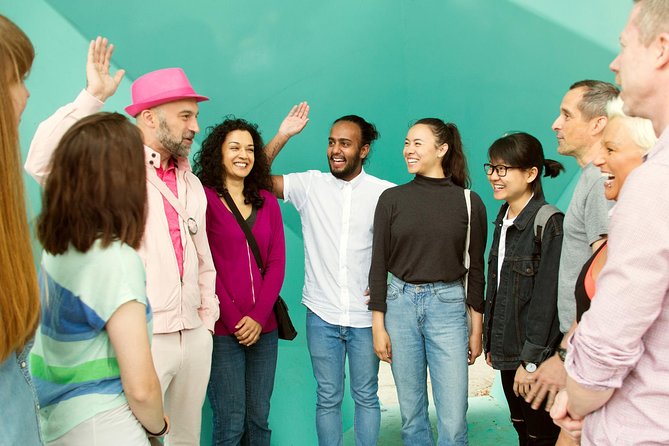
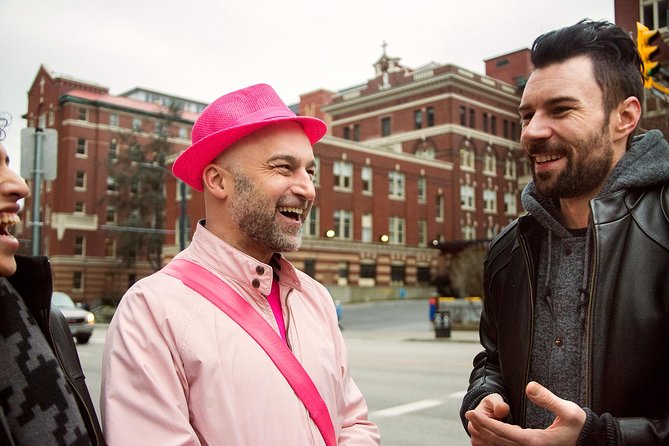
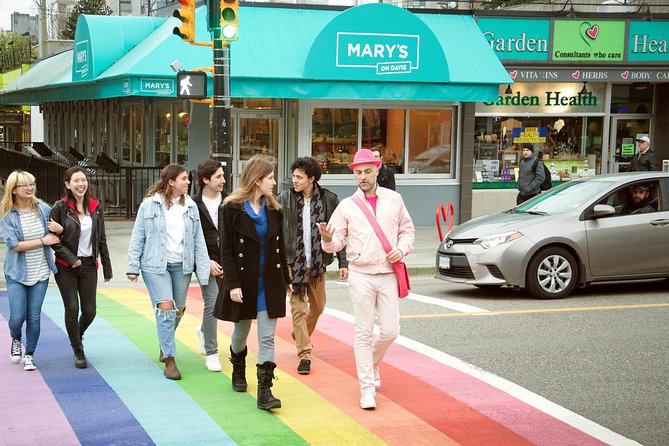
The tour begins at 930 Burrard Street, outside Trees Organic Coffee Shop. The meeting point is easy to spot: the guide is identified as the man in pink, and that makes regrouping simple even if you’re arriving a few minutes early.
It starts at 10:00 am, and you’ll want to show up about 10 minutes before so check-in doesn’t eat into your tour time. The walk is capped at 20 travelers, so you’re likely to hear everyone’s questions and keep a comfortable pace through the streets.
The tour uses a mobile ticket, so make sure your phone battery is in good shape. The starting area is also near public transportation, which is helpful if you’re planning to tack on other stops before or after.
The Big Idea: How the Tour Turns Place Names into Meaning
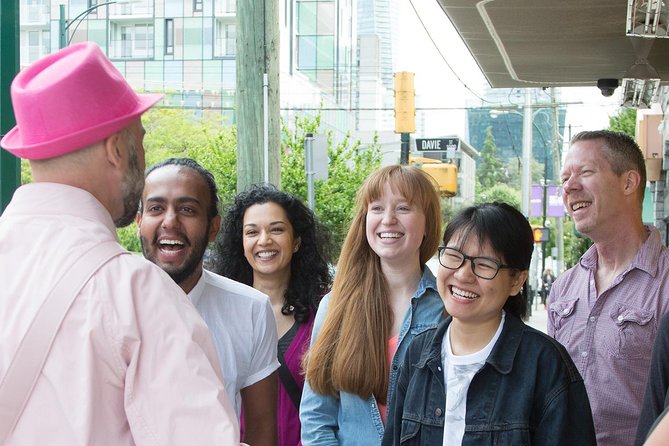
What makes this experience more than a list of facts is how it connects landmarks to lived reality. You’ll hear about community institutions, public events, and moments of risk—not just the “nice” parts of history, but the hard ones too.
The route is planned so you move through several layers of Vancouver:
- downtown story points and civic spaces
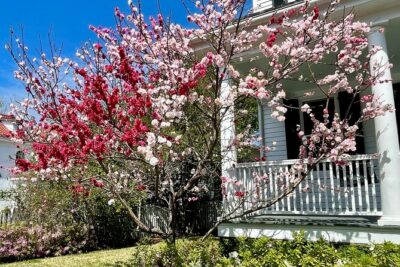
- the tree-lined West End area where early Pride activity is part of the conversation
- the Davie Street area where the community’s present-day pulse is right in front of you
For you, that means the city you see after the tour feels different. You’ll start noticing how often queer life shaped the street, the politics, and the culture—rather than treating it as something that happened elsewhere.
Stop by Stop: What You’ll Experience on the Walk
1) Vancouver Downtown: From Courts and Ministers to Citywide Turning Points
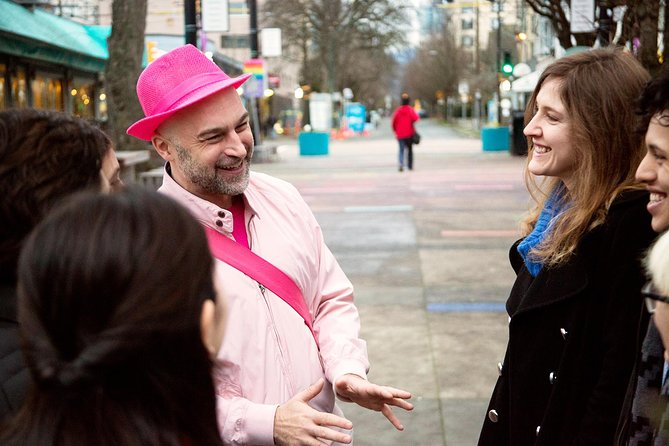
In downtown, the guide sets up the pattern: LGBTQ2+ history isn’t tucked away in one alley. It has shown up in mainstream institutions and public spaces.
Expect stops that reference:
- Imperial Court coronations
- gay ministers connected to the United Church
- early threads that lead into later crises and organizing
These topics matter because they show community formation wasn’t only about nightlife. It was also about leadership, faith spaces, ceremony, and public presence—things that make it easier to understand how the community gained visibility over time.
Then you’ll move into stories that frame the next steps of the tour—stories about fear, stigma, and survival, including references to Patient Zero and the GRID crisis.
A small drawback here: if you’re not a fan of heavier topics, this portion may feel emotionally intense. The good news is that the tour’s overall style uses pacing and humor to keep you engaged without flattening the reality.
2) Quadra and Church-Adjacent Stories: Drag Kings and Community Power
As you head through the route, you’ll hear about drag kings at the Quadra. The guide also links performance to community life and identity, rather than treating it like a side note.
Then there are stops tied to the United Church and other religious connections. That combination—performance energy on one side and faith-based community on the other—helps you understand queer Vancouver as something broader than a single scene.
This mix also explains why the tour feels personal. It’s not only about famous names. It’s about ordinary community roles: people who organized, taught, marched, performed, and made room for others.
3) Nelson Park: An Urban Oasis With a Narrative Footprint
You’ll also visit Nelson Park, described as an urban oasis. That matters because parks are part of daily city life, not just event spaces.
On this walk, the park isn’t just a break from pavement. It works as a moment to absorb the story while you’re literally surrounded by green space in the middle of the city.
It’s a useful reset, especially if the earlier downtown content turned heavy. Even if you’re a quick walker, parks give you breathing room to let what you learned land.
4) The West End: Early Pride, Bookstore Bombings, and a Secret Gay Village
As the walk reaches the West End, you’re in an area that looks very familiar. That’s the point. You’ll get context for why these streets matter to Pride origins and community visibility.
Expect stop references to:
- the city’s earliest Pride parade
- Jim Deva Plaza
- bookstore bombings
- a secret gay village
- a transgender campaigner who blew the whistle on the biggest crime in Vancouver history
Those last two details do a lot of work. The secret-gay-village angle shows how community survival often required discretion. The whistleblower story highlights how some people used truth-telling as a form of protection—both for individuals and for the wider community.
The bookstore bombing reference adds another layer: even when people built spaces for queer safety, those spaces weren’t immune to violence.
If you’re the type who likes your history with stakes, this section is likely to stick with you. If you prefer light and scenic, you might find yourself wishing for a longer pause between stops—but the guide’s structure helps keep you oriented.
5) Two-Spirited Warrior Story: Gone to the Spirits
One of the most distinctive parts of the walk is the story about a two-spirited warrior named Gone to the Spirits. It brings attention to Indigenous identities and the deeper timeline that often gets left out of pop-history versions of Pride.
This isn’t just “another stop.” It changes how you read the route. Instead of seeing the tour as only a 20th-century timeline, you’re pushed to understand that queer identity and gender diversity have always existed in place-based cultures.
For you, that means the tour can be more than LGBTQ2+ history. It can feel like a lesson in how to notice what was here before modern labels and modern movements.
6) Finishing on Davie Street: The Present-Day Scene in Your Hands
The tour ends at Jim Deva Plaza with you in the middle of the action on Davie Street—a strong choice for a half-day experience.
This ending matters because it’s not a “go back to your hotel now” situation. You can do what you actually want next:
- keep browsing the area
- grab a meal
- head into the bars and restaurants that make Davie Street the hub it is today
Because the tour ends where people tend to gather, the whole day keeps moving. You can use the tour as your orientation and then let your curiosity take the next step.
What the Guide Style Brings: Humor, Respect, and Real People
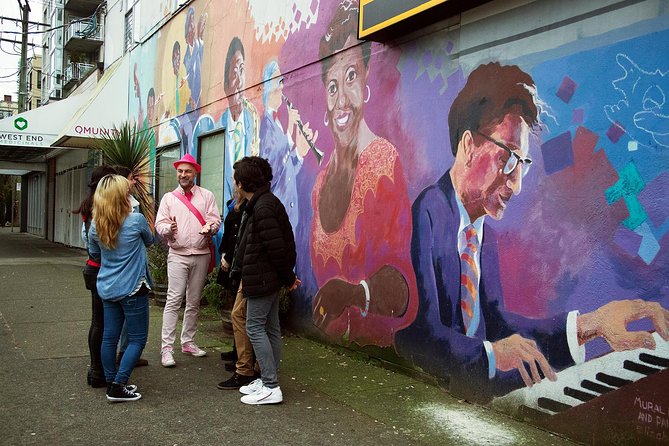
The tour’s consistent strength is how the guide tells stories. Glenn’s delivery is described as masterful, and the big pattern is that he brings details to life while keeping the tone thoughtful.
That balance shows up in how the tour handles emotional content. You get moments that can make you laugh, and you also get moments that feel like a real gut check. The guide’s job is to make that emotional range readable without turning tragedy into spectacle.
Just as important, people appreciate how accurate and well-researched the information feels. That means you’re not only entertained—you’re leaving with a clearer framework for what you just heard.
And because the group size is up to 20, you’re not lost in a crowd. You’re more likely to feel like you’re hearing a conversation built for people who care.
Price and Value: Is $29.29 Worth It?
At $29.29 per person for roughly 2 hours, this tour sits in the “high value for live guidance” category.
Here’s why the math works:
- You’re paying for a professional guide, not self-guided browsing.
- You get a structured route through multiple neighbourhoods instead of piecing together info on your own.
- The ending places you right in Davie Street, which can save time when you’re deciding what to do next.
It’s also a practical price point if you’re on a mid-budget trip and want one tour that meaningfully changes how you understand a city.
If you’re only interested in a single theme (say, nightlife only), you might prefer a shorter or more niche option. But if you want LGBTQ2+ history that connects to the streets, this is a strong deal.
Timing and Physical Comfort: The Part People Should Not Ignore
This is a walking tour, and it’s listed as requiring moderate physical fitness. The route happens rain or shine, though many stops are under cover.
So plan for weather and for movement. Wear sensible shoes, and if it’s warm out, bring sunscreen.
Also, the tour includes explicit language. Even if you’re used to it, it helps to know upfront so you can decide based on your comfort level.
Age note: it’s not recommended for guests under 14. If you’re traveling with a teenager, you’ll want to consider whether your family is okay with explicit language and heavy themes.
Who Should Book This Tour (and Who Might Skip It)
I think this tour is a great match if you:
- want an on-foot way to understand LGBTQ2+ history in Vancouver
- enjoy storytelling that mixes humor with serious material
- like ending a tour in a lively area you can explore right away
- prefer a half-day commitment with a plan for the rest of your day
You might hesitate if:
- explicit language is a deal-breaker
- you want history with minimal emotional weight
- walking for the full duration is tough for you
There’s also a good chance you’ll appreciate it more if you already know a little about Vancouver’s neighborhoods, because the guide’s clues can then snap into focus faster.
Should You Book the Really Gay History Tour?
Yes, if you want a fast, meaningful overview of LGBTQ2+ history that’s tied directly to the streets you’ll be walking anyway. For a $29.29 price, you get a professional guide, a tight 2-hour format, and a satisfying ending on Davie Street where the present-day community life is right there.
I’d book it especially if you care about stories that treat real people with respect and include the hard chapters, not only the highlights. If that sounds like your kind of travel, this is a smart, efficient way to learn—and then keep exploring Vancouver with new eyes.
FAQ
How long is the Really Gay History Tour?
The tour lasts about 2 hours.
How much does the tour cost?
The price is $29.29 per person.
Where do I meet the guide, and where does the tour end?
You meet at 930 Burrard Street outside Trees Organic Coffee Shop. The tour ends at Jim Deva Plaza, 1200 Bute Street.
What time does the tour start?
The start time listed is 10:00 am.
Is the ticket mobile?
Yes. The tour uses a mobile ticket.
Does the tour run rain or shine?
Yes, it happens rain or shine, and many of the stops are under cover.
Is the tour suitable for children?
It contains explicit language and is not recommended for guests under the age of 14.