REVIEW · AMSTERDAM
Financial History Tour
Book on Viator →Operated by Historical Amsterdam Tours · Bookable on Viator
Follow Amsterdam’s money trail.
This Financial History Tour connects how finance shaped Amsterdam’s culture and heritage, with a guided walk that’s packed with photo chances and city details you’d miss on your own. I love how it starts in real, recognizable financial architecture near the Dam, then turns into a story you can actually visualize, not just dates on a wall. I also like the way the route is designed for variety, with stops that include both historic exchange spaces and archive-filled interiors—so you get more than street-level sightseeing. One consideration: it’s about 2 hours 30 minutes, so plan for a moderate walk and standing time.
What makes the experience click is the private format—only your group, flexible enough to move at a pace that makes sense. I especially appreciate the guidance quality; in my notes, one standout comment mentioned tour guide Tijs de Boer as giving clear insights plus practical local hints. The main drawback to keep in mind is price: it’s $390.50 per group (up to 10), so it’s best when you’re splitting the cost with friends or family rather than trying to treat it as a solo bargain.
In This Review
- Key Points You Should Know Before You Go
- A Financial History Tour in Amsterdam that Links Money to Daily Life
- Starting at Beurs van Berlage: Exchange Building Energy Near the Dam
- Stadsarchief Amsterdam: Where Financial Power Leaves Paper Trails
- Merchants, Money-Making, and the Tulip Mania Thread
- Hidden Gems and Photo Opportunities Without the Museum Fatigue
- Private Tour Format: Flexible Pace and Better Question Time
- Price and Value: When $390.50 Makes Sense
- Timing and Meeting Points: Quick Start, Easy Ending
- What to Expect on the Ground: Comfort, Fitness, and Practical Setup
- Who This Tour Is Best For (and Who Might Skip It)
- Should You Book the Financial History Tour?
- FAQ
- FAQ
- How long is the Financial History Tour in Amsterdam?
- What is the price and group size?
- Is the tour offered in English?
- Do I need a printed ticket?
- Where does the tour start and end?
- What are the main stops on the tour?
- Is admission included at the stops?
- What is the cancellation policy for a full refund?
Key Points You Should Know Before You Go
- Private and flexible: only your group participates, so you can ask questions as you go
- Start at Beurs van Berlage: the tour kicks off at the exchange building near the Dam area
- Archive stop in a 1920s bank setting: Stadsarchief Amsterdam includes entry and shifts the story into documents and receipts
- Tulip Mania explained in context: you’ll connect the early bubble idea to Amsterdam’s famous floating flower market
- Easy navigation on foot: it ends just across the Dam, about 500 meters from where you start
A Financial History Tour in Amsterdam that Links Money to Daily Life
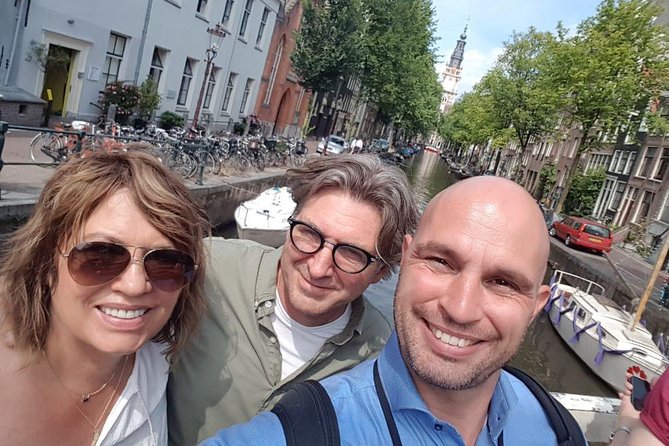
Amsterdam doesn’t just look pretty. It also runs on stories about trade, trust, risk, and reinvention. This tour takes that idea seriously and uses the city itself as your timeline—starting with the places where finance was built, then moving into where records were kept, and finally tying it all to episodes like Tulip Mania.
If you like history but get bored when it’s only old paintings and dusty dates, this kind of tour can feel more “alive.” It’s not trying to make you memorize economics; it’s showing how financial thinking shaped culture and built institutions. And because you’re walking through the area rather than sitting in a museum lecture room, the whole thing lands faster.
You can also read our reviews of more historical tours in Amsterdam


Starting at Beurs van Berlage: Exchange Building Energy Near the Dam
You begin at Bistro Berlage, Beursplein 1 (1012 JW). From there, the tour’s first stop is Beurs van Berlage, an exchange building tied to the way Amsterdam’s finance took physical form around the Dam area.
What I like here is the clarity of the setting. You’re not hearing finance described in the abstract—you’re starting with architecture that signals what mattered: exchange, movement of goods and money, and confidence in systems. It’s also a great way to get your bearings fast because this neighborhood is loaded with recognizable landmarks.
Beurs van Berlage is also one of the tour’s easier wins: admission at this stop is listed as free, and the stop is about 10 minutes. That makes it a good entry point—enough time to understand why the building matters without dragging the whole tour into “stand around for ages” territory.
Stadsarchief Amsterdam: Where Financial Power Leaves Paper Trails
The next major stop is Stadsarchief Amsterdam. The idea is smart: after looking at the exchange world, you shift to the storage world—the documents, archives, and evidence behind what people did with money.
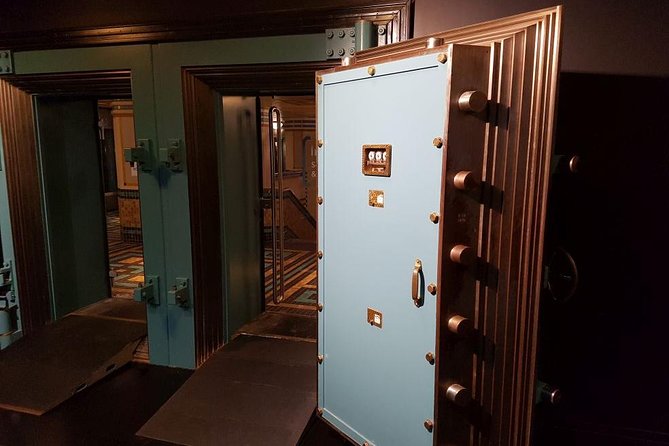
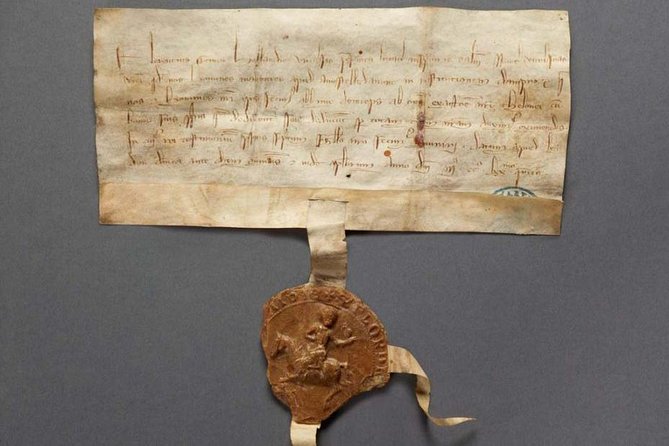
Stadsarchief Amsterdam is described as revealing the city’s treasury of archives from a basement space tied to a 1920s bank building setting. Even if you’re not a document-nerd, this is still useful, because it explains how financial history survives in the real world. Money doesn’t just create buildings; it creates paperwork, records, and systems that outlast the moment.
This stop is also one of the best value points on the tour: admission is included here. It’s listed at about 10 minutes, so it stays focused. You get a concentrated dose of “how we know what happened,” which is exactly what you want from a 2.5-hour walking tour that’s aiming to connect themes instead of hitting dozens of sites.
Merchants, Money-Making, and the Tulip Mania Thread
Between the two named stops, the tour keeps building the story around who held wealth, how merchants made their money, and how financial events became cultural moments. The key themes are simple but powerful: Amsterdam’s success wasn’t accidental, and financial innovation helped shape how people behaved.
One of the standout topics is the first economic bubble idea—Dutch Tulip Mania—connected to the Amsterdam floating flower market. Even if you’ve heard of Tulip Mania before, having it explained inside an Amsterdam money-history framework tends to make it more concrete. It’s no longer just a weird footnote; it becomes an example of how expectations, speculation, and social behavior can drive markets.
I find this kind of interpretation useful because it gives you a lens for the entire city. After a tour like this, you start noticing how Amsterdam’s institutions and commerce turned into identity—practical systems that became part of how people understand the world.
Hidden Gems and Photo Opportunities Without the Museum Fatigue
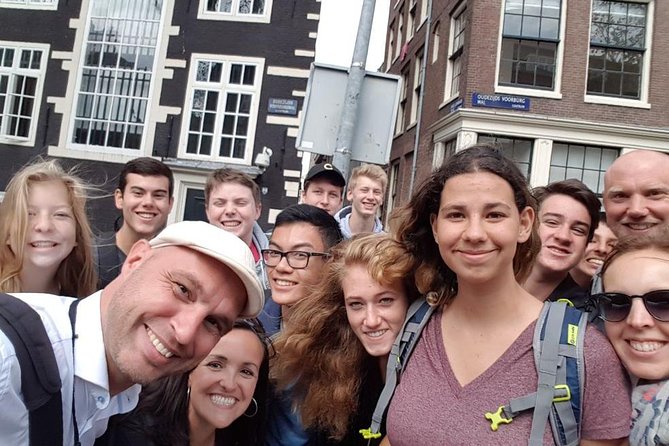
The tour promises “hidden gems” while moving through Amsterdam, and that’s exactly what you should expect from a guided walk designed around stories. You’re not getting endless museum time, so you’re free to spend your attention on what matters: the relationship between place and theme.
You’ll also have opportunities for photos at some of Amsterdam’s most iconic locations. The important practical detail here is timing. In a 2.5-hour tour, photo stops can either feel like quick wins or become time sinks. Since the itinerary is structured around short 10-minute segments at named locations, you’re more likely to get a handful of good shots without losing momentum.
If you’re the type who likes to take pictures but also wants to actually learn something, this format is a decent balance. You get to pause for a frame, then you move on while the story stays fresh.



Private Tour Format: Flexible Pace and Better Question Time
This is a private tour/activity, and only your group participates. That sounds like marketing fluff until you’re the one asking questions and realizing you don’t have to compete with a crowd.
For you, the advantage is control. If something clicks—like a question about merchants, archives, or how an exchange building fits the broader story—you can slow down. If you’re more into architecture, you can focus your attention there. This kind of flexibility matters on a topic like financial history, because people’s curiosity points vary a lot.
The tour also runs in English. If you want a financial history explanation that doesn’t feel like reading a textbook, an English-speaking guide is usually the difference between skimming and actually connecting the dots.
Price and Value: When $390.50 Makes Sense
The price is $390.50 per group (up to 10), for about 2 hours 30 minutes. That pricing structure can either feel high or feel reasonable, depending on how you plan.
Here’s the practical way to think about value:
- If you’re traveling as a small group (friends, family, or a mix of ages who share interests), the per-person cost drops fast.
- If you’re solo, you may feel the cost more because you’re paying for the whole group slot.
- If you like guided context—especially for places with specific historical roles—this tour gives you that interpretive layer in a short time window.
Also note that it’s typically booked about 28 days in advance on average. That’s a hint that you shouldn’t assume last-minute availability if your dates are firm.
Timing and Meeting Points: Quick Start, Easy Ending
You start at Bistro Berlage, Beursplein 1, Amsterdam. The tour ends at Rokin 24HS, Amsterdam. The end point is listed as about 500 meters from the starting point, across the Dam area.
That’s a helpful detail for planning the rest of your day. You don’t need to reorganize your entire itinerary after the tour. You can often go right into nearby food, coffee, or another attraction without wasting time.
It’s also described as near public transportation, which makes it easier to slot into a day even if you’re using transit to get around.
What to Expect on the Ground: Comfort, Fitness, and Practical Setup
The tour indicates a moderate physical fitness level requirement. That usually means you should be prepared for some walking and standing, but not an intense endurance challenge.
You’ll also receive a mobile ticket, and confirmation is received at booking time. For practical travel days, I prefer setups like this because it reduces friction—no scrambling for printouts or trying to figure out where your ticket ended up.
If you’re planning footwear, think comfort first. Amsterdam walking is easy to underestimate. Even if the total time is “only” 2.5 hours, short stops add up.
Who This Tour Is Best For (and Who Might Skip It)
This tour is a good fit if you:
- Want a focused Amsterdam financial history story tied to real places
- Like architecture plus explanation, not just either one or the other
- Enjoy learning through a guided route rather than reading on signs
It may not be your best match if you’re looking for a long, museum-style experience with many separate collections. This tour is short and theme-driven, so you’ll leave with a clear storyline rather than hours of deep compartmentalized exhibits.
Should You Book the Financial History Tour?
I think it’s a strong choice if you want Amsterdam in “systems mode”—how money shaped institutions, culture, and major events like Tulip Mania. The private format makes it feel more personal, and the two named stops are well chosen: a major exchange building to start, then an archives-focused stop where the evidence of financial life is stored.
Book it if your group can share the per-group cost, you’re comfortable with moderate walking, and you’ll enjoy a guided narrative that connects buildings to economic ideas. Skip it if you mainly want slow-paced sightseeing with no interpretation, or if the $390.50 price feels too steep unless you can split it with others.
FAQ
FAQ
How long is the Financial History Tour in Amsterdam?
The tour lasts about 2 hours 30 minutes.
What is the price and group size?
It costs $390.50 per group, and the group size can be up to 10 people.
Is the tour offered in English?
Yes, the tour is offered in English.
Do I need a printed ticket?
No. You’ll get a mobile ticket.
Where does the tour start and end?
It starts at Bistro Berlage, Beursplein 1, 1012 JW Amsterdam, and ends at Rokin 24HS, 1012 KS Amsterdam.
What are the main stops on the tour?
The tour includes Beurs van Berlage and Stadsarchief Amsterdam.
Is admission included at the stops?
Beurs van Berlage lists admission as free, and Stadsarchief Amsterdam lists admission as included.
What is the cancellation policy for a full refund?
You can cancel up to 24 hours in advance for a full refund. If you cancel less than 24 hours before the start time, the amount you paid is not refunded.