REVIEW · AMSTERDAM
Historical tour of Amsterdam with Italian guide
Book on Viator →Operated by AmsterdamViaggi · Bookable on Viator
Amsterdam clicks into focus fast. This historical walk with an Italian mother-tongue guide turns scattered landmarks into one clear story, with practical curiosities that make the city feel less like a postcard and more like a place with real habits and debates.
I like the professional, friendly guiding style and the way it’s built for a first visit, so you can start making sense of canals, religion-era Europe, and everyday Dutch life right away. One thing to plan around: most museum entrances are not included, and key sites like Anne Frank House and Van Gogh are mainly covered from the outside.
In This Review
- Key highlights to look forward to
- Why an Italian mother-tongue guide changes Amsterdam
- The route logic: canals, trade, religion, and the streets between
- Flower Market orientation at Residence Flower Market
- Anne Frank House area: context first, entrance later
- Damrak to the canal heart: Dam, Singel, and the big city contrasts
- Jordaan, Leidseplein, and Vondelpark: neighborhoods you’ll want to return to
- Museumplein finish: plan your Van Gogh and Rijkmuseum time
- Price and value: what $28.81 buys you
- Practical travel notes you can actually use
- Who this tour suits best
- Should you book this Amsterdam history walk?
- FAQ
- How long is the Amsterdam historical tour?
- Where does the tour start and end?
- Are museum entrances included?
- What is the meeting point address?
- How big is the group?
- What is the cancellation policy?
Key highlights to look forward to
- Italian mother-tongue storytelling that keeps the history easy to follow
- A route built like a city loop, starting around Damrak and finishing near Museumplein
- Golden Age and Reformation themes, from Erasmus and Martin Luther to wars of religion
- Quick stop structure so you see a lot in 3 hours 30 minutes without feeling rushed
- Museum-friendly end point so you can continue on your own after the walk
- Group size capped at 50, which helps the tour stay organized
Why an Italian mother-tongue guide changes Amsterdam
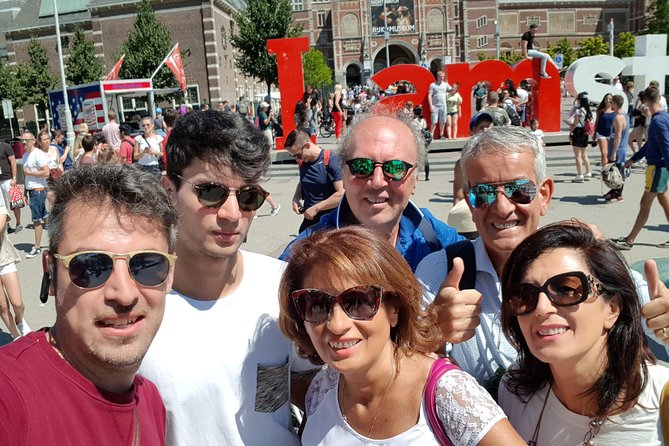
Amsterdam can feel like three cities at once: the canal postcard, the complicated 1500s-to-1600s story of trade and religion, and the modern street life you actually walk through today. This tour uses an Italian guide to connect those layers in a way that feels straightforward, not like a textbook.
I also appreciate the human approach. The guides are described as professional and friendly, with plenty of information delivered along the way, plus “curiosities” that you don’t usually get when you only wander alone. It’s the difference between seeing a building and understanding why people cared about it in its time.
The tour aims to get you living Amsterdam-style for a few hours: where to look, how to read the city’s layout, and what to notice as you move from square to canal to neighborhood.
If you’re traveling with limited time, this style works well. You’ll leave with mental bookmarks you can use later when you go back to explore at your own pace.
You can also read our reviews of more tours and experiences in Amsterdam.


The route logic: canals, trade, religion, and the streets between
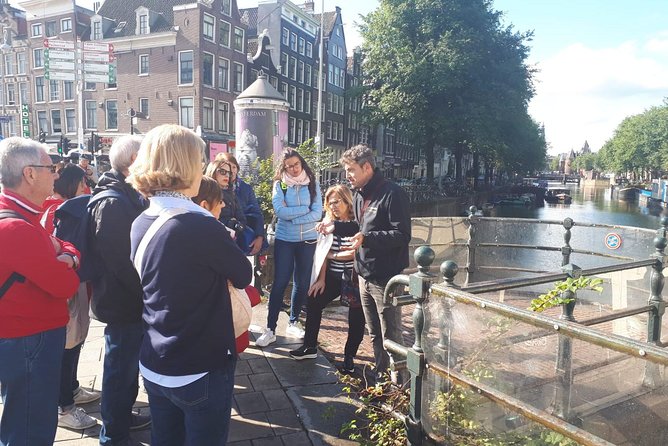
This is a history-focused walking route, but it’s not stuck in one theme. You’ll see how commerce, belief, and everyday customs shaped what the city looks like now.
You start in Central Amsterdam around Damrak, then move through areas tied to major city scenes and important historic spots: Singel, the Spice Customs House, the King’s Warehouses, and then on to the famous older corners that today are among the most talked-about districts.
Along the way, you get the big-picture connections that make Amsterdam feel coherent. The tour’s themes include companies of the Indies, wars of religion, and major European thinkers like Erasmus and Martin Luther. That kind of context helps when you look at sites that might otherwise feel random.
A nice touch is that it’s built for sightseeing flow rather than one long lecture. You’ll hit major points, then keep walking while the guide ties what you see to the story. In practice, that means you’ll remember more than if you only stop for photos.
One caution: since this is a walking route designed to cover a lot, it’s not the format for deep research. If you love reading every plaque and staying an hour in one place, you’ll still enjoy it, but you’ll want to follow up with focused museum time after.
Flower Market orientation at Residence Flower Market
You get a short 20-minute stop at the Flower Market area. The time is brief, so don’t treat it like a full shopping spree. Treat it like a quick orientation: where it sits in the city, why this market matters, and what it signals about Amsterdam’s relationship to daily trade and beauty.
Even in a short window, this stop works because the guide uses it as a launch point into the bigger story of the city’s commerce. You’re not just looking at flowers. You’re watching a living part of Amsterdam’s economy and culture.
If you want to buy anything, keep your expectations realistic: this is more about a first look and passing context than time to browse for an hour. Still, you’ll walk away knowing what you’re looking at when you return later on your own.
Anne Frank House area: context first, entrance later
The tour passes by the Anne Frank House area with a short 5-minute stop. The key detail: you’re looking at the site and hearing its importance, but the Anne Frank House entrance is not included.
That matters because it changes how you should plan your day. If Anne Frank House is high on your list, plan to buy an entry ticket separately and treat the tour as the emotional and historical setup. You’ll get the why behind the place, then decide when to go in.
This is also a good moment to remember what this kind of coverage can and can’t do. A quick exterior stop can’t replace the full experience of inside access and exhibits. But it can help you understand what you’re walking toward before you stand in line elsewhere.
If you’re visiting during busy hours, the short pass-by format is actually a plus. You’ll keep moving while still getting the story.
Damrak to the canal heart: Dam, Singel, and the big city contrasts
After the initial orientation, the route feeds you into Amsterdam’s most recognizable city core. You’ll pass Dam Square, and the walk traces key corridors such as Dam–Singel, plus famous streets and squares that show how Amsterdam mixes grand civic space with smaller, more personal street life.
This is where the tour’s “day as an Amsterdammer” goal starts to feel real. You learn how the city’s major public spaces connect to neighborhoods, and you get a sense of how people use the city year-round, not only as visitors move through it.
The guide’s historical framing is the secret sauce here. Amsterdam’s streets aren’t just pretty. They’re layered with decisions made long ago: where commerce concentrated, where disputes shaped public life, and where different communities found space to exist.
The tour also includes a segment that includes the first red light district area. Whether you find it fascinating or uncomfortable, it helps to have context while you walk through it rather than only seeing it as a headline. The guide places it in the broader city story so you can make sense of what you’re seeing.
One practical note: parts of this area are lively. Keep your eyes on your footing and your schedule. This tour is structured for flow, not lingering.
You can also read our reviews of more historical tours in Amsterdam



Jordaan, Leidseplein, and Vondelpark: neighborhoods you’ll want to return to
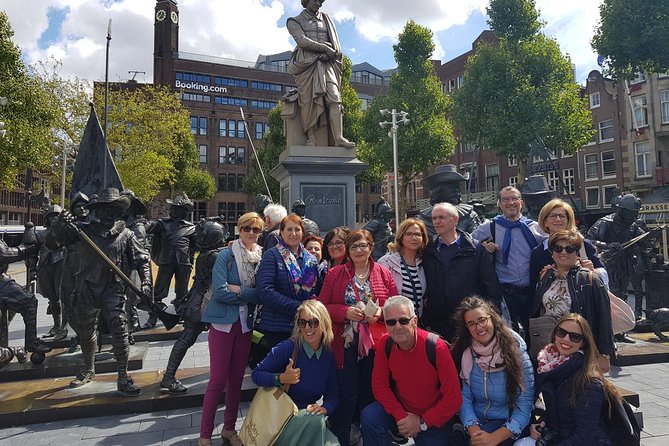
The itinerary moves into the Joordan area, then keeps flowing toward Leidseplein and beyond. This part of the walk is valuable because it gives you a human-scale Amsterdam—streets and squares that feel like where people actually live their day.
You’ll also see a variety of city scenes stacked close together. That’s one reason Amsterdam feels confusing at first: you can go from canal drama to café life in a few blocks. A guided walk is a shortcut to understanding how that switching happens.
Then comes Vondelpark, where the tour includes time along the way to visit key points like major squares and monuments. Vondelpark is often treated as a generic park stop by many visitors. Here it’s handled as a city landmark that helps you understand Amsterdam’s rhythm: people need open space inside a dense historic layout.
If you like taking photos, this is where you’ll naturally slow down for a few seconds. If you don’t, you can just focus on listening. Either way, the value is the connection: the park isn’t an island; it fits into the wider city map.
Museumplein finish: plan your Van Gogh and Rijkmuseum time
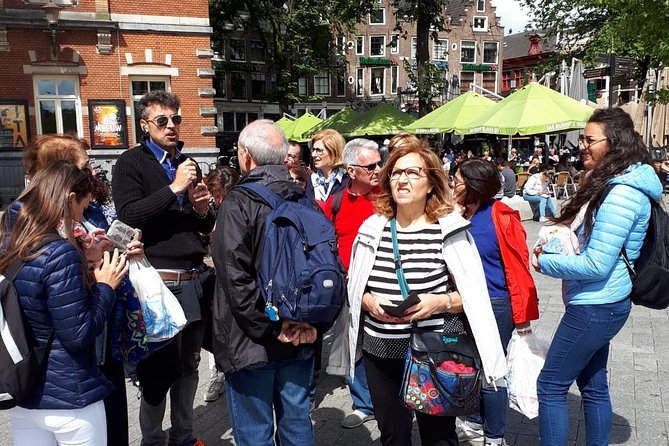
One of the smartest parts of this tour is how it ends. The walk finishes in Museumplein around 1:30 pm, which is perfect for continuing on to big museums on your own.
Here’s the advantage: the tour covers the general area and even includes a pass near Van Gogh museum (entrance not included). That means you’re arriving with a map-like mental picture of where the museums sit and how the blocks relate.
If your goal includes Van Gogh or the Rijkmuseum, this ending helps. You’re not stuck starting your museum quest from a random part of the city after the walk. You’re placed near the concentration of options, and you can choose based on your ticket availability and interests.
Also, because museum entrances are excluded, you avoid paying for something you might not use. You’re buying guidance and orientation, not hoping one ticket covers everything.
Practical tip: if you have strong museum plans, pick your museum first, then use this tour to set the direction. After you exit the guided walk, you can shift into your own pacing without second-guessing where everything is.
Price and value: what $28.81 buys you
At $28.81 per person for a 3 hours 30 minutes guided walking experience, the value is mostly in the human part: the guide’s narration, organization of the route, and the way context turns street scenes into meaning.
This is not a bargain-priced “just walk around” free-for-all. It’s guided, structured, and designed to cover a lot of ground without exhausting you with constant stops. For many first-time visitors, that’s worth it because Amsterdam’s main sights are spread out, and the city’s history is dense.
Two details support the value calculation:
- You’re paying for guidance, and that’s what’s included.
- Museum entrances are not included, so you aren’t overpaying for tickets you may not need.
If you already bought museum tickets for specific places, the tour still works. It gives you context while you walk, then you use the museum time for the full experience where it matters most.
If you’re the type who hates crowds, keep one thing in mind: the tour has a maximum size of 50 travelers. That’s not tiny, but it also isn’t huge. It can feel busy at the most famous areas, especially around squares.
Practical travel notes you can actually use
The tour runs daily from 10:00 am to 1:30 pm for the listed period, with free cancellation up to 24 hours in advance if you need flexibility. It also requires good weather, so keep a Plan B in your head for rainy days.
You’ll get a mobile ticket, and the start point is easy to find: Park Plaza Victoria Amsterdam, Damrak 1-5 (1012 TM). The end at Museumplein is convenient if you’re continuing into museums.
The tour also lists that service animals are allowed, and most people can participate. It’s close to public transportation too, which helps if you want to arrive early or connect from another stop on your schedule.
Weather matters here because it’s a walking tour. I’d dress like you’re doing a proper city walk, not a museum visit: comfortable shoes, a light rain layer, and water.
Who this tour suits best
This is a strong choice if:
- You’re in Amsterdam for the first time and want an orientation that makes later exploring easier.
- You enjoy history but want it explained through real street locations, not only inside museums.
- You want an Italian-speaking guide who can tell the story clearly from stop to stop.
It’s also a good fit for travelers who like structure. The route hits the essentials—Dam Square, major canal streets, flower market area, Anne Frank area exterior, Vondelpark, and Museumplein—without leaving you to plan every connection.
If you only want museum time and you hate walking, you might prefer a shorter route or a single-neighborhood focus. The tour’s strength is the walk plus story combo.
Should you book this Amsterdam history walk?
Yes, I think you should book it if you want to understand Amsterdam fast and move intelligently afterward. The guide-led storyline is the reason this works so well: you’ll connect the city’s trade, religion-era conflicts, and famous modern landmarks into one set of mental notes.
Skip it only if you already have a tight museum schedule that leaves no room for a long walking segment, or if you’re strictly focused on paid museum entrances during the morning. Since key entrances like Anne Frank House and Van Gogh museum aren’t included, you’d still need to buy those tickets separately if they’re priorities.
For most people, though, this is a solid first step. Finish near Museumplein, then choose your museum like a local with a clearer sense of the city in your head.
FAQ
How long is the Amsterdam historical tour?
It runs for about 3 hours 30 minutes.
Where does the tour start and end?
It starts at Park Plaza Victoria Amsterdam, Damrak 1-5, and ends at Museumplein (around 1:30 pm).
Are museum entrances included?
No. Museum entrances are excluded, including the Anne Frank House and Van Gogh museum (you only pass by/exterior coverage).
What is the meeting point address?
Park Plaza Victoria Amsterdam, Damrak 1-5, 1012 TM Amsterdam, Netherlands.
How big is the group?
The tour has a maximum of 50 travelers.
What is the cancellation policy?
You can cancel for a full refund up to 24 hours before the experience starts. It may also be canceled due to poor weather, with an option for a different date or a full refund.