REVIEW · KUSADASI
FOR CRUISERS: Private Ephesus Ancient City & Ephesus Museum Tour
Book on Viator →Operated by Kusadasi Shore Excursions · Bookable on Viator
Ephesus hits you fast, then slows down. This private Kusadasi shore excursion takes you from the cruise port into the ancient city of Ephesus and on to the museum, where excavated finds give the ruins context.
Two things I really like: you get a licensed local guide (not a rushed script), and the day is built around getting you back on schedule with guaranteed on-time return to your ship. One thing to think about: the big entrance fees for the ruins and museum are not included, so your total cost depends on whether you add tickets and any lunch.
You’ll also want to plan for heat and walking. Ephesus is wide, uneven in places, and you’ll spend real time on your feet—though guides do a good job keeping the pace workable and helping you find shade when possible, like Necat did during a 101°F day.
In This Review
- Key Highlights You’ll Actually Feel
- Meeting the Guide at the Kusadasi Cruise Port
- Private Comfort and the Ship-Return Promise
- Ephesus Ancient City: Ruins That Still Explain the Big Picture
- Heat Management and a Pace You Can Actually Handle
- Ephesus Museum: Where Artemis and Excavations Make Sense
- Kusadasi Shopping Center and Craft Stops Without the Guesswork
- Pigeon Island Drive-By Views and Panoramic Moments
- Price and What You’re Really Buying at $29
- Who Should Book This Private Ephesus Tour
- Should You Book This Tour?
- FAQ
- How long is the Kusadasi to Ephesus private tour?
- Is this a private tour?
- What does the price include?
- Which entrance fees are not included?
- Is pickup available from the cruise port?
- Can the company arrange skip-the-line tickets or lunch?
- Do they offer English-speaking guides?
- What if I need to cancel?
Key Highlights You’ll Actually Feel
- Cruise-port timing focus: guaranteed on-time return means you can enjoy the sites without racing the clock.
- Ruins + museum pairing: the museum explains what you’re looking at in the ancient city.
- Guide-led meaning, not just dates: expect clear answers and stories tied to what you see.
- Craft shopping with practical guidance: you get help spotting good traditional items and avoiding common shopping hassles.
- A/C minivan comfort: transportation is air-conditioned with a separate driver.
- Real-world small-group flexibility: many outings are described as easy to customize to your pace and interests.
Meeting the Guide at the Kusadasi Cruise Port
Your day starts the way you want it to on a cruise: you meet the team right at the port, then you’re routed to the right meeting spot and time for your specific ship schedule. After you book, they confirm a customized meeting time based on your arrival and departure, and they recommend you show up about 30–45 minutes after your ship docks to beat buses and heat.
The meeting point listed is at Ege Ports Camikebir (Liman Cd. No:10, Kuşadası). In practice, the goal is simple: get you from the gangway to the guide quickly, with less wandering and fewer lines.
If you’re the type who hates losing time figuring out logistics, this part matters. It’s the difference between starting your day refreshed versus feeling stressed before you even reach the ruins. Guides named in past outings—like Ismail (often called Smile), Fatima, and Valeria—are repeatedly described as easy to spot and clear in communication, which helps a lot when you’re tight on time.
You can also read our reviews of more city tours in Kusadasi
Private Comfort and the Ship-Return Promise
This is a private tour, so only your group participates. That matters because the pace can shift. If your group wants more stops for photos, fewer stops, or extra time for a specific spot (like the theatre area), your guide can adjust rather than herding you with a large bus crowd.
You travel in an A/C minivans with a separate driver. That seems like a small detail until the walk starts and the sun shows up. Short drives between sites let you cool down between long stretches outdoors.
The standout promise here is the guaranteed on-time return to the boat. Cruise excursions live or die on this. If your ship is leaving soon, you don’t want a tour that risks delays. This one is designed to coordinate return timing carefully with multiple ships and different departure windows.
For many cruisers, that’s the value: you’re not just buying history, you’re buying stress reduction.
Ephesus Ancient City: Ruins That Still Explain the Big Picture
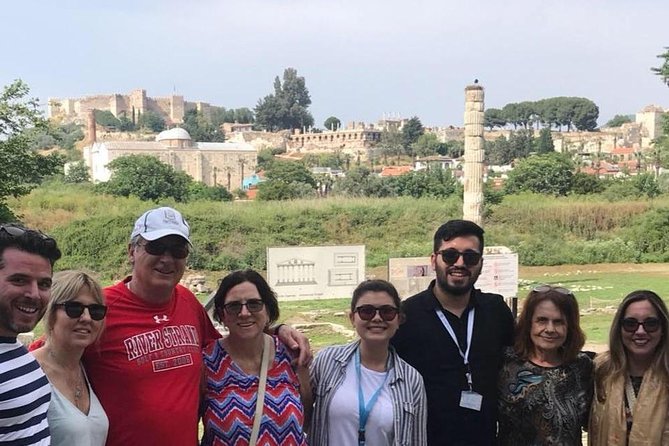
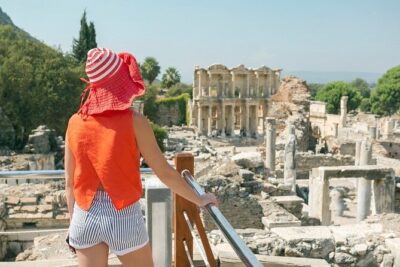
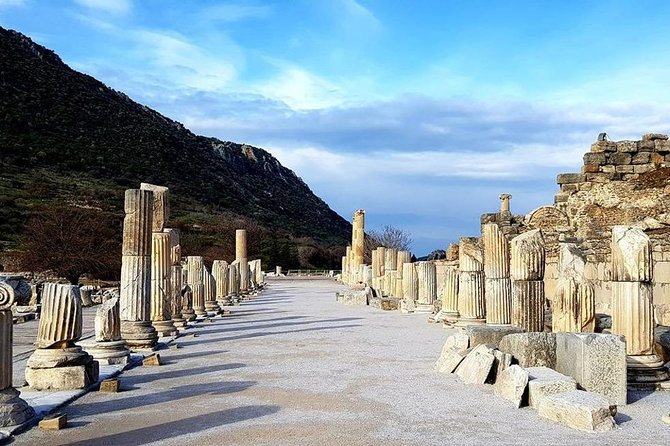
Once you reach the ancient city, the tour focuses on the parts that make Ephesus feel real. You’ll hear how the city stretches back to early settlement periods and grew into one of the major cities of the Roman era. You’ll also connect Ephesus to its most famous religious association—the home of the Blessed Virgin Mary—plus the way the city functioned as a harbour town.
Ephesus isn’t compact. So the guide’s job is to help you understand what you’re seeing instead of letting the site blur together. A strong guide can turn scattered stones into a story with a beginning, middle, and punchline.
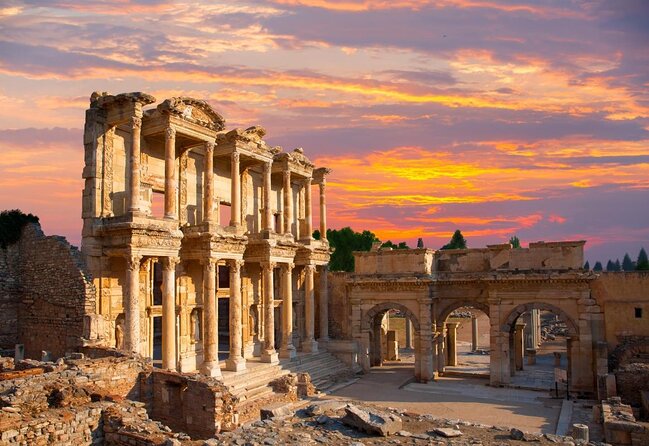
In past outings, guides like Necat and Ozzy were described as especially good at explaining the major ruins and answering questions without drowning you in dates. You can expect a route that typically covers major highlights such as the library area and the theatre, plus the kind of dramatic stories tied to early Christian history at the site. One guide-led experience also mentioned hearing about St. Paul’s speech and the later unrest that followed—exactly the kind of context that makes the ruins feel connected rather than random.
Also, expect real sun exposure. Ephesus gives you few places to fully escape it, so your guide’s pace and planning matter.
Heat Management and a Pace You Can Actually Handle
Ephesus on a cruise day can feel like a test: walking, uneven ground, and bright light. The good news is that guides are often tuned to the reality of a hot afternoon. In one experience described, a guide kept the group cool by actively finding shade spots to stand while listening.
That’s not a gimmick—it’s smart guiding. When your energy dips, your ability to understand the ruins dips too. Shade breaks help you stay present, not just surviving the tour.
This tour also tends to balance guided time with chances to look around. Some experiences included moments for independent exploring within major structures, like time at the library area, before moving on to the theatre and then onward. That pattern works well because it lets your brain do two jobs: listen and then visually confirm what the guide just explained.
One practical note: the ruins involve walking on uneven surfaces. If you’re mobility limited, plan for slower pacing and anticipate that some paths can be difficult. Even if someone in a party uses mobility support, the site can still be challenging, so you’ll want a guide who’s willing to work with you at your speed (many did in past outings).
Ephesus Museum: Where Artemis and Excavations Make Sense
The Ephesus Museum is where the day starts to click. The museum holds artifacts found during excavations of Ephesus, so it turns what you saw outside into something you can actually recognize and explain.
This stop is about an hour, and it’s guided. In particular, you’ll see major pieces connected to the city’s protective goddess, Artemis, including a large marble statue featured as a highlight.
Why this stop is valuable: Ephesus’s best moments are often subtle when you’re standing in bright sun. The theatre and library areas can look dramatic, but you still need context to understand why they mattered. The museum gives you that context fast, with artifacts that show what life in the city really looked like.
It also helps your photos. After you see artifacts inside, you tend to look at the ruins outside with better clarity. You notice what’s been reconstructed, what’s missing, and how the city’s religious identity was tied to everyday life.
One more bonus: museum time is a good recovery break after outdoor walking. If it’s hot when you arrive, this can feel like a welcome cooldown.
Kusadasi Shopping Center and Craft Stops Without the Guesswork
After the ancient city and museum, you’ll head into Kusadasi for shopping and local crafts. This portion is designed to be informative, not just retail. You’ll be able to see local handicrafts and you’ll get guidance from your local tour guide on things like traditional items to look for and what to watch out for during shopping.
This is where the tour can be extra satisfying if you like taking home something meaningful. It’s also where your guide can save you time. In past outings, the shopping portion sometimes expanded beyond a single stall and included visits related to traditional crafts—such as rug/textile education, plus stops connected to leather goods and pottery.
A rug textile stop is specifically mentioned in at least one experience, including women’s rug-making training. Another outing included a pottery store addition, and one included leather-focused stops with a fashion-style presentation. If those are your interests, it’s smart to tell your guide what you want before you arrive, since you may be able to adjust which craft stops are most relevant to your taste and shopping comfort level.
Keep your expectations realistic. Shopping stops are still stops, and you should feel free to say no. If you don’t want to buy, you’ll still gain value from the guidance—like learning how to spot good craftsmanship.
Pigeon Island Drive-By Views and Panoramic Moments
Not every Ephesus day is just ruins and museums. This tour also includes driving through Kusadasi town with panoramic views while your guide shares key information.
You may also pass by Pigeon Island, which is tied to early settlement history in modern Kusadasi and sits very close to the port. The experience is usually more about seeing it from a distance than hiking out to it, so think of this as a “nice bonus window” rather than a major stop.
If you’re someone who likes to understand the geography of where you are, this works. You get a quick mental map of the coastline and the port area, so the rest of your day doesn’t feel like you’re going from one random site to another.
Price and What You’re Really Buying at $29
The base price is $29.00 per person, and the day typically runs about 4 to 6 hours. That low starting price is only part of the equation, because the big site entrance fees are listed as not included.
Budget for:
- Ephesus Ruins: $45.00 per person
- Ephesus Archaeological Museum: $10.00 per person
So the all-in plan for entrances alone is $55, which puts your total around $84 per person before gratuities. That’s still a workable value if you care about having a licensed guide, A/C transport, and—most importantly—ship timing handled correctly.
Also note: “private” means you’re not spreading your guide’s time across a huge group. That’s usually what you’re paying for. If you’d rather listen to fewer people and ask questions without waiting, the private setup can justify the cost quickly.
If you want smoother logistics, the operator notes that skip-the-line entrance tickets and local lunch can be arranged if you request it. That can be helpful on cruise days, when timing is everything.
Who Should Book This Private Ephesus Tour
This tour is a strong fit if:
- You’re on a cruise and want guaranteed return timing.
- You want a guide-led route through Ephesus rather than wandering and guessing.
- You like the combo of outdoor ruins plus museum context.
- Your group values comfort—especially with A/C van time between stops.
It may be less ideal if you want a totally self-paced day with no structure. Ephesus is big, but a timed guided route helps you cover the highlights without burning your whole day in transit.
For families and mixed-age groups, this kind of private pace often works well, because some outings describe guides adjusting to different needs—such as balancing seniors, kids, and mobility differences. Still, keep in mind the ruins involve uneven ground and sun.
If you enjoy craft shopping, the shopping center and guided guidance can add real value beyond “look but don’t buy.”
Should You Book This Tour?
I’d book it if your priority is a low-stress cruise day with guided storytelling and a museum stop that makes the ruins easier to understand. The best reason is the pairing: guided Ephesus plus the museum, then back to the port with timing handled.
I’d pause and plan carefully if you’re sensitive to walking on uneven surfaces or you haven’t budgeted for entrance fees. Once you’ve added the $45 and $10 admissions, you’ll be making an informed choice.
If you do book, send a message about your interests (ruins only vs. museum emphasis, craft-shopping focus, shade/pace needs) so your guide can tailor the day to your group.
FAQ
How long is the Kusadasi to Ephesus private tour?
Plan for about 4 to 6 hours total, depending on your cruise schedule and how the day flows between stops.
Is this a private tour?
Yes. It’s described as a private tour/activity, meaning only your group participates.
What does the price include?
You get a licensed local guide, private service, transportation in an A/C minivan with a separate driver, and cruise port pickup and drop-off (for cruise passengers).
Which entrance fees are not included?
You’ll need to budget for Ephesus Ruins ($45 per person) and the Ephesus Archaeological Museum ($10 per person). Admission tickets are listed as not included in the base tour price.
Is pickup available from the cruise port?
Yes. Cruise passengers are picked up at the cruise port, and the company coordinates your customized meeting time and meeting location after you book.
Can the company arrange skip-the-line tickets or lunch?
They note that skip-the-line entrance tickets and local lunch can be arranged by request. Contact them after reserving if you want that option.
Do they offer English-speaking guides?
Yes. The tour is offered in English.
What if I need to cancel?
Free cancellation is offered up to 24 hours in advance of the experience start time for a full refund. Changes inside 24 hours aren’t accepted.