REVIEW · CHARLESTON
Charleston’s Strong Women of the South History Tour
Book on Viator →Operated by Holy City History Tours · Bookable on Viator
Women wrote much of Charleston’s script. This 2-hour walking tour looks at the city through the women who shaped its power, money, and public life, as you move along Magazine Street. I love how quickly the tour turns a street name into real people and real choices, not just dates and plaques.
The best part is the delivery: Larry tells the stories with sharp pacing and real engagement, plus practical breaks built into the flow. One thing to consider: the stops are short, so this isn’t the tour for long building time inside—expect more outside sightlines and storytelling than museum-style wandering.
In This Review
- Strong Women of the South: Key things you should know
- Strong Women of the South tour: what the walk is really about
- Magazine Street start and Larry’s storytelling rhythm
- Stop 1: Twenty-one Magazine St and the women behind the address
- Stop 2: Wentworth Mansion (SLH Hotel) and the palace-sized question
- Stop 3: The Unitarian Church and three ways Charleston gets its name
- Two hours that move: timing, walking comfort, and what to pack
- Price and value for $35.90 in a small-group format
- Who this tour suits best (and who might want something else)
- Should you book Charleston’s Strong Women of the South History Tour?
- FAQ
- How long is the Strong Women of the South History Tour?
- What does the tour cost?
- Where is the meeting point?
- Are admission tickets included for the stops?
- Is the tour offered in English, and do I get a ticket on my phone?
- Can I get a full refund if I cancel?
Strong Women of the South: Key things you should know
- Up to 20 people makes it feel personal and easy to ask questions
- Meet at 21 Magazine St so you start with context fast
- Three stops, about 15 minutes each keeps momentum without rushing you
- Larry’s storytelling style includes water and restroom pauses
- Admission tickets aren’t included if you want to go into specific sites
- Two hours of standing and walking means comfortable shoes matter
Strong Women of the South tour: what the walk is really about
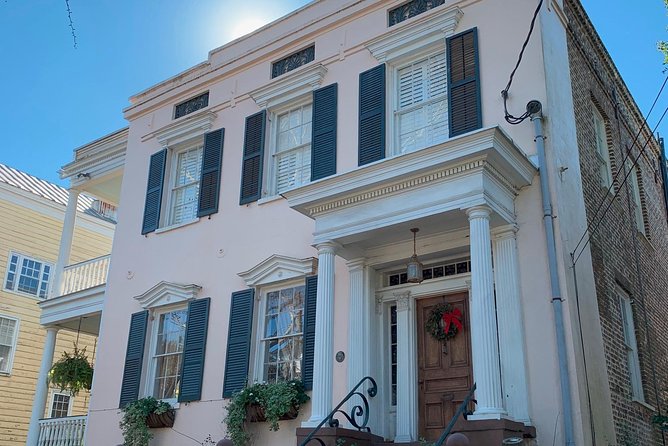
Charleston is famous for its mansions, churches, and big-name history. This tour nudges you to look at the power behind the scenes, especially the women who influenced what happened on these streets. You still get the architecture and the vibe of old Charleston, but the focus stays on who held influence and how that influence moved through everyday life.
I like tours that change the question you’re asking while you’re walking. Here, you’re constantly asking who mattered, who decided, and who had to be bold to survive and lead. It makes the city feel less like a postcard and more like a living timeline—one where women are central characters instead of background notes.
You’ll also get something useful for independent sightseeing afterward: a set of mental “anchors” you can connect to when you explore on your own. After this, you’ll notice different details in the same buildings, because the stories give you new angles.
You can also read our reviews of more historical tours in Charleston



Magazine Street start and Larry’s storytelling rhythm
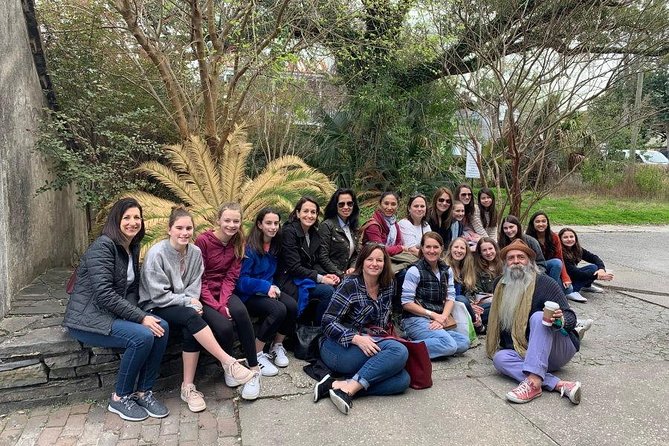
The meeting point is 21 Magazine St in downtown Charleston, right on Magazine Street. That matters more than it sounds: starting in the same lane you’ll walk through keeps you oriented and helps you understand why the street layout and the addresses matter.
From the start, Larry works like a true town storyteller, not a slow reciter. You’ll feel the group settle in because the pace is steady and the focus stays on narrative, not trivia dumps. In the feedback I paid attention to, people praised his eye contact and the way he kept everyone engaged—so even if you’re not a history superfan, you won’t feel lost.
There’s also real-world comfort built into the experience. One standout practical point: there are scheduled moments for water and bathroom breaks, and the guide takes shade into account when possible. That’s not a small detail in Charleston, especially if you’re visiting in hotter months.
And yes, this is a walking tour, not a sit-and-watch presentation. Plan on standing and walking for about two hours, on mostly flat surfaces. Wear shoes you trust.
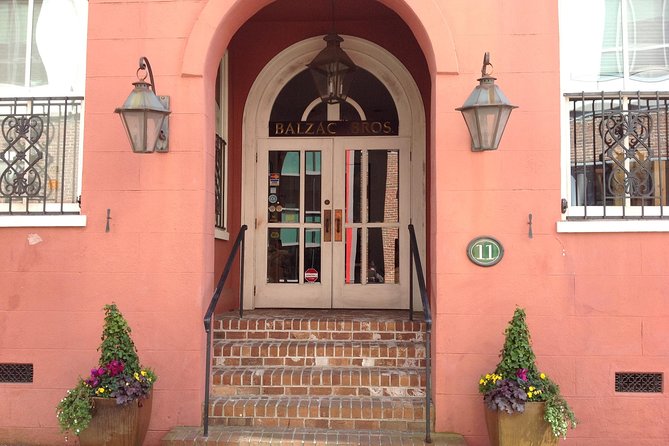
Stop 1: Twenty-one Magazine St and the women behind the address
Your first stop is Twenty-one Magazine, where you hear stories about the women who helped shape what the city became. The framing is clear: the tour brings up women who were beautiful, bold, and also the kinds of people history doesn’t always celebrate in polite company.
This stop works because you’re not just hearing names—you’re learning how a street and an address can carry multiple kinds of power. Some women are remembered for style and influence. Others are included because their choices created consequences. Even if you don’t memorize every character, the bigger takeaway sticks: the American story you’ve been taught as male-first often has women steering it, challenging it, or paying the price for it.
A practical heads-up: this stop doesn’t come with admission ticket time. The tour is designed for seeing and interpreting, not spending long periods inside. If you love the idea of going deeper in a specific building, you can always plan that separately—but don’t expect this tour to replace a paid entrance experience.
Stop 2: Wentworth Mansion (SLH Hotel) and the palace-sized question
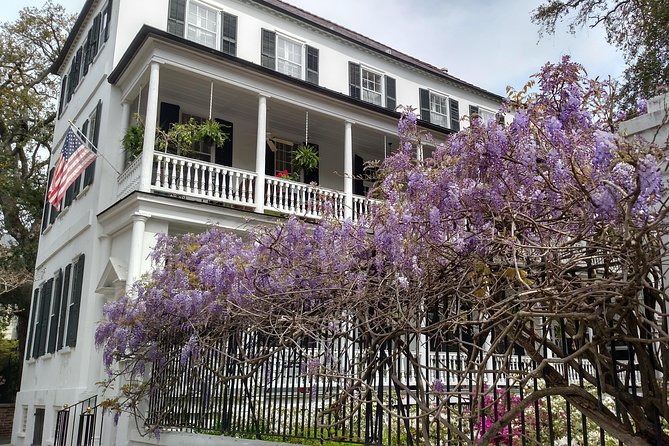
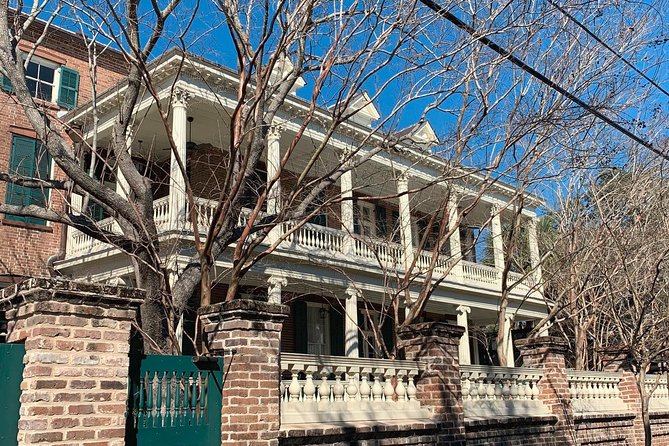
Next you stand in the shadow of the Wentworth Mansion, described as the largest-standing palace in Charleston. It’s an immediate visual anchor: big, commanding, and hard to ignore. But the tour doesn’t stop at the grandeur. It pivots to a question that pulls the whole tour into focus: who were the most important women that lived on this street?
This is where the tour’s theme becomes more than a slogan. You start seeing the buildings as social evidence. Who lived nearby? Who gained status? Who navigated the rules of the time? The mansion isn’t just a pretty object; it’s a prompt for thinking about how power gets displayed, protected, and passed along.
Even though the stop is short (around 15 minutes), the value is in how the story connects the physical space to human decision-making. You’ll leave with a better sense of how Charleston’s impressive exteriors were built on social networks, inheritance, and influence—often managed by women.
Again, admission isn’t included here. If a door is open and you want to check it out, you might need a separate ticket or timing. The tour’s main job is to point you toward what to notice, not to guarantee extra interior time.
Stop 3: The Unitarian Church and three ways Charleston gets its name
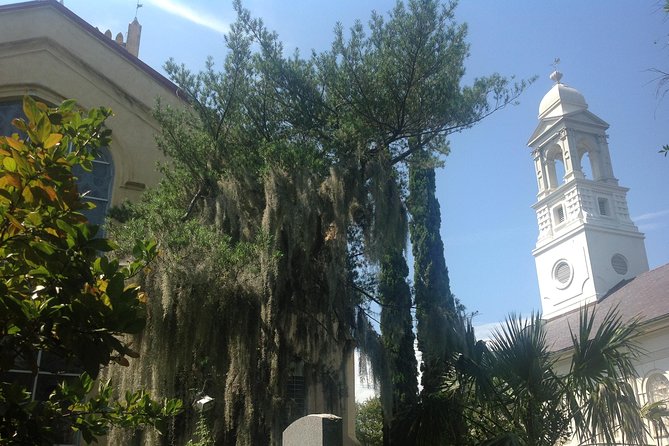
The final stop is the Unitarian Church in Charleston, introduced with a striking set of labels: the mother of old Charles Town, the mother of America, and the mother of modern Charleston. That phrasing may sound poetic, but it works because it frames the church as a long-running source of identity—religious, civic, and cultural.
What I like about ending here is that it broadens the idea of women’s influence. If the earlier stops focus more on street-level power and household presence, this one adds community weight. You’re thinking about institutions that helped form how people understood themselves and their city over time.
Expect more story and interpretation than a checklist of facts. The guide threads the theme of strong women into how the church is positioned in Charleston’s narrative. Even if you don’t catch every detail on first pass, you’ll remember the “mother” framing because it gives you a clear mental image of continuity and influence.
Like the other stops, this isn’t designed as an extended visit with admission included. You get the viewpoint and the context, then you’re ready to keep exploring downtown afterward with a new lens.


Two hours that move: timing, walking comfort, and what to pack
This tour runs about 2 hours total. Each main stop is about 15 minutes, which means the experience stays crisp. You won’t lose an hour to a wandering group or a slow presentation, and that matters if you’re juggling other plans in Charleston.
You should still plan for real walking and standing. Based on what people emphasize, you’ll be out for roughly two hours on mostly flat surfaces, but you’ll still want shoes that handle cobblestones and curb edges. This is where I’d rather you over-prepare than regret it—comfortable shoes are the difference between a fun story walk and a day you pay for later.
Also pack like it’s Charleston. Bring water. The guide has water and restroom breaks during the route, but you’ll feel better with your own bottle too—especially if you’re arriving midday. And if you’re sensitive to sun, consider a hat or light layer. The guide does position people in shade when possible, but you can help your future self with basic shade-ready gear.
If you’re traveling with mixed interests—someone who cares about history and someone who cares about simply seeing Charleston—you’ll still find something here. The stories give the buildings meaning, and the street route gives you the visual texture of downtown.
Price and value for $35.90 in a small-group format
At $35.90 per person, the cost sits in the midrange for a guided walking history experience. The value comes from several things you actually feel during the tour: a small group size (max 20), a focused 2-hour duration, and a guide who keeps the storytelling engaging rather than turning it into a lecture.
You also get tangible practical benefits. The tour includes planning for water and restroom stops, plus shade awareness when the route allows it. That’s worth something in a city where weather can change your comfort fast.
The one cost-related detail to remember is admission tickets. The tour does not include admission for the stops, so if you want to go inside specific buildings, budget extra time and possible ticket fees separately. For most people, that’s fine because the tour is built around outside viewing and guided interpretation. But it’s good to know up front so there aren’t surprises.
If you’re deciding between a short walking tour and a longer museum day, this is the better pick when you want stories that change how you see the street. It’s not the better pick when you want to spend big chunks inside multiple sites.
Who this tour suits best (and who might want something else)
I’d recommend this tour if you want Charleston history with a different angle—one that treats women’s influence as a core theme, not an add-on. You’ll also like it if you enjoy storytelling that sticks in your head, especially if you want a guide who can keep a group engaged without rushing.
It also fits well for couples and solo travelers. One of the joys of a small group walk is that you don’t feel like a random passenger in a crowd. If you’re traveling on your own, it still feels social without being forced.
If your goal is deep, slow study inside major buildings, you might be happier pairing this with other standalone stops where you can take your time. Since admission isn’t included and the stops are brief, you won’t get that long-form “read every plaque” experience here.
Should you book Charleston’s Strong Women of the South History Tour?
Yes, I think it’s worth booking if you want a focused, story-driven way to see Charleston through women’s lives and power. The combination of a small group, strong guiding, and practical pacing (including water and bathroom breaks) makes it feel easy to enjoy even if you’re not into history on paper.
Book it sooner rather than later if your dates are fixed—this one tends to fill ahead. And do yourself a favor: plan a little extra time afterward on Magazine Street or nearby so you can let the stories guide what you choose to explore next.
If you like your walking tours lively, humane, and grounded in real places, this one is an excellent fit.
FAQ
How long is the Strong Women of the South History Tour?
The tour lasts about 2 hours.
What does the tour cost?
It costs $35.90 per person.
Where is the meeting point?
You’ll meet at 21 Magazine St, Charleston, SC 29401, USA.
Are admission tickets included for the stops?
No. Admission tickets are not included.
Is the tour offered in English, and do I get a ticket on my phone?
Yes, the tour is offered in English, and you’ll receive a mobile ticket.
Can I get a full refund if I cancel?
Yes. You can cancel up to 24 hours in advance for a full refund. If you cancel less than 24 hours before the start time, you don’t get a refund.