REVIEW · DUBLIN
Full-Day Irelands Ancient Boyne Valley Private Guided Tour
Book on Viator →Operated by Boyne Valley Tours · Bookable on Viator
Some days, Ireland feels ancient before you even leave Dublin. This private Boyne Valley route mixes Celtic kingship lore with Stone Age tombs, all in one long, well-paced day.
What I like most is the built-in variety. You’ll visit ceremonial earthworks at Hill of Tara, then move into prehistoric monuments at Loughcrew Cairns, Dowth, and Fourknocks—sites that most people only connect with a crowded day trip.
The one thing to think about is the pace. This is an 8-hour day with several outdoor stops, and you’ll want moderate physical fitness and comfy shoes.
In This Review
- The big reasons this day works
- From Dublin to the Hill of Tara’s “royal” enclosure
- Loughcrew Cairns: Slieve na Caillaigh and 5,000-year stonework
- Dowth Passage Tomb and the December light show
- Fourknocks Passage Tomb and the W-shape sky
- What private guiding changes in the Boyne Valley
- Price and value: is $898.70 per group worth it?
- Practical tips for an 8-hour prehistoric day
- Should you book this private Boyne Valley tour?
- FAQ
- How many people are on this private tour?
- Where is pickup offered from?
- What time does the tour start?
- What sites are included in the day?
- Is admission included for the stops?
- What’s included in the price?
- Is lunch included?
- What language is the tour offered in?
- What is the cancellation policy?
The big reasons this day works
- Private, just-your-group format keeps the pace calm and questions welcome
- Four prehistoric stops instead of one “name” attraction
- Free admission included for each scheduled site
- Winter-solstice alignment stories at Dowth and Fourknocks make the history feel practical
- Air-conditioned vehicle + bottled water for an all-day slog (in the best way)
From Dublin to the Hill of Tara’s “royal” enclosure
Your morning starts at 8:30 am, with pickup offered from your apartment or AirBnB (they’ll need your full address including your Eircode). Then you’re set up for a day that’s part travel, part guided walk through Ireland’s ceremonial past.
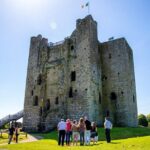
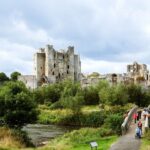
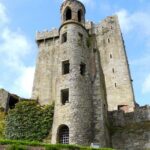
Hill of Tara is the kind of place where you understand why people treated land as power. On the summit, you’ll find the Iron Age Royal Enclosure called the Fort of the Kings, with two interlinked earthworks: Cormac’s House and the Royal Seat. The guide’s job here is key. When you can connect what you’re seeing to what the site meant—kingship, legitimacy, ritual—it stops being “just a hill” and starts being a statement.
One standout detail is the Lia Fáil, a standing stone set in the middle of the Royal Seat. This is where the legend comes in: when a true High King held the stone, it supposedly let out a screech that carried across Ireland. Even if you take the legend as myth, it tells you what people wanted the stone to do—make authority audible and real.
Possible drawback: if you expect a museum-style visit with lots of indoor time, this early stop is mostly outdoors and relies on the guide to bring the place to life.
You can also read our reviews of more tours and experiences in Dublin.
Loughcrew Cairns: Slieve na Caillaigh and 5,000-year stonework
Next up is Loughcrew Cairns. This is a Stone Age site spread across the hills, about 5,000 years old, and it comes with a name that sounds like a story you’d hear by a fire. The Irish name is Slieve na Caillaigh, meaning mountain of the hag.
The legend says a giant hag was striding across the land and dropped her large stones from her apron—so the cairns are framed as leftovers of a supernatural journey. Again, you might file that under folklore, not fact. But folklore is part of how these places were interpreted for generations, and it gives the guide a way to explain why the monuments matter locally.
The physical experience here is different from Tara. You’re moving across a landscape of smaller, spread-out elements. That can be a good thing. It means you’re less likely to feel like you’re staring at one object and done. You get a broader sense of what “a monument complex” looked like—built into the daily view of the people who lived nearby.
What I’d watch for: weather and footing. Hills mean uneven ground, so proper shoes matter more here than in a city stroll.
Dowth Passage Tomb and the December light show
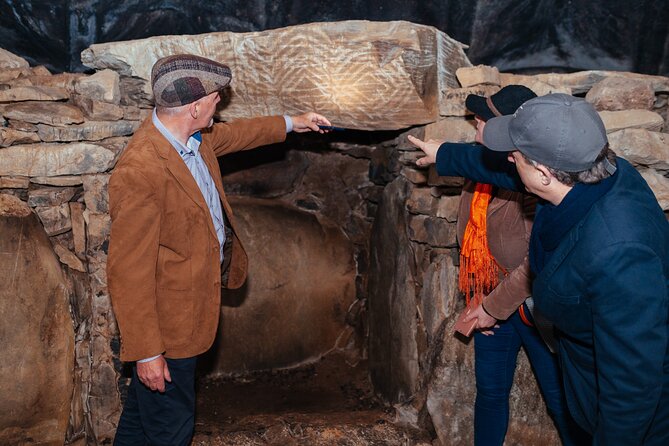
Dowth is one of the three principal tombs in the Brú na Bóinne World Heritage Site. It’s often overshadowed by the better-known names, but the tour does a smart job of making Dowth feel important—especially through its winter-solstice alignment.
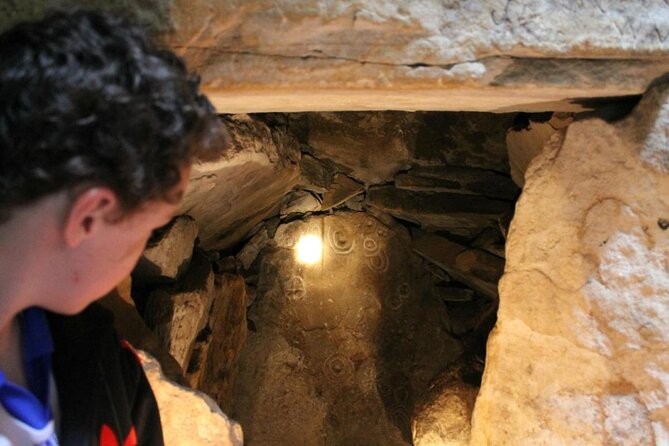
Dowth is aligned with the winter solstice. During December, setting sunlight penetrates the passage tomb and illuminates three stones in the central chamber. That single idea—light as part of the architecture—turns a tomb into a calendar, a stage, and a ritual tool all at once.
This is where private guiding really pays off. A good guide helps you read the geometry without turning it into a lecture. You’re not just looking at stones; you’re understanding why a corridor’s direction matters and why certain sun angles would matter to people planning ceremonies around the year’s turning point.
One practical note: this stop is 1 hour. That’s enough time for you to absorb the key features without feeling rushed into “next, next, next.” It also helps you keep energy for the later stop, which leans more astronomy-and-symbolism.
Fourknocks Passage Tomb and the W-shape sky
Fourknocks sits just outside the village of Ardcath in County Meath. The place name comes from the Irish Fuair Cnoic, meaning cold hills, and the mound was built around 5,000 years ago—similar timing to major Brú na Bóinne tombs.
Here’s where the story turns slightly different. Fourknocks is too far north for a solar alignment like the best-known winter-solstice effects. But it’s aligned with the path of the winter solstice sunrise toward Newgrange. So instead of the “same moment, same light trick,” you get a different kind of directional relationship.
Even more interesting: during Stone Age times, the passage tomb is said to align with the helical rising of the W-shaped constellation Cassiopeia. That may help explain the dominance of W-shaped zig-zag engravings connected with that theme.
This is the kind of stop where you’ll either love the interpretation or wish it were more straightforward. If you’re the type who enjoys patterns—stars, sun angles, repeated symbols—Fourknocks can feel extra satisfying. If you just want big visuals, you’ll still get a meaningful tomb, but the payoff is more about how the guide ties the alignments to the carvings.
What private guiding changes in the Boyne Valley
This is a private tour for up to 3 people, offered in English, and it’s designed for a calm pace. That matters in the Boyne Valley, where the most famous tombs can draw serious crowds. The value here is that you can spend time with multiple key sites without feeling like you’re sprinting between ticket lines.
Guides also control how much you hear at each stop. In at least one case, the experience is linked with a guide named Michael Foxx, praised for being professional and for helping swap a crowded plan for a better private route. The practical takeaway for you: don’t just think about what’s famous. Think about what’s actually enjoyable to see when you’re not fighting foot traffic.
Because the day is private, you can ask follow-up questions. Want the difference between Tara’s royal enclosure earthworks and the tomb architecture? Ask. Curious why alignments matter? Ask. That flexibility is hard to get on group tours that run on strict timing.
And the vehicle helps you feel less drained. With private transportation, bottled water, and an air-conditioned car, you’ll arrive ready to focus instead of feeling like the drive is stealing your energy.
You can also read our reviews of more private tours in Dublin
Price and value: is $898.70 per group worth it?
The price is $898.70 per group, for up to 3 people, for roughly 8 hours. On paper, that’s not cheap. But private days work like a puzzle: value comes from how many “people-hours” you’re buying.
If you have 3 people in your group, you’re effectively around $300 each. You’re paying for:
- Private transportation in an air-conditioned vehicle
- A guide for multiple sites (not just one stop)
- Bottled water
- And free admission for each scheduled stop in the day’s plan
Lunch isn’t included, so plan your own food break. That’s the trade-off: you’re buying the guiding and transportation, not a pre-set meal.
Also, because each stop includes free admission as part of the schedule, you’re less likely to get surprise costs once you’re out the door. The remaining expenses are mainly your own lunch and whatever you choose to do after the tour.
If you’re traveling solo, the price feels higher per person, because you don’t spread the cost. If you’re a couple or small group, it becomes much easier to justify—especially if your priority is seeing multiple prehistoric sites with time to absorb them.
Practical tips for an 8-hour prehistoric day
This day runs about 8 hours and includes 4 guided stops. Start time is 8:30 am, so build your morning around an early pickup and a steady breakfast. Since lunch isn’t provided, I’d bring snacks or plan ahead so you’re not trying to solve hunger while you’re trying to listen to a guide explain alignments.
Wear shoes with grip. Even if the walking doesn’t sound extreme, cairns, hills, and tomb paths don’t behave like flat museum floors. Bring a light layer too, since outdoor stops can shift with wind and daylight.
You also want to manage expectations. This tour is built around interpretation—Celtic kingship rituals at Tara, Stone Age legends at Loughcrew, and solstice-related alignment stories at Dowth and Fourknocks. If you like details that connect stones to meaning, you’ll feel “in the story” rather than just sightseeing.
Finally, you’re in English. If you prefer another language, this specific tour won’t cover that based on the information provided, so plan accordingly.
Should you book this private Boyne Valley tour?
I think this tour is a strong pick if you want more than one “headline” site and you care about guided context. It’s especially worth it if you’re worried about crowded conditions and would rather get time at Tara, Loughcrew, Dowth, and Fourknocks in a single private day.
Book it if:
- You’re traveling with 1–3 people and can use the group pricing
- You like guided explanations that connect monuments to legend and astronomy
- You want free admissions built into the day’s structure
- You prefer a calm route over a high-speed checklist
Skip it (or reconsider) if:
- You want lots of indoor time or minimal walking
- You’re strict about lunch being included
- You’re expecting a stop-by-stop experience focused only on the most famous name sites
If your goal is to experience Ireland’s prehistoric thinking—ritual, sky, and authority—this format is one of the smartest ways to do it from Dublin.
FAQ
How many people are on this private tour?
This is a private tour/activity, and only your group participates. The tour is priced for up to 3 people per group.
Where is pickup offered from?
Pickup is offered. If you’re staying in an apartment or AirBnB, you’ll need to provide the full address including your Eircode.
What time does the tour start?
The start time is 8:30 am.
What sites are included in the day?
The tour visits Hill of Tara, Loughcrew Cairns, Dowth Passage Tomb, and Fourknocks Passage Tomb.
Is admission included for the stops?
Admission tickets for the scheduled stops are listed as free for the time at each site.
What’s included in the price?
The included items are bottled water, private transportation, and an air-conditioned vehicle.
Is lunch included?
No, lunch is not included.
What language is the tour offered in?
The tour is offered in English.
What is the cancellation policy?
You can cancel for free up to 24 hours in advance of the experience start time for a full refund. Cancellation less than 24 hours before the start time isn’t refunded.