REVIEW · DUBLIN
Private Dublin Historical and Heritage Tour by Bike
Book on Viator →Operated by MYBIKEORHIKE · Bookable on Viator
Pedaling through Dublin feels like a shortcut through time. You get a private historical heritage bike tour that mixes famous sights with places most people ride past, plus a guide who knows where to pause for photos. I also like the practical add-ons: you get a souvenir video later with captioned photos, and the guide can help take pictures of you along the route.
One watch-out: this is still a bike ride. You’ll want moderate fitness and good weather, because the tour is designed around moving between sites, often on traffic-free paths.
This is a tour that rewards curiosity. Stops are short, but the guide’s stories connect the dots—from bridges and rivers to rebellions and whiskey fires—so you don’t end up just snapping photos of buildings. If you prefer long museum time or zero cycling, you might feel a bit rushed.
In This Review
- Key highlights worth planning for
- Dublin on two wheels: what you get in 2.5 to 3.5 hours
- Meeting at Bike Stop Dublin on Capel Street
- Grattan Bridge and Dublin Castle: centuries in one central loop
- Dubh Linn Gardens and the 40 Steps: Dublin’s name and Swift’s birthplace
- Saint Patrick’s Cathedral plus the working-class switch to the Liberties
- Teeling Whiskey and the Liberties: a Dublin story you can taste
- Royal Hospital Kilmainham and Kilmainham Gaol: gardens, art, and difficult memory
- War Memorial Gardens and the Liffey cycleway to Chapelizod
- Entering a huge urban park: deer with a bit of luck
- Croppies Acre and Collins Barracks: rebellion, design, and a river view
- The guide experience: local food ideas and a souvenir photo video later
- Price and value: what $120.14 buys you (and what it doesn’t)
- Who should book this Dublin bike tour
- When to book and what to watch for
- Should you book Private Dublin Historical and Heritage Tour by Bike?
- FAQ
- What is the duration of the Private Dublin Historical and Heritage Tour by Bike?
- Where does the tour start, and where does it end?
- Is pickup available?
- Is a bicycle included?
- Are admission tickets included for the stops?
- Is this a private tour?
- What language is the tour offered in?
- What should I bring since snacks are not included?
- Does the tour require a certain fitness level?
- What happens if the weather is poor?
- Is there a cancellation deadline for a full refund?
Key highlights worth planning for
- Private guide, private pace: it’s just your group, so you can stop for photos without feeling rushed
- Souvenir video later: captioned photos from your exact route, not generic images
- Traffic-free sections: you spend time on quieter pathways and a purpose-built cycle route by the Liffey
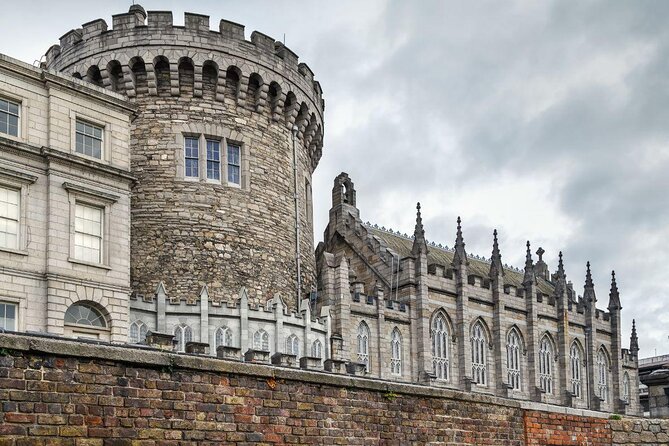
- Big landmarks plus side streets: Dublin Castle and Saint Patrick’s Cathedral, plus the 40 Steps and Croppies Acre
- Photo-friendly stops: locations are set up for scenic pauses and guided picture moments
- Working-class Dublin included: the Liberties and Teeling Whiskey bring the story beyond the grand buildings
Dublin on two wheels: what you get in 2.5 to 3.5 hours
This tour is built for getting your bearings fast. In about 2 hours 30 minutes to 3 hours 30 minutes, you cover a lot of ground without spending the whole day in buses or taxis. The route is designed around central Dublin first, then moves toward the River Liffey and greener space.
The price is $120.14 per person, which is not cheap, but it’s easier to justify once you look at what’s included. You get a bicycle, a private guide, and multiple major stops where admission is listed as free. You’re also paying for interpretation—someone to explain why Grattan Bridge was rebuilt, why the city name ties to a dark pool, and why the Liberties matters to Guinness.
The most practical part: the schedule assumes short walks and quick stops. If you like tight, efficient sight-seeing, this works. If you want long indoor visits, plan extra time elsewhere after the ride.
You can also read our reviews of more tours and experiences in Dublin.
Meeting at Bike Stop Dublin on Capel Street
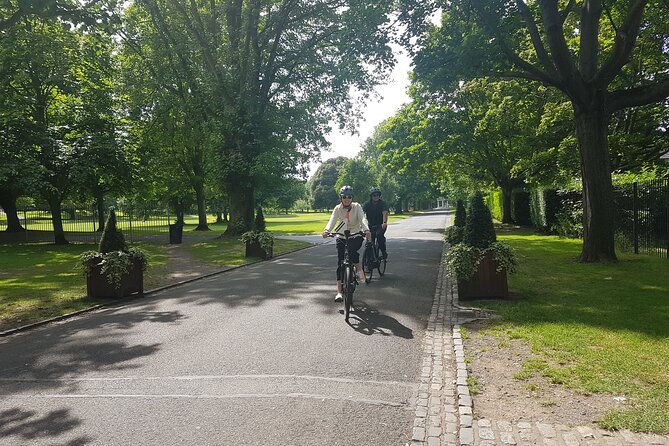
You start at Bike Stop Dublin, 37 Capel St in North City. It’s a convenient meeting point if you’re coming by public transportation, and the tour ends back at the same place.
There’s also a helpful pickup option: if you’re staying within 1 km of the meet location, you can be met there, and then you’ll walk to the start of the tour. That small detail matters if you’re arriving from the wrong side of town and don’t want to haul yourself across Dublin with a bike helmet in your mind.
You’ll use a mobile ticket, so have it ready on your phone. It’s one less thing to juggle right before you’re rolling.
Grattan Bridge and Dublin Castle: centuries in one central loop
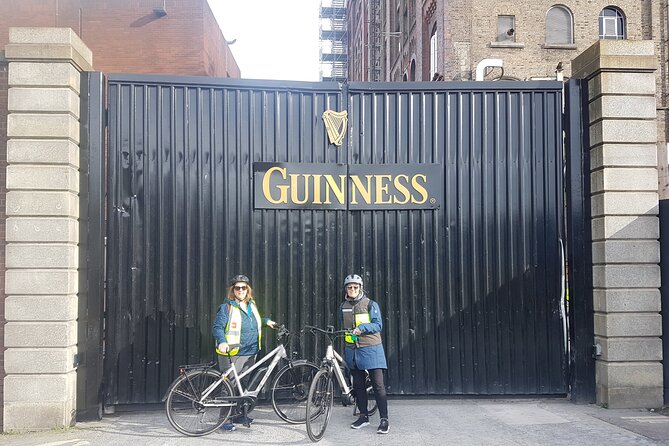
The tour begins with Grattan Bridge, a historic bridge in the centre of Dublin. The story here is exactly the kind of thing that makes a guided bike tour feel different from self-guided sightseeing: the bridge you see was rebuilt in 1875 using foundations from an earlier bridge built in 1755.
From there, you move through the area around Dublin Castle. You pass through the courtyard tied to when Ireland was under British rule, and you get a close-up sense of how different eras sit next to each other. The contrast between 18th-century and 12th-century architecture is the kind of detail that’s hard to notice when you’re just walking by.
One more angle I appreciate: you’re not trapped inside a single theme. This stop isn’t only about politics. It’s about place—where power operated, where people moved, and how layers of Dublin life overlap.
Practical note: the stops are listed around 10 minutes each for these early sights, so don’t expect long wandering. Bring your questions, and let the guide set the pace.
Dubh Linn Gardens and the 40 Steps: Dublin’s name and Swift’s birthplace
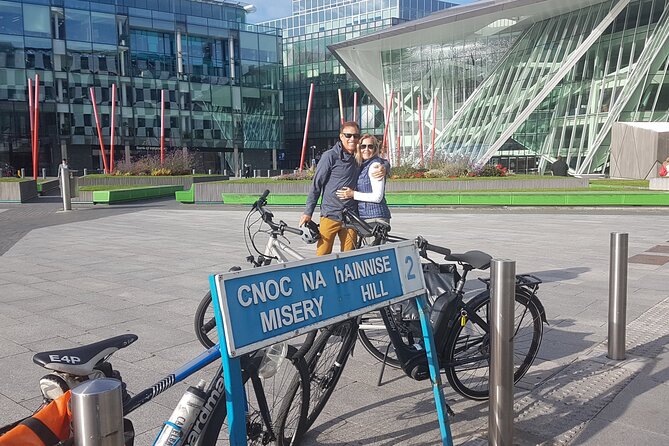
A quick hop brings you to Dubh Linn Gardens, near Dublin Castle. This is a city-centre pause with a strong payoff: you get a moment to breathe, plus specific stories that connect to the city’s identity. The highlight here is the circular garden tied to the dark pool that’s connected to Dublin’s name.
It’s also a good place for statue-and-memorial viewing without the feel of a formal museum stop. The route includes notes about the Garda Memorial, a David & Goliath statue, and a tribute connected to Special Olympics. You’ll also hear about the Chester Beatty Museum and Library, which you might want to add later if you’re the kind of person who likes one museum and then immediately plans the next.
Then comes The 40 Steps, one of those Dublin corners that sounds small until a guide explains what’s going on. You’ll stand at a spot where medieval city walls are represented via metal plates, and you’ll hear how this location connects to Jonathan Swift, including his birthplace. The tour also points out a mis-translated street detail and tells the story of suffragettes who were arrested for throwing stones at windows.
If you enjoy historical footnotes—names, translations, and the meaning behind street-level quirks—this is a standout section.
Saint Patrick’s Cathedral plus the working-class switch to the Liberties
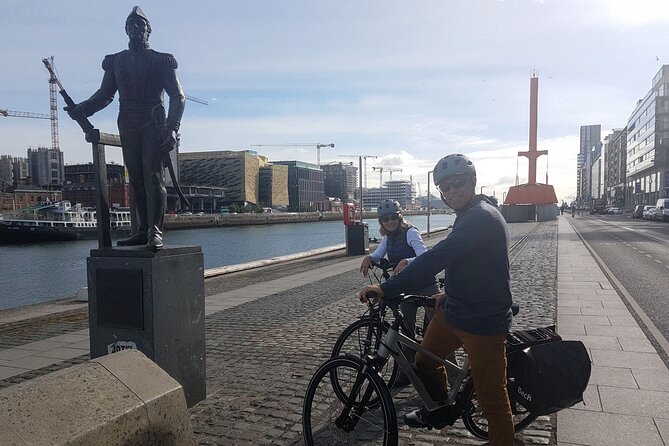
Next is Saint Patrick’s Cathedral, described as the rival to Christchurch Cathedral. Even with a shorter stop (listed at around 5 minutes), you get views that help you understand the cathedral’s scale and how it fits into the surrounding area, including its gardens.
On the way, you’ll pass the birthplace of Jonathan Swift again, plus still-intact Norman walls. So even if you already saw Swift’s story at The 40 Steps, this reinforces the thread from a different angle. You’re basically building a mental map of Dublin’s layers.
Then the tour pivots from grand architecture to everyday Dublin. You pass through the Liberties, a working-class residential district where the vibe changes from official buildings to lived-in streets.
You can also read our reviews of more private tours in Dublin
Teeling Whiskey and the Liberties: a Dublin story you can taste
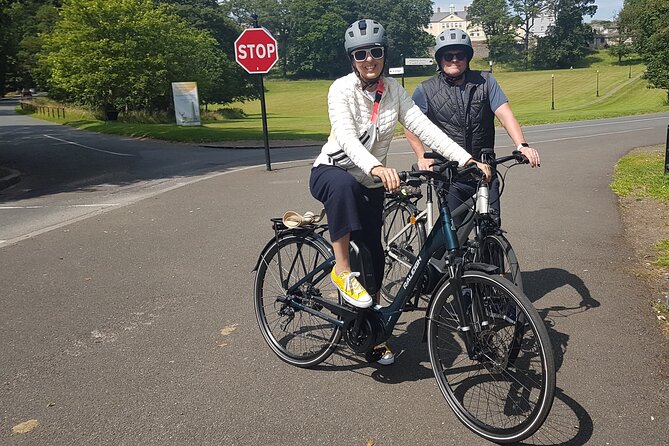
You’ll stop at Teeling Whiskey Distillery, with a focus on the story behind a major event: the great whiskey fire of the 19th century. The guide uses this stop to explain the character of the district, especially its tradition and working-class connections.
Then you pedal through the Liberties with stories about how the area got its name and the way its identity ties into Guinness. That’s a nice balance if you’ve been focusing on castles and cathedrals for the first half of the ride. You’re still learning history, but you’re learning it from the city’s neighborhoods instead of only from its rulers.
Cycling tips here are simple but important. You’re moving through areas where streets can feel busier, so keep your eyes up and your hands steady. The guide will keep the route flowing, but your job is to relax into the pace.
Royal Hospital Kilmainham and Kilmainham Gaol: gardens, art, and difficult memory
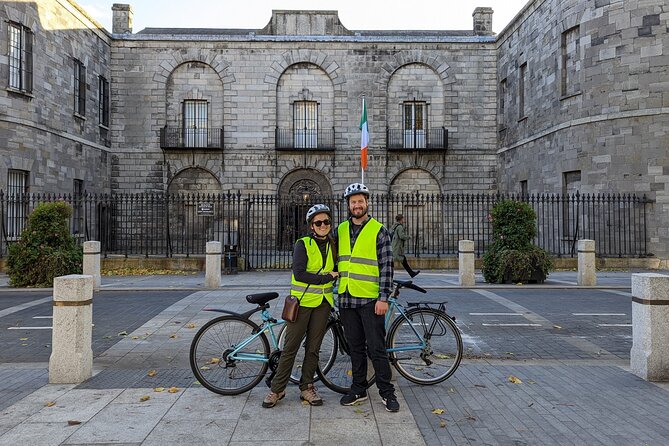
The tour reaches Royal Hospital Kilmainham, built as the Royal Kilmainham Hospital in the 17th century. Today it’s associated with the Irish Museum of Modern Art, and the gardens here are a big part of why the stop works. You get a viewpoint over Dublin, which helps you connect the past to the present city layout.
From there, you continue along a traffic-free path and make time by Dublin’s oldest cemetery. That combination matters: you’re not just seeing buildings, you’re seeing Dublin’s shifting uses of space.
Next is Kilmainham Gaol. You park in a spot with views of the entrance, and you hear what happened here when it was used for public executions. The listed stop is short (around 5 minutes), so this isn’t meant to replace a full museum visit. It’s meant to give you context so that if you return later, you’ll know what you’re looking at.
If you tend to get emotionally affected by sites of punishment or war, this part might feel heavier than the rest of the tour. It’s worth being mentally ready, because the story is part of why Kilmainham is famous.
War Memorial Gardens and the Liffey cycleway to Chapelizod
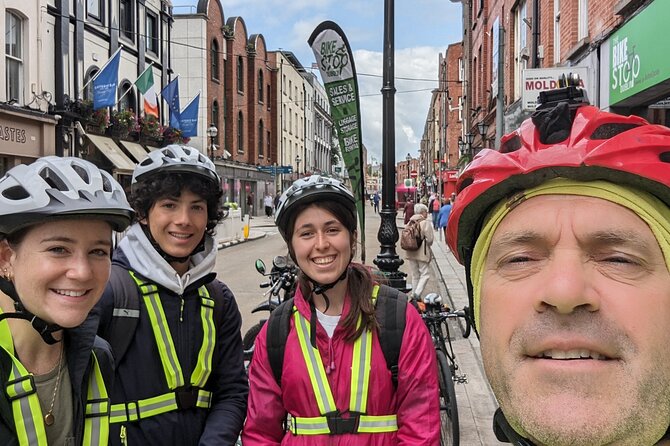
After Kilmainham, the route shifts toward calmer riding. You’ll pedal along the War Memorial Gardens, built in remembrance of those who lost their lives in the First World War. It’s a quiet change from the intensity of a prison site, and it gives you a breather before you head toward the river.
Then you continue along a purpose-built, traffic-free cycleway along the River Liffey, heading toward Chapelizod. This is one of the reasons bike tours feel like a different trip in Dublin. You get open views while you ride, instead of constantly stopping at traffic lights.
The Chapelizod segment is listed as a stop to reach the historic village. You’ll have time to absorb the area, then you’ll move on quickly.
Entering a huge urban park: deer with a bit of luck
Leaving Chapelizod, you enter one of Europe’s largest urban parks through a gate in its 17th-century walls. You’ll ride on dedicated cycle paths, so you get that rare feeling: you’re moving through nature-like space without leaving the city behind.
The tour also notes that you might spot wild deer. That’s never guaranteed, but the fact that wildlife sightings are part of the expectation tells you the park environment is real enough for it.
This section is also where the ride becomes more about the sensation of cycling. After lots of short stops in the centre, this is where the tour gives you breathing room with scenery.
Croppies Acre and Collins Barracks: rebellion, design, and a river view
You end this story-heavy stretch with Croppies Acre Memorial Park. The tour connects the site to a folklore tradition about a mass burial grave for victims of the 1798 rebellion, and you’re guided to look for details that anchor that story.
You’ll also see references to Collins Barracks and the National Decorative arts and Military Museum. Plus, you get a visual link across the River Liffey to the Guinness Brewery, which is the kind of modern payoff that helps you understand why Dublin’s industrial and heritage stories overlap so often.
This stop is listed around 5 minutes, so treat it as a guided introduction. If you’re the type who wants to read signs in depth, plan a follow-up visit later using the names you hear here.
The guide experience: local food ideas and a souvenir photo video later
The difference between a bike tour that just moves you around and one that feels useful is what happens in-between stops. This one leans into that with local recommendations for things to do and eat. After you’ve been in a guided loop, you’ll know what to pick for dinner and what to reserve for a second day.
There’s also a practical photo service built into the tour. Your private guide can help take photos of you during the ride, so you’re not stuck handing your phone to strangers every time you want a picture near Dublin Castle or along the Liffey.
Then there’s the extra: you receive a souvenir video later, with captioned photos from your route. That means you’ll have something to remember beyond a few shaky shots on a windy bridge.
One guide name that comes up in feedback is Ben, who’s praised for making Dublin’s history clear and engaging. Even if your guide is someone else, this tour’s format suggests the storytelling is meant to be easy to follow and tied to real places.
Price and value: what $120.14 buys you (and what it doesn’t)
Let’s be straight about value. At $120.14 per person, this is best thought of as a guided experience bundle: bicycle included, a private guide, and multiple major sights in one go.
Why it can feel like a good deal:
- Many stops are listed with free admission tickets
- You’re not just getting history text. You’re getting photo help and a video souvenir later
- Traffic-free cycling sections can save you time and stress compared with self-guided routes
What’s not included:
- Snacks, refreshments, and drinks are not provided
So I’d plan a light snack before you meet and maybe budget for a drink afterward. It keeps the ride enjoyable and prevents the classic mid-tour energy crash.
Also, this tour is typically booked about 59 days in advance on average. That’s a hint that it sells out at popular times, so if your dates are fixed, book sooner rather than later.
Who should book this Dublin bike tour
This tour fits best if you:
- Want a private guide and a route that mixes famous and lesser-known stops
- Enjoy cycling and can handle frequent short stops
- Like heritage stories connected to specific street-level details (bridges, walls, memorials, and local neighborhoods)
- Want practical guidance for what to eat and do next
It might not be ideal if you:
- Dislike cycling or prefer slow, long museum days
- Are traveling with someone who needs minimal movement
- Want a tour with lots of indoor time (the stop durations are short by design)
The tour also notes moderate physical fitness. That doesn’t mean hardcore training. It does mean you should be comfortable biking for long enough to make multiple stops meaningful.
When to book and what to watch for
The tour depends on conditions. It requires good weather, and if it gets canceled due to poor weather, you’ll be offered a different date or a full refund. Also, there’s a minimum number of travelers needed; if that minimum isn’t met, you’ll be offered a different experience or a full refund.
So if you’re traveling in a rainy season, keep one day flexible. That’s the small planning trick that makes bike tours go smoothly.
Should you book Private Dublin Historical and Heritage Tour by Bike?
I’d book it if you want Dublin to feel coherent. This route connects centre-city history (bridge, castle, cathedral) to neighborhood identity (the Liberties), then into Kilmainham’s heavier story, and finally to the calmer Liffey and park scenery.
You’re paying for more than landmarks. You’re paying for guided meaning, photo help, and the souvenir video later. And if you’re the kind of traveler who likes to get your bearings, then go back for deeper independent exploring, this tour sets you up well.
FAQ
What is the duration of the Private Dublin Historical and Heritage Tour by Bike?
It runs for about 2 hours 30 minutes to 3 hours 30 minutes.
Where does the tour start, and where does it end?
The tour starts at Bike Stop Dublin, 37 Capel St, North City, Dublin, D01 X2E5, Ireland and ends back at the same meeting point.
Is pickup available?
If you are staying within 1 km of the meeting location, you can be met there, and then you will walk to the start point of the tour.
Is a bicycle included?
Yes. Use of bicycle is included.
Are admission tickets included for the stops?
Admission tickets are listed as free for the stops in the itinerary.
Is this a private tour?
Yes. It is a private tour/activity, and only your group participates.
What language is the tour offered in?
The tour is offered in English.
What should I bring since snacks are not included?
Snacks, refreshments, and drinks are not included, so you may want to bring water and plan a snack before or after the ride.
Does the tour require a certain fitness level?
Yes. Travelers should have moderate physical fitness.
What happens if the weather is poor?
The experience requires good weather. If it’s canceled due to poor weather, you’ll be offered a different date or a full refund.
Is there a cancellation deadline for a full refund?
You can cancel for a full refund up to 24 hours in advance of the experience’s start time. Cancellation less than 24 hours before start time is not refunded.