REVIEW · DUBLIN
Book of Kells. Medieval Dublin Castle. 5* History & Heritage Tour
Book on Viator →Operated by City Heritage Tours · Bookable on Viator
Two Gospels, one city, and a lot of clues. This guided walk threads together Trinity College and the Book of Kells, then adds power-politics landmarks on College Green before ending at Dublin Castle’s exterior layers of Viking and medieval Dublin.
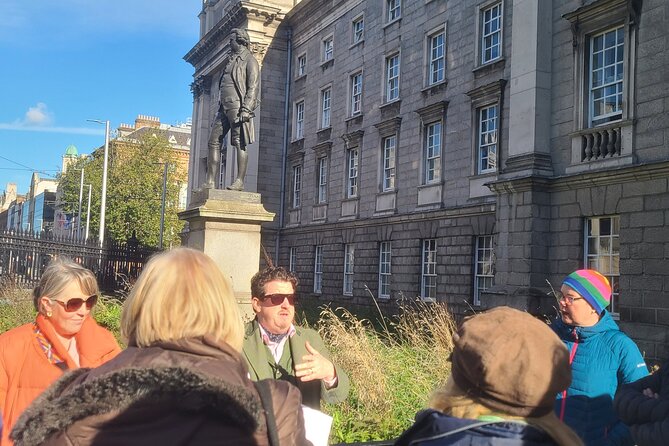
I especially like two things: you get guided context before you ever reach the manuscript, and you also get real time inside the College Treasury/Old Library area where the Book of Kells is shown with short films. Guides like Sean, Marty, and Michael are the reason the stops feel connected instead of like a checklist.
One consideration: this tour keeps it to the grounds at Dublin Castle. If you want to walk through the castle interiors and apartments, you’ll need a different visit.
In This Review
- Key things to know before you go
- A Dublin walk that ties medieval manuscripts to modern streets
- Starting at Henry Grattan Monument: a smart way to begin
- Trinity College Dublin: where the story gets set up
- The Book of Kells Experience at Trinity: what you’re really looking at
- It’s not just an artifact—it’s a whole design system
- The page breakdown helps your eye
- You also get the Old Library setting and films
- The Long Room wow factor (if you have time)
- College Green and the Bank of Ireland building: parliament stories in plain sight
- Molly Malone statue: a quick photo stop with lasting cultural memory
- Dublin Castle grounds: Viking and medieval layers without the entry line
- Price and value: why $99.13 can actually make sense here
- Who this tour suits best (and who should skip it)
- My booking verdict: should you book this 5 history-and-heritage tour?
- FAQ
- What is the tour length?
- How much does the tour cost?
- Is the tour guided?
- Which parts of Trinity College are included?
- Is the Book of Kells ticket included?
- Does the tour include Dublin Castle interiors?
- Do you visit the Molly Malone statue?
- Is St Patrick’s Cathedral included?
- How big is the group?
- Can I get a full refund if I cancel?
Key things to know before you go






The page breakdown helps your eye
Some guides highlight how parts of the page work as symbols and components. If you’re the type who gets stuck staring at one section, that kind of breakdown is gold. It turns your viewing from I can’t decide what to look at into I know what I’m finding.
You also get the Old Library setting and films
The experience isn’t limited to one display case. You’re also spending time in the Old Library viewing area and watching two short films as part of the included visit.
In practice, that means you get a short narrative on how the manuscript fits into medieval bookmaking and Irish culture, then you see it in the space where it’s presented to the public.
The Long Room wow factor (if you have time)
Many people walk away talking about Trinity’s famous long-room atmosphere. Even if your visit time is structured, you may still get that wow factor in the library environment while you’re on-site.
Tip: if you want photos, take them during your moments of free viewing, not during the densest explanation parts. Otherwise you risk missing the details you came for.
College Green and the Bank of Ireland building: parliament stories in plain sight