REVIEW · GIRONA
Girona and Besalu, Jewish History tour Small Group from Girona
Book on Viator →Operated by Girona Experience Tours · Bookable on Viator
Jewish heritage in Catalonia clicks fast. I love how the Museum of Jewish History in Girona makes big themes feel human, and I also love the chance to see the 13th-century mikvé in Besalú with real context from a guide. It’s built for learning without turning into a lecture, and the small size (max 7) helps you actually ask questions.
One thing to plan for: lunch isn’t included, so you’ll want to time your meal breaks around the group pace.
In This Review
- Key things you’ll notice on this tour
- Jewish Girona and Besalú: what this day trip is really about
- Meeting point and how the small-group rhythm helps
- Stop 1: Puente de Besalú and the medieval approach to the Jewish quarter
- The Museum of Jewish History in Girona: making the story stick
- Stop 3: Girona’s medieval and Jewish quarters on foot
- Stop 4 and 5: Besalú again—village time and the mikvé visit
- English-language value and how the guide makes it feel personal
- Price and what you actually get for $179.24
- Who should book this Girona and Besalú Jewish History tour
- Should you book this Jewish history small-group tour from Girona?
- FAQ
- FAQ
- How long is the Girona and Besalú Jewish History tour?
- What time does the tour start, and where do I meet?
- Is lunch included?
- Are the tours offered in English?
- What group size should I expect?
- What admission tickets are included?
- Is bottled water included?
- Can most travelers participate?
- Is it refundable if I cancel?
Key things you’ll notice on this tour
- Max 7 travelers: more back-and-forth with your guide, fewer “wait for the group” moments
- Two landmark sites: the Museum of Jewish History in Girona plus the 13th-century mikvé in Besalú
- You start with Besalú early: you’re walking the medieval Jewish quarter area while crowds are still manageable
- Guided storytelling in the streets: your route moves through medieval lanes, not just photo stops
- Water included, admissions covered: you’re not constantly pulling out your wallet for tickets
Jewish Girona and Besalú: what this day trip is really about
This tour is for people who want more than a quick highlight reel. You’ll spend the day connecting places to lives: how communities lived, what faith practices looked like in everyday architecture, and how Catalonia’s medieval Jewish history shaped towns you can still walk today.
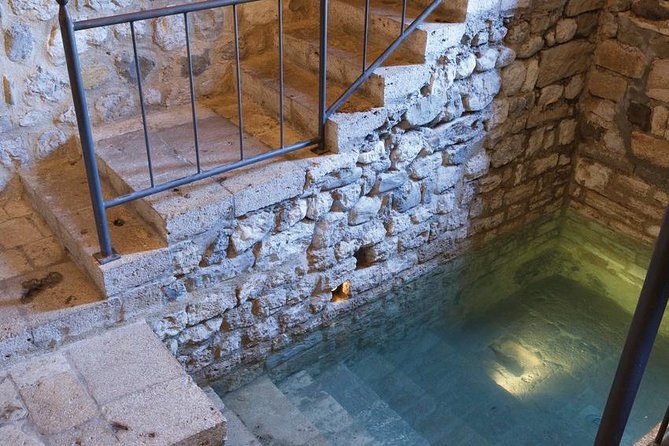
I like that the day is structured around “you can see it” moments. The 13th-century mikvé isn’t a vague concept. It’s a real building you can stand near and talk about—timed with guided explanation so you know what you’re looking at. And in Girona, the museum visit helps you fill in the why behind the stones you’ll later pass in the streets.
The pacing also feels designed for value. You’re out for about 8 hours, but the stops are meaningful: a medieval Jewish-quarter walk in Besalú, a guided museum hour, and then guided time in both Girona and Besalú again. It’s not just transportation between sites. It’s a guided storyline.
You can also read our reviews of more historical tours in Girona


Meeting point and how the small-group rhythm helps
You meet at Plaça de Sant Feliu in Girona, and the tour ends back at that same spot. That simple “circle back” ending matters: no stressful hunt for transit after a long day.
The group size cap of 7 is one of the best parts of this format. On a day like this—where questions come up fast about religion, architecture, and medieval life—you don’t want to shout across a big bus. A smaller group makes it easier for your guide to slow down when something sparks curiosity. It also helps you keep a good walking rhythm, because there’s less reshuffling and less waiting.
English is available, so you won’t have to do mental translation to catch the key details. And since it’s listed as using a mobile ticket, you won’t be stuck hunting for printed passes in the morning.
Stop 1: Puente de Besalú and the medieval approach to the Jewish quarter
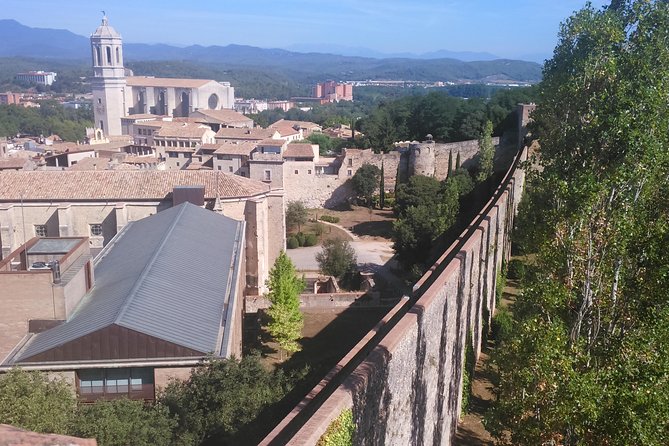
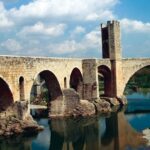
Besalú is the kind of town where the medieval street plan still affects how you experience the place. You start with a guided walking segment around the Puente de Besalú area, and then you head into the medieval village core with Jewish quarter context.
Here’s what makes this first stop special: you’re walking the way people would have entered and moved through the town. The bridge was described as the only way to enter Besalú in the Middle Ages. That single idea gives you instant historical gravity. It helps explain why the town’s layout, entrances, and “gatekeeping” mattered so much for a community’s safety, trade, and daily movement.
During the walk, your guide points out Jewish quarter elements and the mikvé of the 13th century (you’ll go deeper later, but you’re primed for what to notice). Even if you only have a passing interest in Jewish heritage, this is where it starts to feel tangible—because you’re seeing physical reminders built into the town’s geometry.
Practical note: this is a walking stop (listed around 15 minutes for this segment before you transition). Wear shoes you can walk in comfortably, because Besalú and Girona both have medieval streets that don’t care about your fashion choices.
The Museum of Jewish History in Girona: making the story stick
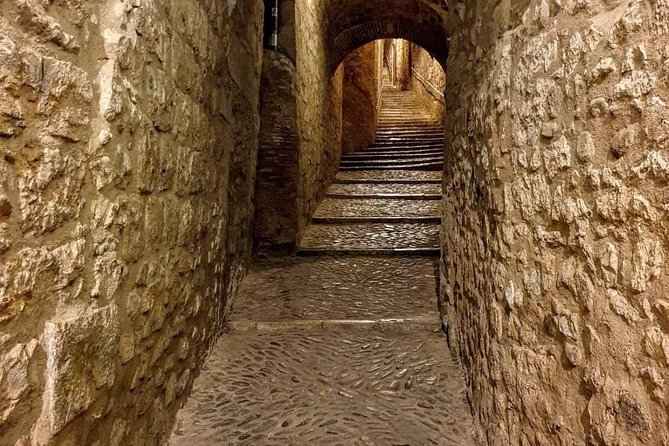
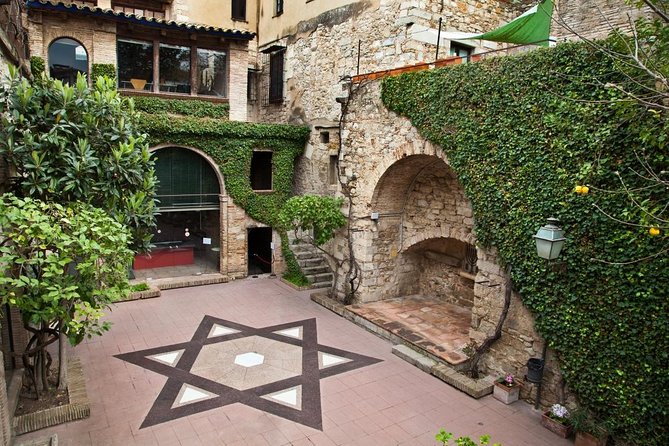
In Girona, the center piece is the Museum of Jewish History. You’ll get a guided visit here for about an hour, with admission included.
Museums can go two ways: either they’re facts thrown at you, or they’re a way to build a mental map. This one’s set up to connect what you’ll later see in the streets—medieval life, cultural patterns, and historical context that makes the physical sites easier to understand.
What I love about a guided museum hour is that it helps you avoid the most common problem: wandering around reading at random. Instead, you get a tour-like framework so you know what to look for and why. When the guide ties museum ideas to later town scenes, the day stops feeling like separate stops. It starts feeling like one coherent narrative.
If you’re the type who likes understanding the “how did people live” part of history (not just dates), this museum time is your foundation.
Stop 3: Girona’s medieval and Jewish quarters on foot
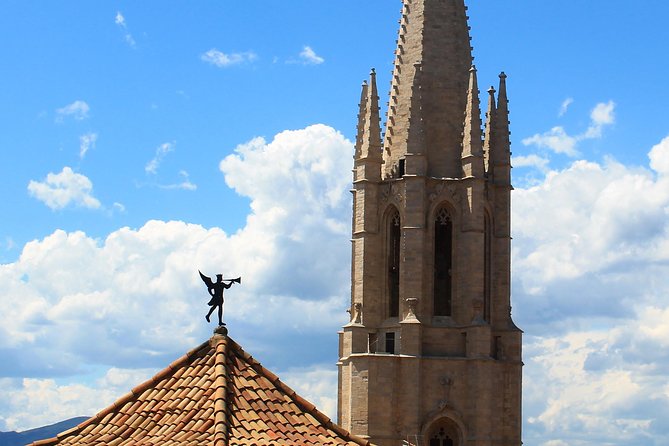
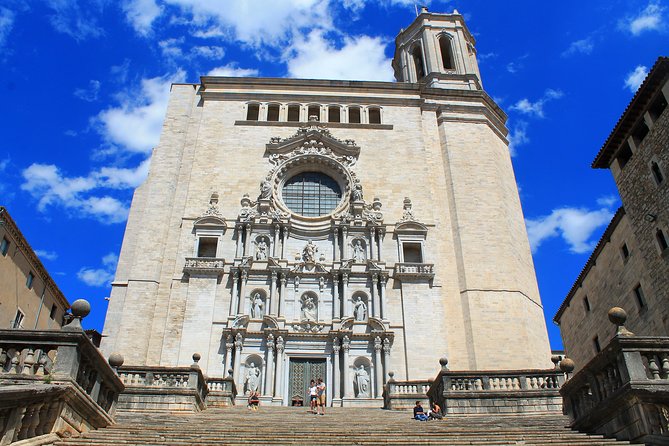
After the museum, you shift into guided time exploring Girona’s city areas, specifically the medieval and Jewish quarters. This is a longer guided segment—about 3 hours—so it’s where you’ll really absorb the atmosphere.
Girona’s medieval street layout isn’t just scenic. It shapes how you imagine daily routines: where people would have passed through, how neighborhoods relate to each other, and how the city’s layers show up in building styles and street turns.
One of the strengths of this part of the day is that the guide doesn’t only talk about Jewish heritage. The tour includes context about other religions and Spanish history too, which helps you see Jewish life not as an isolated storyline, but as part of a wider medieval world.
That broader framing can be surprisingly useful. It gives you context when you’re staring at an old structure and thinking, Okay, but what was around it? The guide’s job here is to connect details to the bigger picture, and this itinerary gives them enough time to do it without rushing.
Tip for you: take a moment during this section to pause in a spot that lets you see a street’s length or a corner’s shape. Medieval towns read differently when you understand the “flow” of movement.
Stop 4 and 5: Besalú again—village time and the mikvé visit
You get additional guided time in Besalú after Girona—first around the medieval village area (about 2 hours), and then a focused visit to the Sinagoga Miqve portion connected to the 13th-century mikvé (about 30 minutes, with admission included).
Going back to Besalú can sound repetitive on paper, but it’s not how it feels in practice. Your first Besalú segment sets up the entry story and Jewish-quarter context. The later Besalú time gives you more room to appreciate how the village reads as a whole—its lanes, its rhythm, and the way multiple layers of history sit side by side.
Then you get the mikvé visit as a real finale moment. This is a special place: the guide explains what it is and why it mattered, and because it’s one of the best-preserved examples in Europe (as described), you can see the design clearly instead of imagining it.
From the experience people share, one detail that stands out is how guides handle access and transitions. When the mikvé portion is part of a guided flow, you’re not left trying to figure out logistics on the spot. You also get the interpretation that makes the visit meaningful instead of just “we walked into a historic room.”
Practical takeaway: this day has a lot of old stone and guided listening. If you can, bring a light layer. Medieval buildings and outdoor shade can swing temperatures more than you’d expect.
English-language value and how the guide makes it feel personal
This tour offers English or Spanish. If you’re choosing between languages, go with what helps you ask questions comfortably. Jewish history in medieval settings has lots of terms, but a good guide keeps it readable.
Guide quality matters here more than in a basic sightseeing tour. The difference is in the small interpretive details: how your guide links buildings to practice, or explains not just what something is, but what it meant for daily life. In the experiences tied to this tour, guides such as Mike, Gerard, Marc, and Carmen are praised for being personable and for answering questions from both historical and cultural viewpoints.
That matters because Jewish heritage in Spain isn’t just a museum topic. It’s built into cities. When the guide points out details you might miss—small architectural cues or personal cultural connections—it changes the way you walk away. You don’t just see places. You understand what they represent.
Price and what you actually get for $179.24
At $179.24 per person, you’re paying for a full guided day with small-group attention, included admission, and a couple of stops that often cost money on their own.
Here’s where the value shows up:
- Admission is included for key parts: the Museum of Jewish History and the mikvé portion in Besalú
- You’re getting guided visits for multiple hours in two towns, not a quick stop-and-sprint
- Bottled water is included, so you’re not hunting for a purchase immediately
- The group limit (max 7) increases the odds you’ll feel “with a guide,” not “watching a guide from far away”
What’s not included is lunch. That’s the main cost-management piece for your day. If you want good value, decide in advance whether you’ll eat near the meeting area before you start, or plan a meal stop during the gaps (the itinerary doesn’t specify a lunch stop, so you’ll want to follow your guide’s timing and choose something convenient).
Also, the tour duration is listed as about 8 hours. That’s a full day, but because the admissions and guiding are baked in, you’re not spending extra time and energy piecing the plan together yourself.
Who should book this Girona and Besalú Jewish History tour
This is a great fit if you:
- Want to learn about Spain’s Jewish heritage through real places you can walk around
- Like guided context for museums and historic sites
- Prefer small groups (max 7) and the chance to ask questions
- Are comfortable with a full day schedule and some walking on uneven, old streets
It also works well as a day trip from Barcelona in theory, because the tour is in Girona and people often pair it with early train timing. The day is long, so you’ll want to be realistic about how early you leave and how tired you’ll be afterward.
If you’re the type who hates guided time and would rather wander alone with a map, this might feel structured. But if you like learning in a human pace—where the guide connects the dots—this is the right format.
Should you book this Jewish history small-group tour from Girona?
Yes, if your goal is understanding, not just photos. You’re paying for guided interpretation plus included admissions, and the small group size (max 7) is a real advantage for a topic like this where questions are natural.
I’d book it if you want the museum hour in Girona paired with the 13th-century mikvé experience in Besalú. That combination makes the day more than a “see-and-forget” itinerary. It gives you a storyline you can carry into your next stop around Catalonia.
Skip it only if you strongly need an included lunch break or you’re trying to keep costs ultra-low. The admissions and guiding do a lot for the price, but you’ll still want to handle your own meal plan.
FAQ
FAQ
How long is the Girona and Besalú Jewish History tour?
The tour duration is listed as approximately 8 hours.
What time does the tour start, and where do I meet?
The start time is 9:00 am at Plaça de Sant Feliu, 17004 Girona, Spain. The tour ends back at the meeting point.
Is lunch included?
No. Lunch is not included.
Are the tours offered in English?
Yes. The tour is offered in English (and you can choose between English or Spanish).
What group size should I expect?
The tour has a maximum of 7 travelers.
What admission tickets are included?
Admission is included for the Museum of Jewish History in Girona and the Sinagoga Miqve / 13th-century mikvé portion in Besalú.
Is bottled water included?
Yes. Bottled water is included.
Can most travelers participate?
The tour lists that most travelers can participate.
Is it refundable if I cancel?
Yes. You can cancel up to 24 hours in advance for a full refund.