REVIEW · GIRONA
Girona Jewish Heritage small group from Girona
Book on Viator →Operated by Girona Experience Tours · Bookable on Viator
Medieval lanes, explained in 2.5 hours. This Girona Jewish Heritage small-group tour takes you through a medieval Jewish quarter that’s unusually well preserved, then includes your ticket to the Museum of Jewish History. It’s a strong, story-led way to understand Jewish presence in Spanish and Catalan culture—though there’s a fair bit of walking on steps and slopes.
I like that it’s built for conversation, not just a march. The group stays small (up to 10), and guides like Ona, Mike, and Pere show up prepared to connect the Jewish story to the bigger Girona setting. One fair warning: a couple of mixed comments mention pacing issues, like time spent chatting during training or the tour feeling repetitive if you’re expecting lots of extra physical remains.
You’ll also find the practical touchpoints helpful: the experience is offered in English, uses a mobile ticket, and runs from Plaça de Sant Feliu to the same spot again. If you want a focused evening plan without hunting tickets or map-app work, this is a solid pick.
In This Review
- Key highlights I think you’ll enjoy
- Girona’s medieval Jewish quarter: what you’ll see beyond the postcard
- Museum of Jewish History: included entry and the last synagogue before 1492
- The 2.5-hour flow: meeting at Plaça de Sant Feliu and staying on schedule
- Small group size and how it affects your questions
- Price and value: $54.31 with museum admission included
- Who should book this tour, and who might skip it
- Should you book the Girona Jewish Heritage small group tour?
- FAQ
- FAQ
- Where does the tour start?
- How long is the Girona Jewish Heritage tour?
- Is the tour offered in English?
- How many people are in the group?
- What’s included in the price?
- Is the tour recommended for people with mobility problems?
- Can I cancel for a full refund?
Key highlights I think you’ll enjoy
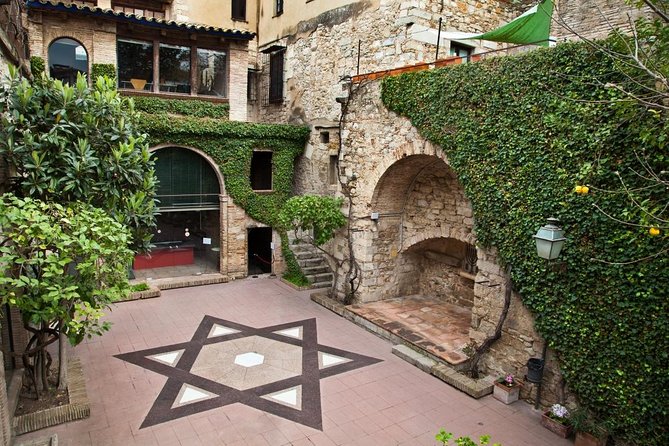
- Museum entry included means you’re not piecing together ticket timing mid-walk
- Small group (max 10) keeps questions from getting lost in the shuffle
- Last synagogue story brings the 1492 expulsion into clear local context
- Medieval street layout lets you “read” the neighborhood as you walk
- Guides with strong local voice show up in the names people mention most (Ona, Mike, Pere, Susana)
Girona’s medieval Jewish quarter: what you’ll see beyond the postcard
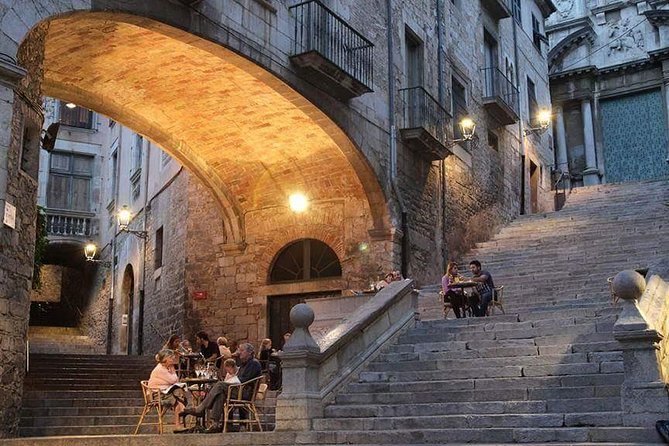
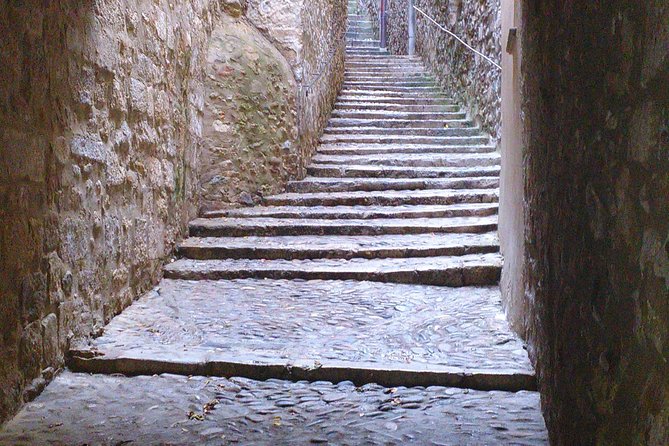
Girona’s Jewish quarter is the star of the show. You’re not looking at vague “there used to be Jews here” plaques. You’re walking a neighborhood whose layout and street structure have stayed remarkably close to what you’d have recognized in medieval times. In plain terms: it feels like the past still has corners.
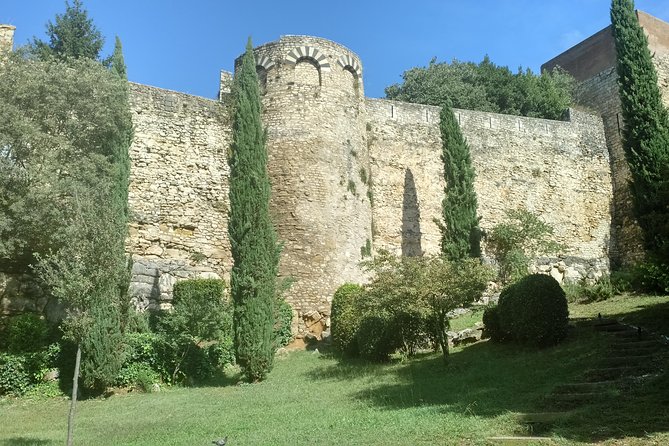
Your guide brings out specific details along the route, including the parts of the neighborhood that helped separate and protect Jewish community life. You’ll also learn how the walls and boundaries shaped daily movement and identity—something that’s hard to grasp from a quick self-guided loop. One of the most memorable takeaways from past tours is how the tour points out physical traces, like where structures once existed and how carved or set-in details still show up on buildings.
This is also a good tour if you care about the “how did it fit into the city?” question. Girona isn’t just a backdrop; it’s the context. The guide ties the Jewish story to the city’s broader history and culture, so you’re not treating Jewish history like a separate museum wing.
Practical tip: wear shoes you’d actually walk in all day. Girona has steps and slopes, and the route is part of why the experience feels real—but it can be tough if your legs get tired fast. If you’re unsure, tell me your mobility limits and I’ll help you decide whether another plan fits better.
You can also read our reviews of more historical tours in Girona

Museum of Jewish History: included entry and the last synagogue before 1492
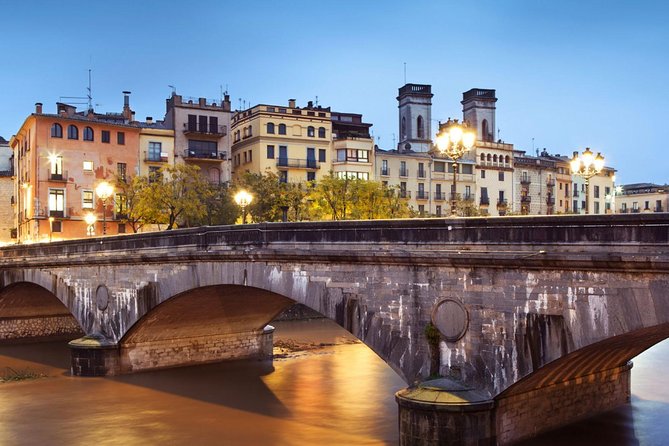
The museum visit is not an optional add-on—it’s built into the tour price. You get admission to the Museum of Jewish History, which is linked to the last synagogue that remained in use until the expulsion in 1492.
That matters because the museum visit changes how the street walk lands in your brain. Outside, you’re reading the neighborhood through layout and surviving remnants. Inside, you’re given the background that helps those remnants make sense: what the community did, what changed over time, and how Jewish life in Girona connected to wider Spanish history.
Time-wise, the museum stop is short (about 30 minutes), so you won’t get stuck for hours. Instead, think of it as guided orientation. Your guide points out the angles you might miss if you walked through quickly on your own—how to interpret what you’re seeing, and which details matter most to the local story.
Now, a fair note: not everyone felt the museum needed a guide. One person said the tour felt too concentrated on the museum and that they could have done it alone for less money. I get that perspective—if you already love reading museum labels and you move fast, the guided value may feel smaller.
But if you want the why behind what you’re seeing—especially around the synagogue’s role and the community timeline—this is where the guide earns their fee. The best tours are the ones where you walk out thinking, I finally understand what I just saw.
The 2.5-hour flow: meeting at Plaça de Sant Feliu and staying on schedule
The tour runs about 2 hours 30 minutes total. The structure is simple: you start at Plaça de Sant Feliu, 17004 Girona, then you do a long walk-and-guide portion through the Jewish quarter, followed by the museum visit.
That timing works for a day where you want culture without blowing your whole schedule. It’s also long enough that the guide can stop, explain, and connect the dots, instead of rushing you from one wall plaque to another.
You should also plan around the walking. Girona’s slopes aren’t dramatic enough to stop most people, but they are enough to make the wrong shoes miserable. If you’d like to take photos, you’ll want to do it while the group pauses, not during every turn.
The tour ends back at the meeting point. That’s convenient if you’re also planning a meal or another nearby sight afterward, since you don’t need to relocate across town.
Language note: the tour is offered in English. Still, if you’re booking close to travel date, it’s smart to double-check the language in your confirmation message. There was at least one cancellation/refund situation reported where the language expectation didn’t match, and you don’t want any stress on a tight schedule.
Small group size and how it affects your questions
With a maximum of 10 travelers, this tour has a better chance of feeling personal. You’re not just listening to history facts; you can ask the “wait, so what happened next?” kind of questions that pop up while you’re standing on a real street that survived centuries.
That’s why guide personality matters so much here. Different guides bring different rhythms to the storytelling. Some reviews mention that guides like Ona excel at being personable and patient, and that Mike brought the history to life with a conversational style tied to everyday Girona. Other guides mentioned positively include Pere, Monica, and Susana—each praised for being engaging and respectful.
One mixed review called out a guide style that felt like a memorized speech. Another said the guide spent time talking with someone training for the tour, which lowered their satisfaction. Those are not deal-breakers for everyone, but they are useful signals.
My practical advice: if you love discussion, show up ready with questions. If you prefer a very dynamic, story-heavy guide, read the fine print on the day’s guide assignment when you can—and don’t book this as your only education plan if you’re deeply invested in religious details.
Price and value: $54.31 with museum admission included
At $54.31 per person, you’re paying for three things: an expert guide, the guided museum time, and entrance fees to the Museum of Jewish History. Food and drinks are not included, so plan on buying water or snacks separately.
Is it worth it? For most people, yes—because the street walk plus museum context is hard to replicate well on your own in a short time. Self-guided is cheaper, but it’s also easier to miss the story thread that turns buildings into meaning.
That said, value depends on your style:
- If you like a guided explanation and want to connect Girona’s Jewish past to Catalan identity and Spanish history, the included museum ticket makes the price feel reasonable.
- If you’re the type who wants to do museums independently, you might feel the guide portion didn’t add enough. One reviewer argued that most of what they saw was the museum and that the museum visit alone could be done cheaply.
So here’s the honest takeaway: this isn’t priced like a budget walking tour, but it’s also not priced like a long day with multiple attractions. You’re buying a focused, cultural narrative—best for people who want someone else to point the way and explain the significance while you stand where it happened.
A small note on timing: this tour is commonly booked about 43 days in advance, so if you’re traveling in high season or around popular dates, I’d avoid waiting too long.
Who should book this tour, and who might skip it
This one fits best if you:
- want an English-speaking guided look at Jewish heritage in Girona
- like walking tours where you learn what you’re looking at, not just where to stand
- care about how Jewish life shows up in the city’s physical layout and surviving sites
- enjoy museums more when someone helps you interpret what matters most
It’s also a good fit if you’re traveling with a mix of backgrounds, since the tour is designed around helping you understand Jewish presence in Spanish history and culture.
It’s not the best fit if you:
- have mobility issues. Girona’s steps and slopes are part of the experience, and the tour isn’t recommended for people with mobility problems.
- need fully flat, low-effort sightseeing.
On the bright side, most travelers can participate, it’s near public transportation, and the group stays small.
For families or first-timers: if everyone can manage uneven terrain, it’s a strong “orientation” tour. For anyone who hates walking uphill, you might want to consider another option that focuses on one location rather than streets plus museum.
Should you book the Girona Jewish Heritage small group tour?
I’d book it if you want a guided route through the medieval Jewish quarter plus a museum visit that explains the synagogue story up to the 1492 expulsion. The combination is the point: street-level context plus a focused museum stop, in a group that stays small enough for real questions.
I’d think twice if you’re hoping for lots of separate physical relics scattered around town. The tour’s value is mostly in how the guide helps you understand what remains, and in the museum that gives meaning to those spaces. If your ideal tour is “maximum visible artifacts per minute,” you might find it too concentrated.
My decision shortcut: if you want history explained clearly by a local guide and you’re good with hills and steps, this is a worthwhile use of 2.5 hours in Girona.
FAQ
FAQ
Where does the tour start?
The tour starts at Plaça de Sant Feliu, 17004 Girona, Spain.
How long is the Girona Jewish Heritage tour?
It lasts about 2 hours 30 minutes (approx.).
Is the tour offered in English?
Yes, it’s offered in English.
How many people are in the group?
This is a small group tour with a maximum of 10 travelers.
What’s included in the price?
The price includes entrance fees to the Museum of Jewish History, an expert guide, and a guided visit to the Museum of Jewish History in Girona.
Is the tour recommended for people with mobility problems?
No. The experience isn’t recommended for people with mobility problems because Girona has a lot of steps and slopes.
Can I cancel for a full refund?
Yes. You can cancel for a full refund up to 24 hours in advance of the experience’s start time.